BUYER-FOCUSED ODM PRODUCT DEVELOPMENT

ODM Pickleball Paddle Manufacturer for Differentiated Product Programs

An ODM pickleball paddle manufacturer contributes product ideas, engineering choices and manufacturable solutions—not only production capacity. Buyers need clarity on differentiation, ownership, exclusivity, target cost, prototype rounds, validation and what happens if the concept changes.

Gloperti helps sports brands, importers and retailers translate a customer opportunity into a paddle specification, sample and scalable product. Development can start from a proven shared platform, a semi-custom structure or a more exclusive mold and construction.

Our buyer-focused process places commercial and technical decisions at defined gates before larger costs and inventory are committed.

ODM BUYER DECISIONS
Develop with Clear Gates
Market
Customer / Gap / Price
Differentiation
Shared / Modified / Exclusive
Ownership
Concept / Drawing / Tooling
Release
Prototype / Pilot / Revision
Pilot MOQ from 50 pcs · Free Initial Design Support
Released-Design MOQ
0 +
In-House Designers
0
Dedicated QC Staff
0
Daily Paddle Capacity
0 +
💡
From Market Need to Manufacturable Product
Concept, feasibility, target cost, prototypes, pilot production and release are managed as connected decisions.

ODM Should Reduce Development Risk—Not Hide Product Decisions

The first ODM risk is paying for “custom development” that is only a common market model with new artwork. Buyers should understand which parts are shared, modified or exclusive and how that affects price, speed and protection.

The second risk is development without a target cost. Shape, carbon face, foam, thermoforming, handle, packaging and testing can push the product beyond its intended retail tier. We review feasibility and cost direction before final engineering.

The third risk is unclear ownership. Concept contributions, drawings, molds, artwork, samples and manufacturing know-how may have different rights. These points should be documented before development fees are paid.

Questions Buyers Must Resolve Before Approving an ODM Concept

Each capability below addresses a commercial or technical decision that can determine whether an ODM launch succeeds.

Is the Product Truly Different?

Define which construction, geometry, handle, performance direction or user experience creates meaningful differentiation.

Is the Design Exclusive?

Clarify shared platform, market-limited, customer-specific or exclusive elements—and what each level costs.

Who Owns the Development?

Document ownership and use rights for briefs, drawings, molds, graphics, prototypes and production files.

Can It Meet the Target Cost?

Balance material, structure, packaging and testing against target ex-factory cost and intended retail price.

How Many Prototype Rounds?

Agree what each prototype must answer, how feedback is approved and when additional revisions create new cost or time.

Can It Launch on Time?

Plan feasibility, tooling, samples, testing, approvals, pilot production, packaging and shipping around the launch date.

T700 paddle manufacturer T700 paddle manufacturer T700 paddle manufacturer

ODM Development Decision & Responsibility Matrix

Compare development paths by differentiation, investment, ownership, speed, MOQ and commercial exposure.

ODM PathTypical ScopeBuyer Trade-Off
Shared PlatformExisting structure with brand artwork and packagingFast and lower cost; limited exclusivity
Semi-CustomMaterial, thickness, handle, foam, surface or package changesStronger differentiation; moderate validation
Custom DevelopmentNew geometry, drawings, tooling or constructionHigher distinction; more time and investment
Prototype GateDefined questions, feedback and revision decisionControls endless iteration
Pilot ReleaseSmall batch, QC, packaging and market validationReduces launch inventory risk

A Stage-Gated ODM Paddle Development Process

Six gated stages prevent uncontrolled iteration and create decisions before tooling, pilot production and launch inventory.

01

Market Opportunity Brief

We define customer problem, player segment, price, channel, competitive gap, quantity, launch date and success criteria.

02

Concept and Feasibility

Concepts are screened for manufacturability, cost direction, material availability, tooling and likely development risk.

03

Prototype Materials

Prototype faces, cores, foam, handles, grips and components are selected to answer specific design questions.

04

Prototype Iteration

Prototype rounds test geometry, construction, feel, graphics and packaging, with buyer feedback recorded by revision.

05

Pilot Verification

A pilot batch verifies production repeatability, agreed dimensions, target ranges, appearance and package completeness.

06

Launch and Revision Control

Released files, model codes, specifications and revision records support launch, replenishment and future upgrades.

Turn a Market Need into a Manufacturable Paddle

ODM development can follow three practical paths. A shared platform offers the fastest launch and lowest investment but limited exclusivity. A semi-custom platform modifies material, thickness, handle, surface, foam, artwork or packaging to create stronger differentiation. A custom development path may use new geometry, tooling or construction and therefore requires more validation, cost and time.

The correct path depends on the customer problem. A beginner line may need forgiveness and value rather than a new mold. A control model may benefit from a thicker core, textured carbon face and stable perimeter. A power model may justify an elongated shape, thermoformed structure or different balance direction.

Buyers should set success criteria before sampling: target player, target cost, acceptable weight range, dimensions, grip, construction, claims, aesthetic direction and packaging. Without these criteria, prototype feedback becomes subjective and development can continue indefinitely.

Designed for product builders

Emerging Brands
Turn customer insight into a first product.
Established Paddle Brands
Extend ranges with controlled differentiation.
Importers & Retailers
Develop channel-specific products and packaging.
Product Innovation Teams
Test concepts before custom tooling.

How Gloperti Addresses ODM Buyer Concerns

Our ODM workflow connects market need, manufacturability, cost, ownership, prototype learning and production release.

Pilot Before Inventory

Selected released designs can begin around 50 pieces, reducing inventory exposure during pilot market validation.

Decisions at Each Gate

Each sample round should answer defined questions about geometry, construction, feel, appearance or packaging.

Verify the Designed Product

Five QC staff support material, process and pilot-batch checks against the released ODM specification.

Choose the Right ODM Path for Your Brand

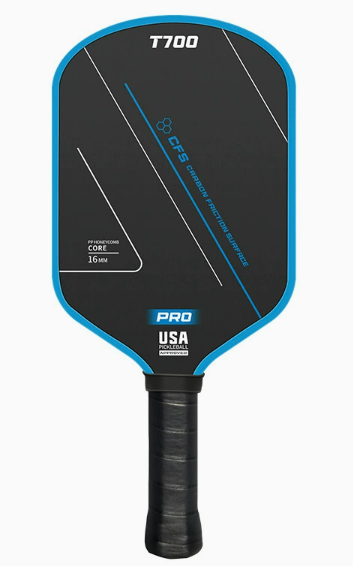
ODM programs can cover fiberglass starter paddles, graphite step-up models, T700 raw carbon control paddles, thermoformed all-court paddles, foam-enhanced structures, elongated power paddles, widebody designs, hybrid shapes and coordinated paddle sets.

Differentiation does not always require a new mold. Material combinations, handle geometry, grip system, perimeter, surface treatment, balance direction, artwork and packaging can create a distinct product at lower development risk. New tooling becomes more relevant when geometry itself is central to the product promise.

Commercial planning should accompany engineering. Buyers should understand development fees, tooling, sample rounds, unit-cost direction, MOQ, forecast, packaging, tests and approval responsibilities. A technically interesting product that misses the retail price or launch window is not a successful ODM project.

Related solutions include collaborative paddle design, semi-custom paddle platforms, exclusive paddle molds, performance paddle prototyping and long-term ODM product-roadmap support.

ODM Pickleball Paddle Manufacturer FAQ

Direct answers about ODM versus OEM, exclusivity, IP, tooling, development fees, prototype rounds, target cost and launch timing.

OEM generally reproduces a buyer-defined product. ODM involves the manufacturer in concept, design or engineering decisions. Projects may still combine both approaches, so scope and responsibility should be written clearly.
Not automatically. Exclusivity depends on the development path and written agreement. Shared platforms, modified platforms, buyer-funded tooling and jointly developed features may carry different rights.
List which elements are existing, modified or new: geometry, construction, handle, surface, foam, materials, artwork and packaging. Differentiation should solve a customer problem, not only change appearance.
Ownership and use rights depend on the agreement, contributions and payment. Clarify drawings, molds, artwork, prototypes, storage, maintenance, permitted use and transfer before development begins.
The quotation should identify included concept work, drawings, tooling, sample rounds and revision assumptions. Additional changes outside the agreed scope may affect cost and schedule.
Set target ex-factory and retail ranges early. Review material, construction, tooling, packaging, testing and MOQ at the feasibility stage before finalizing the concept.
It depends on novelty and feedback. Each round should have defined questions and approval criteria. Shared-platform projects may need fewer rounds than new geometry or construction.
Selected released designs using practical materials and structures can start around 50 pieces. New tooling, special components or exclusive materials may require higher quantities.
The buyer or brand owner is responsible for market claims, player validation and governing-body submission for the exact model. Factory samples and product data can support evaluation but do not replace official approval.
Use model codes, released specifications and revision history. Customer feedback can become a controlled next revision, while existing orders continue under the approved version unless a change is authorized.

Ready to Develop an ODM Paddle with Clear Commercial Terms?

Send the customer problem, target player, retail price, desired differentiation, quantity, timeline and reference products. We will recommend an ODM development path.