Choosing a beginner pickleball paddle should feel exciting, not like decoding a materials-science textbook. Yet shoppers quickly run into dozens of shapes, weights, core thicknesses, surface materials, retailer exclusives, and brand-specific technologies. The result is a common mistake: buying the most expensive paddle on the shelf before understanding which features actually help a new player learn consistent contact, control depth, and build confidence at the kitchen line.
The goal is not to declare one universal winner. The best paddle is the one that helps you strike the ball cleanly, control the face angle, swing comfortably, and improve without creating unnecessary fatigue. Use the framework below to compare any paddle—whether it comes from a specialty brand, a major sporting-goods retailer, a warehouse club, or an OEM manufacturer.
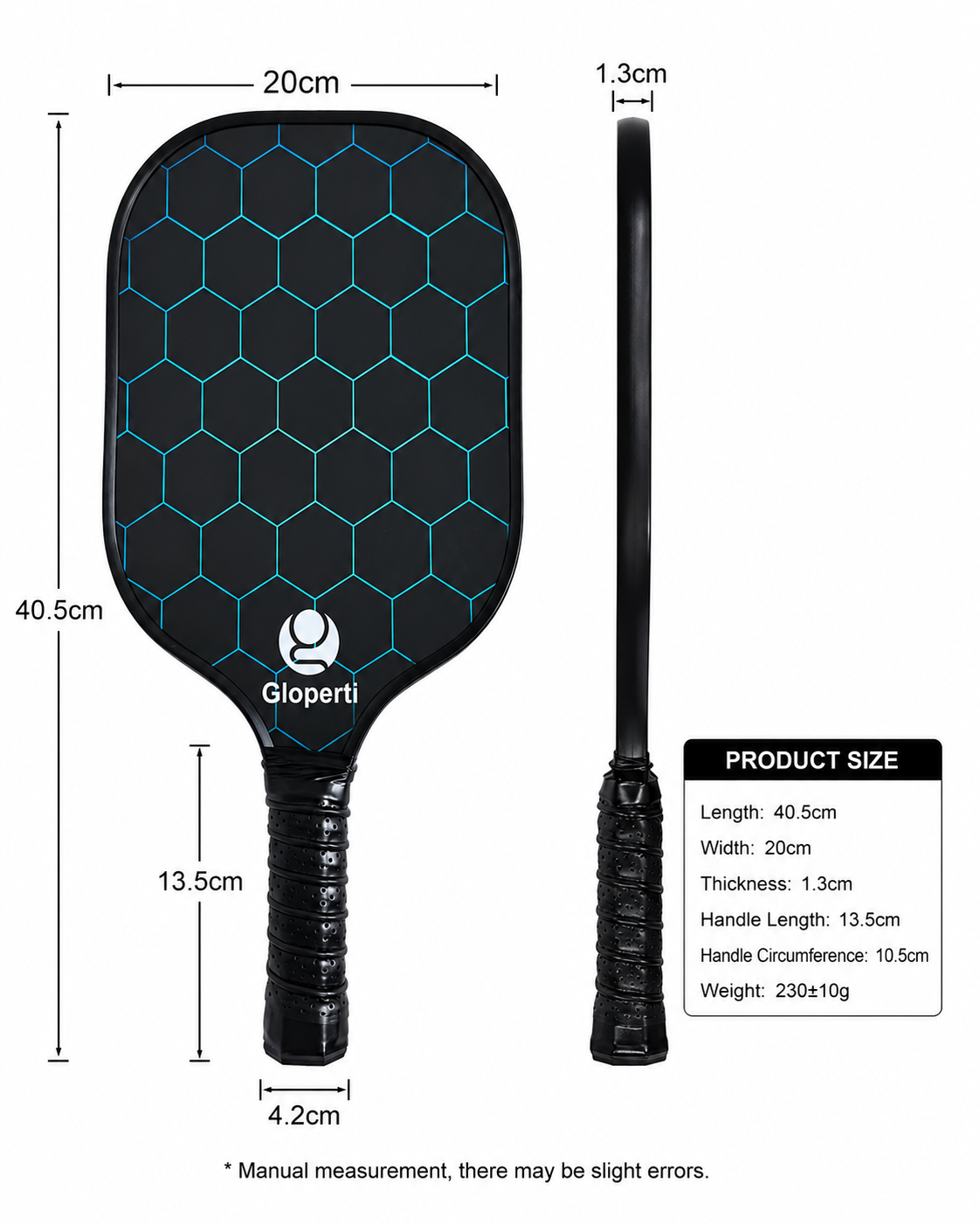
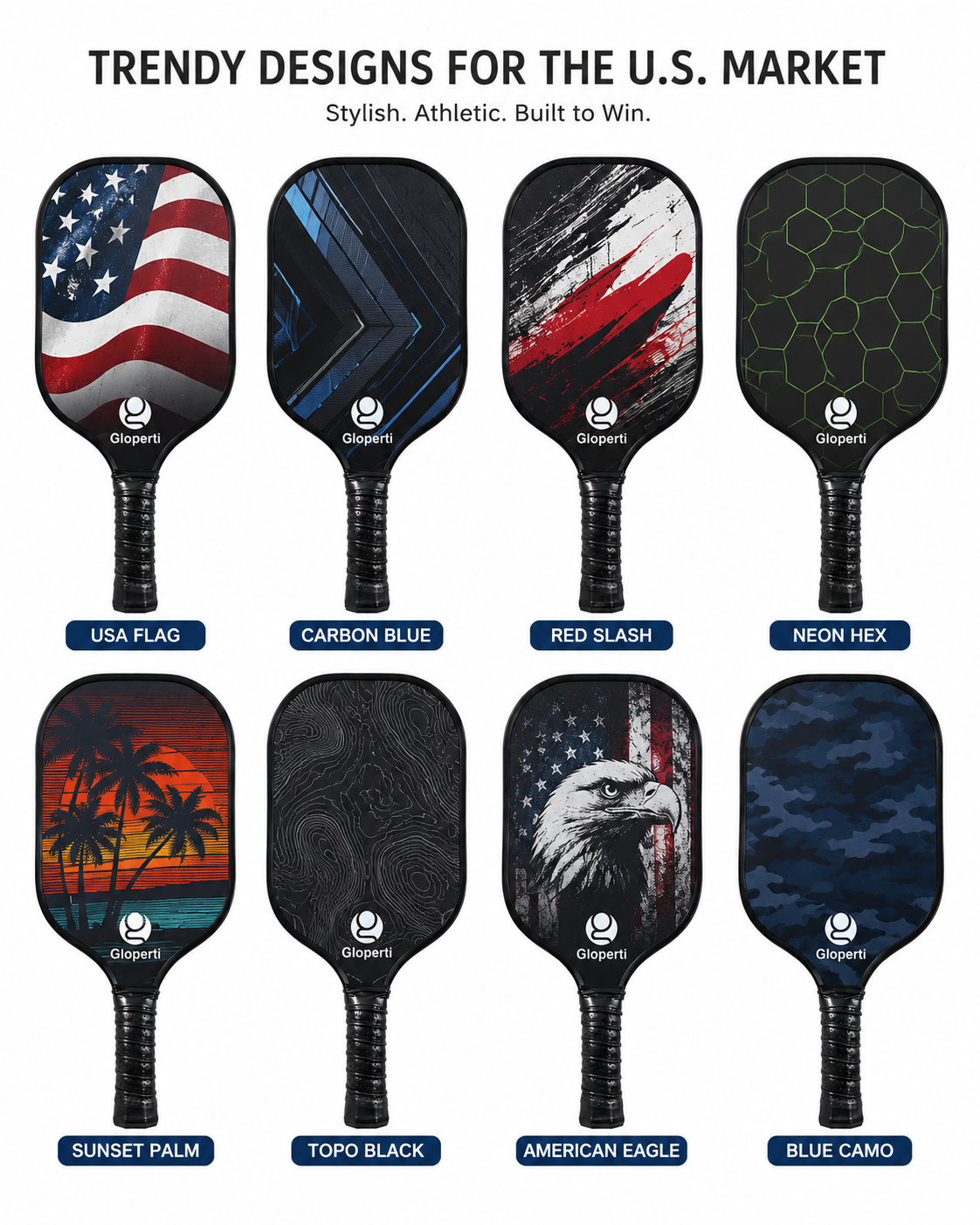
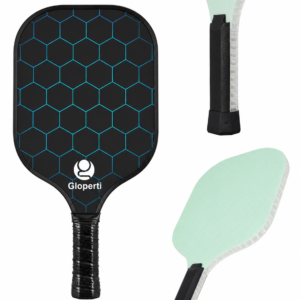
Key specifications of a quality beginner pickleball paddle — weight, grip size, and core materialPopular pickleball paddle designs available in the US market for beginners and intermediate playersBeginner pickleball paddle comparison chart — foam vs carbon fiber core performance
A good beginner paddle is forgiving, comfortable, predictable, and reasonably priced. Forgiveness means the paddle maintains useful pace and direction even when contact occurs slightly outside the center. Comfort means the weight, balance, grip size, and vibration response allow repeated play without forcing the wrist or elbow. Predictability means the ball does not launch dramatically higher or lower because of small changes in swing speed.
For most new players, a standard or hybrid shape, medium weight, moderate grip circumference, and 14–16 mm core provide a sensible starting point. These specifications usually create a generous hitting area and enough stability for blocks while keeping the paddle maneuverable during fast exchanges. A beginner does not need extreme spin ratings, maximum swing weight, or a highly aggressive elongated design to learn the fundamentals.
The best beginner pickleball paddles also make it easy to understand cause and effect. When the player opens the face, the ball should rise; when the player accelerates smoothly, depth should increase. A paddle with a very lively face can hide technical errors for a while, but it may also make resets and drops harder to learn.
Start with weight. A paddle around the middle of the common weight range is often easier for beginners because it balances stability and hand speed. Very light paddles can feel quick but may twist on off-center contact. Heavy paddles can add plow-through but may tire the shoulder and slow reaction time. Two paddles with the same static weight can still feel different because balance and swing weight change how the mass moves through the air.
Next, consider core thickness. A thicker core generally supports a softer, more controlled response, while a thinner core often feels firmer and faster. This is a broad design tendency rather than a guarantee because face material, layup, edge construction, core density, and manufacturing method also matter. New players who want a calm, controlled response often gravitate toward 16 mm models, while athletic players who prefer quick acceleration may enjoy 13–14 mm paddles.
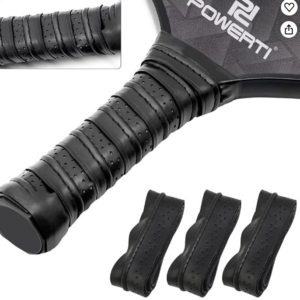
Grip size and handle length affect comfort more than many shoppers expect. A grip that is too large can reduce wrist freedom; a grip that is too small may encourage excessive squeezing. The player should be able to hold the paddle securely with relaxed fingers. Handle length matters for two-handed backhands and leverage, but a long handle can reduce face area on some designs.
Finally, look at shape. Standard and widebody paddles typically offer a larger sweet spot. Hybrid shapes balance reach and forgiveness. Elongated paddles provide reach and leverage but often have a narrower face and higher swing weight. For a first purchase, forgiveness usually matters more than the extra inch of reach.
Surface Materials: Fiberglass, Graphite, Carbon Fiber, and Titanium
Fiberglass faces are common in affordable beginner pickleball paddles. They can provide accessible power and a lively feel, which helps players who do not yet generate much racquet-head speed. The tradeoff is that some fiberglass models feel less controlled during soft shots, and their textured finish may not remain as spin-oriented as premium raw carbon surfaces.
Graphite and carbon-fiber faces tend to feel more precise and stable. Raw carbon fiber has become popular because its texture can support spin and its response can feel controlled. However, the words carbon fiber alone do not guarantee quality. Fiber grade, weave, resin system, surface treatment, layup, curing, and quality control all influence performance.
Titanium-faced or titanium-coated designs have also appeared in the market. They can offer a crisp, distinctive response, but the label does not automatically indicate whether a paddle is beginner-friendly. Evaluate the complete construction rather than choosing based on one material buzzword.
Foam pickleball paddles are often discussed as though every model uses a solid foam core. In reality, the category can include full-foam constructions, foam-perimeter designs, and honeycomb cores enhanced with structural foam. Perimeter foam may increase edge stability, enlarge the effective sweet spot, and change the sound and feel. Full-foam designs may offer a different rebound profile and durability behavior than conventional polypropylene honeycomb paddles.
For a beginner, foam is not automatically better or worse. The useful question is whether the paddle provides a stable face, manageable power, consistent rebound, and comfortable feedback. Some foam-enhanced paddles feel exceptionally solid, while others may be too powerful or too expensive for a first purchase. Players should also confirm current approval status if they plan to compete in sanctioned events, because approved equipment lists and testing standards can change.
Cheap pickleball paddles can be a smart choice for families, schools, community centers, casual doubles groups, and first-time players who are unsure how often they will play. A low-cost set usually prioritizes accessibility over specialized performance. It may include two or four paddles, indoor and outdoor balls, and a carrying bag.
The main risks are inconsistent weight, small grips, basic edge guards, slick faces, and less refined quality control. Before buying, check the listed weight range, grip dimensions, return policy, and whether replacement paddles are available. A budget paddle that feels comfortable and survives regular recreation is a better value than a premium paddle that does not suit the player.
For organizations buying in volume, factory-direct customization can improve value. Buyers can specify face material, core thickness, grip size, artwork, packaging, and quality inspections instead of accepting a one-size-fits-all retail set.
Costco pickleball paddles are commonly searched by shoppers who want recognizable brands, bundled accessories, and warehouse-club value. Inventory can vary by region and season, so the exact paddle set available at one location may not match another. When comparing a club bundle, calculate the value of the paddles separately from balls, bags, covers, and other accessories.
A warehouse set can be ideal for a household that needs multiple paddles immediately. More serious players should still compare individual paddle weight, core thickness, grip measurements, warranty terms, and model identity. Some bundles use models or cosmetic versions that differ from a brand's main specialty-retail line.
Dick's Sporting Goods Pickleball Paddles
Searches for dicks sporting goods pickleball paddles or Dick's Sporting Goods pickleball paddles usually reflect a desire to handle products in person. That is a real advantage. Players can compare grip circumference, handle length, head shape, static weight, balance, and overall finish before purchasing.
In-store selection may include entry-level sets, midrange composite paddles, and premium performance models. Use the store visit as a fitting session rather than choosing only by packaging. Hold the paddle in ready position, rehearse a compact volley, and notice whether the head feels slow or the grip forces the hand open. Then compare the return policy, warranty, and online price.
A Bread and Butter pickleball paddle attracts players who want distinctive branding and modern performance construction. The company has offered models aimed at different combinations of power, control, spin, and shape. For developing players, the important step is matching the model profile to actual needs rather than buying based on social-media visibility.
A player moving from a basic beginner paddle may appreciate a Bread & Butter model with a more stable face, textured surface, and refined balance. However, a high-output model can require disciplined touch. Compare swing weight, twist weight, core thickness, handle length, and warranty details. The best upgrade should make difficult shots more repeatable, not simply make hard shots faster.
The Double Black Diamond pickleball paddle is frequently considered by improving recreational players because it sits in the conversation between control-oriented and all-court designs. Its appeal is the idea of balanced performance: enough stability and spin potential for confident drives, but enough touch for resets and drops when technique is sound.
It may suit an intermediate player who already contacts the ball consistently and wants a more refined response than a basic fiberglass set. A complete beginner can still use an all-court paddle, but there is no need to pay for advanced construction until the player understands personal preferences for shape, balance, and power.
The CRBN Power Series pickleball paddle is associated with performance-focused carbon construction and a power-oriented playing profile. Shoppers sometimes type cbrn pickleball paddle when they mean CRBN pickleball paddle. Including both spellings helps users find the intended category, but buyers should verify the exact model name before ordering.
Power-oriented paddles can reward compact acceleration and aggressive counters, yet they may also send blocks and resets long when the face is not controlled. Intermediate and advanced players who generate reliable topspin may benefit more than true beginners. Compare the current model generation, thickness, shape, handle, approval status, and warranty rather than relying on the series name alone.
A Gearbox pickleball paddle often feels different from a conventional honeycomb paddle because the brand is known for distinctive internal construction concepts and a solid, engineered response. Some players love the stability, durability perception, and direct feedback; others need time to adjust to the feel.
For beginners, Gearbox can be a premium option rather than an automatic starting point. Demoing is especially useful because sound, dwell time, balance, and rebound character may differ from common entry-level paddles. An improving player who values a clean, solid strike may find the transition worthwhile after developing consistent mechanics.
The best intermediate pickleball paddle should solve a real limitation in the player's current equipment. Common reasons to upgrade include needing more stability on blocks, more spin on third-shot drives, better control on drops, a longer handle for a two-handed backhand, or a shape that supports reach without becoming sluggish.
Intermediate players should identify their error pattern. If balls frequently sail long, choose a more controlled response and practice relaxed grip pressure. If shots land short despite good mechanics, consider a slightly more powerful face or higher swing weight. If the paddle twists on counters, seek greater torsional stability. If hand speed is the problem, avoid overly head-heavy elongated designs.
A useful upgrade test includes serves, returns, drives, drops, resets, dinks, blocks, overheads, and rapid volleys. A paddle that feels impressive only on drives may not improve overall match performance. The best intermediate choice usually produces fewer unforced errors across the full shot menu.
Beginner Paddle vs. Intermediate Paddle
A beginner paddle prioritizes ease of use and value. An intermediate paddle usually offers more deliberate engineering around spin, stability, balance, face texture, and power delivery. That does not mean an intermediate paddle must be expensive, nor that beginners cannot use premium equipment.
The practical difference is specificity. Beginners benefit from broad forgiveness because they are still discovering their style. Intermediate players can choose narrower performance targets because they know whether they prefer control, power, hand speed, reach, or a two-handed backhand. Upgrade when your preferences become clear—not because a calendar says you have played long enough.
A Simple In-Store or Demo-Court Testing Checklist
First, check comfort. Hold the paddle for several minutes and rehearse compact swings. The grip should not create pressure points, and the head should return to ready position without effort. Second, test center and off-center contact. A useful paddle remains stable when the ball strikes near the upper corners or edge.
Third, test soft control. Hit dinks, resets, and third-shot drops before judging power. Fourth, accelerate through serves and drives to see whether the ball stays predictable. Fifth, play fast hands at the kitchen and observe maneuverability. Finally, compare results rather than impressions. Count errors, depth consistency, and successful resets across several paddles.
A reliable beginner paddle starts with repeatable manufacturing. Core sheets should have consistent density and thickness. Face layers should be cut and bonded accurately. Resin distribution, curing temperature, pressure, edge sealing, handle assembly, grip wrapping, and final weight sorting all affect the finished product.
OEM and ODM buyers should define tolerances instead of requesting only a material name. A practical specification can include target weight and tolerance, balance point, swing-weight range, core thickness, face layup, surface finish, grip circumference, handle length, edge-guard fit, artwork method, packaging, and inspection standard.
For private-label programs, sample evaluation should include impact consistency, surface adhesion, edge durability, handle rigidity, grip quality, cosmetic inspection, and play testing by users at different skill levels. A paddle designed for beginners should not merely be cheaper; it should be forgiving, comfortable, and consistent from unit to unit.
Private-Label and Custom Pickleball Paddle Opportunities
Retailers, clubs, coaches, schools, tournament organizers, and promotional-product distributors can create differentiated paddle programs through custom design. Common options include fiberglass, carbon fiber, multiple core thicknesses, standard or elongated shapes, custom grip colors, UV printing, edge-guard colors, paddle covers, retail boxes, and complete sets.
A well-planned product line can include an affordable beginner pickleball paddle, a balanced intermediate model, and a premium thermoformed or foam-enhanced model. This structure gives customers a clear upgrade path and prevents one product from trying to satisfy every player.
Gloperti supports custom pickleball paddle development with material, shape, thickness, artwork, packaging, and sample options. Buyers can use the custom paddle page to begin a specification discussion and request a design based on their target market.
For most new players, begin with a comfortable midweight paddle, a forgiving standard or hybrid shape, and a controlled 14–16 mm core. Spend enough to get consistent construction and a secure grip, but do not assume the most expensive paddle is the easiest to learn with.
Cheap pickleball paddles and retailer bundles can be excellent for casual use. Specialty models from Bread and Butter, CRBN, Gearbox, and other performance brands become more valuable when the player can identify a specific need. The best intermediate pickleball paddle is the one that improves repeatability across dinks, resets, drives, blocks, and volleys—not merely the one with the loudest marketing claim.
Choose based on comfort, stability, control, and measurable court results. As technique improves, equipment preferences become clearer, and the next paddle decision becomes much easier.
For most beginners, the best choice is a comfortable midweight paddle with a forgiving standard or hybrid shape, a moderate grip, and a 14–16 mm core. The exact model should match the player’s strength, hand size, budget, and preference for control or power.
Yes. Budget paddles can be excellent for casual play, families, schools, and first-time users. Check weight consistency, grip comfort, face durability, return policy, and whether the set includes useful balls and a bag.
When should I upgrade to an intermediate pickleball paddle?
Upgrade when you can identify a clear limitation in your current paddle, such as instability, insufficient spin, excessive power, a handle that is too short, or a shape that does not fit your game.
Not automatically. Foam-enhanced and full-foam designs can improve stability or change feel, but performance depends on the entire construction. Test control, rebound consistency, comfort, durability, and current tournament approval.
Is a heavier or lighter paddle better for beginners?
A moderate weight is usually the safest starting point. Very light paddles may twist more, while heavy paddles can cause fatigue. Balance and swing weight matter as much as static weight.
Yes, but a true beginner may not need premium all-court construction immediately. It becomes more valuable when the player can appreciate differences in stability, spin, balance, and touch.
Beginners can shop at specialty stores, major sporting-goods retailers, warehouse clubs, online marketplaces, brand websites, and direct manufacturers. Compare specifications, warranty, return terms, and fit rather than retailer name alone.
What paddle shape is easiest for a beginner?
Standard and widebody shapes are often easiest because they offer a larger hitting area and more forgiveness. Hybrid shapes are also a strong choice for players who want a balance of reach and maneuverability.
How can a business create a custom beginner paddle line?
Define the target customer, price, weight, shape, core thickness, face material, grip size, artwork, packaging, and quality tolerances. Then test samples with beginner and intermediate players before mass production.
Build Your Own Pickleball Paddle Line
Develop beginner, intermediate, and premium paddles with custom materials, shapes, graphics, packaging, and quality standards.
Introduction Pickleball has become one of the fastest-growing sports in North America and is rapidly expanding across Europe, Asia, and Australia. With thousands of new
Introduction As pickleball continues to grow across recreational clubs, schools, and professional tournaments, paddle technology has advanced at an impressive pace. Today's players can choose
mike@xmnovelty.com
July 17, 2026
Table of Contents
I am Seaner.luo,the author of this post and also the manager Gloperti Brand.we have 10 years experience to make different kinds of sport products.please feel free to contact me,if you have any questions about sport products.