
12K Carbon Pickleball Paddle Supplier Focused on Material and Batch Consistency
Choosing a 12K carbon pickleball paddle supplier requires more than approving a carbon-weave photo. Buyers need the face specification, construction, texture, thickness, weight range, finish and packaging to remain aligned from sample through mass production.
Gloperti supports OEM, ODM and private-label 12K carbon paddles for performance brands, distributors, retailers and e-commerce sellers. Available directions include cold-pressed and thermoformed structures, several core thicknesses, standard, widebody, hybrid and elongated shapes, custom handles, surface finishes and branded packaging.
Our buyer-focused workflow establishes approval points before mass production and inspection points before shipment.
- 12K woven carbon face specification and appearance approval
- Cold-pressed or thermoformed construction options
- 13mm, 14mm and 16mm core thickness directions
- Custom shape, handle, surface, artwork and packaging
12K / Weave / Resin
Texture / Print / Finish
Core / Bond / Perimeter
Weight / Batch / Packing
Do Not Buy the 12K Label—Buy a Controlled Product Specification
The first purchasing risk is material ambiguity. “12K” describes a carbon tow format, but it does not by itself guarantee face thickness, resin system, texture, stiffness, bonding quality or on-court performance. These details must be considered as one product specification.
The second risk is visual variation. Woven-carbon alignment, resin appearance, print coverage, coating and surface finishing influence how premium the paddle looks. Buyers should approve acceptable appearance references instead of expecting every natural composite surface to be visually identical.
The third risk is sample-to-batch consistency. We define face, core, thickness, shape, handle, weight range, grip, surface, artwork and packaging before production, then inspect agreed characteristics across the order.
- Material, construction and acceptable appearance references
- Pilot samples using intended face and production method
- Weight, dimensions, surface and assembly inspection
- Protective packing for exposed carbon finishes
Resolve the Main 12K Carbon Paddle Procurement Risks
Each capability below answers a question purchasing teams should ask before ordering a 12K carbon paddle.
Is the Face Really 12K?
Confirm face material documentation and approved physical appearance. A marketing name alone is not a complete material specification.
Will the Weave Look Consistent?
Define acceptable weave orientation, visible resin, cosmetic marks, logo coverage and color variation for the chosen finish.
Will Surface Feel Remain Stable?
Specify peel-ply, molded texture, coating or printed finish. Texture method and durability matter more than a vague “high spin” claim.
Will the Structure Stay Bonded?
Review lamination or thermoformed perimeter, adhesive control, core condition, handle connection and edge finishing.
Will Weight Stay in Range?
Agree a realistic weight range and sampling method because carbon, resin, core, foam and assembly all create variation.
Will the Finish Arrive Undamaged?
Use protective film, sleeves, covers, dividers and cartons that reduce scratches, pressure marks and abrasion in transit.
12K Carbon Paddle Specification & Risk-Control Matrix
Connect each construction decision to customer benefit, visible quality, measurable control and commercial risk.
| Buyer Decision | 12K Options | Risk Controlled |
|---|---|---|
| Face Definition | 12K woven carbon, approved appearance and layup | Material ambiguity |
| Construction | Cold-pressed, thermoformed, perimeter foam options | Bonding and durability mismatch |
| Core & Shape | 13–16mm; standard, widebody, hybrid, elongated | Unclear player positioning |
| Surface & Art | Textured, coated, partial graphic or full-face print | Inconsistent look and unsupported claims |
| Batch & Packing | Target ranges, sampling, film, cover, divider and carton | Variation, scratches and transit damage |
A Controlled 12K Carbon Paddle Sourcing Process
Six sourcing stages create buyer approval points for material, sample, mass production, inspection and shipment.
Define Performance & Market
We confirm player segment, price, construction, shape, thickness, weight, texture, graphics, quantity and packaging.
Lock the Product Specification
The approved specification defines the 12K face, core, structure, handle, grip, target range, finish and artwork.
Verify Face & Material Lots
Carbon faces, cores, foam, adhesive, handles, edge guards and grips are prepared and checked by lot.
Control Bonding and Finish
Lamination or thermoforming, curing, cutting, surface finishing and printing follow controlled process references.
Inspect Batch-Critical Details
QC checks material appearance, dimensions, thickness, weight range, surface, assembly, print and packaging.
Protect Carbon Appearance
Carbon faces are protected against abrasion and pressure damage, then identified and packed for export shipment.
Build a 12K Carbon Paddle Range Buyers Can Understand
A 12K carbon range should offer clear reasons to buy. A 16mm control model can prioritize stability and a softer response. A 14mm all-court model can balance hand speed and support. A 13mm or elongated power model can provide a more direct feel and added leverage. These are product directions, not automatic results of the 12K weave alone.
Buyers can select cold-pressed or thermoformed construction, edge protection or edgeless styling, optional perimeter foam, several handle lengths and grip circumferences. Each option changes cost, production control and product positioning.
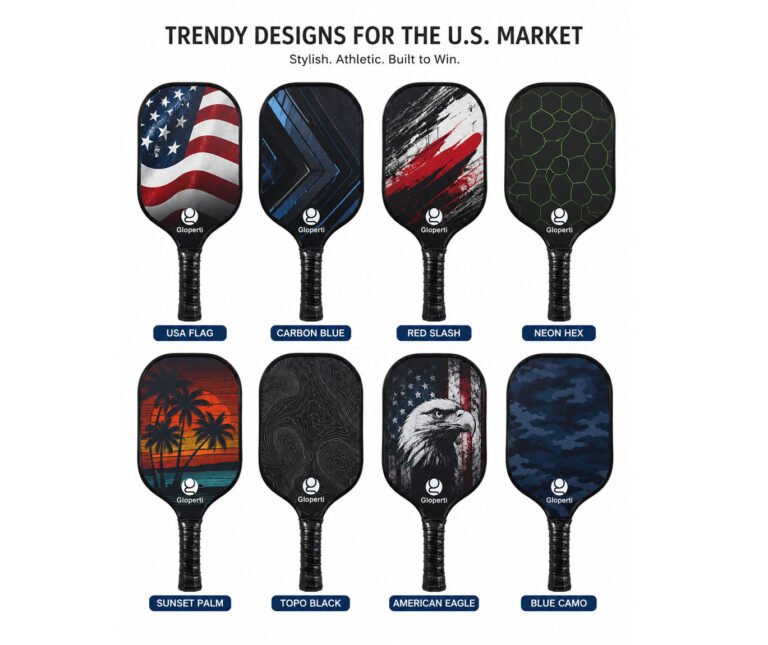
Artwork can preserve much of the carbon weave, use a partial color treatment or cover the face with a full graphic. Packaging should clearly state verified material and dimensions without making unsupported performance or approval claims.
- 12K face, resin appearance and weave-orientation approval
- PP honeycomb core, optional perimeter foam and edge structure
- Standard, widebody, hybrid and elongated paddle geometry
- Peel-ply, textured, coated, partial-print or full-print finishes
- Target weight range, grip size, handle length and colorway
- Cover, box, label, model card and export protection
Designed for carbon-paddle buyers
Build clear control, all-court and power models.
Control material and batch expectations.
Present visible carbon value accurately.
Coordinate product, artwork and packaging.
How Gloperti Addresses 12K Carbon Buyer Concerns
Our supply process emphasizes material clarity, approved appearance, realistic tolerances and protected delivery.
Pilot Before Scaling
Selected projects can begin around 50 pieces, supporting sample validation and controlled market testing before larger orders.
Approve Real Materials
Approve the actual 12K face, weave appearance, texture, construction, weight, handle, grip, artwork and packaging.
Inspect Visible & Measurable Details
Five QC staff support incoming material, process and finished-goods checks against agreed project references.
Plan 12K Carbon Models by Player Benefit and Price
12K carbon paddle programs may include cold-pressed control paddles, thermoformed all-court paddles, elongated power paddles, widebody forgiveness models, hybrid shapes, foam-enhanced structures and multiple core thicknesses.
Procurement teams should avoid treating carbon tow count as the only performance variable. Face layup, resin, core, thickness, shape, handle, perimeter, surface and weight distribution all influence feel. A clear specification protects both buyer expectations and supplier execution.
Cosmetic standards are also important. Carbon weave is a visible material feature, so alignment, print opacity, coating, gloss level and protection during packing influence customer perception. Acceptable appearance should be agreed during sampling.
Related sourcing solutions include woven carbon paddles, raw 12K carbon paddles, textured 12K paddles, thermoformed 12K paddles, 12K control paddles, 12K power paddles and private-label 12K carbon collections.
12K Carbon Pickleball Paddle Supplier FAQ
Direct answers about 12K material verification, weave variation, surface texture, construction, weight, MOQ, claims and packaging.
Ready to Source 12K Carbon Paddles with Fewer Surprises?
Send your target player, construction, thickness, shape, weight range, surface, artwork, quantity and packaging. We will prepare a 12K carbon paddle proposal and quotation.