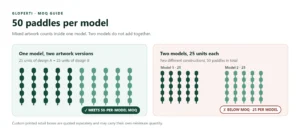
Two paddle quotations can specify the same carbon face and 16 mm thickness while describing very different interiors. When comparing a foam core vs honeycomb core pickleball paddle, the first purchasing decision is to establish what each supplier is actually offering.
Quick answer: A full foam core uses engineered foam in the main core area, while a honeycomb core uses a cellular structure, commonly polypropylene. A honeycomb paddle with perimeter foam remains a honeycomb-based construction. For OEM buyers, compare documented structures, matched quotations, and finished samples; neither core label guarantees better performance or durability.
Start with a suitable existing honeycomb platform when it meets your product brief and launch budget. Include a documented full foam platform in sampling when its construction addresses a specific product goal. This guide explains the differences, the cost questions to ask, and the records needed to approve samples. For a broader overview, see our guide to pickleball paddle face and core materials.
What Is the Difference Between Foam and Honeycomb Paddle Cores?
Key Takeaway for Buyers: Full foam, PP honeycomb, and honeycomb with perimeter foam describe different internal structures; identify the central core and surrounding materials before comparing offers.
What is a polypropylene honeycomb core pickleball paddle?
A polypropylene honeycomb core pickleball paddle has a network of thin cell walls and hollow spaces between its face layers. The core supports the faces while helping limit weight. “PP honeycomb” identifies a material and structural category, but it does not specify cell size, wall geometry, core density, thickness, or the bond to the faces.
Ask for the supplier’s controlled core specification rather than accepting “polymer core” as a complete description. Two honeycomb paddles can differ in their core geometry, reinforcement, face layup, and weight distribution, even when the published thickness is identical.
What is a full foam core pickleball paddle?
A full foam core pickleball paddle uses engineered foam in the main core area instead of a conventional honeycomb lattice. The construction may combine foam grades, rings, channels, or supporting components. “Full foam” therefore needs a section drawing or written construction description; it does not necessarily mean a single uniform slab.
Commercial examples show why precise wording matters. CRBN describes TruFoam as a 100% foam core, while Selkirk describes its OMNI core system using a PureFoam floating center, an inner PureFoam ring, and an outer EVA ring. These are manufacturer descriptions of specific products, not independent evidence that every foam design performs similarly.
Foam-injected vs full foam pickleball paddles
A paddle can contain foam around a honeycomb center. That foam may serve a perimeter or reinforcement function while the main hitting area remains honeycomb. “Foam-injected,” “foam-enhanced,” and “foam core” should not be treated as interchangeable specifications.
Request a labeled cross-section identifying the central core, any surrounding foam, face layers, frame, and handle transition. A photograph helps show where materials are located, but material identity and grade still need supporting records.
Is thermoforming a core material?
No. Core material and manufacturing route describe separate parts of a paddle specification. A thermoformed label alone does not tell you whether the center is honeycomb or foam. Confirm the actual materials and assembly process separately. Our thermoformed vs cold-pressed pickleball paddles guide covers the construction-process comparison.
Real Sample Photos: Foam Core and Honeycomb Core
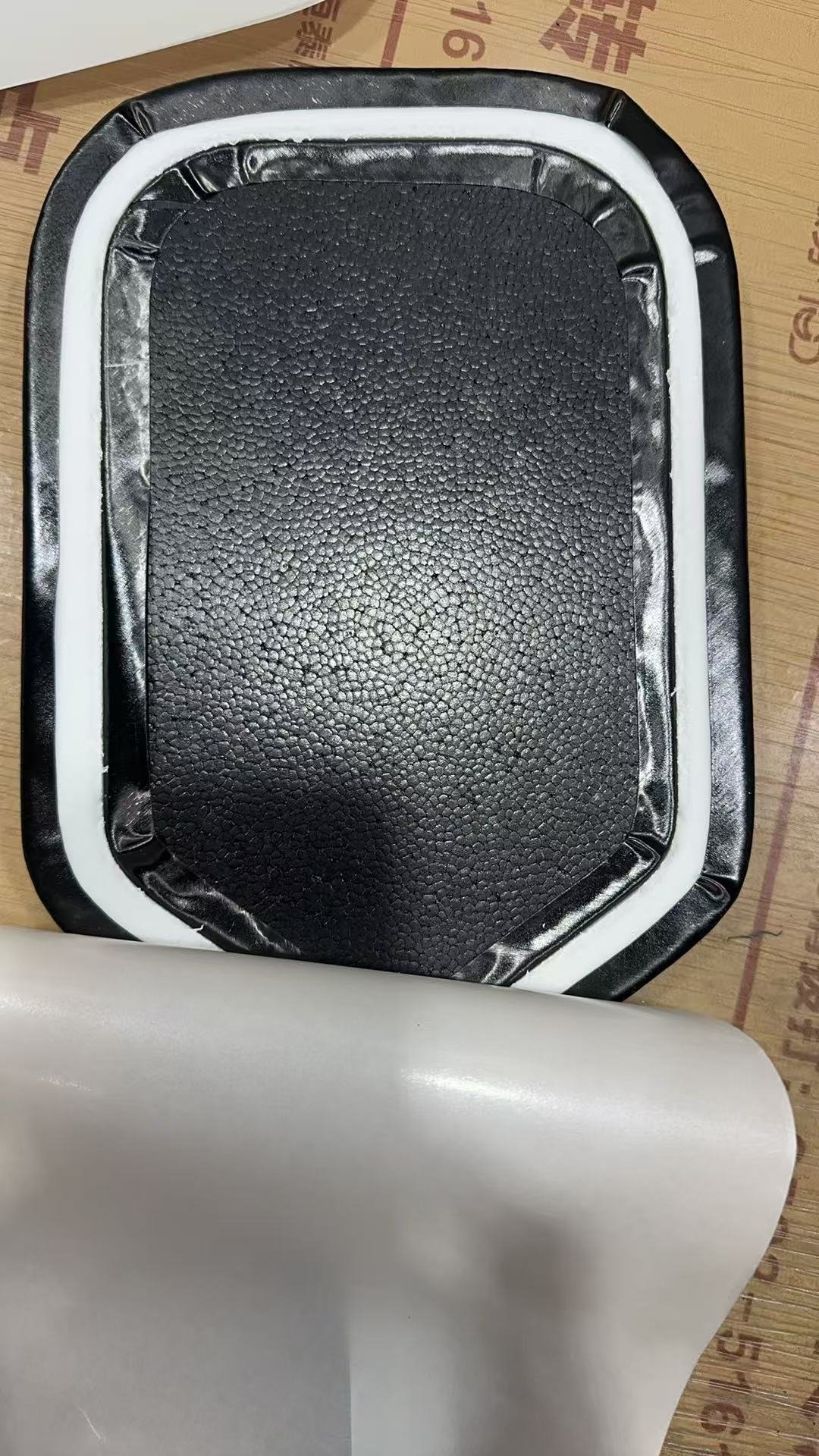
Gloperti foam core sample with the central core and perimeter ring exposed.
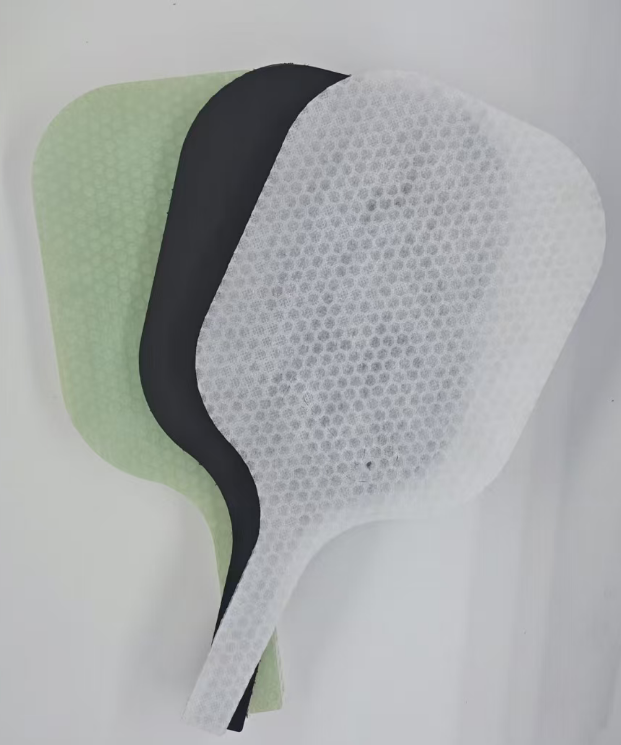
Separated layers from a Gloperti honeycomb-core paddle sample, showing the cellular core and adjacent layers.
These factory sample photos show internal views of the two core constructions identified by Gloperti. The white perimeter ring in the foam core sample is shown without assigning a material grade. The photographed foam-core sample illustrates construction only; production availability and specifications require project-specific confirmation. They are different assemblies, not a controlled performance comparison; no honeycomb-with-perimeter-foam example is pictured.
Foam Core vs Honeycomb Core Pickleball Paddles at a Glance
| Comparison point | Full foam core | PP honeycomb core | Buyer verification |
|---|---|---|---|
| Main structure | Engineered foam, potentially with multiple regions or grades. | Cellular PP structure; may have added perimeter foam. | Labeled section and controlled material specification. |
| Specification variables | Foam identity, density, grade, thickness, and regional layout. | Core grade, cell geometry, density, thickness, and reinforcement. | Identify which variables the supplier controls for repeat orders. |
| Feel and rebound | Depend on foam response and the complete assembly. | Depend on cell structure and the complete assembly. | Compare finished samples under the same evaluation conditions. |
| Durability review | Check permanent deformation, bond condition, and response changes. | Check crushed cells, bond condition, and response changes. | Agree on test methods and acceptance criteria. |
| Cost | Depends on platform, materials, assembly, tooling, and yield. | Depends on the same factors; an existing platform may suit a budget launch. | Request matched quotations at the same order quantity. |
| Tournament approval | Must be checked for the specific model and intended competition. | Must be checked for the specific model and intended competition. | Verify the relevant current equipment list and requirements. |
Use this table to prepare a sample request. It is a comparison framework, not a ranking of measured performance.
How Do Core Materials Affect Feel, Power, Spin, and Sound?
Core structure contributes to impact response, while the faces, frame, surface finish, and mass distribution also affect the finished paddle. Compare specific models using defined tasks and record configuration differences.
Feel and control: define the response you want
“Soft,” “solid,” and “controlled” can mean different things to different players. One buyer may want less vibration at impact; another may want predictable rebound on resets. Translate these descriptions into evaluation tasks before comparing samples.
Use short drops, resets against incoming pace, blocks, and volleys to collect structured player feedback. Record perceived comfort separately from consistency of shot depth. Keep paddle shape, face finish, weight, balance, and thickness as similar as the available platforms allow.
Power and pop: test the finished paddle
Do not assume full foam always produces more power, or honeycomb always produces less. Foam grade, core geometry, face stiffness, frame design, and mass distribution can all change the response. A material name does not establish a rebound value.
If power is part of your product positioning, define the measurement or playing task. Drive speed, punch-volley response, and perceived effort are different observations. Where instruments are available, record the test setup and measured results; where they are not, label player impressions as subjective feedback.
Spin: keep the face specification visible
A core comparison should not hide surface differences. Face texture, coatings, printing, wear, and the complete impact response can influence a spin comparison. If one sample has a different finish, you cannot attribute the observed difference to the core alone.
Approve the hitting surface and graphic coverage alongside the core. Support any numerical spin claim with an appropriate test method rather than hand feel or a supplier’s broad marketing statement.
Sound and vibration: avoid blanket claims
Foam may be used to tune damping, but its presence does not establish that a finished paddle is quieter or more comfortable than another model. Compare sound under the same conditions, including ball model, impact task, microphone position, and surroundings when measuring noise.
Player comfort feedback is useful for product selection, but it does not establish medical benefits. Avoid claims that a core prevents injury or treats elbow pain without suitable evidence.
EPP and EVA: material names need grades and locations
EPP means expanded polypropylene; EVA means ethylene-vinyl acetate. An EPP foam pickleball paddle core is different in structure from PP honeycomb even though both descriptions include polypropylene. EVA can appear in a different region or role from the central foam.
Neither abbreviation specifies density, compression response, or the assembled paddle’s performance. Ask for the actual grade or controlled supplier specification, density range, thickness, and location. If detailed formulation is proprietary, agree on traceability, acceptance limits, and written approval before substitutions.
Which Core Is More Durable?
Key Takeaway for Buyers: Neither core category guarantees a longer lifespan; evaluate deformation, internal condition, bonding, and response changes under a defined procedure.
Pickleball paddle core durability depends on the core, face-to-core bond, frame, manufacturing quality, and use conditions.
Honeycomb cell walls can be damaged or crushed. Foam can develop permanent deformation or changes in response. Both assemblies can also have bonding or frame problems. Removing a honeycomb structure removes that particular cell-wall failure mechanism; it does not prove that every other failure mode has been eliminated.
What should an OEM durability review include?
- Baseline records: sample code, specification revision, dimensions, weight, and initial observations.
- Defined exposure: the agreed repeated-impact, play-use, or conditioning procedure.
- Follow-up checks: local soft spots, deformation, separation, handle movement, and changes in measured response where tested.
- Acceptance decision: documented limits and a clear remedy if the supplied batch fails those limits.
A tap sound or visual check may identify a concern, but neither alone proves internal condition or useful life. Ask what additional inspection is appropriate for the suspected problem. Our pickleball paddle quality control checklist provides a broader framework for agreeing production checks.
How Does Core Choice Affect OEM Costs?
Core choice affects OEM cost through material preparation, assembly, reinforcement where specified, tooling, and inspection. A price comparison becomes useful when the quotation scope is aligned. A foam sample with different face layers, a reinforced frame, and premium packaging cannot establish the price difference caused by its core.
An existing PP honeycomb platform may provide an economical starting point, but this is a sourcing option to investigate rather than a fixed price rule. A full foam project may involve different material preparation, assembly, tooling, or quality-control requirements. Ask the factory which items change for your proposed specification.
| Quotation item | What to align or disclose |
|---|---|
| Product specification | Face layup and finish, core construction, shape, thickness, weight range, handle, grip, and edge treatment. |
| Order basis | Quantity per model, graphic variations, packaging, accessories, and inspection scope. |
| Development charges | Samples, tooling, revisions, destructive checks, and external testing where required. |
| Delivery basis | Trade term, delivery scope, lead time, quotation validity, and freight inclusion or exclusion. |
| Repeat-order controls | Approved materials, change approval, traceability, tolerances, and defect remedy. |
Request unit cost and one-time development charges separately. Confirm whether an existing platform meets the brief before committing to new tooling. For more detail, review our pickleball paddle manufacturing costs guide.
How Should Buyers Compare Foam and Honeycomb Paddle Samples?
Key Takeaway for Buyers: Use a shared brief, identify construction differences, measure several samples where practical, and approve a reference sample together with a written specification.
1. Create one sample brief
State your target customer, intended market, retail positioning, estimated order quantity, and required product characteristics. Include dimensions, face finish, thickness, weight range, handle requirements, packaging, and any applicable approval plan.
For example, a brand developing a 16 mm all-court paddle could request one PP honeycomb construction and one full foam construction with similar shape, surface finish, weight, and balance. This is an illustrative purchasing brief, not a Gloperti test result or a promise that identical platforms are available.
2. Identify every structural difference
Assign each sample a model code and revision. Obtain the central-core specification, foam locations, face construction description, and frame details. Record differences the factory cannot match. Comparing two commercial models helps select a product; isolating the effect of core material requires tighter controls.
3. Measure several units where practical
Record weight, dimensions, thickness at agreed positions, and balance using consistent methods. Include swing weight or twist weight when those measurements are available and relevant to your brief. Review variation across units rather than relying on one selected sample.
A heavier or differently balanced sample can change the player’s impression before core response is considered. Keep handling data alongside the evaluation notes.
Factory Sample Inspection Photos
These photos document Gloperti’s weight and dimension checks on samples from the same batch. The weight image shows a 230 g scale reading with the visible handle wrapping included; the other images show width and overall-length checks.
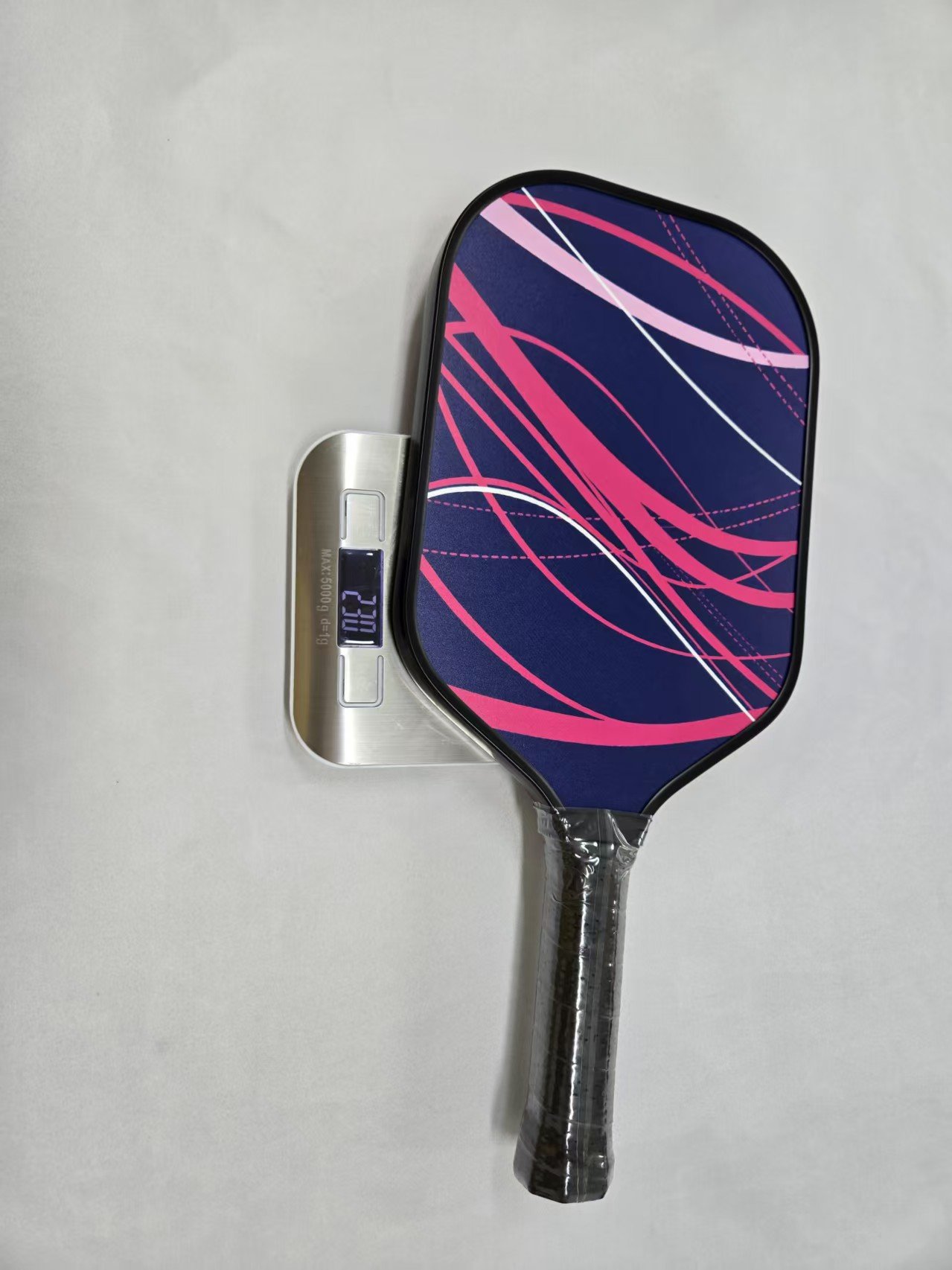
Scale display: 230 g, with the handle wrapping shown.
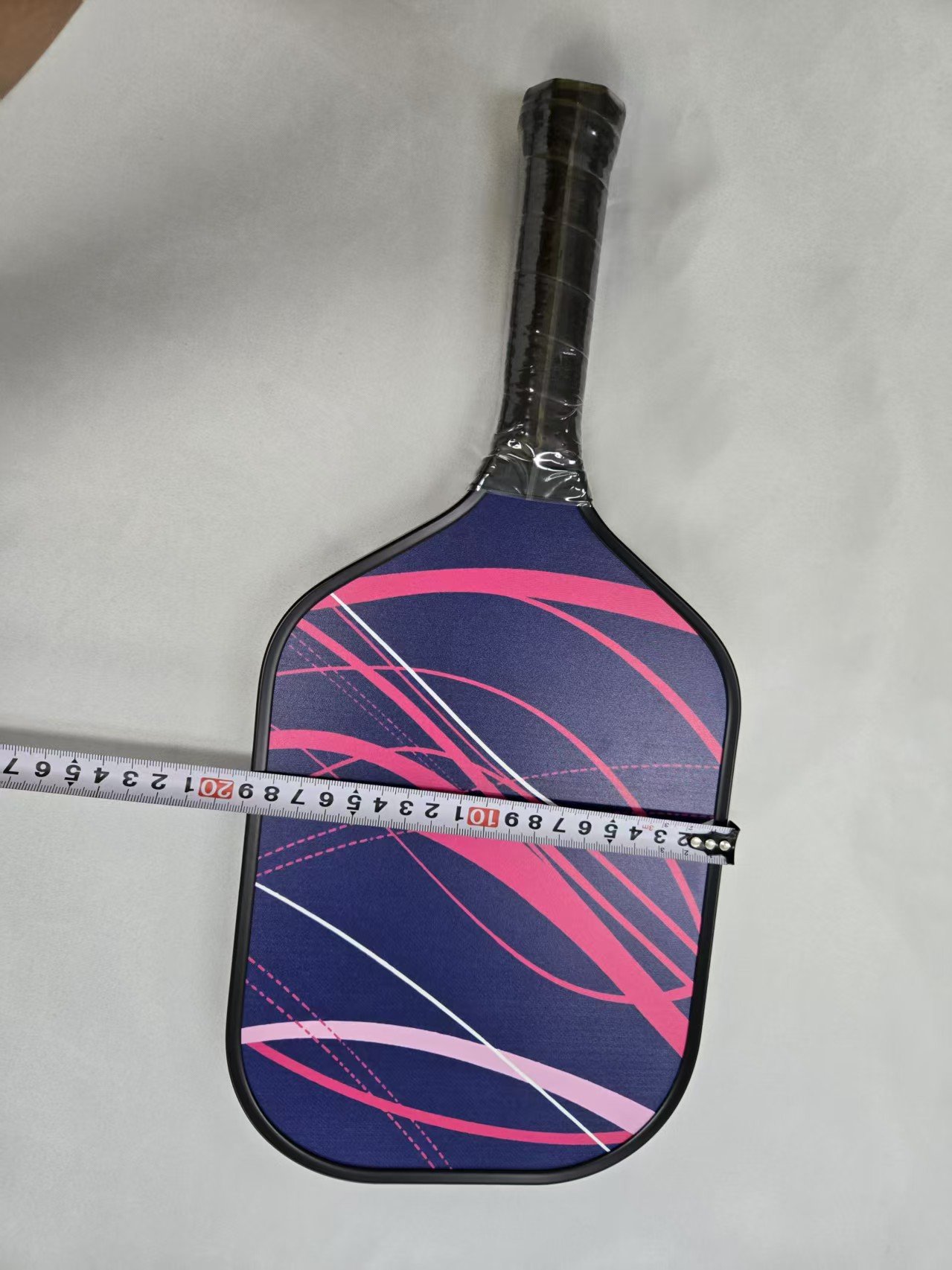
Width checked with a measuring tape.
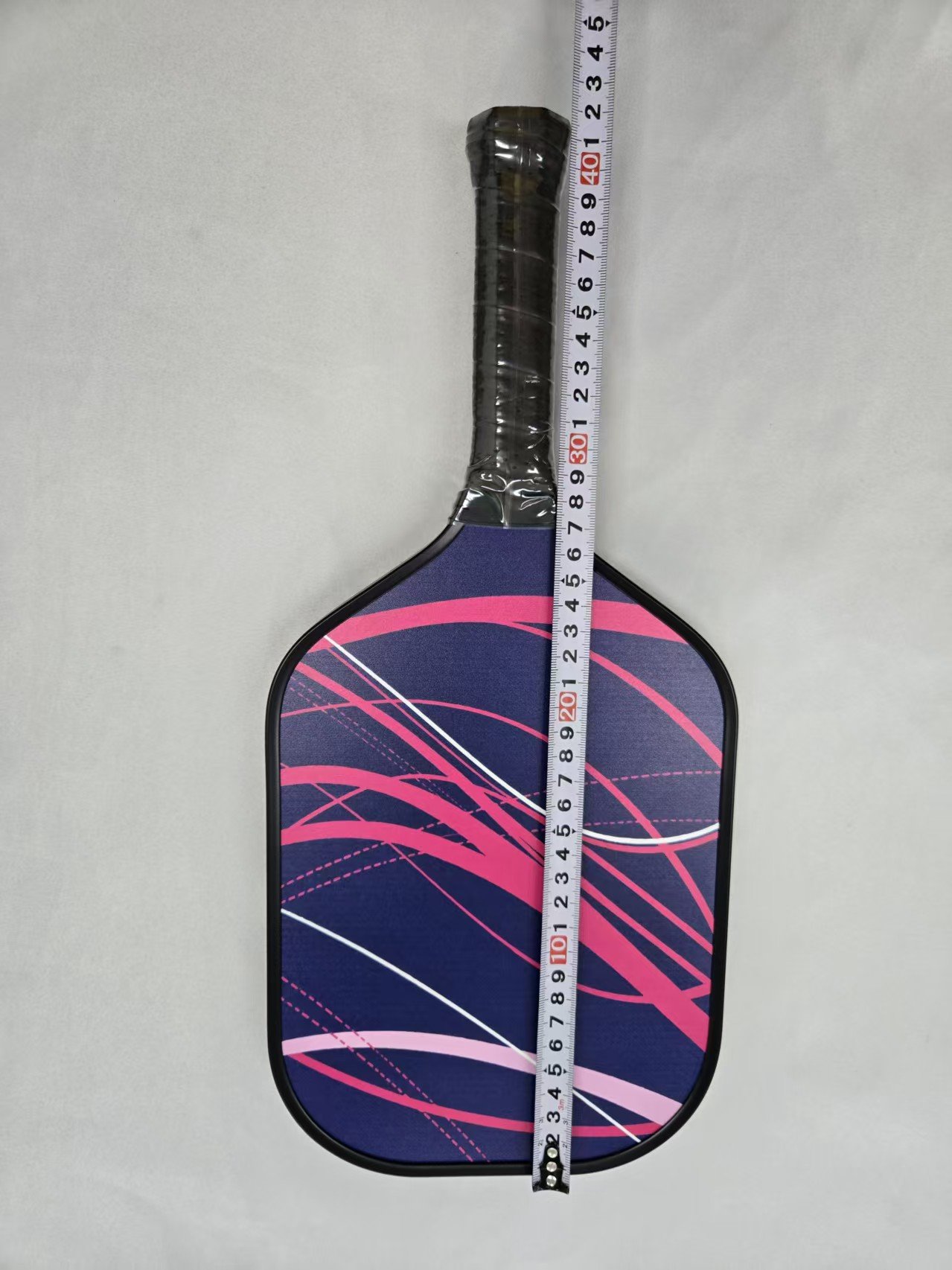
Overall length checked with a measuring tape.
The 230 g reading is for the photographed sample as inspected, including the visible handle wrapping; it is not a net-weight specification or evidence of batch-wide weight consistency. Record sample IDs and measurements from multiple units to evaluate variation. Measure thickness with a suitable gauge at agreed locations. These images document basic checks, not a matched foam-versus-honeycomb performance test or a batch acceptance decision.
4. Evaluate response and condition consistently
Use the same ball model, comparable court conditions, and the same tasks for each sample. Record soft-shot feedback, blocks, counters, and drives separately. Include repeat-use evaluation if durability is a product priority, with the procedure and acceptance rules agreed in advance.
5. Approve a specification and reference sample together
The approved sample should correspond to a written specification revision. Establish which materials, density ranges, cell specifications, bonding details, and finishes require approval before change. Retain the sample identification and acceptance records for repeat orders.
Keep the inspection photographs together with sample codes, material records, and the specification revision. Photos document structure and basic checks; they do not independently establish chemistry, performance, or lifespan.
Which Core Fits Your Paddle Product Line?
| Your objective | Recommended purchasing approach |
|---|---|
| A value-priced starter line | Sample an existing honeycomb platform first if it meets the brief, then verify the complete specification and launch cost. |
| A differentiated foam-based range | Request a documented full foam design and check whether its sample results support the planned positioning. |
| A specific power or control response | Evaluate suitable models from both core categories under the same criteria. |
| Consistent repeat orders | Prioritize controlled materials, sample variation, traceability, and change approval for either structure. |
| A tournament-focused product | Confirm the relevant competition requirements, model approval route, testing responsibility, and budget before launch. |
OEM pickleball paddle core selection works best when each construction is judged against the same business brief. If a platform meets your performance, quality, and commercial requirements, its core label does not need to serve as a universal ranking.
Check approval for the exact model
For products intended for USA Pickleball-sanctioned play, consult the current USA Pickleball Approved Paddle List and applicable requirements. A supplier’s experience with another approved paddle does not establish approval for your proposed branded model. Confirm the model identity and approval responsibilities before using approval claims in listings or packaging.
Frequently Asked Questions
Is a foam core pickleball paddle better than honeycomb?
Neither is automatically better. Compare the finished construction against the target feel, handling, quality, price, and approval needs. A documented sample comparison is more useful than a core-category ranking.
Is foam-injected the same as full foam?
No. A foam-injected description can refer to foam around a honeycomb center or another specified region. Full foam generally describes a foam-based main core. Ask for a section drawing and material specification to establish the actual construction.
Is an EPP foam core the same as a polypropylene honeycomb core?
No. EPP is expanded polypropylene foam, while PP honeycomb is a cellular lattice structure. Sharing a polymer family does not make their architecture or finished paddle response identical.
Do foam cores prevent core crush?
A full foam design does not contain conventional honeycomb cell walls to crush. That does not establish immunity to permanent deformation, bonding failure, or other damage. Verify the specific design using an agreed durability evaluation.
Are foam core pickleball paddles tournament approved?
Approval must be checked for the specific model and intended competition. Do not infer approval or rejection from the core material alone; use the relevant current equipment list and requirements.
What should I include in an OEM sample request?
Include your intended market, target customer, quantity, shape, face specification, core construction, thickness, weight range, handle dimensions, finish, packaging, and testing or approval requirements. Ask the supplier to identify any departures from the brief.
Sources and Scope
This guide provides an OEM comparison framework, not a controlled foam-versus-honeycomb performance test. Brand examples describe those manufacturers’ stated constructions. No numerical performance, lifespan, or cost advantage is claimed for a core category.