Best Pickleball Paddles in 2026: From Beginner Choices to Carbon Fiber Performance
2026 Buyer’s Guide: A practical comparison of beginner, carbon fiber, all-court, retail, and custom paddle options.
- Introduction: Finding the Right Paddle in a Crowded 2026 Market
- What Makes a Pickleball Paddle “Best”?
- Best Pickleball Paddle for Beginners
- Carbon Fiber Pickleball Paddles: Why They Remain Popular
- 6.0 Pickleball Paddle Options and the All-Court Category
- HEAD Radical Elite Pickleball Paddle: Who Is It For?
- J2K Pickleball Paddle and the Hybrid-Shape Trend
- JOOLA Scorpeus and the “Double Vision” Search Term
- Dick's Sporting Goods Pickleball Paddles: Shopping Advantages and Limits
- Custom Pickleball Paddles for Brands, Clubs, and Promotions
- How to Compare Paddle Specifications Without Getting Lost
- Recommended Selection Framework by Player Type
- Common Buying Mistakes to Avoid
- Final Verdict: The Best Paddle Is the Best Match
- Frequently Asked Questions
Introduction: Finding the Right Paddle in a Crowded 2026 Market
Choosing the best paddles for pickleball is no longer a simple matter of buying the lightest model on the shelf. The 2026 market includes inexpensive starter paddles, forgiving wide-body designs, raw carbon control paddles, thermoformed power paddles, hybrid shapes, aramid-fiber faces, and fully custom pickleball paddles for clubs, brands, retailers, and corporate programs. That variety is good for players, but it also makes comparison harder.
The right paddle should match the player’s level, swing speed, preferred court position, physical comfort, and budget. A new player usually benefits from a generous sweet spot and predictable response. An intermediate player may want more spin and stability. An advanced player may care about hand speed, launch angle, dwell time, swing weight, and the balance between counter power and soft-game control.
This guide explains how to compare modern paddle categories without getting trapped by marketing language. It also discusses frequently searched models and shopping terms, including the 6.0 pickleball paddle category, the HEAD Radical Elite pickleball paddle, the J2K pickleball paddle, JOOLA Scorpeus models, and Dick's Sporting Goods pickleball paddles. Product lines and availability change, so buyers should always confirm the exact model name, approval status, warranty, dimensions, and current specifications before ordering.
What Makes a Pickleball Paddle “Best”?
There is no single paddle that is best for every player. A paddle becomes a strong choice when its design supports the player’s actual needs.
First, consider forgiveness. A forgiving paddle maintains acceptable speed and direction when the ball contacts outside the center. Wider faces, stable perimeter weighting, and well-supported cores can help. Forgiveness is especially important for beginners, doubles players who block fast drives, and anyone who wants confidence during quick exchanges at the kitchen line.
Second, evaluate control. Control is not simply softness. It includes predictable launch, consistent response, the ability to take pace off the ball, and enough dwell to shape dinks, drops, and resets. Thicker cores are often associated with a more controlled feel, although face material, core construction, edge design, and weight distribution also matter.
Third, look at usable power. A powerful paddle should create depth and put-away speed without becoming difficult to manage. Players with compact swings may appreciate added rebound, while players with fast tennis-style swings may prefer a more controlled platform.
Finally, check comfort. Grip circumference, handle length, static weight, swing weight, vibration response, and balance can affect fatigue. The best paddles for pickleball should feel manageable through a full session, not only during five impressive warm-up drives.
Best Pickleball Paddle for Beginners
The best pickleball paddle for beginners should make learning easier rather than forcing the player to compensate for a demanding design. A beginner-friendly paddle normally has a medium weight, a comfortable grip, a large effective sweet spot, and a balanced combination of power and control.
New players should avoid choosing only by maximum spin or maximum power. Early development depends more on repeatable contact, basic depth control, and confidence at the net. A highly reactive paddle may feel exciting during hard swings but can make dinks and resets unpredictable. Likewise, an extremely soft paddle may require more effort to send the ball deep.
A traditional or slightly elongated shape is often a safe starting point. Standard wide-body paddles are usually forgiving in hand battles and blocks. Hybrid shapes can add reach while keeping a broad hitting area. Very long, narrow paddles may offer reach and leverage but can be less forgiving across the face.
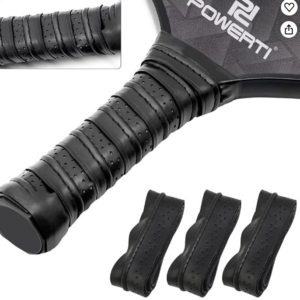
Beginners should also examine the grip. A grip that is too large can slow wrist movement; one that is too small may encourage over-gripping. Overgrip can fine-tune size and moisture control. For most first-time buyers, a comfortable all-court paddle from a reputable seller is a better investment than an expensive specialized model.
Carbon Fiber Pickleball Paddles: Why They Remain Popular
Carbon fiber pickleball paddles continue to attract players because they can combine surface durability, spin potential, stability, and a refined feel. However, “carbon fiber” is a broad label. Different products may use raw carbon fabric, woven carbon, painted carbon-like graphics, carbon composite layers, or hybrid laminates.
Raw carbon surfaces are popular because their texture can help generate spin when the player brushes the ball. Woven constructions such as 3K, 12K, or 18K carbon can be tuned for different stiffness, appearance, and response. The number alone does not guarantee quality. Resin system, layup direction, face thickness, bonding, curing, core quality, and finishing consistency are equally important.
Thermoformed carbon fiber pickleball paddles often use heat and pressure to create a more unified structure around the face and perimeter. This can improve stability and power, but performance varies by design. Buyers should not assume that every thermoformed paddle has the same feel or durability.
For B2B buyers, carbon paddle sourcing should include material verification, weight tolerance, surface consistency, core bonding tests, edge-guard inspection, print adhesion, and batch sampling. A good factory should be able to explain the construction rather than relying on vague phrases such as “professional carbon.”
6.0 Pickleball Paddle Options and the All-Court Category
Searches for a 6.0 pickleball paddle commonly refer to Six Zero, a brand known for all-court and carbon-face options. In the broader market, the phrase also reflects demand for paddles that sit between pure control and pure power.
An all-court paddle is designed to perform acceptably in every phase: serves, returns, third-shot drops, drives, blocks, counters, dinks, and overheads. This category is ideal for intermediate players who are still refining their identity or for advanced players who do not want a highly specialized tool.
When comparing Six Zero or similar all-court paddles, focus on shape, thickness, swing weight, face material, and generation. A 14 mm version may feel faster and more direct, while a 16 mm version may feel more stable and controlled. An elongated version can add reach and leverage but may move more slowly in rapid exchanges.
The brand name should start the evaluation, not end it. Compare the exact product rather than assuming all models from one company play alike. Read the current manufacturer description, verify approval listings where competition legality matters, and purchase from an authorized channel when warranty protection is important.
HEAD Radical Elite Pickleball Paddle: Who Is It For?
The HEAD Radical Elite pickleball paddle is often considered by recreational and developing players who want a recognizable brand and an accessible all-around design. HEAD describes the Radical Elite as a paddle for a wide range of players, with a larger sweet spot, a thicker core, and an ergonomic grip.
That positioning makes it relevant for beginners, social players, and value-focused buyers. It may also suit tennis or racquet-sport players who want a familiar grip shape and a paddle that does not require advanced technique to produce useful depth.
Before purchasing, compare the exact year and regional version because product listings can change. Confirm weight, grip size, face material, warranty, and whether the offer is a single paddle or a bundle. A lower-priced paddle can be an excellent choice when it helps a player develop consistent mechanics, even if it does not use the newest premium face technology.
For retailers and private-label brands, this product category demonstrates the value of a clear entry-to-intermediate proposition: forgiving shape, comfortable handle, recognizable styling, and a price that encourages first-time purchase.
J2K Pickleball Paddle and the Hybrid-Shape Trend
The J2K pickleball paddle is associated with Honolulu Pickleball Company and is frequently discussed as a hybrid all-court option. Hybrid shapes aim to combine some of the reach and leverage of an elongated paddle with more width and forgiveness than a narrow elongated design.
This category appeals to players who want a large usable hitting area without giving up too much reach. It can work well for doubles players who need stability on blocks and counters but still want enough leverage for serves and drives.
When evaluating a J2K or another hybrid paddle, pay attention to the face construction, core thickness, total weight, balance, and handle dimensions. Two paddles with nearly identical outlines can feel very different if one carries more mass toward the head or uses a stiffer face.
Players moving from a standard shape should test hand speed at the kitchen, not just groundstroke power. Players moving from an elongated shape should evaluate whether the wider face improves defensive consistency. The best choice is the one that reduces unforced errors while preserving the shots the player relies on.
JOOLA Scorpeus and the “Double Vision” Search Term
The keyword “joola scorpeus double vision pickleball paddle” appears in consumer searches, but shoppers should carefully verify the listing title. JOOLA’s Scorpeus family includes multiple generations, thicknesses, athlete editions, and technology packages. A retailer may use promotional wording, bundle language, or an informal descriptor that is not the official model name.
The Scorpeus shape is generally positioned as a wider, forgiving platform suited to doubles, blocks, resets, counters, and fast exchanges near the net. JOOLA’s current descriptions emphasize a broad sweet spot and stability. Those characteristics can appeal to defensive players, control-oriented players, and anyone who prefers a standard shape over a narrow elongated paddle.
Because JOOLA releases and updates products, buyers should confirm the exact generation and approval status. Compare the official product page with the retailer listing, and inspect the SKU, thickness, technology name, warranty terms, and included accessories. This is particularly important when a discounted listing uses an older image or a title that combines several search phrases.
The larger lesson is simple: search keywords are not always precise product identities. Verify before buying.
Dick's Sporting Goods Pickleball Paddles: Shopping Advantages and Limits
Dick's Sporting Goods pickleball paddles are popular searches because many buyers want to see a paddle in person, compare grip feel, and purchase from a familiar national retailer. Physical retail can be useful for beginners who are unsure about handle circumference, weight, or face size.
A large retailer may carry entry-level sets, established sporting-goods brands, premium performance paddles, balls, bags, shoes, and replacement grips. Promotions and inventory vary by store and season. Online listings may offer a wider selection than the nearest location.
The main advantage is convenience. The limitation is that shelf availability does not automatically identify the best match. A buyer should still compare construction, shape, thickness, weight range, return policy, warranty, and intended player level.
When possible, hold several paddles in a neutral ready position and simulate quick volleys. Check whether the grip feels secure without squeezing. Look for clean edge-guard alignment and a flat, undamaged face. For high-priced models, verify that the seller is authorized and that the warranty applies.
Custom Pickleball Paddles for Brands, Clubs, and Promotions
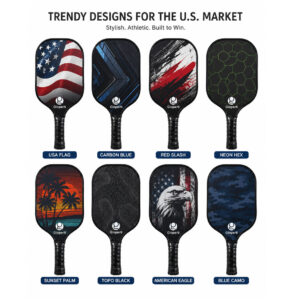
Custom pickleball paddles serve a different purpose from standard retail paddles. They can be developed for sports brands, clubs, academies, tournaments, corporate gifts, resorts, schools, and promotional campaigns. Customization may include face graphics, logo placement, grip color, edge-guard color, packaging, paddle shape, thickness, surface material, and accessory bundles.
The first step is defining the target user. A low-cost fiberglass set for a resort is different from a raw carbon competition paddle for an emerging performance brand. The buyer should specify target price, expected order quantity, desired certification, sales channel, and packaging requirements.
For OEM and ODM projects, request a pre-production sample and a golden sample for mass-production comparison. Confirm artwork dimensions, color method, print durability, weight tolerance, handle construction, core density, edge bonding, and final inspection standards. UV printing supports detailed custom graphics, while surface texture and printed layers must be controlled so branding does not compromise performance.
A reliable supplier should provide clear timelines for design, sampling, testing, production, and shipment. Customization is most successful when product engineering and branding are planned together.
How to Compare Paddle Specifications Without Getting Lost
Start with five practical specifications: shape, thickness, static weight, swing weight, and grip dimensions.
Shape affects reach, sweet-spot geometry, and hand speed. Standard shapes are often quick and forgiving. Elongated shapes offer reach and leverage. Hybrid shapes attempt to balance both.
Thickness influences feel but does not act alone. Thicker cores are commonly associated with stability and control; thinner cores often feel more direct and powerful. Face stiffness and core design can reverse expectations, so testing remains valuable.
Static weight tells only part of the story. Two paddles can weigh the same but swing differently because their mass is distributed differently. Swing weight affects how heavy the paddle feels in motion. Twist weight relates to resistance against rotation on off-center hits.
Handle length matters for two-handed backhands and leverage. Grip circumference affects comfort and control. Players with hand or elbow sensitivity should prioritize manageable balance and a comfortable grip rather than chasing maximum power.
Finally, compare warranty, approval, seller reputation, and replacement support. A specification sheet cannot compensate for inconsistent manufacturing or poor service.
Recommended Selection Framework by Player Type
For beginners, choose forgiveness, comfort, and predictable depth. A medium-weight standard or hybrid paddle is usually a sensible starting point.
For control-oriented doubles players, prioritize stability, a broad sweet spot, and confidence on resets and blocks. Wider paddles and thicker cores often fit this profile.
For aggressive drivers, look for a responsive face, adequate swing speed, and enough stability to control hard contact. Power without directional consistency is not useful.
For former tennis players, a longer handle and hybrid or elongated shape may feel natural, but the player should still test kitchen speed and soft-game control.
For players with slower swings, moderate rebound can reduce effort. For players with fast swings, a controlled face may improve consistency.
For clubs and retailers, stock a simple ladder: beginner value, intermediate all-court, premium carbon control, and premium power. This makes customer guidance easier and reduces overlap.
For private-label buyers, develop around a defined customer rather than copying a popular paddle. A clear product brief leads to better sampling, more coherent marketing, and fewer quality disputes.
Common Buying Mistakes to Avoid
The first mistake is buying by appearance alone. Graphics matter, but they do not reveal balance, core quality, or consistency.
The second mistake is assuming expensive means suitable. Premium technology can be wasted if the paddle is too heavy, too reactive, or uncomfortable for the user.
The third mistake is relying on a single influencer review. Reviewers have different swing speeds, skill levels, preferences, and test methods. Use several sources and look for repeated observations.
The fourth mistake is confusing a family name with a specific model. JOOLA Scorpeus, Six Zero, HEAD Radical, and other lines may include several versions. Confirm the exact SKU and generation.
The fifth mistake is ignoring return and warranty terms. A paddle may feel different on court than it does in a store.
The sixth mistake is adding excessive lead or tungsten tape before understanding the original balance. Small changes can affect swing weight and hand speed. Modify gradually and stay within applicable competition rules.
The final mistake is ordering custom paddles without a detailed specification sheet and approved sample.
Final Verdict: The Best Paddle Is the Best Match
The 2026 paddle market offers more useful choices than ever, from affordable starter models to sophisticated carbon and hybrid constructions. The best paddles for pickleball are not defined by one brand, one material, or one review score. They are defined by fit.
Beginners should prioritize a comfortable, forgiving platform. Developing players should identify whether they need more control, spin, reach, or power. Advanced players should compare swing behavior, stability, and shot-specific performance. Retail buyers should verify exact model names, especially when search phrases such as joola scorpeus double vision pickleball paddle do not clearly match an official product title.
Products such as the HEAD Radical Elite pickleball paddle illustrate the value of accessible all-around design. The J2K pickleball paddle represents the popularity of hybrid all-court shapes. Six Zero models show the continued demand for balanced carbon performance. JOOLA Scorpeus models demonstrate the appeal of wide, stable paddles for doubles.
For brands and clubs, custom pickleball paddles create opportunities beyond retail comparison, but success depends on disciplined sampling and quality control. Choose with a clear player profile, verify the exact specifications, and let on-court consistency—not hype—make the final decision.
Frequently Asked Questions
What is the best pickleball paddle for beginners?
A medium-weight paddle with a comfortable grip, a broad sweet spot, and predictable control is usually the best starting point. Beginners should prioritize forgiveness and comfort over maximum power.
Are carbon fiber pickleball paddles better?
Carbon fiber paddles can offer strong spin potential, stability, and a refined feel, but quality depends on the complete construction. A well-made fiberglass or composite paddle may suit some players better.
What does 6.0 pickleball paddle mean?
The phrase commonly refers to Six Zero pickleball paddles. Buyers should compare the exact Six Zero model, thickness, shape, weight, and current specifications rather than treating the brand as one single paddle.
Is the HEAD Radical Elite pickleball paddle good for beginners?
It is positioned as an accessible paddle for a wide range of players, with a larger sweet spot, thicker core, and ergonomic grip. Buyers should confirm the current model specifications and personal comfort.
What type of player may like the J2K pickleball paddle?
Players seeking a hybrid all-court shape with a balance of reach, forgiveness, control, and pop may consider the J2K. Testing hand speed and balance is still important.
Is JOOLA Scorpeus Double Vision an official model name?
The search phrase may not match a precise official model name. JOOLA has several Scorpeus generations and variants, so shoppers should verify the SKU, thickness, technology, and official listing.
Can I buy good pickleball paddles at Dick's Sporting Goods?
Yes, large sporting-goods retailers can offer convenient access to beginner and premium paddles. Selection varies, so compare construction, warranty, return policy, and exact model details.
Can a manufacturer make fully custom pickleball paddles?
Yes. OEM and ODM suppliers can often customize graphics, materials, thickness, shape, grip, edge guard, packaging, and accessories. A detailed specification and approved sample are essential.
Need Custom Pickleball Paddles for Your Brand?
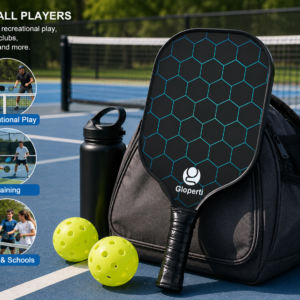
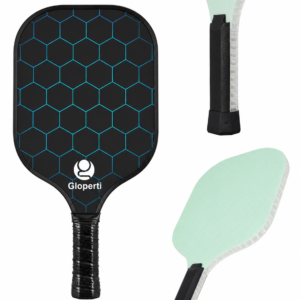
Gloperti supports OEM and ODM paddle development, custom graphics, material selection, packaging, and bulk production for clubs, retailers, and sports brands.
Ready to Source the Right Paddle?
Whether you need OEM/ODM manufacturing, wholesale pricing, or a custom branded paddle – we’re here to help. Get a free quote within 24 hours.