Introduction
Most new players are using the wrong paddle — and not because they’re lazy or didn’t do research. It’s because nobody has actually explained how to think about paddle selection when you’re just starting out.
Whether you’ve played five games or fifty, you’ve probably heard terms like control, power, spin, and thermoformed tossed around — but nobody breaks down what those really mean, or how they affect your learning curve.
If you’ve caught yourself wondering, “Should I just buy what the pros use?” — you’re not alone. But what works for us-Leigh Waters probably won’t help you build consistency right now. And that’s not a knock; it’s just reality.
What this video will do is cut through the noise and show you how to choose a paddle that makes the game easier, not harder.
【The Three Core Paddle Types】
We’ll cover three core paddle types: control, all-court, and power, and explain why most new players should avoid one of them. We’ll dig into the specs — swing weight, twist weight, and core thickness — not just tech jargon, but in plain English, so you know what to look for and what to skip.
I’ll also walk through the most common beginner mistakes, how to avoid Amazon traps, and what makes certain paddles genuinely better for learning. You don’t need a $250 pro frame to get started — but you do need to know what matters, what doesn’t, and how to pick something that works with your game, not against it.
【The Three Types Explained】
Control Paddles
These are the most forgiving. They typically use thicker 16mm cores, which give you more dwell time, a larger sweet spot, and a softer, more muted feel. They’re built to help you reset, drop, and dink — the slower, touch-based parts of the game that most new players struggle with. If you’re learning to keep the ball in play and reduce errors, this is the type of paddle that makes the biggest difference early on.
Power Paddles
These go the opposite direction. They prioritize pace, firmer contact, faster rebound, and a heavier swing feel. You’ll often see 14mm or thinner cores here, sometimes paired with stiffer frames or elongated shapes to boost speed and reach. But that power comes with a trade-off: you give up margin for error. If your timing or contact point is off, you’ll find yourself missing long, popping balls up, or struggling to reset under pressure.
All-Court Paddles
These sit in the middle of control and power. They blend a bit of both worlds, usually with a hybrid shape somewhere between 14mm and 16mm, and swing weights that don’t lean too far in either direction. If you’ve got some racket-sport background and are picking things up quickly, an all-court paddle can offer a more balanced feel without rushing your development.
【The Most Common Beginner Mistake】
Here’s the problem: a lot of players unknowingly start with a power paddle. Maybe it felt exciting on a first swing, maybe a friend recommended it, or maybe it just looked expensive and advanced. But what feels good on day one often becomes a liability once the rally slows down, the pressure ramps up, and you’re forced to control tempo. That’s when you realize the paddle isn’t helping you get better — it’s exposing your gaps.
And that’s why I always recommend starting with a paddle that helps you stay in control — not one that tests your precision with every shot, but one that gives you the stability to build real consistency. Because in the early stages, power without control just leads to faster errors.
【Not All Beginners Are the Same】
Most buying guides get this wrong: not all beginners are the same. There’s a huge difference between someone picking up a paddle for the first time and someone who played varsity tennis and is now learning pickleball. Both are technically beginners, but they need different tools.
If you’re just starting out — maybe you’ve played a few times, or you’re still figuring out how to keep score — you’re likely in the 2.0 to 3.0 range on the USA Pickleball scale. At that level, the priority is simple: keep the ball in play. You’re not hitting with consistent depth or spin, your contact point changes swing to swing, and you’re still learning how to reset or absorb pace. This is where a control paddle makes the game more playable — it gives you a larger sweet spot, more time on contact, and a better chance of making your shots land in bounds.
If you’re around the 3.0 to 3.5 range — maybe you’re winning more points, aiming your shots, and even starting to play in rec ladders or leagues — there’s some room to experiment. That’s where all-court paddles come in. They let you play a more aggressive style without giving up the forgiveness you need.
【The Biggest Myth】
The mistake most new players make is thinking a $250 paddle or a pro-endorsed model will make them better. But that’s like learning to golf with tour blades — it punishes every mishit and slows down your learning curve.
The better move is to start with something that helps you succeed with imperfect contact and real-world footwork. That’s what actually builds confidence and skill.
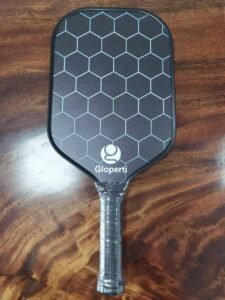
Pickleball is one of the easiest racket sports to start, but choosing the right equipment can make a big difference in how quickly new players improve. For beginners, the right paddle should feel comfortable, forgiving, lightweight, and easy to control. That is why many new players search for the best pickleball paddles for beginners before buying their first paddle.
A beginner-friendly pickleball paddle does not need to be the most expensive model on the market. Instead, it should provide a balanced combination of control, power, comfort, and durability. The goal is to help players learn basic strokes, serve consistently, return the ball with confidence, and enjoy the game from the first match.
This complete guide explains what beginners should look for when buying pickleball paddles, which materials work best, how weight affects performance, and what retailers or clubs should consider when sourcing beginner paddle sets.
Why Beginners Need the Right Pickleball Paddle
Many beginners make the mistake of using any available paddle without considering weight, grip, or paddle face material. A poorly matched paddle can make the game feel harder than it should be.
- A paddle that is too heavy can cause arm fatigue.
- A paddle that is too light may feel unstable during returns.
- A small sweet spot can make off-center hits harder to control.
- An uncomfortable grip can reduce accuracy and confidence.
- A low-quality surface may lose performance quickly.
The right beginner paddle helps players focus on learning the sport instead of fighting against their equipment.
Key Features of the best pickleball paddles for beginners
1. Lightweight or Midweight Design
For most beginners, a paddle that is easy to swing is the best choice. Lightweight and midweight paddles help players react faster, reduce fatigue, and control the ball more easily during long games.
| Paddle Weight | Beginner Benefit |
|---|---|
| Lightweight | Easy to swing, fast reaction, less fatigue |
| Midweight | Balanced power, control, and stability |
| Heavyweight | More power, but may be tiring for new players |
Many beginners perform best with a midweight paddle because it gives enough power without feeling too difficult to handle.
2. Large Sweet Spot
The sweet spot is the area of the paddle face that produces the best response when contacting the ball. A larger sweet spot gives beginners more forgiveness on off-center hits and helps maintain control during rallies.
3. Comfortable Grip Size
Grip comfort is extremely important for new players. A grip that fits well allows better wrist movement, smoother swings, and improved paddle control. Most beginner players prefer a grip circumference around 4.125 to 4.25 inches, but comfort should always be the final guide.
4. Durable Paddle Surface
Beginners often practice frequently as they learn the game, so durability matters. Fiberglass, graphite, and carbon fiber surfaces are all popular options, depending on budget and performance expectations.
5. Balanced Power and Control
A beginner paddle should not be too powerful or too soft. A balanced paddle makes it easier to serve, return, dink, and volley while still giving players enough pop to enjoy the game.
Best Paddle Materials for Beginners
Fiberglass Pickleball Paddles
Fiberglass paddles are a popular choice for beginners because they offer good power and a friendly price range. They are easy to use and provide a lively ball response, making them suitable for casual players and first-time buyers.
- Good power for new players
- Attractive price point
- Available in many colors and designs
- Suitable for recreational play
Graphite Pickleball Paddles
Graphite paddles are lightweight and responsive. They are often preferred by beginners who want fast reactions and smooth control without using a heavy paddle.
- Lightweight feel
- Quick paddle response
- Comfortable for longer games
- Good control for basic strokes
Carbon Fiber Pickleball Paddles
Carbon fiber paddles are usually selected by beginners who want a paddle they can continue using as their skills improve. Carbon fiber provides excellent durability, control, and spin potential.
- Strong control
- Long-lasting surface
- Better spin potential
- Good upgrade option for motivated beginners
Wood Pickleball Paddles
Wood paddles are often used by schools, camps, and community programs because they are affordable and durable. However, they are usually heavier and less comfortable than modern composite paddles.
Which Paddle Thickness Is Best for Beginners?
Paddle thickness affects control, power, and forgiveness. For beginners, thicker paddles are often easier to control because they provide a softer feel and a larger sweet spot.
- 16mm: Best for control, comfort, and forgiveness
- 14mm: Balanced choice for beginners who want both power and touch
- 13mm: Slightly faster response with more pop
- 10mm: Lightweight and powerful, but less forgiving
For most new players, a 14mm or 16mm paddle is a safe and practical choice.
Best Pickleball Paddle Shape for Beginners
Beginners usually benefit from a standard or wide-body paddle shape. These shapes offer a larger hitting area and more forgiveness, helping players keep the ball in play more consistently.
Standard Shape
A standard paddle shape gives balanced control, maneuverability, and forgiveness. It is one of the best choices for most beginners.
Wide-Body Shape
Wide-body paddles offer a larger sweet spot and are especially helpful for new players who are still developing accuracy.
Elongated Shape
Elongated paddles provide more reach and power, but they may have a smaller sweet spot. Beginners can use them, but standard shapes are usually easier to learn with.
Beginner Pickleball Paddle Sets
Many new players prefer buying a paddle set instead of a single paddle. A set usually includes two or four paddles, pickleballs, and sometimes a carry bag. This is ideal for families, schools, clubs, resorts, and recreational programs.
- Great for family play
- Convenient for new players
- Good gift option
- Suitable for schools and training programs
- Easy for retailers to sell as a complete starter package
How Retailers Can Sell Beginner Pickleball Paddles
Retailers should create a clear beginner paddle category with simple buying guidance. Many customers are new to pickleball and may not understand technical paddle terms. Clear descriptions, comparison charts, and paddle set options can improve conversion rates.
- Use beginner-friendly product titles
- Show paddle size and weight clearly
- Explain the benefit of each material
- Offer colorful designs for casual buyers
- Include paddle sets for family and gift customers
- Add FAQ sections to reduce buying hesitation
For independent websites, blogs like this can help attract search traffic from people looking for best pickleball paddles for beginners, pickleball paddles for sale, and recommended pickleball paddle topics.
Common Mistakes Beginners Should Avoid
- Buying the cheapest paddle only: A very low-cost paddle may feel uncomfortable and wear out quickly.
- Choosing a paddle that is too heavy: Heavy paddles can cause fatigue and slow reaction speed.
- Ignoring grip size: Grip comfort affects control and confidence.
- Picking an advanced paddle too soon: Some high-performance paddles may be less forgiving for new players.
- Not reading pickleball paddle reviews: Reviews can help buyers understand real playing feel and durability.
Frequently Asked Questions
What are the best pickleball paddles for beginners?
The best beginner paddles are lightweight or midweight, comfortable to grip, durable, and forgiving on off-center hits. Fiberglass, graphite, and carbon fiber paddles can all be good choices depending on budget and playing goals.
Should beginners use a lightweight or midweight paddle?
Most beginners do well with a lightweight or midweight paddle. Lightweight paddles are easy to swing, while midweight paddles provide better stability and power.
Is carbon fiber good for beginners?
Yes. Carbon fiber can be a good option for beginners who want a paddle with strong control, durability, and room to grow as their skills improve.
What paddle thickness is best for beginners?
A 14mm or 16mm paddle is usually a good choice for beginners because it offers a comfortable balance of control, forgiveness, and stability.
Are pickleball paddle sets good for beginners?
Yes. Paddle sets are convenient for new players, families, schools, clubs, and recreational programs because they often include paddles, balls, and a carry bag.
Looking for custom pickleball paddles for your brand, club, or store?
Gloperti offers OEM/ODM pickleball paddle manufacturing, including carbon fiber paddles, fiberglass paddles, logo customization, and private-label packaging.
Final Thoughts
Choosing the best pickleball paddles for beginners can make the sport easier, more enjoyable, and more rewarding from the first game. A good beginner paddle should be comfortable, forgiving, durable, and balanced enough to support learning basic strokes.
For retailers, clubs, and brands, beginner paddles and paddle sets are excellent products because they serve a fast-growing customer group entering the sport for the first time.
At Gloperti, we manufacture high-quality pickleball paddles for beginners, intermediate players, clubs, retailers, and private-label sports brands. We support carbon fiber paddles, fiberglass paddles, paddle sets, custom logo printing, full-surface graphics, and OEM/ODM production.