Meta Title: List of Pickleball Paddle Manufacturers | OEM Guide
Meta Description: Compare pickleball paddle manufacturer types, materials, customization, quality controls, and sourcing criteria for carbon fiber, graphite, junior, kids, lightweight, and large-grip paddles.
List of Pickleball Paddle Manufacturers: How to Choose the Right OEM Partner
Focus Keyword: list of pickleball paddle manufacturers
Executive summary: This buyer-focused guide explains how to compare pickleball paddle manufacturers by materials, construction, customization, quality control, MOQ, lead time, and intellectual-property protection.
Introduction
Searching for a reliable list of pickleball paddle manufacturers is not simply a matter of collecting factory names. A useful supplier list must help buyers understand what each manufacturer can actually produce, which materials and construction methods it controls, how it manages quality, and whether it can support a brand from sample development through repeat production.
The pickleball market includes many different product segments. Some buyers need an entry-level fiberglass set for schools or promotional campaigns. Others need a high-performance carbon fiber paddle with a thermoformed edge, foam-injected perimeter, custom mold, premium grip, and tournament-oriented specifications. Junior and kids’ products introduce another set of requirements, including lower weight, smaller grip circumference, safer packaging, and age-appropriate graphics. A manufacturer that performs well in one category may not be the best partner in another.
This guide explains how to evaluate manufacturers instead of relying on a superficial directory. It covers carbon fiber, graphite, fiberglass, junior, kids, lightweight, large-grip, paddle-tennis crossover, and private-label manufacturing programs. It also shows what to ask before requesting a quotation, how to compare samples, and how to reduce quality risks when moving from prototype to mass production.
What a Real Manufacturer List Should Tell You
A strong manufacturer list should provide more than a company name and email address. It should identify the factory’s core product category, available face materials, core technologies, molding methods, printing processes, grip options, testing procedures, customization capabilities, minimum order quantity, lead time, and export experience.
When a buyer searches for the best pickleball paddle manufacturers, the word “best” has to be defined. The best supplier for a small Amazon launch may be a flexible factory that accepts a modest MOQ and offers fast artwork support. The best supplier for an established sporting-goods brand may be a manufacturer with automated cutting, stable honeycomb sourcing, mold-development capability, traceable production records, and capacity for multiple containers per year.
A practical shortlist should therefore classify suppliers by capability. Common categories include full-service OEM/ODM factories, component assemblers, promotional-product suppliers, sporting-goods trading companies, and brand-authorized production partners. Buyers should ask whether the quoted company owns the production line, subcontracts key operations, or mainly coordinates third-party factories. None of these models is automatically unacceptable, but the answer affects price transparency, production control, confidentiality, and problem-solving speed.
Main Types of Pickleball Paddle Manufacturers
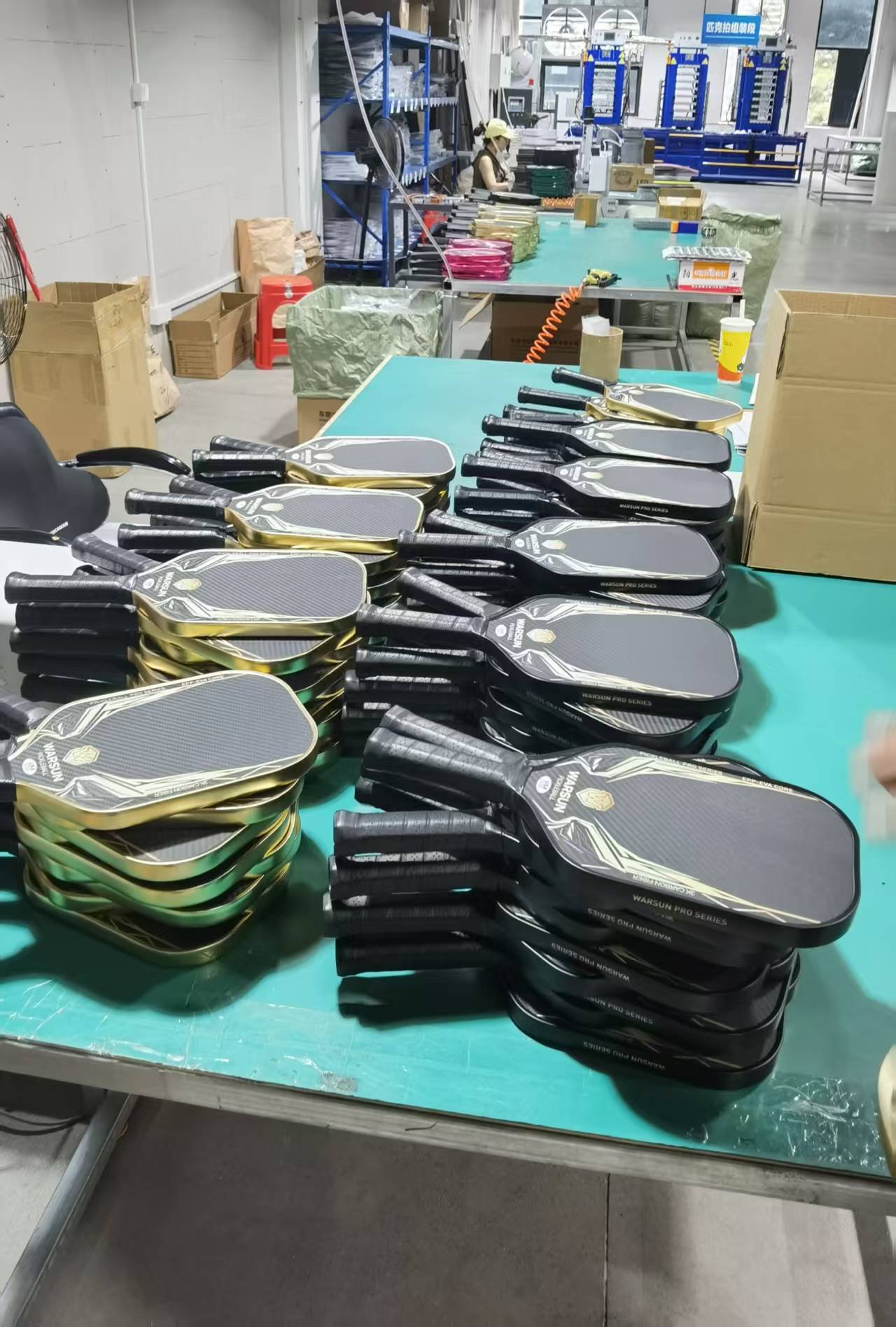
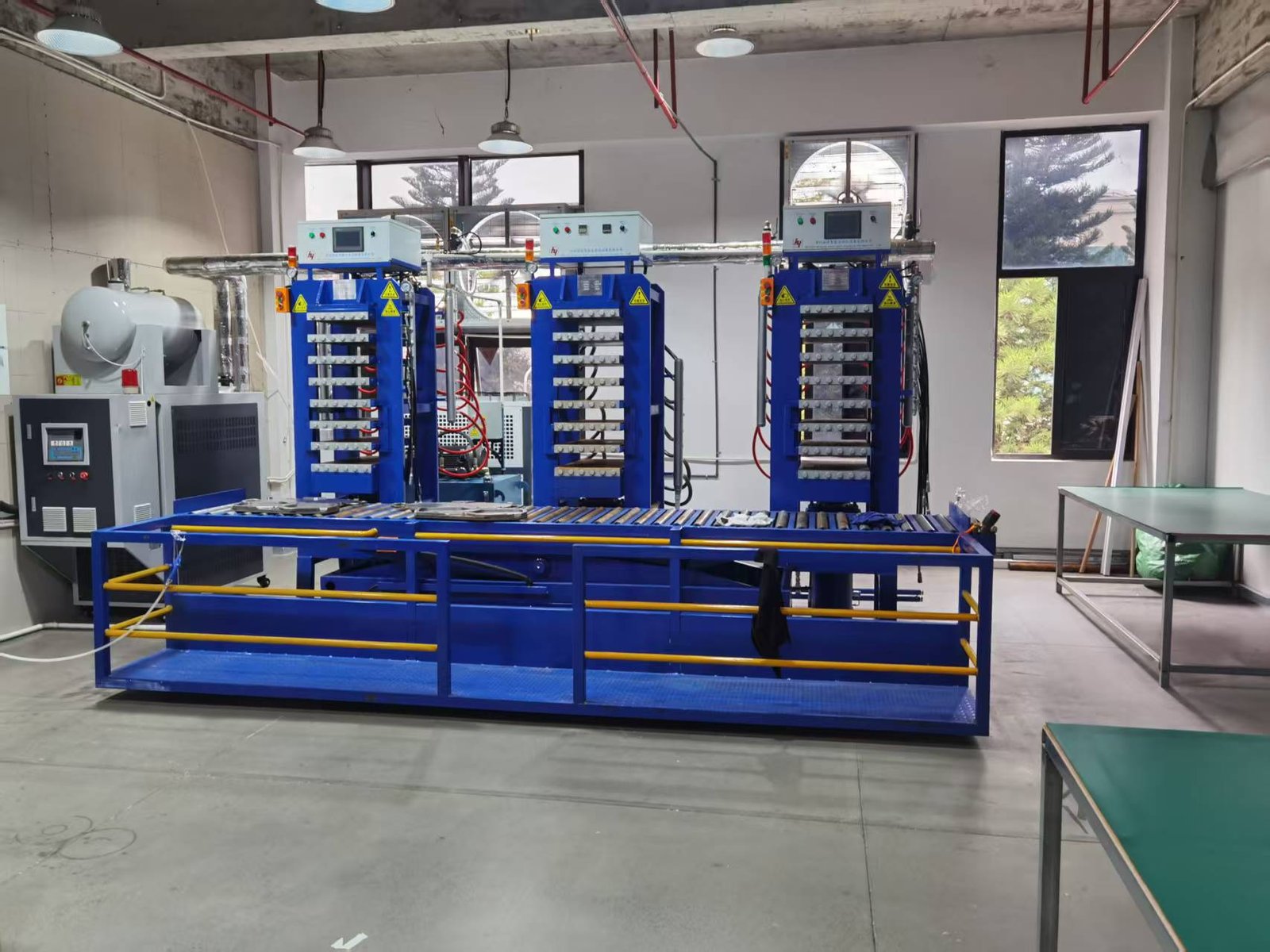
Full-service OEM manufacturers normally handle material cutting, layup, hot pressing or cold pressing, trimming, edge installation, handle assembly, surface finishing, printing, grip wrapping, inspection, and packaging. They are often the most suitable choice for custom pickleball paddle projects because one technical team controls the complete build.
Specialized carbon fiber factories focus on raw carbon, T700 carbon fiber, 3K, 12K, 18K, or other woven surfaces. Their strength may be surface consistency, peel-ply texture, resin control, and thermoforming. A paddles carbon fiber pickleball paddle manufacturer should be able to explain the difference between cosmetic weave, structural carbon layers, and the final textured playing surface.
Fiberglass manufacturers are often strong in beginner, recreational, youth, and set products. They can provide bright graphics and competitive prices, but buyers should still verify face flatness, bond strength, core compression, edge alignment, and weight consistency.
Graphite suppliers may use the term graphite broadly. A paddle graphite pickleball paddle manufacturer should provide a material specification rather than relying only on marketing language. Ask whether the face is a true graphite sheet, a carbon-graphite composite, a printed fiberglass face, or another laminate.
Some factories also produce paddle tennis, beach tennis, platform tennis, and pickleball equipment. A paddle tennis and pickleball manufacturer can be useful for multi-category brands, but the buyer should confirm that the engineering team understands the dimensional, acoustic, surface, weight, and performance requirements that are specific to pickleball.
Carbon Fiber, Graphite, and Fiberglass Capabilities
Material selection determines feel, durability, spin potential, appearance, cost, and positioning. Carbon fiber is popular for performance paddles because it can provide a stable face, controlled response, and premium market perception. The result, however, depends on the complete laminate and production process, not on the carbon label alone.
A qualified carbon fiber manufacturer should disclose the face construction, resin system, pressing temperature, pressure control, core thickness, edge design, and finishing method. It should also control fiber orientation and prevent wrinkles, resin-rich areas, dry spots, print distortion, and uneven surface texture. For thermoformed paddles, the factory should demonstrate consistent edge fusion and manage overheating or core deformation.
Graphite paddles are often positioned as lightweight and responsive. When comparing graphite pickleball paddle manufacturers, request an actual face-material sample or cut section. The word graphite can describe different commercial structures, so documentation and sample testing are more valuable than a product-page label.
Fiberglass remains an excellent choice for beginner sets, clubs, schools, and retail bundles. A fiberglass manufacturer can usually support colorful UV printing, broad sweet-spot designs, and cost-effective production. Buyers should pay special attention to surface durability, impact resistance, and printing adhesion, especially when the artwork uses large areas of dark color or fine gradients.
Junior and Kids' Paddle Manufacturing
A junior pickleball paddle manufacture program should not simply take an adult paddle and add cartoon artwork. Children and younger players benefit from carefully adjusted dimensions, weight, balance, handle length, and grip circumference. The intended age range should be defined before the mold or specification is selected.
For a kids pickleball paddle set manufacture project, the complete set may include two or four paddles, indoor or outdoor balls, a carry bag, instructions, and retail packaging. The supplier should help the buyer select a package that protects the paddles without creating unnecessary shipping volume.
A dependable fiberglass junior pickleball paddle manufacturer will normally propose lighter cores, smaller handles, softer grip materials, rounded edge details, and durable graphic treatments. The target weight should include a realistic production tolerance. It is not enough to approve one perfect sample if mass production varies widely.
Safety and compliance also matter. Buyers should review coating, ink, adhesive, grip, packaging, warning-label, and age-grading requirements for the destination market. The factory should be willing to coordinate third-party testing when required. Claims such as “child safe” should never be used without appropriate evidence.
Large-Grip and Lightweight Paddle Programs
Large-grip and lightweight paddles serve different player needs, and both require engineering control. A large grip pickleball paddle manufacturer should offer more than a thicker overgrip. It should be able to adjust handle circumference, under-grip build, pallet shape, grip texture, and sometimes handle mold dimensions while keeping the finished handle consistent.
Buyers sourcing from a large grip pickleball paddle manufacturer in China should specify the finished circumference measurement method, measurement point, grip type, overlap pattern, and allowable tolerance. A sample measured without tension can differ from a production grip wrapped by another operator, so the work instruction must be standardized.
A lightweight pickleball paddles manufacturer must balance several variables. Reducing weight by removing structural material can reduce durability or create an unstable feel. Better solutions may include lower-density core selection, optimized face layers, shorter or narrower shapes, lighter edge guards, lighter handle components, and controlled grip weight.
The supplier should report both static weight and balance point. Two paddles can have the same total weight but feel very different because one is head-heavy and the other is handle-biased. For private-label projects, defining a target range for weight, swing feel, and balance is more useful than specifying only one nominal number.
Joola-Style Requests and Brand Protection
Buyers sometimes search for a Joola pickleball paddle manufacturer because they want a product with a similar market position, shape, technology, or playing feel. This request must be handled carefully. A legitimate factory should not copy protected logos, branded graphics, packaging, patented structures, or trade dress without authorization.
The correct approach is to describe the performance objective in neutral engineering terms. For example, a buyer can request an elongated shape, a specific core thickness, a raw carbon surface, a certain grip length, a thermoformed perimeter, or a target weight range. The manufacturer can then develop an original product around those requirements.
A trustworthy supplier will protect both the buyer and itself. It should accept original artwork, confidentiality terms, mold-ownership terms, and intellectual-property clauses. It should also reject requests to reproduce another brand’s marks or packaging. This is not an inconvenience; it is evidence that the supplier understands professional OEM business.
When benchmarking an existing retail paddle, use it as a reference for dimensions, balance, feel, and general performance. Then create an original mold, structure, visual identity, and specification that supports your own brand.
How Manufacturer Specifications Affect On-Court Performance
Manufacturer specifications affect power, control, spin, forgiveness, comfort, maneuverability, and durability. Core thickness is one of the most visible variables. Thinner paddles often feel quicker and more direct, while thicker cores are commonly selected for a softer response and greater control. The exact result also depends on core density, cell size, face stiffness, perimeter construction, and paddle geometry.
Face material changes the way the ball interacts with the paddle. Fiberglass can provide a lively response, while carbon and graphite constructions may create a firmer, more controlled feel. Surface texture can influence spin, but buyers should evaluate how well that texture remains after repeated play rather than judging only a new sample.
Shape affects sweet spot, reach, and balance. Elongated paddles provide additional reach and can support a longer handle, but they may feel more head-heavy. Wide-body shapes can increase forgiveness. Handle length matters for two-handed backhands, while grip circumference affects comfort and control.
Manufacturing tolerance is just as important as the nominal specification. A good design can perform inconsistently if face thickness, glue spread, core density, edge weight, or grip wrapping varies from paddle to paddle. This is why sample approval should include measurable control points, not just visual approval.
Questions to Ask Every Manufacturer
Before adding a company to your approved list of pickleball paddle manufacturers, ask for clear answers to a standard supplier questionnaire.
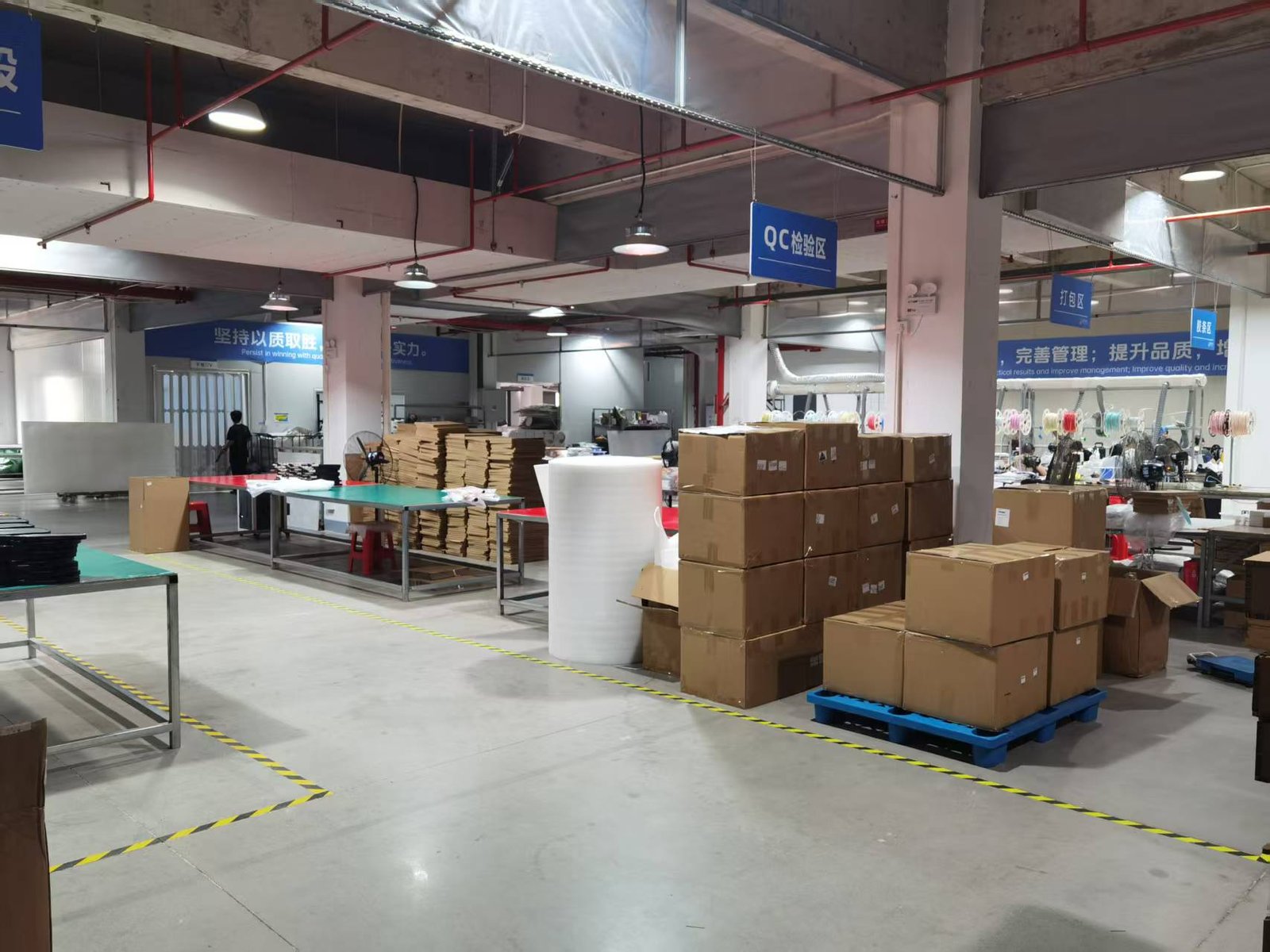
First, ask which processes are performed in-house. Request photographs or a video of material storage, cutting, pressing, trimming, printing, assembly, inspection, and packaging. Ask how subcontracted steps are controlled.
Second, request a material declaration. The quotation should state face material, face thickness or layup, core material, core thickness, edge material, handle construction, grip material, printing method, coating, and packaging.
Third, ask for production tolerances. Important values include finished weight, thickness, length, width, handle length, grip circumference, balance point, flatness, and print position.
Fourth, ask how the factory tests bond strength, edge security, handle strength, impact resistance, surface wear, print adhesion, and packaging. Not every project needs laboratory-level testing, but every factory should have repeatable inspection procedures.
Fifth, discuss ownership and confidentiality. Clarify who owns artwork, molds, tooling, CAD files, prototypes, and production specifications. Confirm that your design will not be shown to other customers or sold as a generic product without permission.
Finally, ask for realistic lead times. Separate sampling time, artwork approval, mold time, material preparation, mass production, inspection, and shipping. A quotation that promises an unusually short schedule may exclude important steps.
Sampling and Quality-Control Workflow
A professional sampling process usually begins with a written specification sheet. The buyer defines the paddle shape, dimensions, core thickness, face material, target weight, grip size, handle length, printing method, edge color, packaging, logo placement, and performance goals.
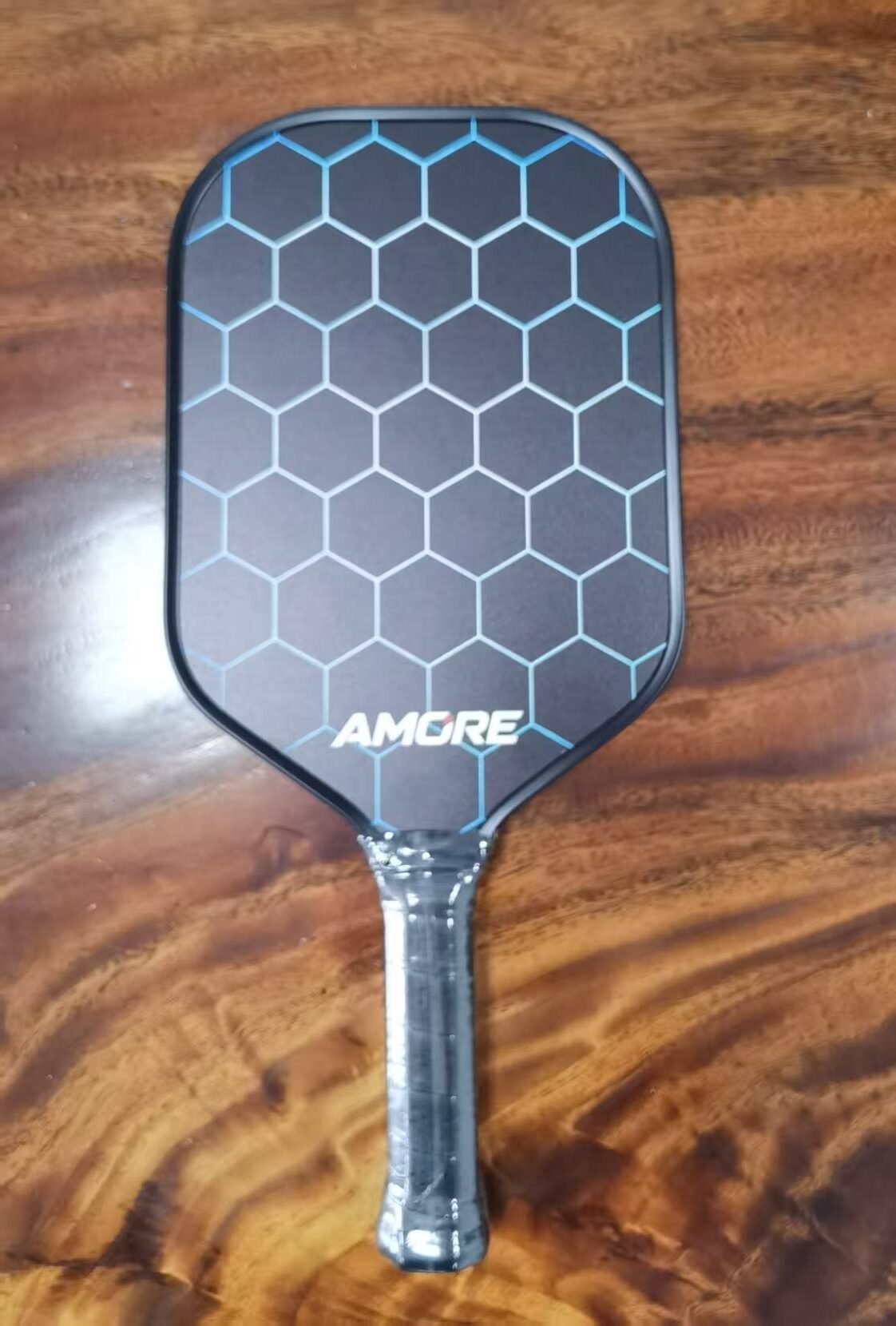
The first sample is used to confirm construction and basic feel. The second round may refine weight, balance, surface, graphics, handle shape, or packaging. When a custom mold is involved, a pre-production sample should be approved after the final production tooling is completed.
Create a signed golden sample and a measurement report. The golden sample becomes the visual and physical reference for production. The report should record key dimensions, weight, balance, appearance, and packaging configuration.
During mass production, inspection should occur at incoming material, in-process, and final stages. Incoming inspection checks core, face sheets, edge guards, grips, inks, and packaging. In-process inspection checks pressing, trimming, bonding, drilling, printing, and assembly. Final inspection checks appearance, dimensions, weight, grip, edge fit, sound, packaging, labels, and carton marks.
For larger orders, consider an independent pre-shipment inspection. The inspection standard should be agreed before production, including sampling level, critical defects, major defects, minor defects, and acceptance criteria.
MOQ, Pricing, and Lead-Time Comparison
MOQ varies according to construction and customization. A standard shape with stock materials and custom printing may support a relatively low minimum. A new mold, special core, custom edge guard, unique grip, serialized packaging, or complex surface process normally requires a higher commitment.
Do not compare quotations only by unit price. Check whether the price includes mold cost, artwork setup, sample charges, packaging, labels, testing, inspection, inland freight, export cartons, and spare units. Also compare payment terms and the cost of changes after approval.
A lower quotation can become expensive if the factory has unstable weight, poor print adhesion, delayed production, or weak packaging. Conversely, the highest price does not guarantee the best product. The most useful comparison is total landed cost combined with defect risk, communication quality, and the supplier’s ability to support future revisions.
Lead time should be divided into development and production. A stock construction with custom graphics can move quickly. A fully custom thermoformed paddle may require mold development, engineering tests, multiple sample rounds, and material reservations. Plan extra time before major retail seasons, trade shows, or promotional launches.
How to Build a Shortlist of the Best Manufacturers
Start with five to eight potential suppliers, then reduce the group through structured evaluation. Send the same specification and questionnaire to each company so the responses are comparable.
Score each supplier in five areas: technical capability, quality system, communication, commercial fit, and business reliability. Technical capability includes materials, molds, construction, printing, and engineering. Quality includes documented inspection, traceability, test methods, and willingness to define tolerances. Communication includes response clarity, speed, and the ability to identify risks instead of simply saying yes. Commercial fit includes MOQ, price, sample cost, lead time, and payment terms. Reliability includes export history, references, audit results, and consistent company information.
Order samples from the strongest candidates. Test them blind where possible so branding and sales language do not influence the result. Record weight, thickness, dimensions, balance, grip circumference, appearance, sound, and playing feedback. Repeat measurements after use.
The best supplier is usually the one that provides consistent evidence, asks intelligent questions, documents changes, and produces repeatable samples. A factory that challenges an unrealistic specification can be more valuable than one that agrees immediately.
Why Work With a Custom OEM Partner
A custom OEM partner can help a brand create a differentiated product rather than competing only on price. Options may include original paddle shapes, custom handle lengths, multiple grip sizes, carbon or fiberglass face systems, different core thicknesses, UV graphics, edge colors, logo grips, retail boxes, carry bags, and complete paddle sets.
For buyers developing a new collection, a staged approach is often effective. Begin with one proven construction and several graphic designs. After sales data is available, expand into junior, lightweight, large-grip, elongated, premium carbon fiber, or tournament-oriented models.
Gloperti supports private-label and custom paddle projects for brands, distributors, clubs, promotional buyers, and sporting-goods retailers. Buyers can review the available customization process on the custom pickleball racket manufacturing page. A clear brief with target market, price level, material, dimensions, quantity, packaging, and launch date helps the technical team recommend an efficient development route.
Conclusion
A useful list of pickleball paddle manufacturers is a decision-making tool, not a collection of search results. The right partner must match the intended product category, whether the project involves a junior fiberglass set, a lightweight graphite paddle, a large-grip recreational model, or a high-performance carbon fiber construction.
The strongest sourcing process combines a detailed specification, standardized supplier questionnaire, sample comparison, measurable tolerances, intellectual-property protection, and staged quality control. By evaluating evidence instead of marketing claims, buyers can reduce risk, improve consistency, and build a paddle line that supports long-term brand growth.
Frequently Asked Questions
How do I find a reliable pickleball paddle manufacturer?
Use a written specification, verify in-house production processes, request material details and tolerances, order samples, review quality-control records, and confirm intellectual-property and mold-ownership terms before placing a production order.
What is the usual MOQ for custom pickleball paddles?
MOQ depends on the construction and customization. Stock molds with custom graphics normally allow lower quantities, while new molds, special materials, custom grips, and complex packaging generally require higher minimums.
Can a manufacturer make junior or kids' pickleball paddles?
Yes. A capable manufacturer can adjust weight, dimensions, balance, handle length, grip circumference, graphics, and packaging for younger players. The intended age range and destination-market compliance requirements should be defined first.
What is the difference between carbon fiber and graphite paddles?
Commercial terminology varies. Buyers should request the actual laminate specification and sample evidence. Carbon fiber and graphite labels alone do not explain face thickness, fiber orientation, resin system, texture, or complete paddle construction.
Can I request a paddle similar to a major brand model?
You may define neutral performance targets such as shape, thickness, weight, handle length, balance, and surface type. The final product should use original engineering, artwork, packaging, and branding and must not copy protected intellectual property.
What quality tolerances should be included?
Common control points include finished weight, thickness, length, width, grip circumference, handle length, balance point, flatness, print position, edge fit, appearance, and packaging configuration.
Should I use a trading company or a factory?
Either can work, but the business model should be transparent. A factory may offer direct technical control, while a professional trading company can coordinate multiple processes. Verify who owns production responsibility and how subcontractors are controlled.
How long does custom paddle development take?
The schedule depends on mold requirements, material availability, sample rounds, testing, artwork approval, and production capacity. Separate development time from mass-production lead time when planning a launch.
Develop Your Custom Pickleball Paddle Line
Share your target material, dimensions, grip, quantity, artwork, packaging, and launch schedule with our OEM team.
Ready to Source the Right Paddle?
Whether you need OEM/ODM manufacturing, wholesale pricing, or a custom branded paddle – we’re here to help. Get a free quote within 24 hours.