Meta Title: Pickleball Paddle Manufacturers | Best OEM Factory Guide 2026
Meta Description: Looking for reliable pickleball paddle manufacturers? Learn how to choose the best pickleball paddle manufacturer, compare USA vs China factories, and discover OEM solutions for custom carbon fiber paddles.
Pickleball Paddle Manufacturers: The Complete 2026 Guide to Choosing the Best OEM Factory
For brands, distributors and wholesalers: a practical guide to selecting an OEM/ODM paddle factory, evaluating materials, controlling quality and launching a differentiated private-label product.
Introduction
Pickleball is no longer a niche activity served by a handful of equipment companies. It has become a competitive sporting-goods category with room for specialist brands, distributors, clubs, promotional-product companies, Amazon sellers, and established racket-sports businesses. That opportunity also creates a practical sourcing challenge: the paddle may look simple from the outside, but its performance depends on the face material, core density, bonding process, handle structure, edge protection, finishing quality, and production consistency.
Choosing among pickleball paddle manufacturers is therefore one of the most important decisions behind a new product line. A dependable factory does more than place a logo on an existing model. It helps translate a target retail price and player profile into a manufacturable specification, prepares prototypes, controls materials, manages printing and packaging, inspects production, and supports repeat orders. The wrong supplier can create inconsistent weight, weak bonding, uneven texture, delayed deliveries, or products that do not match the approved sample.
This guide explains how brands, distributors, and wholesalers can evaluate a pickleball paddle manufacturer in 2026. It covers OEM and ODM services, carbon-fiber options, thermoforming, core thickness, 3K surfaces, minimum order quantities, quality control, and the practical differences between sourcing from the United States and China. It is designed to help buyers create a shortlist based on real production capability rather than attractive catalog photos alone.
What Do Pickleball Paddle Manufacturers Actually Do?
Professional manufacturers coordinate a chain of product-development and production tasks. At the beginning of a project, the factory should clarify the intended user, target weight, balance, shape, thickness, grip length, face material, surface feel, visual design, packaging, order quantity, and expected selling market. Those requirements influence both cost and construction.
For an ODM project, a buyer usually selects from factory-developed shapes and structures, then customizes graphics, grip color, logo position, packaging, and small specification details. This is often the fastest route for a startup or distributor. For an OEM project, the buyer may provide a more detailed design, exclusive shape, custom mold, special layup, unique handle, or proprietary surface treatment. OEM projects usually require more development time, testing, and minimum volume.
A capable factory may provide industrial design support, mold development, face-material cutting, honeycomb-core preparation, adhesive application, cold pressing or thermoforming, edge-guard installation, handle assembly, grip wrapping, surface finishing, UV printing, serial or batch coding, packaging, inspection, and export coordination. Some suppliers handle every process internally; others outsource selected steps. Buyers should understand which stages are controlled directly because this affects consistency and accountability.
The strongest manufacturing partners also document specifications. A clear product sheet should record dimensions, nominal weight and tolerance, core thickness, face material, handle length, grip circumference, printing method, packaging, and inspection standard. This document becomes the reference for samples, mass production, and future reorders.
How Many Pickleball Paddle Manufacturers Are There?
Buyers often ask: how many pickleball paddle manufacturers are there? There is no authoritative global registry that provides a reliable total. Many consumer brands do not own factories, some sporting-goods factories produce paddles alongside other products, and a number of trading companies market themselves as manufacturers. New suppliers also enter the category as demand changes.
For planning purposes, it is safer to think in terms of manufacturing clusters rather than a precise worldwide number. China has the largest and most diverse OEM supply base, including factories with carbon-fiber processing, honeycomb-core assembly, printing, molds, packaging, and export experience. The United States has a smaller group of domestic producers and specialist workshops, while Taiwan has long-standing expertise in composites and racket-sports manufacturing. Vietnam, Pakistan, and other regions may offer selected capabilities, but supplier depth varies.
Online articles sometimes quote totals such as 150 to 200 manufacturers worldwide or more than 100 in China. These figures should be treated as broad industry estimates, not verified counts. More importantly, the number of factories able to deliver repeatable tournament-oriented carbon-fiber paddles, accurate tolerances, dependable bonding, documented quality checks, and scalable OEM service is much smaller than the number of companies advertising paddles.
A buyer should therefore avoid choosing a supplier based on how many listings appear in a marketplace search. The useful question is how many factories can meet the exact material, construction, compliance, customization, quantity, and delivery requirements of the project.
| Region | General Market Observation |
|---|---|
| China | Largest and broadest OEM supply base |
| USA | Smaller domestic and specialist manufacturing base |
| Taiwan | Established composites and racket-sports expertise |
| Vietnam | Developing sporting-goods manufacturing capacity |
| Pakistan | Selected sporting-goods production capabilities |
Best Pickleball Paddle Manufacturers in 2026: What “Best” Really Means
The phrase best pickleball paddle manufacturers 2026 does not point to one universal winner. A factory that is ideal for a 50-piece private-label launch may not be suitable for a retailer ordering several containers. Likewise, a supplier focused on low-cost fiberglass sets may not be the right partner for a premium thermoformed carbon-fiber line.
For most B2B buyers, the best pickleball paddle manufacturers combine five qualities: suitable technology, repeatable quality, honest communication, commercially workable minimums, and reliable delivery. Technology means the supplier can produce the requested construction rather than merely offer similar-looking products. Repeatable quality means production stays close to the approved sample. Honest communication means the factory explains trade-offs instead of agreeing to every request without evidence.
Buyers should review material choices carefully. Common face options include fiberglass, graphite-style composite sheets, T300 or T700 raw carbon fiber, and woven 3K, 12K, or 18K carbon-fiber surfaces. The terminology can be confusing because fiber grade, weave pattern, resin system, surface coating, and texture are separate variables. A factory should be able to explain what material is actually used and how the finished surface is created.
Core selection is equally important. Polypropylene honeycomb is common, with popular nominal thicknesses around 10 mm, 13 mm, 14 mm, and 16 mm. A thinner core often produces a firmer, quicker feel, while a thicker core is commonly chosen for stability and control. Those are general tendencies rather than guarantees; face stiffness, cell size, perimeter structure, weight distribution, and handle design also change performance.
The best factory is ultimately the one whose process matches the buyer’s product strategy. A brand should define its target player, price tier, key performance promise, expected order size, and launch date before comparing quotations.
Carbon Fiber, Honeycomb Cores, and Thermoformed Construction
Carbon fiber has become central to premium paddle development because it can provide a stiff, lightweight face with a clean technical appearance. However, not every carbon-fiber paddle performs the same. A visible weave may be decorative, structural, or part of a hybrid laminate. Buyers should request a construction description rather than relying on a surface photograph.
T300 and T700 commonly refer to grades of carbon fiber used in composite products. In paddle marketing, T700 raw carbon fiber is often associated with a textured surface and a control-oriented premium position. Woven 3K, 12K, and 18K materials describe tow and weave appearances, but the finished behavior still depends on the complete laminate and resin system. A responsible supplier should not promise performance based on one material label alone.
The polypropylene honeycomb core provides thickness and internal structure. Factories cut and bond the face layers to the core, then finish the perimeter and handle. Uniform adhesive coverage and controlled pressure are critical. Poor bonding can lead to dead spots, delamination, rattling, or early failure.
Thermoformed construction generally uses heat and pressure to create a more integrated perimeter structure. Depending on the design, it may improve rigidity, stability, durability, and power. It can also change feel and weight distribution. The term thermoformed is used broadly in the market, so buyers should ask what is heated, how the perimeter is reinforced, whether foam is injected, and how the process is controlled. Sample testing is more valuable than a label in a catalog.
Why 3K Carbon Fiber Is Becoming Popular
3K carbon fiber has a recognizable woven appearance that communicates a premium, technical look. For brands, that visual identity is useful because it differentiates a paddle from plain fiberglass or painted composite products. For players, a well-designed 3K face can offer a balanced combination of stiffness, durability, control, and spin potential.
Experienced 3K carbon fiber pickleball paddle manufacturers may offer different weave orientations, coatings, textures, gloss levels, edge colors, and printed graphics. The surface can be left visually exposed, partially printed, or integrated into a full custom design. Buyers should confirm whether the texture comes from the carbon weave, a peel-ply process, a coating, or an applied finish, because those methods can feel and wear differently.
Quality control matters more than appearance. The factory should monitor flatness, bonding, face defects, edge finishing, dimensions, weight, and handle assembly. It should also control the visual placement of the weave if that appearance is a selling point. A premium-looking material loses value when the logo is misaligned, the edge guard is uneven, or paddle weights vary widely within the same carton.
When comparing quotations, brands should request the full specification behind the phrase 3K carbon fiber. The lowest-priced option may use a different laminate, thinner face layer, simpler core, or less demanding finishing process than a premium version.
Is a 3K Pickleball Paddle Good for Beginners?
The search phrase 3k pickleball paddle for beginner manufacture reflects growing demand for beginner-friendly paddles that still look premium. A 3K paddle can be suitable for beginners, but the weave alone does not determine usability. Shape, total weight, swing weight, grip size, core thickness, balance, and sweet-spot behavior are usually more important for a new player.
A beginner-oriented design often aims for manageable weight, comfortable grip circumference, stable impact, a forgiving face area, and predictable control. A 13 mm or 16 mm polypropylene core can be considered depending on the desired feel, while an optimized perimeter and balanced shape may help reduce mishits. The handle should be comfortable for a wide range of users and wrapped consistently.
For private-label programs, a 3K paddle can bridge entry-level accessibility and premium presentation. It allows retailers to offer a product that feels more advanced than a basic fiberglass set without requiring an extreme power-oriented construction. The product should still be tested by representative players rather than described as beginner-friendly solely because of its weight or material.
Brands should ask the manufacturer for several weight ranges or prototypes and evaluate comfort, vibration, control, and consistency. A good beginner paddle supports learning; it should not force the player to manage excessive head weight, a large grip, or an unforgiving face.
Pickleball Paddle Manufacturers USA vs China
Sourcing from pickleball paddle manufacturers USA can offer advantages for buyers who prioritize domestic production, shorter internal logistics, local communication, or a made-in-USA positioning. Depending on the supplier, development discussions may be easier across similar time zones, and smaller specialist workshops may provide close collaboration. Domestic manufacturing can also support brands whose customers value local origin.
The limitations are usually cost, supplier variety, and capacity. Labor, materials, molds, printing, packaging, and assembly may be more expensive, and not every domestic supplier offers the same breadth of private-label options. Buyers must also verify the meaning of domestic claims: a paddle may be assembled, finished, or printed in the United States while some components are imported.
Chinese manufacturers generally offer a broader OEM ecosystem, competitive unit costs, established export processes, extensive material sourcing, multiple construction options, custom printing, packaging suppliers, and scalable capacity. Many international sporting-goods brands use Chinese OEM or ODM production for these reasons. A factory experienced with overseas customers may also provide design support, sample development, carton optimization, inspection reports, and shipping coordination.
The trade-offs include longer logistics, time-zone differences, import procedures, and the need for disciplined supplier verification. Communication quality varies widely. Buyers should use written specifications, approved samples, inspection criteria, and milestone checks rather than assuming that a detailed chat conversation is sufficient.
Neither country is automatically better for every project. The correct choice depends on product positioning, volume, cost target, origin claim, lead time, customization, compliance strategy, and the buyer’s ability to manage an international supply chain.
How to Choose the Right Pickleball Paddle Manufacturer
Begin with evidence of relevant manufacturing experience. Five or more years in composites or racket-sports products can be a useful signal, but buyers should ask for current production examples, process photos or video, equipment information, and references where appropriate. A factory that mainly produces unrelated promotional products may not understand paddle tolerances and bonding risks.
Next, compare technical capability. Ask which face materials are available, which processes are performed in-house, how cores are sourced, what pressing or thermoforming equipment is used, how handles are built, and how surface texture is controlled. Request a clear explanation of the proposed construction for your target price.
Minimum order quantity should be evaluated together with customization. A low MOQ may apply only to stock shapes, standard materials, and existing packaging. Custom molds, special colors, exclusive grips, unique cartons, or complex surface treatments may require higher quantities. Startups should look for a supplier that offers a practical path from sample to small launch and then to larger repeat orders.
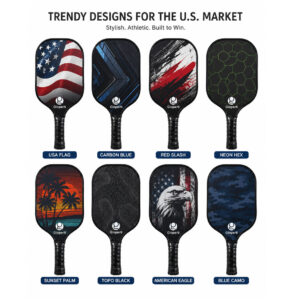
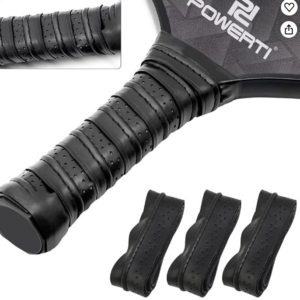
OEM capability includes more than logo printing. A full private-label program may involve artwork preparation, UV printing on both paddle sides, Pantone color matching, grip selection, edge-guard colors, custom barcode labels, instruction cards, retail boxes, paddle covers, master cartons, and shipping marks. Ask which services are included and which require separate suppliers or fees.
Quality systems should be visible in the quotation and production plan. Useful controls include incoming-material checks, first-article approval, in-process inspection, weight and dimension checks, visual inspection, adhesion or impact testing where appropriate, packaging checks, and pre-shipment inspection. Define acceptable tolerances before production begins.
Finally, evaluate communication. Good manufacturers ask questions, confirm details in writing, identify technical risks, and explain schedule changes early. Fast replies are helpful, but accurate replies are more valuable.
Questions to Ask Before Ordering
A structured supplier questionnaire makes quotations easier to compare. Ask what face materials, core thicknesses, shapes, handle lengths, grip sizes, and weight ranges are available. Request details of the exact construction being quoted, not just the model name.
Ask whether the factory provides free artwork assistance, paid industrial design, custom molds, prototype development, and packaging design. Confirm the sample fee, mold fee, number of revisions, sample lead time, production lead time, and whether fees can be credited against a future order.
Discuss compliance carefully. Manufacturers can produce paddles designed around common tournament dimensions and requirements, but formal approval belongs to the relevant governing body and product-submission process. Do not treat 'USAPA-ready' or similar wording as guaranteed approval. Ask what testing data the factory can provide and who is responsible for official submission, fees, and ongoing conformity.
Confirm the MOQ for each level of customization. Ask whether logos can be printed on both sides, which printing process is recommended, what file format is required, how colors are controlled, and whether pre-production artwork or a physical sample will be approved.
Request packaging and logistics details: unit packaging, carton quantity, carton dimensions, gross weight, production port, Incoterm, estimated freight method, and export documentation. A low unit price can be misleading if packaging is inefficient or important services are excluded.
Before paying a mass-production deposit, ensure that the final specification, artwork, packaging, price, tolerance, inspection method, lead time, payment terms, and remedy for defects are documented.
Why More Brands Choose OEM Manufacturing
OEM manufacturing gives a brand control over product identity without building its own factory. Instead of reselling an identical marketplace model, the buyer can select a structure, shape, material, weight target, grip, colors, graphics, and packaging aligned with a defined customer segment.
This can improve margins because the product is sourced closer to production cost and sold under a differentiated brand. It can also reduce direct price comparison when the design, bundle, packaging, warranty, and customer experience are unique. For distributors and wholesalers, private-label products can strengthen retailer relationships and create repeat-order opportunities.
ODM manufacturing offers a faster alternative when development resources are limited. A brand can start with a proven factory platform and customize the visible and commercial elements. As sales grow, it can move toward exclusive molds, refined layups, or special features. This staged approach helps control risk and inventory.
Successful OEM programs still require active product management. The brand must define the customer, validate samples, protect artwork and agreements, plan inventory, monitor production, and collect post-launch feedback. The manufacturer is a production partner, not a substitute for the brand’s product strategy.
Why Work with Gloperti for Custom Pickleball Paddles?
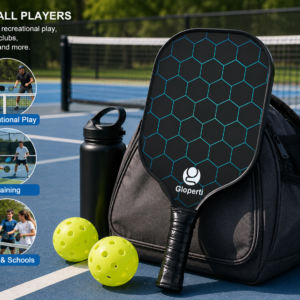
Gloperti supports brands, distributors, promotional-product companies, clubs, and sporting-goods sellers that need flexible custom pickleball paddle solutions. The program is designed for buyers who want a practical route from artwork and specification to branded production.
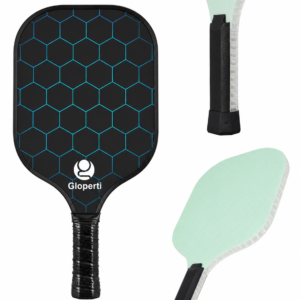
Available options include carbon-fiber and fiberglass paddle faces, common core thicknesses such as 10 mm, 13 mm, and 16 mm, custom UV printing on both sides, private-label graphics, grip and edge-color choices, and custom packaging. For suitable projects, minimum order quantities can start from 50 pieces, allowing new brands and market tests to begin without committing to a very large first order.
Free artwork assistance can help buyers convert a logo, color direction, or rough concept into a production-ready visual mockup. The development process can include specification confirmation, artwork approval, samples, production, inspection, packaging, and international shipment coordination.
A reliable quotation depends on the requested construction, quantity, artwork, packaging, target market, and delivery location. Buyers should share these details at the beginning so the most suitable option can be recommended.
Explore Gloperti’s custom paddle capabilities and request an OEM quotation at: Custom Pickleball Paddle Manufacturing
Conclusion
Finding the right pickleball paddle manufacturer is not a search for the cheapest catalog model. It is a process of matching a factory’s materials, equipment, quality controls, customization, minimums, communication, and delivery capability to a clear product strategy.
The best pickleball paddle manufacturers provide transparent specifications, realistic advice, controlled sampling, repeatable production, and support for private-label details. Buyers comparing the United States, China, and other sourcing regions should evaluate total commercial fit rather than country alone.
For brands planning a 3K carbon-fiber paddle, a beginner-friendly model, a premium thermoformed line, or a small-MOQ custom launch, the next step is to prepare a concise product brief. Define the target player, price tier, face material, core thickness, shape, weight, grip, artwork, packaging, quantity, compliance needs, and desired delivery date. A precise brief produces better samples, clearer quotations, and a stronger manufacturing partnership.
Frequently Asked Questions
Who are the best pickleball paddle manufacturers?
The best supplier depends on the project. Look for relevant composite experience, repeatable quality, transparent specifications, suitable OEM or ODM capability, workable minimum order quantities, and dependable communication.
How many pickleball paddle manufacturers are there?
There is no official global registry. Published totals are broad industry estimates because many brands outsource, some factories produce multiple sporting-goods categories, and trading companies may advertise as manufacturers.
Are most pickleball paddles made in China?
A significant share of private-label and branded paddles are produced through Chinese OEM and ODM supply chains, although paddles are also manufactured or assembled in the United States, Taiwan, and other countries.
What is the best material for a pickleball paddle?
Carbon fiber is widely used in premium paddles, while fiberglass can provide a lively feel and attractive value. The best choice depends on the target player, construction, weight, core, surface, price, and performance goals.
Is 3K carbon fiber suitable for beginner paddles?
Yes, when the complete design is beginner-friendly. Weight, balance, grip size, core thickness, stability, and sweet spot matter more than the weave label alone.
Can a manufacturer customize my logo and packaging?
Professional OEM factories commonly offer two-sided logo printing, custom graphics, grip and edge colors, barcodes, instruction cards, paddle covers, retail boxes, and master-carton markings.
Can a factory guarantee tournament approval?
A factory can design around current dimensional and construction requirements, but formal approval is controlled by the relevant governing body and submission process. Buyers should confirm responsibility for testing, fees, submission, and ongoing compliance.
What MOQ should a new brand expect?
MOQ varies by construction and customization. Stock molds with custom printing can have lower minimums, while exclusive molds, special materials, and custom packaging usually require larger orders. Gloperti can support suitable custom projects from 50 pieces.
Ready to Source the Right Paddle?
Whether you need OEM/ODM manufacturing, wholesale pricing, or a custom branded paddle – we’re here to help. Get a free quote within 24 hours.