Focus Keyword: pickleball paddle manufacturing china
- Introduction
- Why China Is a Major Pickleball Paddle Manufacturing Base
- How a Pickleball Paddle Is Manufactured
- Choosing Face Materials and Core Construction
- OEM and Private-Label Customization Options
- Pickleball Paddle Sets and Retail Bundles
- USAPA-Ready Development and Compliance
- Quality-Control Standards Buyers Should Require
- How to Evaluate a Pickleball Paddle Manufacturing Supplier
- Pricing, MOQ, Samples, and Lead Times
- Common Sourcing Mistakes and How to Avoid Them
- Building a Product Line for Different Customer Segments
- Conclusion
- Frequently Asked Questions
Introduction
Pickleball has moved from a niche recreational activity to a global sporting category with serious retail, club, tournament, and private-label demand. For importers and brand owners, that growth creates a practical sourcing question: where can a company develop reliable paddles at a competitive cost without giving up control over materials, performance, design, packaging, or delivery? For many buyers, the answer starts with pickleball paddle manufacturing in China.
China has a mature sporting-goods supply chain that combines carbon-fiber processing, fiberglass lamination, honeycomb-core conversion, printing, molding, edge-guard assembly, grip installation, packaging, and export logistics. A qualified factory can support everything from an entry-level recreational paddle to an advanced thermoformed carbon-fiber model. The real advantage is not simply lower cost. It is the ability to coordinate multiple production processes within one supply network and scale from samples to repeat orders.
This guide explains how to evaluate a pickleball paddle manufacturing factory, compare materials and construction methods, develop private-label products, manage quality, and avoid common sourcing mistakes. It is written for distributors, sporting-goods companies, Amazon and Walmart sellers, promotional-product buyers, clubs, and entrepreneurs building their own paddle brands.
Why China Is a Major Pickleball Paddle Manufacturing Base
A professional pickleball paddle manufacturing supplier in China usually works with a network of specialized material and component partners. Carbon cloth, fiberglass sheets, polypropylene honeycomb, EVA or foam inserts, edge guards, grip tape, end caps, UV inks, retail boxes, carry bags, and shipping cartons may come from different nearby producers. When the supply chain is well managed, this specialization improves speed and flexibility.
The first benefit is product range. A single pickleball paddle manufacturing manufacturer may offer fiberglass paddles for beginners, graphite or carbon-fiber paddles for intermediate players, raw-carbon paddles for spin-focused users, elongated paddles for reach, wide-body paddles for a larger sweet spot, junior paddles, pink lifestyle paddles, and complete paddle sets.
The second benefit is customization. Buyers can specify face material, core thickness, shape, handle length, grip circumference, weight range, balance, edge-guard color, artwork, logo placement, packaging, barcode labels, and accessory combinations. This makes China particularly suitable for OEM and ODM programs.
The third benefit is scalable pricing. Development can begin with a modest private-label quantity and expand as sales grow. Tooling and printing costs can be distributed across larger orders, while mature factories can often combine multiple colors or graphics within one production run, subject to minimum quantities.
The fourth benefit is export experience. Established suppliers understand commercial invoices, packing lists, carton markings, HS-code documentation, pallet requirements, inspection procedures, and international shipping. This reduces friction for buyers who need products delivered to the United States, Canada, Europe, Australia, Southeast Asia, or other markets.
How a Pickleball Paddle Is Manufactured
Although construction varies by model, the manufacturing flow normally begins with a product specification. The factory confirms the paddle dimensions, face material, core type, thickness, target weight, handle design, edge protection, graphics, and packaging. A clear specification sheet is essential because small changes can affect feel and performance.
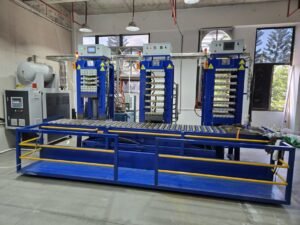
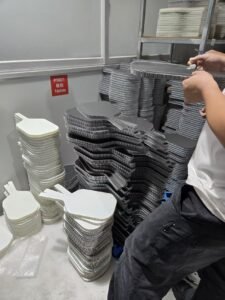
For a conventional sandwich paddle, sheets of fiberglass, graphite, or carbon fiber are prepared and bonded to a polypropylene honeycomb core. Adhesive selection, glue coverage, pressure, temperature, and curing time all influence durability. After lamination, the paddle blank is cut to shape by CNC equipment or precision dies. The handle area is formed, reinforced when necessary, and prepared for grip assembly.
The face is then decorated. Common options include UV printing, screen printing, water-transfer graphics, decals, textured coatings, or direct printing on a carbon surface. A pickleball paddle pink manufacturer may use solid pink, gradient artwork, floral patterns, metallic details, or coordinated pink edge guards and grips to create a retail-ready lifestyle product.
The edge guard is fitted around the paddle perimeter unless the design is edgeless. The handle receives foam or structural inserts, a grip, and an end cap. Each finished paddle is weighed, visually checked, cleaned, and packed. Better factories also check dimensions, flatness, bonding, surface finish, grip alignment, and carton strength.
Thermoformed paddles add further steps. Heat and pressure are used to form the paddle perimeter and bond the face and core into a more integrated structure. Foam may be injected around the edge to increase stability and sweet-spot consistency. Thermoforming can improve power and rigidity, but it demands tighter control because excessive heat or pressure may damage the core or create delamination risk.
Choosing Face Materials and Core Construction
Material selection should match the intended customer and price position. Fiberglass is common in recreational paddles because it is affordable, lively, and easy to decorate. It can provide good power, although it may offer less spin consistency than a textured raw-carbon surface.
Graphite and carbon-fiber faces are used for lighter, more controlled, and premium-feeling products. T700 raw carbon is popular because its woven surface can support friction and spin while maintaining a clean technical appearance. 3K, 12K, and 18K carbon descriptions refer to tow size and visual weave characteristics, but the label alone does not guarantee performance. Resin system, thickness, layup direction, surface treatment, and bonding quality are equally important.
Polypropylene honeycomb is the standard core material for many paddles. Common thicknesses include approximately 10 mm, 13 mm, 14 mm, and 16 mm. Thinner cores usually feel faster and more power-oriented, while thicker cores generally emphasize control, stability, and a softer response. These are broad tendencies rather than absolute rules because face stiffness, perimeter construction, weight, and balance also matter.
A capable pickleball paddles composite manufacturer can combine multiple layers to tune performance. For example, carbon fiber may be paired with fiberglass beneath the surface, or reinforcement layers may be added around the throat and handle. Buyers should ask for a complete material breakdown instead of relying only on marketing names.
When comparing a pickleball paddles composite manufacturer in China, request samples with controlled variables. Testing two paddles that differ only in core thickness is more informative than comparing two completely different constructions. Structured sampling helps a brand identify which specification best suits beginner, intermediate, power, control, or all-court users.
OEM and Private-Label Customization Options
A private-label program can be simple or highly customized. The fastest route is to select an existing factory mold and change the graphics, logo, grip, packaging, and accessories. This approach reduces tooling cost and shortens development time. It is suitable for buyers testing a market or launching a value-focused line.
A deeper OEM project may modify the shape, handle length, throat geometry, face layup, core thickness, weight distribution, or perimeter construction. Custom molds can help a brand create a recognizable silhouette, but the project requires more engineering, testing, and investment.
Artwork is one of the most visible differentiators. The factory should provide a print template showing trim lines, bleed, safe zones, handle coverage, and edge-guard areas. High-resolution vector artwork is preferred. Brands should check color references, logo size, orientation, and whether the same artwork appears correctly on both paddle faces.
Packaging options include individual retail boxes, color sleeves, kraft boxes, EVA cases, neoprene covers, Oxford-cloth bags, PVC bags, and master cartons. A pickleball paddle set manufacturer may also pack two or four paddles with balls, covers, towels, overgrips, or a carry bag. Inserts can include instructions, warranty cards, QR codes, and brand stories.
For buyers building a complete custom program, this custom pickleball paddle manufacturing service shows the type of specifications that can be organized around materials, thickness, size, weight, logo printing, packaging, and low-volume brand development.
Pickleball Paddle Sets and Retail Bundles
A pickleball paddle set manufacturer serves a different retail need from a single-paddle supplier. Sets are designed for families, schools, clubs, gifts, beginner packages, and online marketplaces. The most common configuration is two paddles, but four-paddle sets are also popular for group play.
When selecting a pickleball paddle set of 2 manufacturer, evaluate the entire bundle rather than only the paddles. Ball quality, bag stitching, zipper durability, printed instructions, packaging protection, and total shipping weight all affect customer satisfaction and landed cost. A low-cost accessory can create a disproportionate number of complaints if it fails quickly.
Professional pickleball paddle sets manufacturers should be able to keep both paddles within an agreed weight range and match graphics accurately. They should also verify that balls are suitable for indoor or outdoor use, depending on the target listing. For e-commerce, compact packaging can reduce dimensional shipping charges, but paddles still need enough protection to prevent edge-guard deformation and surface scratches.
Bundle design is also a branding opportunity. Coordinated colors, matching grip tape, a printed carry bag, and a clean box can make an ordinary recreational set feel premium. Pink, blue, black, white, and bright multi-color combinations often perform well because they are easy for buyers to understand visually.
USAPA-Ready Development and Compliance
Many brands search for a pickleball paddle USAPA approved manufacturer. It is important to understand that a factory can manufacture paddles to a buyer’s intended specification, but official approval is connected to the tested product and the responsible brand or applicant. Buyers should verify current submission requirements directly with the governing organization before claiming approval in listings or packaging.
A factory supporting an approval-oriented project should provide stable materials, controlled dimensions, consistent surface treatment, and repeatable production. The sample submitted for testing must accurately represent mass production. Changing the face texture, thickness, graphics process, core, or construction after approval may create compliance problems.
Surface roughness is a particular concern for spin-focused paddles. Aggressive peel-ply textures or coatings can vary if process controls are weak. Brands should define inspection methods and acceptable limits with the supplier. Weight, length, width, and combined dimensions should also remain within the applicable rules.
The safest commercial wording before approval is to describe the paddle as developed for performance testing or designed toward applicable specifications, rather than stating that it is approved. Once approval is confirmed, keep records of the approved model name, artwork version, factory specification, and production controls.
Quality-Control Standards Buyers Should Require
Quality control should begin before production. The buyer and supplier need an approved golden sample, specification sheet, artwork file, packaging standard, and inspection checklist. Verbal descriptions are not enough for repeat orders.
Incoming material inspection should confirm face material, core thickness, edge guards, grips, adhesives, and packaging components. During production, the factory should monitor lamination, curing, cutting accuracy, printing alignment, surface defects, handle assembly, and edge-guard fit. Finished goods should be checked for weight, dimensions, flatness, cosmetics, grip quality, and packaging.
Common paddle defects include bubbles beneath the face, weak bonding, core crushing, warped blanks, uneven edges, rough trim, color variation, misaligned logos, loose end caps, wrinkled grips, rattling debris, and inconsistent weight. Thermoformed models may also face edge separation or internal core damage if the process is poorly controlled.
A practical inspection plan can use AQL sampling for appearance and packaging while applying stricter functional checks to critical issues. Buyers may also request drop tests, handle-strength tests, repeated impact tests, temperature-aging tests, and carton tests. The exact protocol should reflect product price, sales channel, warranty promise, and risk tolerance.
Third-party pre-shipment inspection is useful for new suppliers or large orders. It does not replace factory quality management, but it provides an independent review before the balance payment and shipment release.
How to Evaluate a Pickleball Paddle Manufacturing Supplier
Supplier evaluation should go beyond a quotation. Start by confirming whether the company is a real pickleball paddle manufacturing factory or a trading company. Both can be useful, but buyers should know who controls production, quality, and communication.
Ask for factory photos or a live video showing lamination, cutting, printing, assembly, inspection, and packing. Review sample quality and measure it against the promised specification. A professional supplier should answer technical questions clearly, explain trade-offs, and identify risks instead of agreeing to every request without analysis.
Check experience with your intended construction. A factory making simple fiberglass paddles may not have the equipment or process control needed for advanced thermoformed carbon models. Conversely, a premium carbon factory may not be the most cost-effective choice for a promotional wooden or entry-level set.
Communication speed matters, but accuracy matters more. Look for organized quotations, revision control, clear sample comments, realistic lead times, and written confirmation of changes. A reliable pickleball paddle manufacturing supplier should also explain minimum order quantities, sample fees, mold charges, printing setup, packaging costs, and payment terms.
Request references or shipment history where appropriate, and verify business registration, export capability, and quality certifications. Certifications alone do not prove product quality, but they can indicate whether the supplier has documented management systems.
Pricing, MOQ, Samples, and Lead Times
Buyers searching for pickleball paddle manufacturing for sale often focus on the lowest unit price. That can be misleading because quotations may be based on different materials, weights, printing methods, packaging, accessories, inspection levels, or order quantities.
A useful quotation should list face material, core material and thickness, paddle dimensions, target weight, grip specification, edge guard, printing, packaging, accessories, carton quantity, MOQ, sample cost, mold cost, production lead time, and trade terms. Without these details, price comparisons are unreliable.
Minimum order quantities depend on construction and customization. Existing molds with standard materials usually support lower quantities than fully custom thermoformed projects. Printing and packaging may have separate MOQs. Buyers can sometimes mix several graphics within one order if the underlying paddle construction remains the same.
Samples normally progress through three stages: an existing sample to evaluate factory capability, a custom artwork sample to verify appearance, and a pre-production sample that represents the final specification. Rushing directly into mass production increases risk.
Lead time includes material preparation, printing, lamination, curing, assembly, inspection, and packing. Peak-season demand, custom packaging, new molds, and approval testing can extend the schedule. Buyers should leave time for revisions and shipping rather than planning around the factory’s shortest theoretical production time.
Common Sourcing Mistakes and How to Avoid Them
The first mistake is choosing a factory only by price. Extremely low pricing may indicate thinner materials, lower-grade cores, weak adhesives, reduced inspection, inaccurate specifications, or incomplete packaging assumptions. The correct objective is the best landed value at an acceptable quality level.
The second mistake is approving only artwork while ignoring construction. A beautiful paddle can still perform poorly if the weight, balance, core, grip, and bonding are inconsistent. Brands should test both appearance and playability.
The third mistake is using vague language such as “premium carbon” or “professional quality.” These terms are subjective. Specifications should define material, thickness, dimensions, tolerances, weight range, print process, texture, packaging, and test requirements.
The fourth mistake is failing to control changes. Factories may substitute materials when components are unavailable unless the purchase agreement prohibits unauthorized changes. Approved suppliers and material codes should be documented.
The fifth mistake is making unverified claims. Do not state that a paddle is officially approved, tournament legal, made from a specific carbon grade, or tested to a standard unless records support the claim.
The sixth mistake is ignoring freight and packaging. A bundle may have an attractive factory price but poor profitability after dimensional shipping, duties, inspection, and marketplace fees. Packaging design should be part of product development from the beginning.
Building a Product Line for Different Customer Segments
A strong brand often starts with a focused lineup rather than too many similar models. One practical structure is a recreational set, an all-court carbon paddle, and a premium performance paddle.
The recreational line can use fiberglass faces, a comfortable grip, durable edge guards, bright graphics, and value-oriented set packaging. It is ideal for families, schools, beginners, gifts, and promotional sales. A pickleball paddles for sale manufacturer can support multiple colorways to help retailers create visual variety without changing the basic construction.
The all-court line can use carbon or graphite faces with a 14 mm or 16 mm polypropylene core. The goal is balanced control, spin, stability, and manageable weight. This model can become the brand’s main online listing because it serves a broad audience.
The premium line may use raw T700 carbon, thermoformed construction, foam perimeter reinforcement, an elongated shape, and tighter weight tolerances. It should be supported by more detailed testing and clearer performance positioning.
A lifestyle extension can include pink paddles, coordinated sets, junior paddles, compact handles, lightweight versions, and limited-edition artwork. These products should still meet functional standards; visual differentiation works best when supported by reliable construction.
Conclusion
Pickleball paddle manufacturing in China gives brands access to a flexible combination of materials, customization, production capacity, and export support. The opportunity is significant, but successful sourcing depends on disciplined product development.
Choose a supplier that understands the required construction, not just the artwork. Define every important specification, approve a golden sample, control materials, inspect production, and verify all compliance claims. Compare total landed value rather than unit price alone. For sets, evaluate every accessory and packaging component. For premium paddles, require stronger process control and repeatability.
The best manufacturing partnership is collaborative. A capable factory should help translate a target customer, price point, and performance goal into a production-ready specification. With clear communication and quality standards, importers can build a paddle range that looks distinctive, performs consistently, and scales with market demand.
Frequently Asked Questions
What is the typical MOQ for custom pickleball paddles in China?
MOQ varies by construction, mold, printing, and packaging. Existing molds with custom graphics usually allow lower quantities than fully custom thermoformed designs. Buyers should confirm separate MOQs for paddles, packaging, and accessories.
Can a factory manufacture USAPA-approved pickleball paddles?
A factory can manufacture a model for approval-oriented testing, but official approval applies to the submitted product and applicant. The approved construction must remain consistent in mass production, and claims should only be used after confirmation.
What face material is best for a private-label paddle?
Fiberglass is suitable for affordable recreational paddles, while graphite and carbon fiber are common for control and premium positioning. Raw T700 carbon is popular for spin-focused models, but overall construction matters more than the material name alone.
How long does custom paddle production take?
Timing depends on samples, molds, materials, printing, packaging, and order size. A realistic plan should include artwork approval, pre-production samples, mass production, inspection, and shipping.
Can I order a pickleball paddle set of two with custom packaging?
Yes. Many manufacturers offer two-paddle sets with balls, covers, bags, overgrips, instructions, retail boxes, and barcode labels. Every component should be included in the approved specification and inspection standard.
How can I verify that a supplier is a real factory?
Request a live factory video, review production equipment, inspect business and export records, ask technical questions, and order samples. Third-party audits or inspections can provide additional verification.
What quality defects are common in pickleball paddles?
Common issues include delamination, bubbles, warping, crushed cores, uneven edges, print misalignment, loose end caps, poor grip wrapping, inconsistent weight, and weak packaging.
Should I use an existing mold or create a custom shape?
Existing molds reduce cost and development time. Custom shapes can strengthen brand identity but require tooling, engineering, testing, and higher investment. New brands often validate demand with an existing mold first.
Looking for a reliable OEM/ODM pickleball paddle manufacturer?
Gloperti specializes in custom pickleball paddle manufacturing — logos, colors, packaging, and specs fully customized for brands, clubs, and retailers.
Ready to Source the Right Paddle?
Whether you need OEM/ODM manufacturing, wholesale pricing, or a custom branded paddle – we’re here to help. Get a free quote within 24 hours.