How to Choose a Professional Pickleball Paddle Supplier for T700, Thermoformed, Thin-Grip, and Wholesale Programs
Focus Keyword: professional pickleball paddle supplier
Introduction
Choosing a professional pickleball paddle supplier is no longer a simple price-comparison exercise. Retailers, distributors, private-label brands, clubs, and promotional-product buyers now expect clear material specifications, stable production, repeatable swing weight, reliable surface texture, packaging support, and documented quality control. At the same time, product demand is becoming more segmented. One buyer may need a pink pickleball paddle supplier for a lifestyle collection, while another may be sourcing a T700 thin core pickleball paddle supply program for advanced players. A third customer may need a dependable wholesale pickleball paddle supplier capable of supporting several shapes, thicknesses, grip sizes, and packaging formats under one purchase order.
This guide explains how to compare suppliers across product engineering, customization, compliance, production, quality assurance, and commercial service. It also clarifies the differences among 3K carbon fiber, T700 carbon fiber, thermoformed construction, thin-core designs, thin-grip formats, and tungsten weighting accessories. The goal is to help buyers create a sourcing brief that is specific enough to obtain accurate quotations and strong enough to prevent costly misunderstandings after sampling or mass production.
1. Start with the Market Position, Not Only the Paddle Specification
A good sourcing project starts with the intended customer. The same paddle cannot simultaneously optimize every playing style, price point, visual preference, and retail channel. Before contacting a supplier, define whether the product is intended for beginners, recreational players, club players, tournament-focused users, juniors, women, corporate promotions, or premium private-label collections.
For example, a recommended pickleball paddles supplier should be able to translate a general target such as “comfortable all-court paddle for club players” into measurable product parameters. Those parameters may include total weight, balance point, swing weight, twist weight, face material, core thickness, handle length, grip circumference, edge-guard design, and desired sound or feel. A professional partner will ask questions before quoting because small design changes can affect cost, tooling, production yield, and performance.
Buyers should also specify the sales channel. Amazon listings often require strong image consistency, compact packaging, barcode placement, and low damage rates. Independent brands may prioritize custom graphics and premium unboxing. Clubs may value durability and fast replenishment. Promotional buyers may need simplified construction, logo printing, and strict delivery dates. A capable paddle supplier should adjust the development plan to the commercial use case rather than pushing the same standard model to every customer.
2. Understanding 3K Carbon Fiber and T700 Carbon Fiber
Carbon-fiber terminology can be confusing because surface appearance, fiber grade, weave style, resin system, and finished laminate construction are related but not identical. A supply 3K sport leisure pickleball paddle program typically refers to a woven 3K carbon surface or a 3K-style visual structure. These paddles are often selected for a balanced combination of appearance, touch, spin potential, and mid-market positioning. However, buyers should request an actual material specification rather than relying on the phrase “3K carbon” alone.
A T700 pickleball paddle supplier usually offers a raw carbon fiber or carbon-composite face built around T700-grade fiber. T700 is widely used in sporting goods because it can provide a useful balance of strength, stiffness, and processability. The final paddle performance still depends on laminate thickness, resin content, surface treatment, core structure, perimeter reinforcement, pressing parameters, and finishing quality. Therefore, two products described as T700 may play very differently.
When comparing a supply T700 thin core pickleball paddle proposal, ask the supplier to confirm the face construction, core thickness, total weight tolerance, balance-point tolerance, peel-ply or texture process, edge reinforcement, and handle structure. Request samples from the same process route intended for mass production. A visually attractive prototype made with a different layup or finishing method is not a reliable approval sample.
3. Thin-Core Paddle Programs: Speed, Feedback, and Control Trade-Offs
A T700 thin core pickleball paddle supply project is commonly aimed at players who want faster hand speed, direct ball feedback, and a lower-profile feel. “Thin core” can refer to several thickness categories depending on the supplier and market, so buyers should state the exact nominal thickness instead of using only a descriptive term. Common development points include the core cell size, core density, face stiffness, perimeter reinforcement, and target static weight.
Thin-core paddles can feel lively and responsive, but poor process control may create excessive vibration, inconsistent rebound, premature edge separation, or uneven sound. The supplier should therefore control glue spread, press temperature, press time, pressure, cooling, trimming, and edge-guard installation. Sampling should include multiple units rather than one “golden sample,” because consistency is as important as peak performance.
A buyer sourcing a T700 thin core pickleball paddle supplier should define acceptable tolerances. For example, it is better to specify a target weight range and balance-point range than to request “approximately lightweight.” The supplier should also record production data by batch so repeated orders can stay close to the approved sample. This is especially important for private-label brands that receive public reviews comparing units purchased months apart.
4. Thermoformed Construction: What Buyers Should Verify
A thermoformed pickleball paddle supplier typically uses heat and pressure to consolidate the face, core, edge structure, and perimeter reinforcement into a more integrated build. Thermoformed paddles can deliver a solid feel, strong edge stability, and a premium product story, but the term is sometimes used too broadly. Buyers should ask for a process explanation and cross-section details rather than accepting the label without evidence.
Important questions include whether the perimeter is foam-injected, whether the carbon layer wraps around the edge, how the handle is connected to the body, what adhesive system is used, and how temperature and pressure are controlled. The supplier should also explain how it prevents core deformation, resin starvation, delamination, and excessive stiffness variation.
Thermoforming raises the importance of process validation. A reliable supplier should maintain work instructions, inspection records, and traceability for materials and production batches. Buyers should consider destructive checks on retained samples, especially for premium programs. These checks can include sectioning, edge-bond review, handle-pull testing, impact testing, and accelerated temperature or humidity exposure. The objective is not merely to create a strong first sample; it is to establish a repeatable production method.
5. Thin-Grip and Small-Hand Design Requirements
A thin grip pickleball paddle supplier serves an important segment that includes players with smaller hands, juniors, many women, and users who prefer faster wrist action. Grip circumference should be defined with a measurable method, including whether the measurement is taken over the base grip and at which handle location. Handle shape also matters. Octagonal geometry, bevel definition, grip compression, and butt-cap size can change the perceived grip even when the circumference is similar.
Buyers searching for a thin grip pickleball paddle supplier China program should request several handle samples if the product will be sold to a broad audience. A grip that feels comfortable to one product manager may not suit the target market. It can be useful to test two or three circumference options and collect structured feedback from players.
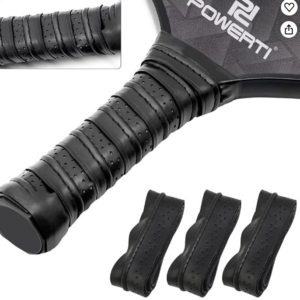
The supplier should also confirm grip material, thickness, overlap consistency, adhesive performance, moisture resistance, and replacement compatibility. For retail collections, the handle color and butt-cap logo can support brand recognition. For junior or small-hand products, reducing grip size should not weaken the handle. Internal reinforcement, handle length, and connection to the paddle body must remain structurally sound.
6. Pink Paddles and Lifestyle-Focused Customization
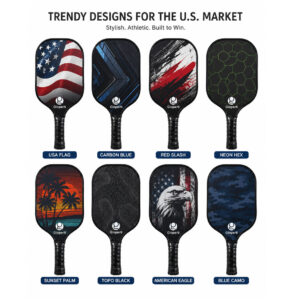
A pink pickleball paddle supplier may be supporting much more than a simple color change. Lifestyle collections often require coordinated face graphics, edge-guard colors, grip colors, paddle covers, packaging, barcode labels, and social-media-ready presentation. Color approval should therefore use physical standards or clearly defined digital references, while recognizing that screen colors and printed colors can differ.
Buyers should ask how the graphic is applied. UV printing, water-transfer graphics, screen printing, decals, and other methods can create different finishes, costs, and durability. The decoration method must also preserve the intended surface texture and playing characteristics. A glossy visual layer may look attractive but change friction or hide the underlying carbon appearance.
A strong supplier can prepare visual mockups before sampling and then provide a physical pre-production sample for approval. The purchase specification should identify which elements are color-critical and which are allowed normal manufacturing variation. For repeat orders, retain an approved color sample and packaging sample. This reduces the risk that a later production batch shifts from soft blush pink to bright magenta or from matte to unexpectedly glossy.
7. Professional and Premium Paddle Programs
A professional pickleball paddle supplier should be able to support more demanding product-development conversations. This does not necessarily mean the supplier must create a paddle for a named professional athlete. It means the factory can work with objective targets, test feedback, iteration, and controlled tolerances.
Premium programs may include multiple prototypes with different layups, core thicknesses, handle lengths, balance points, perimeter weighting, and surface treatments. The development team should document each version so player feedback can be connected to the actual construction. Without version control, comments such as “prototype two had better control” are difficult to use because the factory may not know exactly what changed.
For advanced-market positioning, ask for data on static weight, balance, swing weight, twist weight, dimensions, thickness, surface roughness, and rebound consistency. Not every supplier has every test instrument in-house, but a professional partner should be transparent about what it can measure and what requires an outside laboratory. Clear data is more valuable than vague claims such as “maximum power” or “best spin.”
8. Tungsten Weighted Tape and Paddle Tuning Accessories
A tungsten weighted tape for pickleball paddles supplier can help brands offer a practical tuning accessory alongside paddles. Tungsten tape is used to adjust total weight, balance, stability, and feel by placing strips at selected positions on the paddle perimeter. The product may be sold in rolls, pre-cut strips, or kits with application instructions.
Safety, adhesion, unit weight, dimensional consistency, surface finish, and packaging are key sourcing points. Buyers should confirm the mass per unit length or per strip and test whether the adhesive remains secure during play, storage, and normal temperature changes. The tape should also be easy to cut or position without creating sharp exposed edges.
When a paddle and weight-tape kit are sold together, the brand should provide conservative guidance and avoid promising a single setup for every player. Adding weight changes handling and may affect comfort. The supplier can support custom packaging, printed placement diagrams, and private-label branding, but the buyer should validate the instructions with experienced users before launch.
9. Brand-Name Search Terms and Supplier Authorization
Some buyers use search phrases such as “Selkirk pickleball paddles supplier” when looking for branded products or trying to understand market benchmarks. A responsible sourcing process must distinguish between an authorized distributor, an OEM factory, a component supplier, and an unrelated seller using a brand name for traffic.
Do not assume that a factory is authorized to manufacture or sell a specific brand merely because it displays similar products, uses the brand name in a listing, or says it has industry experience. Ask for written authorization when purchasing branded goods. For private-label sourcing, use brand-name products only as general market references and create original shapes, graphics, trademarks, packaging, and product claims.
A trustworthy supplier will not pressure buyers to copy protected branding or present another company’s product as available for unrestricted wholesale. Protecting intellectual property is part of supply-chain risk management. It helps prevent listing removals, customs disputes, customer complaints, and reputational damage.
10. How to Evaluate a Wholesale Pickleball Paddle Supplier
A wholesale pickleball paddle supplier should be evaluated across commercial reliability as well as product quality. Start with a structured request for quotation that lists quantity by model, target specifications, artwork requirements, packaging, labeling, testing, delivery terms, and destination. This allows suppliers to quote the same scope.
Review the supplier’s minimum order quantities for stock models, color changes, custom graphics, custom molds, and packaging. Ask whether different designs can be combined within one order and which components create separate MOQs. Confirm sample fees, tooling fees, printing setup charges, testing costs, carton specifications, and spare-part policy.
Production capacity should be discussed realistically. A large theoretical capacity is less useful than an honest schedule supported by material availability and line planning. Ask for the expected sample timeline, pre-production approval point, mass-production lead time, inspection window, and shipping readiness date. For seasonal launches, build in time for revisions and third-party inspection.
Finally, evaluate communication quality. Does the supplier answer technical questions clearly? Does it identify conflicts in the specification? Does it summarize changes after calls? Does it issue a revised quotation when the scope changes? Good communication is a quality-control tool because many manufacturing problems begin as undocumented assumptions.
11. Quality-Control Plan for Paddle Production
Quality control should begin before mass production. The approved specification should include materials, dimensions, thickness, weight range, balance range, graphics, grip, edge guard, packaging, labels, and acceptable cosmetic limits. The supplier should prepare a pre-production sample or signed golden sample representing the final construction.
Incoming inspection can verify carbon fabric, core material, adhesive, edge guards, grips, and packaging components. In-process inspection can monitor layup, glue application, pressing, curing, trimming, drilling, handle assembly, printing, and edge-guard installation. Final inspection should combine appearance checks with measurements and functional sampling.
Useful checks include overall length and width, thickness, handle length, grip circumference, weight, balance point, surface condition, edge bonding, handle stability, sound consistency, logo position, barcode readability, and packaging drop resistance. The sampling plan should match the order size and risk level. High-value premium paddles may justify more testing than entry-level promotional paddles, but every program needs documented acceptance criteria.
Independent inspection is valuable when the order is large, the product is new, the delivery window is critical, or the buyer cannot visit the factory. The inspection company should receive the approved specification and physical reference sample when possible. A generic inspection checklist is not enough for a performance product.
12. Sampling, Pilot Orders, and Scale-Up
The safest route from concept to volume is staged development. Begin with specification confirmation and visual mockups. Then create engineering or decoration samples. After feedback, approve a pre-production sample. For a new supplier or new construction, consider a pilot order before committing to a large launch quantity.
A pilot order reveals issues that prototypes may not show, including batch color variation, weight distribution, packaging efficiency, carton damage, label placement, and production yield. It also tests the supplier’s communication and documentation under real production conditions.
After the pilot, hold a review covering defects, customer feedback, returns, and any requested improvements. Changes must be documented and reflected in a new specification revision. Scale-up should not rely on informal chat messages or memory. A controlled revision process helps the supplier reproduce the correct version and protects the buyer from receiving an earlier design by mistake.
13. A Practical RFQ Checklist
A clear RFQ for pickleball paddles should include the target player, sales channel, face material, core material and thickness, shape, overall dimensions, handle length, grip circumference, target weight, balance preference, edge design, surface texture, printing method, color references, logo files, packaging, accessories, labels, compliance needs, order quantity, destination, and requested delivery date.
For specialized programs, add the exact phrase that describes the commercial requirement, such as supply 3K sport leisure pickleball paddle, supply T700 thin core pickleball paddle, thermoformed pickleball paddle supplier, thin grip pickleball paddle supplier, or tungsten weighted tape for pickleball paddles supplier. Then follow the phrase with measurable details. Keywords help suppliers understand the product category, but specifications control the result.
Request a quotation that separates product cost, tooling, artwork setup, sampling, testing, packaging, inland transportation, and freight terms. Also request validity period, payment terms, production lead time, sample lead time, MOQ, carton data, and warranty or defect-handling policy. A transparent quote is easier to compare and easier to manage.
Conclusion
The right supplier is not simply the company offering the lowest unit price. A strong professional pickleball paddle supplier combines material knowledge, controlled production, transparent communication, realistic lead times, measurable quality standards, and responsible intellectual-property practices.
Whether the project requires a pink pickleball paddle supplier, a recommended pickleball paddles supplier, a supply 3K sport leisure pickleball paddle program, a T700 pickleball paddle supplier, a T700 thin core pickleball paddle supply partner, a thermoformed pickleball paddle supplier, a thin grip pickleball paddle supplier China option, a tungsten weighted tape for pickleball paddles supplier, or a wholesale pickleball paddle supplier, the sourcing method should remain consistent: define the market, convert expectations into measurable specifications, approve representative samples, document tolerances, inspect production, and scale gradually.
A disciplined sourcing brief does more than obtain a better quotation. It creates a shared technical language between buyer and factory, reduces avoidable revisions, protects launch schedules, and improves the chance that every production batch matches the product promise made to customers.
Frequently Asked Questions
What should I ask a professional pickleball paddle supplier before ordering?
Ask about face and core materials, thickness, dimensions, weight and balance tolerances, surface process, handle construction, printing, packaging, MOQ, sample lead time, production lead time, testing, inspection, and defect handling.
Is every T700 pickleball paddle the same?
No. T700 describes a fiber grade or material input, but performance also depends on laminate design, resin, core, surface treatment, pressing, perimeter construction, weight, and balance.
What is the benefit of a thin-core pickleball paddle?
Thin-core paddles often provide faster handling and more direct feedback. The exact feel depends on core density, face stiffness, total weight, balance, and perimeter reinforcement.
How should I source a thin grip pickleball paddle?
Specify the measured grip circumference, handle shape, handle length, grip material, and acceptable tolerance. Test several samples with users who match the target market.
What should I verify with a thermoformed pickleball paddle supplier?
Verify the actual process, perimeter structure, carbon wrap, foam use, adhesive system, handle connection, pressing controls, quality records, and relevant durability testing.
Can a supplier make a custom pink pickleball paddle?
Many OEM suppliers can customize face graphics, edge guards, grips, covers, and packaging. Approve physical color and finish samples before production.
How is tungsten tape used on pickleball paddles?
Tungsten tape is placed on selected perimeter areas to adjust weight, balance, and stability. Brands should provide tested, conservative application guidance.
How can I verify a Selkirk pickleball paddles supplier?
Request written proof of authorization for branded goods. Do not rely only on listings, photographs, or verbal claims.
What is a reasonable MOQ for wholesale pickleball paddles?
MOQ varies by whether the model is stocked, requires custom graphics, needs custom packaging, or uses a new mold. Ask suppliers to separate the MOQ for each customization element.
Should I order a pilot batch before a large wholesale order?
Yes, especially for a new supplier or construction. A pilot batch helps verify consistency, packaging, labeling, production communication, and real-world customer response.
Contact a Pickleball Paddle Supplier
For OEM and wholesale inquiries, visit Gloperti Custom Pickleball Racket to discuss materials, dimensions, graphics, packaging, sampling, and production requirements.
Looking for a reliable OEM/ODM pickleball paddle manufacturer?
Gloperti specializes in custom pickleball paddle manufacturing — logos, colors, packaging, and specs fully customized for brands, clubs, and retailers.
Ready to Source the Right Paddle?
Whether you need OEM/ODM manufacturing, wholesale pricing, or a custom branded paddle – we’re here to help. Get a free quote within 24 hours.