Tennis Shoes Guide: Types of Tennis Shoes Explained
Choosing the right tennis shoes is just as important as choosing the right racket. The right pair can improve traction, speed, comfort, and injury protection on court. Tennis shoes are mainly classified in two ways: by court surface and by playing style or performance.
1. Tennis Shoes by Court Surface
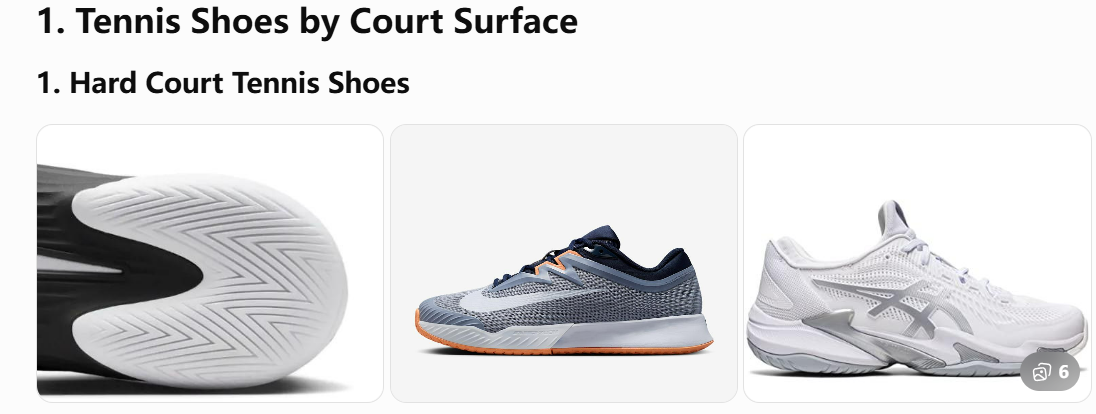
Hard Court Tennis Shoes
Hard court tennis shoes are the most common option for recreational and club players. They are designed for acrylic hard courts, concrete courts, and indoor hard courts.
- Outsole: Dense herringbone tread with high-abrasion rubber.
- Key features: Durable outsole, strong lateral grip, shock absorption, and reinforced toe protection.
- Best for: Daily club play, public hard courts, and baseline rallies.
- Limitations: Not ideal for clay or grass courts because the tread can collect clay and may slip on grass.
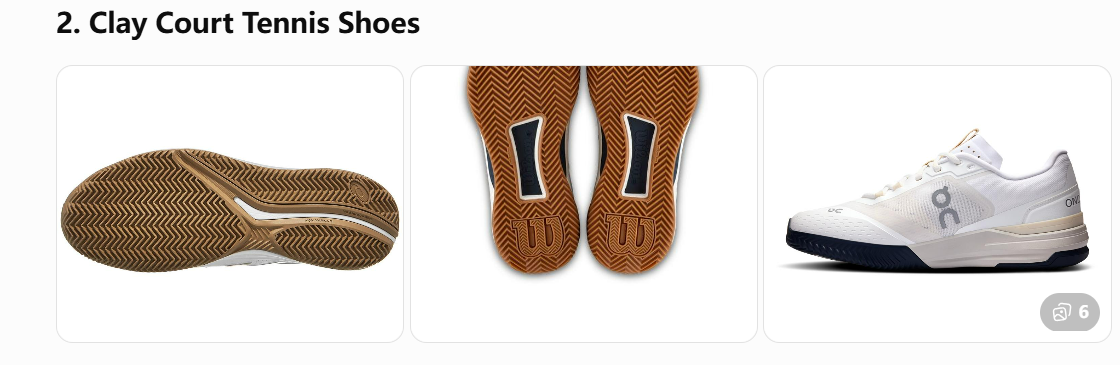
Clay Court Tennis Shoes
Clay court tennis shoes are designed for red clay, soft clay, and indoor clay courts. Their outsole pattern helps players slide safely and move smoothly on loose surfaces.
- Outsole: Deep open herringbone pattern with wide grooves.
- Key features: Controlled sliding, excellent clay traction, and self-cleaning tread.
- Best for: Clay court training, long baseline rallies, and players who like sliding into shots.
- Limitations: Soft rubber wears out quickly on hard courts.
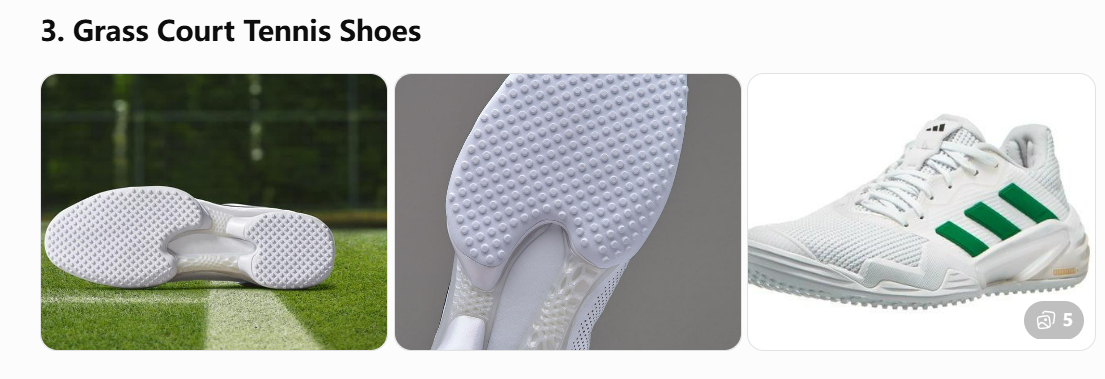
Grass Court Tennis Shoes
Grass court tennis shoes are designed for natural grass courts. They usually feature small rubber nubs that provide grip without damaging the grass surface.
- Outsole: Dense small rubber pimples or nubs.
- Key features: Better traction on grass, reduced slipping, and minimal grass build-up.
- Best for: Grass court clubs and serve-and-volley players.
- Limitations: Not suitable for hard courts or clay courts.
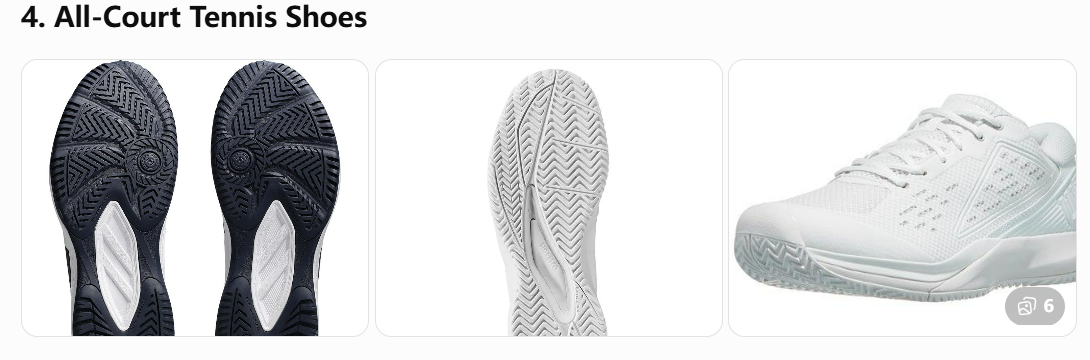
All-Court Tennis Shoes
All-court tennis shoes are a balanced choice for players who often switch between different court surfaces. Their outsole design sits between hard court and clay court shoes.
- Outsole: Medium-depth herringbone pattern.
- Key features: Balanced grip, moderate durability, and basic clay performance.
- Best for: Beginners, casual players, and players who use several court types.
- Limitations: Less durable than hard court shoes on hard surfaces and less specialized than clay shoes on clay.
Indoor Carpet Court Shoes
Indoor carpet court shoes use a flat, non-marking rubber outsole with minimal tread. They are designed to protect indoor carpet or plastic flooring. This category is less common today because carpet courts are not widely used in many regions.
2. Tennis Shoes by Playing Style and Performance
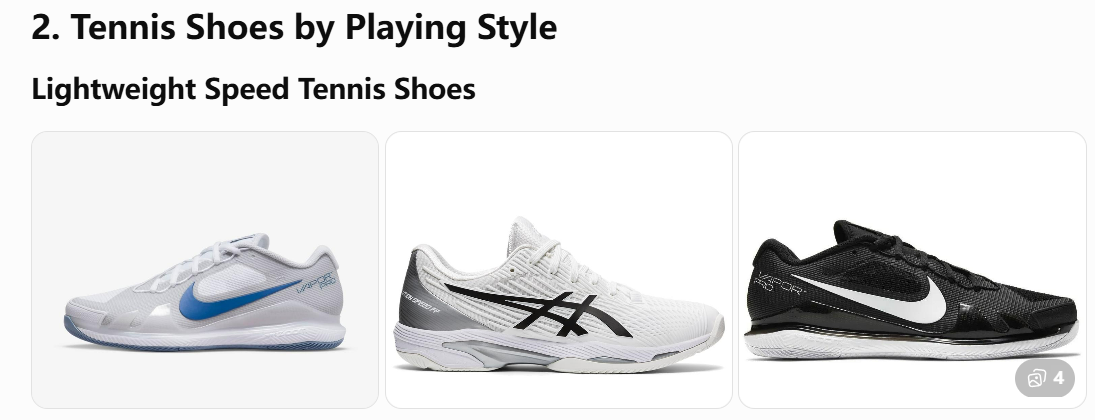
Lightweight Speed Tennis Shoes
Lightweight speed shoes are built for players who value quick movement, fast starts, and responsive footwork.
- Typical examples: Nike Vapor Pro, ASICS Solution Speed FF.
- Key features: Lightweight upper, thinner midsole, flexible forefoot, and quick response.
- Advantages: Fast acceleration and agile court movement.
- Limitations: Less cushioning, less durability, and less support for heavier players.
- Best for: Narrow-footed players, aggressive attackers, serve-and-volley players, and junior players.
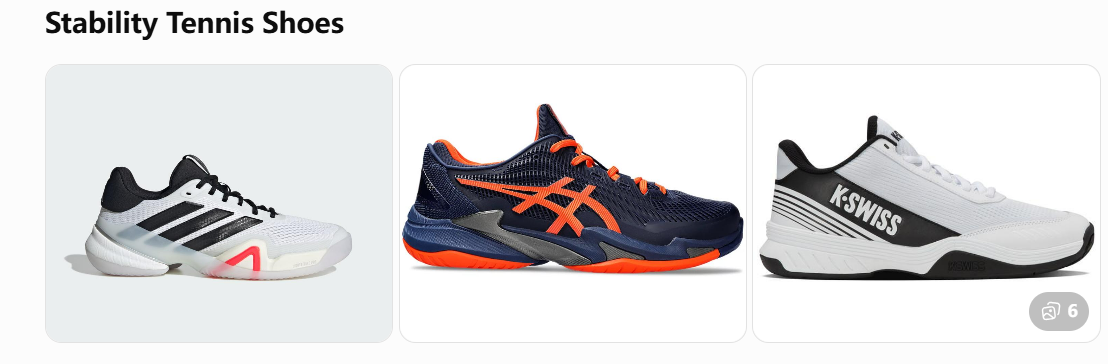
Stability Tennis Shoes
Stability tennis shoes are made for strong lateral support, impact protection, and durability. They are ideal for players who move aggressively from side to side.
- Typical examples: Adidas Barricade, ASICS Court FF, K-Swiss Ultrashot.
- Key features: Thicker midsole, TPU stability frame, firm heel counter, strong arch support, and reinforced upper.
- Advantages: Better anti-rollover protection, shock absorption, torsional stability, and long-lasting durability.
- Best for: Players over 75 kg, baseline grinders, players with frequent lateral movement, older players, and people with ankle injury concerns.
Cushioned Comfort Tennis Shoes
Cushioned comfort tennis shoes focus on soft landing, long-session comfort, and joint protection. They usually have thicker foam midsoles and a roomier upper.
- Key features: Soft cushioning, wide fit options, moderate support, and comfortable ride.
- Best for: Recreational players, long training sessions, knee-sensitive players, and players with foot fatigue.
3. Tennis Shoes by Foot Shape
Narrow Fit Tennis Shoes
Narrow-fit tennis shoes are suitable for players with slim feet and low insteps. Nike Vapor models are often preferred by players who like a snug, fast-feeling shoe.
Wide Fit Tennis Shoes
Wide-fit tennis shoes are better for players with wide feet, high insteps, or thicker feet. ASICS, New Balance, and Adidas Barricade models are commonly considered by wide-foot players.
High-Top Tennis Shoes
High-top tennis shoes are rare in professional tennis. They are mainly selected by players who need extra ankle protection during injury recovery or after previous ankle problems.
Men’s and Women’s Tennis Shoes
Many tennis shoes are available in both men’s and women’s versions. Women’s tennis shoes usually have a narrower last, lower center of gravity, lighter construction, and different color options.
Quick Buying Guide
| Playing Situation | Recommended Tennis Shoes |
|---|---|
| Only play on hard courts | Hard court tennis shoes |
| Switch between hard and clay courts | All-court tennis shoes |
| Mainly play on clay courts | Clay court tennis shoes |
| Prefer speed and quick attack | Lightweight speed tennis shoes |
| Heavy body weight or frequent lateral movement | Stability tennis shoes |
| Need more comfort and joint protection | Cushioned comfort tennis shoes |
Final Recommendation
For most recreational tennis players, hard court tennis shoes are the safest and most practical choice because they offer strong durability, reliable grip, cushioning, and stability. If you regularly change court surfaces, all-court tennis shoes are a better value choice. If you train mainly on clay or grass, choose shoes specifically designed for those surfaces to improve traction and movement efficiency.
Related product suggestion: Pairing the right tennis shoes with high-quality tennis accessories can improve your overall playing experience, from footwork to racket control.
Looking for custom tennis shoes or sports apparel for your brand?
Gloperti offers OEM/ODM sports shoe manufacturing and custom branding solutions for brands, clubs, and retailers.