How to Choose a Thermoformed Pickleball Paddle Manufacturer for T700, Thick-Core, Women’s, and Youth Product Lines
Focus Keyword: thermoformed pickleball paddle manufacturer


Table of Contents
- Introduction
- Why Thermoformed Construction Has Become a Major OEM Category
- T700 Carbon Fiber: What Buyers Should Actually Specify
- Elongated Paddle Development and Tooling Control
- Thick-Core Pickleball Paddles: 16 mm and Beyond
- Women’s Pickleball Paddle Programs: Design Without Stereotypes
- Youth Pickleball Paddle Manufacturing
- Tungsten Weighted Tape as an OEM Accessory
- Sport and Leisure Pickleball Paddle Manufacturing
- How to Evaluate US Pickleball Paddle Manufacturers and Overseas Factories
- Where Are Selkirk and JOOLA Pickleball Paddles Manufactured?
- Which Is the Best Pickleball Paddle Manufacturer?
- Factory Audit Checklist for a Thermoformed Paddle Supplier
- Sampling Strategy: From Concept Sample to Golden Sample
- Quality Control Metrics That Matter
- Commercial Terms, MOQ, and Cost Engineering
- Building a Scalable Product Line with One Manufacturing Partner
- Conclusion
Introduction
The pickleball market has moved well beyond basic fiberglass paddles and generic private-label sets. Buyers now compare raw carbon surfaces, thermoformed perimeter construction, core thickness, swing weight, edge reinforcement, handle geometry, packaging, certification support, and repeatable production quality. That makes the choice of a thermoformed pickleball paddle manufacturer one of the most important decisions for any brand, distributor, club supplier, or sporting-goods importer.
A good factory does more than press materials together. It helps translate a market idea into a stable product specification, controls the variables that affect feel and durability, and supports the buyer from sampling through mass production. A weak supplier may deliver a visually attractive sample but fail to maintain weight, balance, bonding strength, surface texture, or cosmetic consistency across a larger order.
This guide explains how to evaluate a manufacturing partner for modern T700 carbon fiber paddles, elongated models, thick-core paddles, women’s collections, youth paddles, and accessory programs such as tungsten weighted tape. It also addresses common brand-location questions around Selkirk and JOOLA without relying on assumptions that may become outdated. The goal is practical: help buyers build a paddle line that is manufacturable, commercially differentiated, and easier to scale.
Why Thermoformed Construction Has Become a Major OEM Category
Thermoforming is often used to describe a production approach in which the face materials, core, edge structure, and resin system are consolidated with heat and pressure to create a more unified paddle body. Exact processes vary by factory, tooling, resin formulation, and product design. For buyers, the main point is not the marketing label alone; it is whether the manufacturer can produce a durable and repeatable structure.
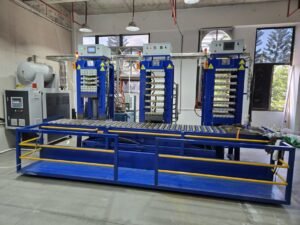
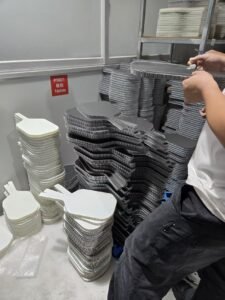
A capable thermoformed pickleball paddle manufacturer should be able to explain the full process flow in plain language. This normally includes material preparation, core cutting, face layup, perimeter treatment, handle construction, pressing, curing, trimming, surface finishing, edge protection, grip installation, inspection, and packing. The supplier should also identify which stages are performed in-house and which are outsourced.
The best OEM programs begin with measurable specifications rather than vague claims such as “more power” or “professional quality.” Buyers should define target weight, static balance, swing feel, paddle thickness, face material, surface texture range, handle length, grip circumference, edge-guard style, artwork method, and packaging. A reliable manufacturer then converts those targets into process controls and inspection criteria.
T700 Carbon Fiber: What Buyers Should Actually Specify
Many product listings use the phrase T700 paddle manufacturer because T700 has become a recognizable search term in the raw-carbon paddle category. However, the material name alone does not guarantee performance. Buyers should ask how the carbon fabric is sourced, what weave and areal weight are used, how the fabric is stored, how many face layers are applied, what resin system is used, and how surface texture is created and controlled.
A factory may offer multiple T700 constructions at different cost levels. One model may use a single visible carbon layer over a supporting composite stack, while another may use a more extensive carbon layup. These options can produce different stiffness, sound, rebound, durability, and manufacturing cost. The buyer should request a bill-of-material summary and approved sample record so that mass production matches the selected construction.
For a T700 elongated manufacturers project, the specification must also address geometry. Elongated shapes can change leverage, sweet-spot position, balance, and perceived head weight. Small changes in handle length or top width can noticeably change how the paddle plays. The factory should therefore control finished dimensions with templates or digital measurement, not only by visual inspection.
Elongated Paddle Development and Tooling Control
Elongated paddles are popular because they can provide extra reach and a familiar shape for players transitioning from tennis or other racket sports. From a manufacturing perspective, however, an elongated design places greater importance on balance control, edge consistency, handle reinforcement, and dimensional accuracy.
When comparing T700 elongated pickleball paddle manufacturers, ask whether the supplier uses dedicated tooling for each shape, how often molds or fixtures are checked, and how trimming tolerances are managed. A paddle that is slightly wider on one side or trimmed unevenly near the throat may pass a casual visual check but feel unbalanced in play.
The approved golden sample should include more than artwork. Record total weight, balance point, thickness, length, width, handle length, grip circumference, edge-guard weight, and packaging configuration. For repeat orders, the same specification sheet should remain the controlling document unless the buyer formally approves a revision.
Thick-Core Pickleball Paddles: 16 mm and Beyond
Thick core pickleball paddles manufacturers commonly offer 16 mm models because this thickness is associated with a softer feel, greater dwell time, and a more controlled response than many thinner constructions. Yet two paddles with the same stated thickness can play differently because of core density, cell size, face stiffness, resin content, perimeter structure, and total weight distribution.
A buyer should not approve a thick-core model based only on thickness. Request a sample set that represents the intended production range, then evaluate feel, sound, stability, twist resistance, and consistency. If possible, compare multiple face layups on the same core and shape. This isolates the influence of the face construction and makes product positioning more deliberate.
Core thickness also affects edge-guard dimensions, handle transition, packaging depth, and carton efficiency. A strong manufacturer considers these downstream details early, preventing avoidable changes after artwork and packaging have already been approved.
Women’s Pickleball Paddle Programs: Design Without Stereotypes
Searches for women’s pickleball paddle fiberglass manufacturers often reflect demand for lighter paddles, comfortable grips, coordinated colors, giftable packaging, or beginner-friendly sets. A good OEM program should not assume that all women want the same weight, color, or playing style. Instead, the manufacturer should support a clear product brief based on target user needs.
For example, a women’s collection may include a lightweight fiberglass entry model, a midweight carbon control model, and a premium thermoformed power-control model. The visual identity can remain consistent while the performance options vary. Grip circumference and handle shape deserve special attention because comfort and confidence are strongly affected by fit.
Artwork should be tested on the actual surface and process, not approved only from a computer mockup. Fiberglass, raw carbon, and coated composite faces reproduce colors differently. The supplier should provide realistic preproduction samples so the buyer can confirm contrast, fine-line clarity, logo placement, and finish before mass production.
Youth Pickleball Paddle Manufacturing
Youth pickleball paddle manufacturers must solve a different design problem from adult paddle factories that simply scale down an existing shape. A youth paddle should be easy to swing, comfortable to hold, durable enough for repeated use, and visually appealing to younger players. Weight, grip size, handle length, and overall dimensions should be selected for the target age group rather than treated as one universal specification.
Buyers should ask for separate recommendations for children, preteens, and junior competitors. A very light paddle may be suitable for first-time learners, while an older junior player may prefer a near-adult construction with a smaller grip and slightly reduced weight.
Durability is especially important for school, camp, and club programs. Edge protection, grip adhesion, print resistance, and packaging should tolerate frequent handling. The manufacturer should also provide clear warnings and age-appropriate product information where required by the destination market.
Tungsten Weighted Tape as an OEM Accessory
A tungsten weighted tape for pickleball paddles manufacturer can help brands create an accessory line that increases average order value and gives players a way to tune balance and stability. Compared with dense metal strips that may raise handling concerns, tungsten-based weighted tape is often marketed as a convenient customization option. The exact composition, adhesive, dimensions, liner, and packaging should be verified with the supplier.
For OEM buyers, the key questions are adhesive performance, clean removal, weight accuracy per segment, edge smoothness, packaging instructions, and storage stability. The tape should be tested on common edge-guard materials and paddle surfaces to reduce the risk of residue or detachment during use.
A useful retail kit may include pre-cut strips, a placement guide, alcohol wipes, and a small storage card. The manufacturer should print clear instructions explaining that added weight changes swing feel and that users should apply the product gradually and symmetrically.
Sport and Leisure Pickleball Paddle Manufacturing
The phrase sport leisure paddle manufacture often describes value-focused paddles for casual play, schools, resorts, corporate gifts, promotional programs, and family sets. These products may not require the same premium construction as tournament-oriented T700 models, but they still need reliable bonding, safe edges, comfortable grips, and consistent printing.
A manufacturer with both entry-level and performance capabilities can help a buyer create a product ladder. The range might begin with a fiberglass recreational set, move to a carbon-fiber intermediate paddle, and finish with a thermoformed T700 flagship model. Shared branding and packaging architecture can make the line feel coherent while preserving clear price differences.
For recreational sets, carton efficiency and accessory selection are especially important. Paddle covers, balls, bags, overgrips, and retail boxes can strongly affect landed cost. The supplier should provide packing dimensions, gross weight, carton quantity, and drop-test recommendations before the buyer finalizes the retail price.
How to Evaluate US Pickleball Paddle Manufacturers and Overseas Factories
Buyers searching for US pickleball paddle manufacturers may be looking for domestic production, local engineering, faster communication, brand heritage, or simplified logistics. The term “manufacturer,” however, can refer to several business models: fully domestic production, domestic assembly, local finishing, design and quality control with overseas production, or a brand that works with contract factories.
The same distinction applies when comparing any supplier. Ask where each production stage occurs, who owns the tooling, who purchases the materials, where quality control is performed, and who is responsible for corrective action. This is more useful than relying on a country label alone.
Overseas factories can offer broad material choices, integrated packaging, competitive tooling, and scalable production. Domestic partners may offer easier site visits, faster engineering communication, and lower minimums for some programs. The right choice depends on the buyer’s volume, launch speed, quality-control resources, tariff exposure, and need for customization.
Where Are Selkirk and JOOLA Pickleball Paddles Manufactured?
Questions such as “Selkirk manufacturing location” and “where are JOOLA pickleball paddles manufactured” are common because buyers want to understand how leading brands organize their supply chains. Manufacturing arrangements can vary by model, production stage, and time, so procurement decisions should not be based on an old forum post, a single product label, or a broad assumption about an entire brand.
When researching a brand, review the current product packaging, official company statements, regulatory markings, customs information where legally available, and direct responses from the company. Distinguish between design location, material origin, component production, assembly, finishing, and final quality control.
For OEM buyers, the more useful lesson is that successful brands often manage a system rather than rely on one marketing claim. Product engineering, approved materials, tooling ownership, inspection standards, traceability, packaging, and after-sales response all contribute to consistency.
Which Is the Best Pickleball Paddle Manufacturer?
There is no single answer to “which is the best pickleball paddle manufacturers” because the best supplier depends on the project. A factory that is excellent for 50-piece promotional orders may not be ideal for a 20,000-piece thermoformed program. A premium carbon specialist may be too expensive for a school set, while a low-cost recreational supplier may lack the process control required for a performance paddle.
A practical scorecard should include product-development capability, communication speed, sample accuracy, material traceability, tooling control, weight and balance consistency, surface-finish control, packaging support, certification documentation, production capacity, corrective-action discipline, and commercial terms.
Buyers should score evidence, not promises. Request inspection reports, material documents, sample records, process photos, and clear answers to technical questions. A supplier that acknowledges limitations and proposes a test plan is often more trustworthy than one that says every requirement is “no problem.”
Factory Audit Checklist for a Thermoformed Paddle Supplier
A remote or in-person audit should follow the actual production flow. Begin with incoming materials and storage. Carbon fabric, honeycomb core, resin systems, adhesives, grips, and edge guards should be identified and protected from contamination or environmental damage. Lot records should connect incoming materials to production batches.
Next, review cutting, layup, pressing, curing, trimming, drilling, handle assembly, surface finishing, printing, edge installation, gripping, and packing. Ask where defects are most common and how operators detect them. Strong factories normally know their high-risk steps and can explain preventive controls.
Finally, inspect the quality system. Look for approved samples, calibrated scales and gauges, batch records, nonconformance handling, rework control, final inspection criteria, and retained samples. The audit does not need to be bureaucratic, but it should show that the factory can repeat the approved product.
Sampling Strategy: From Concept Sample to Golden Sample
Do not jump directly from a digital rendering to a large order. A disciplined sampling process usually includes a concept sample, an engineering sample, a decorated preproduction sample, and a sealed golden sample. Each stage answers different questions.
The concept sample confirms general shape and feel. The engineering sample tests construction choices such as face layup, core, perimeter treatment, and handle reinforcement. The decorated sample confirms artwork, color, logo position, finish, edge guard, grip, label, and packaging. The golden sample becomes the production reference.
Record every change in writing. Avoid approving modifications only through chat messages or marked-up photos. A revision-controlled specification sheet reduces confusion, especially when several people are involved in design, purchasing, and quality approval.
Quality Control Metrics That Matter
The most useful quality metrics are measurable and connected to the customer experience. Typical controls include finished weight range, thickness, length, width, handle length, grip circumference, balance point, visual appearance, print alignment, edge adhesion, grip installation, sound consistency, and packaging condition.
For performance paddles, buyers may also establish internal tests for face bonding, edge durability, impact resistance, temperature exposure, and repeated play. Test methods should be agreed before production so that both buyer and factory understand acceptance criteria.
Inspection sampling plans should reflect order size and risk. New models, new tooling, new materials, and first production runs deserve tighter attention than mature repeat orders. Retained samples from each batch help investigate future complaints and compare production over time.
Commercial Terms, MOQ, and Cost Engineering
A quoted unit price is only one part of the commercial decision. Buyers should also compare tooling charges, sample fees, artwork setup, packaging cost, inspection cost, payment terms, lead time, spare-part policy, defect allowance, and shipping configuration.
MOQ can vary by material, shape, printing process, packaging, and color. A low paddle MOQ may still require a higher quantity for custom grips, edge guards, bags, or boxes. Ask the supplier to separate fixed costs from variable costs so the launch quantity can be designed intelligently.
Cost engineering should protect the product concept rather than quietly downgrade it. If the target price is too low, discuss visible and invisible tradeoffs: simpler packaging, shared shape tooling, standard grip colors, fewer artwork variants, or a different face construction. Any material change should be documented and reapproved.
Building a Scalable Product Line with One Manufacturing Partner
The strongest supplier relationships often begin with one carefully developed model and expand into a coordinated range. A buyer might launch a 16 mm T700 thermoformed paddle, then add an elongated version, a lightweight women’s option, a youth paddle, a fiberglass recreational set, paddle covers, replacement grips, and tungsten weighted tape.
Using one qualified partner can simplify artwork control, packaging consistency, accessory matching, inspection standards, and repeat ordering. However, buyers should still protect critical files, maintain specification ownership, and qualify backup options for high-volume products.
For custom OEM and ODM paddle development, Gloperti supports material selection, thickness options, custom artwork, packaging, sampling, and scalable production planning. Buyers can review the custom paddle program at the product development page linked below.
Conclusion


Choosing a thermoformed pickleball paddle manufacturer is not a logo-printing decision. It is a product-engineering and supply-chain decision that affects feel, durability, consistency, brand reputation, and margin.
The best process starts with a precise product brief, continues through controlled sampling and measurable quality standards, and ends with a supplier that can repeat the approved construction at scale. T700 carbon, elongated geometry, thick cores, women’s collections, youth paddles, recreational sets, and weighted accessories can all fit within one coherent product strategy when specifications are managed carefully.
Before placing a production order, verify materials, tooling, process ownership, inspection methods, packaging, lead time, and corrective-action responsibilities. A manufacturer that provides transparent evidence and disciplined documentation gives your brand a much stronger foundation for long-term growth.
Frequently Asked Questions
What should I ask a thermoformed pickleball paddle manufacturer before ordering?
Ask about the full process flow, face materials, core specification, perimeter construction, resin system, tooling ownership, weight tolerance, balance control, surface-finish control, testing, packaging, lead time, and corrective-action procedure.
Is T700 carbon fiber enough to guarantee a high-quality paddle?
No. T700 is only one input. Performance and durability also depend on fabric construction, resin, layer stack, core, pressing, curing, edge structure, handle reinforcement, trimming, and quality control.
What is the best core thickness for a private-label paddle?
There is no universal best thickness. Thicker cores are often positioned for control and stability, while thinner cores may feel faster or more responsive. The right choice depends on target player, shape, weight, face stiffness, and price position.
Can one factory produce adult, women’s, and youth pickleball paddles?
Yes, provided the factory can control different weights, grip sizes, handle lengths, shapes, materials, and packaging. Each model should have its own approved specification and golden sample.
How should I verify where a branded pickleball paddle is manufactured?
Check current packaging and markings, official brand information, direct company responses, and legally available trade data. Separate design, component production, assembly, finishing, and quality-control locations.
What is a reasonable sampling process for an OEM paddle?
Use a concept sample, engineering sample, decorated preproduction sample, and sealed golden sample. Record every approved change in a revision-controlled specification.
Should I buy from a US manufacturer or an overseas factory?
Choose based on product complexity, volume, lead time, communication needs, total landed cost, quality-control resources, tariff exposure, and the supplier’s actual capabilities rather than location alone.
Can weighted tape be included with a private-label paddle line?
Yes. A supplier can provide pre-cut tungsten weighted tape, instructions, packaging, and placement guides. Verify adhesive performance, weight accuracy, clean removal, and compatibility with the paddle edge.
Start Your Custom Pickleball Paddle Project
Develop T700 carbon, thermoformed, fiberglass, women’s, youth, and accessory programs with custom branding and packaging.
Ready to Source the Right Paddle?
Whether you need OEM/ODM manufacturing, wholesale pricing, or a custom branded paddle – we’re here to help. Get a free quote within 24 hours.