How to Choose a Pickleball Paddles Supplier for OEM, Wholesale, and Retail Growth
Focus Keyword: pickleball paddles supplier
For importers, distributors, sports brands, clubs, and online retailers: this guide provides a practical framework for sourcing private-label paddles and retail-ready sets.
Table of Contents
- Introduction: Why the Supplier Choice Matters
- 1. Start with a Clear Product and Market Position
- 2. Evaluate Supplier Capability, Not Just the Product Photo
- 3. Compare Composite, Carbon Fiber, Fiberglass, and Graphite Options
- 4. Understand Paddle Construction and Manufacturing Methods
- 5. Verify Dimensions, Weight, Balance, Grip, and Tolerances
- 6. USAPA Approval and Responsible Compliance Claims
- 7. Build Retail-Ready Sets That Sell
- 8. Custom Branding, Graphics, Packaging, and OEM Support
- 9. Sampling: Move from Concept to a Reliable Golden Sample
- 10. Quality Control from Incoming Materials to Final Shipment
- 11. Pricing: Compare Total Value, Not Only Unit Cost
- 12. MOQ, Lead Time, Capacity, and Inventory Planning
- 13. Communication, Documentation, and Project Management
- 14. Red Flags When Selecting a Supplier
- 15. A Practical Supplier Scorecard
- 16. Why China Remains Important for Pickleball Paddle Sourcing
- 17. How Gloperti Supports OEM and Wholesale Paddle Programs
- Conclusion: Choose a Supplier That Can Support Repeatable Growth
- Frequently Asked Questions
Introduction: Why the Supplier Choice Matters
The global pickleball market continues to create opportunities for sporting-goods brands, distributors, clubs, promotional-product companies, and online retailers. Yet a successful paddle program depends on more than selecting an attractive shape and placing a logo on the face. The right pickleball paddles supplier must combine product engineering, stable material sourcing, repeatable production, quality control, customization support, packaging expertise, and dependable communication.
For buyers, the supplier decision affects nearly every commercial outcome: landed cost, customer reviews, return rates, certification claims, product differentiation, inventory planning, and the speed at which a new collection can reach the market. A low quotation may look appealing at first, but inconsistent core thickness, weak edge guards, poor print adhesion, inaccurate weight ranges, or unreliable lead times can quickly erase the apparent savings.
This guide explains how to evaluate a supplier for private-label paddles, wholesale programs, retail bundles, approved competition models, composite products, and training equipment. It also provides a practical framework for comparing quotations and moving from concept to repeat production with fewer surprises.
1. Start with a Clear Product and Market Position
Before requesting prices, define the customer and sales channel. A paddle designed for a beginner bundle is not the same product as a thermoformed performance paddle sold to advanced players. Likewise, a club training program may prioritize durability and consistency, while an e-commerce brand may prioritize distinctive graphics, packaging, and a compelling feature story.
A useful sourcing brief should identify the target player, intended retail price, preferred face material, core thickness, shape, average weight, grip size, packaging format, logo method, quantity, compliance requirements, and expected delivery date. It should also distinguish mandatory specifications from flexible preferences. This prevents suppliers from quoting products that look similar in photographs but differ substantially in construction and performance.
For example, a buyer searching for a pickleball paddle set supplier may need two paddles, four outdoor balls, two indoor balls, and a zippered carry bag. Another buyer may need a single premium paddle with a neoprene cover and gift box. Both are “pickleball products,” but the cost structure, assembly steps, packaging dimensions, and quality checks are completely different.
Clear positioning also helps avoid the common mistake of overengineering a low-price product or under-specifying a premium one. A well-prepared supplier can recommend a construction that supports the intended price point without sacrificing the features customers will actually notice.
2. Evaluate Supplier Capability, Not Just the Product Photo
A professional supplier should be able to explain how the paddle is built, where critical materials come from, which production steps are completed in-house, which steps are subcontracted, and how quality is controlled. Product photos alone do not prove manufacturing capability.
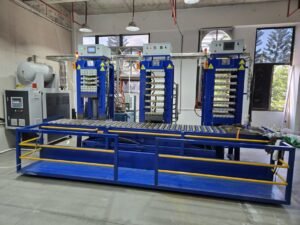
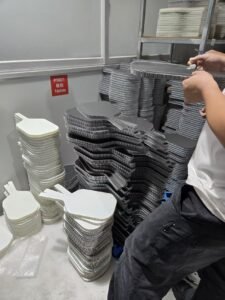
Ask whether the supplier controls lamination, core cutting, face bonding, edge-guard installation, handle assembly, printing, finishing, packaging, and final inspection. In many supply chains, several factories may contribute to one finished paddle. That is not automatically a problem, but the lead supplier must have clear incoming-inspection standards and traceability for outsourced components.
The strongest suppliers respond with measurable information rather than vague assurances. They can provide target tolerances for length, width, thickness, weight, balance, grip circumference, print position, surface finish, and packaging. They can also explain how production samples are approved and how deviations are handled.
When comparing a trading company with a manufacturing-focused partner, consider the total service package. A capable trading partner may offer strong project management and broader product consolidation, while a direct factory may offer deeper process control. The best choice depends on the complexity of your program, order size, need for mixed items, and internal sourcing experience.
3. Compare Composite, Carbon Fiber, Fiberglass, and Graphite Options
Material terminology is often used loosely in online listings, so buyers should request a clear bill of materials or construction description. “Composite” can refer broadly to a paddle made from multiple engineered materials, but it does not reveal the exact face layer, resin system, core density, or manufacturing method.
A pickleball paddles composite supplier may offer fiberglass-faced paddles, carbon-fiber-faced paddles, graphite-style surfaces, hybrid laminates, and different polypropylene honeycomb cores. Each option affects feel, power, control, spin potential, weight, durability, and cost.
Fiberglass faces are commonly selected for entry-level and value-focused products. They can provide lively response and colorful graphic possibilities. Carbon fiber is often used for performance-focused paddles because buyers associate it with control, stiffness, and premium positioning. Raw or textured carbon surfaces may support a stronger spin story, but surface consistency must be controlled. Graphite terminology may describe a thin carbon-based face construction, although buyers should verify the actual layer composition.
Core thickness also matters. Thinner cores, such as 10 mm or 13 mm, are often positioned for faster response and power. A 16 mm core is commonly selected for control, stability, and a softer feel. However, thickness alone does not determine performance. Core cell size, density, face stiffness, shape, perimeter construction, and total weight all interact.
A qualified pickleball paddles composite supplier in China should provide samples that represent production materials, not hand-built prototypes using different components. Request written confirmation that approved materials and tolerances will be maintained for mass production.
4. Understand Paddle Construction and Manufacturing Methods
Most conventional paddles use a sandwich construction: a honeycomb core bonded between face sheets, with a handle structure and edge protection added afterward. Performance-oriented products may include cold pressing, hot pressing, thermoforming, foam-injected perimeter structures, reinforced throat areas, or unibody carbon layers.
Traditional cold-pressed construction is widely used and can deliver reliable performance at competitive cost. Thermoformed construction typically uses heat and pressure to create a more integrated perimeter and may support a premium performance position. It also requires tighter control of temperature, pressure, adhesive behavior, foam expansion, and dimensional stability.
Ask the supplier to describe the process in practical terms. How is adhesive applied? How is pressure controlled? How long is curing? How are voids, delamination, warped faces, loose edge guards, or handle failures detected? What happens when a paddle falls outside the approved weight range?
Do not assume that a more complex process is automatically better for every customer. A beginner set may gain little from expensive thermoformed construction if the retail price cannot support it. Conversely, a premium paddle program needs credible structural differentiation, controlled surface texture, and reliable performance from batch to batch.
5. Verify Dimensions, Weight, Balance, Grip, and Tolerances
A specification sheet should include more than overall length and width. Buyers should define core thickness, face thickness where relevant, handle length, handle circumference, edge-guard width, target weight range, balance expectation, and acceptable cosmetic tolerances.
Weight is especially important because customers notice it immediately. A broad uncontrolled range can create inconsistent reviews even when the average weight looks correct. Specify a target and a realistic tolerance, such as 225-235 grams, based on the construction. If your brand offers lightweight, standard, and power versions, define separate ranges and labeling procedures.
Balance affects maneuverability and perceived power. Two paddles with the same total weight can feel different if one is head-heavy and the other is handle-balanced. Advanced programs may specify swing weight or balance point, but even basic products benefit from consistent component selection.
Grip construction also deserves attention. Confirm grip length, circumference, cushioning, tackiness, seam quality, end-cap security, and logo orientation. For a pickleball training paddle supplier, grip durability may be more important than luxury feel because equipment can be used repeatedly by clubs, coaches, and students.
Create an approved measurement method so the supplier and buyer use the same reference points. Ambiguous measurement practices are a frequent cause of avoidable disputes.
6. USAPA Approval and Responsible Compliance Claims
Many buyers search for a pickleball paddle USAPA approved supplier because approval can be important for tournament-oriented products. However, buyers should treat approval as a model-specific process rather than a general factory credential.
A supplier may have experience producing approved paddles, but your customized model may still require its own submission, testing, documentation, fees, and final listing under the appropriate brand and model name. Changes to face material, texture, dimensions, construction, or graphics can affect the approval pathway. Always verify the latest requirements directly with the governing organization before making claims in packaging or marketing.
During sourcing, ask the supplier for examples of approved models they have produced, the scope of their support, and the exact responsibilities of each party. Clarify who prepares samples, who submits documents, who pays testing or listing costs, and whether the production version will match the tested sample.
Avoid using approval logos or phrases before authorization is complete. Responsible compliance language protects the brand, distributor, and supplier while reducing the risk of listing removals or customer complaints.
7. Build Retail-Ready Sets That Sell
Retail bundles can increase average order value and make the product easier for beginners to purchase. A pickleball paddle sets supplier should understand not only paddle production but also accessory selection, kitting, packaging efficiency, and carton planning.
Common bundles include two paddles, four balls, and a carry bag. Larger family sets may include four paddles and multiple balls. The best configuration depends on shipping cost, marketplace fee structure, target customer, and retail price.
For a pickleball paddles set of 2 supplier, the two paddles may use matching construction with different graphics or colors. Confirm whether both paddles must meet the same weight range and whether they will be matched as a pair. Balls should be specified by diameter, hole pattern, material, color, bounce performance, indoor or outdoor use, and packaging quantity.
Bag quality is often overlooked. Check zipper performance, stitching, handle strength, fabric weight, print durability, and internal fit. A bag that is too tight can damage edge guards or make the set feel cheap. A bag that is oversized increases carton volume and shipping cost.
Ask the supplier to provide the complete packed weight and dimensions, not only the product weight. For e-commerce, dimensional weight can materially affect profitability. A strong pickleball paddles set supplier will help optimize the arrangement of paddles, balls, instructions, and accessories inside the package.
8. Custom Branding, Graphics, Packaging, and OEM Support
Customization is where a supplier becomes a long-term product-development partner rather than a catalog vendor. Typical options include custom face graphics, private-label grips, edge-guard colors, end-cap logos, paddle covers, bags, retail boxes, barcode labels, instruction cards, and master-carton marks.
UV printing offers detailed color graphics and flexible design possibilities. Screen printing may be suitable for simpler logos or certain promotional applications. Water-transfer, decals, textured coatings, and molded branding may also be available depending on the construction and quantity. Request samples that demonstrate the exact print method.
Color management is critical. Screens do not guarantee production color, so use Pantone references where possible and approve physical samples for important brand colors. Define acceptable variation, print placement, bleed area, and artwork resolution. Also confirm whether graphics may affect surface texture or approval requirements.
Packaging should communicate the product position and survive transportation. A premium paddle may need a structured box with protective inserts, while a value set may use a printed sleeve or carry bag. Include country-of-origin marking, warnings, age guidance, importer details, barcodes, recycling marks, and marketplace labels as required for the destination.
Suppliers that provide design templates, dielines, mockups, and pre-production samples can significantly reduce launch time. Buyers should keep final artwork files, approval records, and packaging specifications under version control.
9. Sampling: Move from Concept to a Reliable Golden Sample
A disciplined sampling process reduces risk. Start with an existing construction sample when evaluating basic feel and quality. Then create a customized prototype using the intended face material, core, thickness, shape, grip, graphics, and packaging.
The approved final sample should become the golden sample for mass production. Record its weight, dimensions, balance, color, print position, surface appearance, sound, grip feel, accessories, and packaging. Photographs are helpful, but physical reference samples are stronger.
Separate aesthetic approval from performance approval. A sample can look excellent while having the wrong weight or core behavior. Conduct play testing with users who match the target market. For a beginner product, evaluate comfort, forgiveness, and ease of use. For an advanced product, assess control, power, stability, spin, sweet spot, and hand speed.
Ask whether sample charges are refundable after an order, how many revisions are included, and how long each revision takes. Avoid rushing into mass production with unresolved comments. Small ambiguities become large problems when multiplied across hundreds or thousands of units.
10. Quality Control from Incoming Materials to Final Shipment
Quality control should be defined before production begins. A robust plan covers incoming materials, in-process checks, final inspection, packaging inspection, and shipment release.
Incoming checks may include face-sheet appearance, core thickness and density, adhesive condition, grip material, edge guards, foam components, bags, balls, and printed packaging. In-process checks can identify warped panels, incomplete bonding, misaligned graphics, rough edges, loose handles, uneven grips, and inconsistent dimensions before final assembly.
Final inspection should verify quantity, model, color, dimensions, weight, cosmetics, edge-guard fit, handle security, grip wrapping, print adhesion, accessory completeness, packaging, labels, carton marks, and drop-test expectations. For performance-focused paddles, additional tests may include surface roughness, deflection, impact resistance, bond strength, or destructive sampling.
Agree on an inspection standard and sampling level. Buyers may use supplier self-inspection, third-party inspection, or both. Photographs and videos are useful, but they should support a documented checklist rather than replace it.
A reliable supplier should be willing to investigate root causes and implement corrective actions. Replacing defective units is helpful, but preventing recurrence is more valuable.
11. Pricing: Compare Total Value, Not Only Unit Cost
Supplier quotations can differ because the products are not truly equivalent. Before comparing prices, normalize the specifications: face material, core thickness, construction, dimensions, weight range, grip, print method, edge guard, accessories, packaging, labels, testing, inspection, and shipping terms.
Ask for a clear price breakdown when possible. Tooling, sample charges, artwork setup, certification support, packaging plates, molds, testing, and freight may be separate. Confirm the Incoterm, currency, payment schedule, quotation validity, production lead time, and quantity breaks.
A low unit price may exclude critical elements or rely on wider tolerances. A slightly higher price may include stronger materials, better process control, packaging assembly, or lower defect risk. Evaluate landed cost and likely return rate, not just ex-factory price.
For buyers seeking pickleball paddles for sale supplier options, catalog models can reduce development cost and lead time. Private molds and exclusive constructions can strengthen differentiation but require higher investment and longer validation. Many growing brands begin with a proven platform, customize graphics and packaging, then introduce proprietary features after sales data confirms demand.
12. MOQ, Lead Time, Capacity, and Inventory Planning
Minimum order quantity depends on construction, materials, graphics, packaging, and how much customization is required. A supplier may support a relatively low MOQ for stock shapes with custom printing, while custom molds, unique edge guards, special grips, or printed boxes may require larger quantities.
Ask the supplier to separate MOQ by component. The paddle MOQ may be lower than the retail-box MOQ. In that case, buyers can use standard packaging for a pilot order or purchase extra packaging for future production.
Lead time should be divided into sample development, material preparation, production, inspection, and shipping. Seasonal demand, holidays, approval testing, and packaging delays can affect the schedule. Build buffer into launch plans, particularly for marketplace promotions or trade shows.
Capacity claims should be tested with practical questions. What is the normal monthly output for your construction? How many similar orders are currently in production? Which step is the bottleneck? How quickly can the supplier repeat an order using reserved materials?
Forecast sharing can help both parties. The supplier can plan critical materials, while the buyer can reduce the risk of stockouts. For fast-growing products, consider staggered deliveries or framework orders rather than one oversized shipment.
13. Communication, Documentation, and Project Management
Strong communication is a commercial advantage. The supplier should respond clearly, confirm changes in writing, identify risks early, and maintain version control for specifications and artwork.
Use a single product specification document that includes drawings, materials, tolerances, colors, artwork references, packaging, labeling, inspection criteria, and approved samples. Every revision should have a date and version number. Verbal changes should be added to the written record.
During production, request milestone updates rather than constant informal messages. Useful milestones include material arrival, printing approval, lamination completion, assembly start, packaging completion, inspection, and shipment booking.
For complex OEM projects, assign one decision-maker on each side. Too many uncoordinated contacts can create conflicting instructions. A supplier that asks intelligent questions and challenges unclear specifications is usually safer than one that agrees instantly to everything.
14. Red Flags When Selecting a Supplier
Several warning signs deserve attention. Be cautious when a supplier refuses to provide measurable specifications, changes material descriptions frequently, offers unrealistically short lead times, cannot explain approval claims, avoids sample revisions, or provides quotations that omit packaging and quality requirements.
Other red flags include inconsistent company names on documents, unclear payment beneficiaries, copied product images, reluctance to show production evidence, unusually broad product claims without technical detail, and repeated pressure to place a large order before sample approval.
A very low MOQ combined with extensive customization may also require clarification. The supplier may be using digital printing and stock components, which can be perfectly suitable, but buyers should understand the limits. Similarly, claims of complete exclusivity should be supported by contract terms, ownership of molds or artwork, and clear geographic or channel boundaries.
Trust should be built through evidence: samples, documents, video calls, audits, inspection records, references, repeatable communication, and successful small orders.
15. A Practical Supplier Scorecard
A scorecard makes supplier selection more objective. Consider weighting the following categories according to your business model:
- Product engineering and construction knowledge
- Material transparency and sourcing stability
- Sample quality and revision speed
- Dimensional and weight control
- Printing and packaging capability
- Compliance and approval experience
- Quality-control system
- MOQ and pricing competitiveness
- Lead time and capacity
- Communication and documentation
- Financial and commercial reliability
- Corrective-action support
Score each supplier using the same evidence. Include notes on risks and mitigation. A supplier with the highest product score may not be the best for a mixed-SKU promotional order, while a flexible set assembler may not be ideal for a premium performance paddle. The scorecard should reflect the actual project.
When possible, place a controlled pilot order before scaling. Measure defect rate, on-time delivery, carton accuracy, customer feedback, and supplier response. Real order performance is more informative than a polished presentation.
16. Why China Remains Important for Pickleball Paddle Sourcing
China remains a major sourcing base for pickleball paddles because of its established supply networks for carbon fiber, fiberglass, polypropylene honeycomb, adhesives, foam, molded plastic components, grips, textiles, printing, packaging, and export logistics.
This ecosystem can support rapid sampling, multiple construction levels, coordinated accessory sets, and competitive OEM customization. However, buyers should avoid treating all suppliers as interchangeable. Capability varies widely, and the most appropriate partner depends on product tier, volume, compliance needs, and service expectations.
A specialized pickleball paddles composite supplier in China can help translate a commercial concept into a producible specification. The greatest value often comes from engineering suggestions, material alternatives, packaging optimization, and early identification of risks – not simply a lower labor cost.
Successful sourcing requires clear specifications, verified samples, documented approvals, inspection, and long-term relationship management. Geography does not replace due diligence, but a well-managed Chinese supply chain can provide strong flexibility and scale.
17. How Gloperti Supports OEM and Wholesale Paddle Programs
Gloperti supports sports brands, importers, distributors, clubs, promotional buyers, and online sellers with custom pickleball paddle development. Available programs can include carbon fiber and fiberglass faces, multiple core thicknesses, custom graphics, private labeling, paddle covers, carry bags, retail packaging, and set assembly.
Typical customization may include 13 mm or 16 mm constructions, standard or elongated shapes, personalized UV printing on both sides, logo application, color coordination, and packaging development. For suitable projects, low-volume customization can help buyers test designs before scaling.
Our goal is to make the development process practical: define the target market, select a construction, prepare artwork, approve samples, confirm production standards, inspect the order, and organize export packaging. Buyers can also request a visual mockup and product recommendation based on retail price and player profile.
To discuss a new paddle or set program, visit the custom pickleball racket page and share your target quantity, market, preferred material, thickness, graphics, and packaging requirements.
Conclusion: Choose a Supplier That Can Support Repeatable Growth
The best supplier is not simply the company with the lowest quotation or the largest catalog. It is the partner that can convert your product idea into a repeatable, documented, commercially viable product.
A dependable pickleball paddles supplier should understand materials, construction, tolerances, branding, packaging, compliance, quality control, and export requirements. For bundles, the supplier must also manage accessories and kitting. For performance paddles, the supplier must control construction and surface consistency. For training products, durability and repeatability are essential.
Begin with a clear brief, compare equivalent specifications, approve a golden sample, define inspection standards, and test the relationship with a pilot order. This approach reduces risk and creates a stronger foundation for wholesale, private-label, and retail growth.
Frequently Asked Questions
What should I ask a pickleball paddles supplier before ordering?
Ask about construction, face and core materials, target tolerances, MOQ, sample process, printing, packaging, quality control, lead time, payment terms, compliance support, and shipment terms.
What is the difference between a paddle supplier and a paddle manufacturer?
A manufacturer performs some or all production processes, while a supplier may coordinate products from one or more factories. Either can be suitable if capability, quality control, transparency, and accountability are strong.
Can a supplier make custom pickleball paddle sets?
Yes. A pickleball paddle set supplier can typically combine two or four paddles with balls, bags, covers, instructions, retail packaging, and private labeling.
What MOQ is typical for custom pickleball paddles?
MOQ varies by construction and customization. Stock shapes with custom graphics often allow lower quantities than custom molds, unique components, or fully printed retail boxes.
Does a factory with approved paddles guarantee my model will be approved?
No. Approval generally applies to a specific brand and model. A customized construction may require its own submission and verification under current governing-body requirements.
Which material is best for a private-label paddle?
Fiberglass can suit value and beginner products, while carbon fiber is often selected for premium control and spin positioning. The best choice depends on customer, retail price, core, shape, weight, and performance target.
How long does custom paddle production take?
Timelines depend on sampling, material availability, printing, packaging, quantity, testing, and season. Buyers should separate sample lead time from mass-production and shipping time.
How can I reduce quality risk?
Use a detailed specification, approve a physical golden sample, define tolerances and inspection criteria, conduct pre-shipment inspection, and begin with a controlled pilot order.
Can a supplier match two paddles by weight in a set?
Yes, if weight matching is specified before production. Define the acceptable range for each paddle and the maximum difference within each set.
What information should I send for a quotation?
Send quantity, destination, face material, core thickness, shape, dimensions, weight, grip, graphics, packaging, accessories, approval needs, and target delivery date.
Start Your Custom Pickleball Paddle Project
Share your target market, quantity, preferred face material, core thickness, artwork, accessories, and packaging requirements.
Looking for a reliable OEM/ODM pickleball paddle manufacturer?
Gloperti specializes in custom pickleball paddle manufacturing — logos, colors, packaging, and specs fully customized for brands, clubs, and retailers.
Ready to Source the Right Paddle?
Whether you need OEM/ODM manufacturing, wholesale pricing, or a custom branded paddle – we’re here to help. Get a free quote within 24 hours.