How to Choose a Pickleball Paddle Supplier for Custom, Carbon Fiber, and Retail Programs
Focus Keyword: pickleball paddle supplier
A practical sourcing guide for buyers comparing custom, carbon fiber, graphite, personalized, pink, and set-of-two pickleball paddle suppliers.
Table of Contents
- Introduction
- 1. Start with the target customer and sales channel
- 2. Compare paddle construction, not just appearance
- 3. Carbon fiber, graphite, and fiberglass options
- 4. Customization and personalized paddle programs
- 5. Color development, including pink pickleball paddles
- 6. Racket terminology and multi-sport sourcing
- 7. Set-of-two and bundle development
- 8. Sampling: how to turn an idea into an approved standard
- 9. Quality control and production consistency
- 10. Compliance, testing, and claim management
- 11. Pricing, MOQ, tooling, and total landed cost
- 12. Lead time, capacity, and supply continuity
- 13. Communication signs of a reliable supplier
- 14. A practical supplier evaluation scorecard
- 15. RFQ checklist for a pickleball paddle supplier
- Conclusion
- Frequently Asked Questions
Introduction
Choosing the right pickleball paddle supplier is not simply a matter of finding the lowest unit price. A dependable sourcing partner must translate your market idea into a repeatable product, control raw materials, maintain stable tolerances, support branding, and deliver packaging that is ready for retail or e-commerce. For importers, sporting-goods brands, promotional distributors, clubs, and marketplace sellers, the supplier decision influences product reviews, return rates, inventory planning, and the long-term value of the brand.
This guide explains how to evaluate a paddle pickleball supplier across the issues that matter most: paddle construction, carbon fiber and graphite surfaces, core thickness, customization, quality assurance, packaging, compliance support, lead times, and commercial communication. It also covers niche sourcing searches such as personalized pickleball paddle supplier, pickleball paddle pink supplier, pickleball paddle racket supplier, and pickleball paddle set of 2 supplier. The goal is to help buyers create a clear specification and compare quotations on an equal basis.
1. Start with the target customer and sales channel
Before requesting a quote, define who will use the paddle and where it will be sold. A beginner bundle for a supermarket is very different from a performance paddle for a specialist retailer. Marketplace sellers may prioritize compact packaging, barcode placement, and photo-ready colors. Clubs may value durable edge guards, grip comfort, and consistent weight. Promotional buyers often need logo accuracy and flexible order quantities. A paddle tennis and pickleball supplier should be able to separate these use cases rather than recommending one generic construction for every program.
Write a short product brief that identifies the target player level, expected retail price, preferred shape, thickness, surface material, weight range, grip circumference, handle length, color direction, packaging, order quantity, and destination market. This document becomes the basis for sampling and quality control. It also prevents a common sourcing problem: suppliers quoting visually similar paddles that use different cores, surface grades, printing methods, or internal reinforcement.
2. Compare paddle construction, not just appearance
Most modern pickleball paddles combine a face material, a polymer honeycomb core, an edge guard or edge treatment, a handle structure, a grip, and printed graphics. Two paddles can look nearly identical while playing very differently. Face stiffness affects rebound and feel. Core thickness influences stability, control, and power. Shape changes the sweet spot and reach. Handle length affects two-handed backhands and maneuverability. Weight distribution can matter as much as total weight.
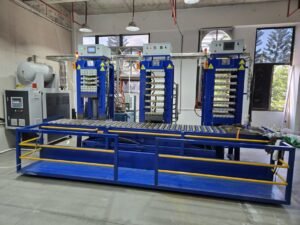
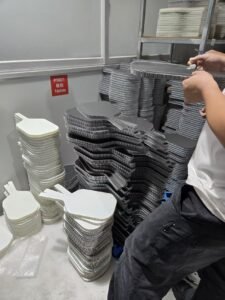
Ask each pickleball paddle manufacturing supplier for a construction breakdown. The quotation should identify surface material, nominal core thickness, core cell type where relevant, overall dimensions, target weight and tolerance, grip size, handle length, edge construction, printing process, and packaging. For upgraded models, request information on perimeter reinforcement, thermoforming, foam injection, handle reinforcement, peel-ply texture, or surface coating. A professional pickleball paddle manufacturer supplier should be willing to explain which features are standard, optional, or dependent on tooling.
3. Carbon fiber, graphite, and fiberglass options
Carbon fiber has become a major performance category because buyers associate it with spin, controlled response, and premium positioning. However, the term carbon fiber can describe multiple constructions, including woven carbon, unidirectional carbon, T700-based surfaces, 3K, 12K, 18K visual patterns, and coated composite faces. A paddles carbon fiber pickleball paddle supplier should specify the actual surface construction instead of relying on a broad marketing label.
When comparing a pickleball paddle carbon fiber supplier, ask whether the texture is created by peel ply, coating, printed effect, or another process. Request samples from the intended production process, not only showroom samples. Check surface consistency, graphics adhesion, edge finish, sound, weight, balance, and grip installation. For a premium program, define acceptable surface appearance and texture variation in the approved sample or specification sheet.
Graphite is another widely searched term. Buyers looking for a paddle graphite pickleball paddle supplier may use “graphite” to refer to a lightweight composite face, a carbon-based surface, or a specific visual finish. Because terminology varies, confirm the material layer and construction in writing. Fiberglass can be a useful alternative for beginner and recreational models, often delivering a lively response and broad graphic flexibility. The best material is the one that matches the target player, price point, and brand promise.
4. Customization and personalized paddle programs
A pickleball paddle custom supplier should offer more than logo placement. A complete custom program may include shape selection, surface material, thickness, handle dimensions, grip color, edge guard color, artwork, packaging, accessories, and carton marks. Some projects use existing molds to control cost and speed. Others require new tooling or structural development. Clarify which elements are truly custom and which are selected from existing components.
For a personalized pickleball paddle supplier, the printing workflow is especially important. Personalized orders may involve names, team numbers, event graphics, school logos, corporate branding, or variable data. Ask how artwork is prepared, how colors are matched, whether white underprinting is used, and how variable files are managed. UV printing, heat-transfer methods, decals, direct printing, and other techniques can produce different results in durability, color saturation, and texture.
Approve a digital proof and a physical pre-production sample before mass production. The approved sample should be linked to a revision-controlled specification. For repeat orders, require the supplier to compare production against the same standard. This is particularly important when a program uses multiple colors or customized retail packaging.
5. Color development, including pink pickleball paddles
Color is a commercial feature, not merely decoration. A pickleball paddle pink supplier may offer pale blush, bright neon pink, magenta, rose, gradient, metallic, or patterned versions. Each direction attracts a different customer and may require a different printing or coating process. Provide Pantone references or physical samples when color accuracy matters. Screen colors alone are not a reliable production standard.
Evaluate the full product as a color system: paddle face, edge guard, grip, end cap, cover, box, insert card, and accessories. A strong supplier can propose combinations that look coordinated without creating unnecessary minimum-order requirements for every component. For online retail, request clean sample photography after approval so the final listing accurately represents the shipped product.
6. Racket terminology and multi-sport sourcing
Some buyers search for a pickleball paddle racket supplier because “racket” is the familiar category term in their market. The product is normally called a paddle in North American pickleball, but suppliers should understand both terms and confirm dimensions and intended use. This avoids confusion with paddle tennis, beach tennis, platform tennis, or junior racket products.
A paddle tennis and pickleball supplier can be useful for brands building a broader racket-sports assortment, but multi-category capability should not replace product expertise. Ask whether pickleball paddles are produced in-house, assembled through a partner, or sourced as finished goods. Review the supplier’s testing, traceability, and incoming-material controls specifically for pickleball rather than assuming that experience in another sport automatically transfers.
7. Set-of-two and bundle development
A pickleball paddle set of 2 supplier must manage more than two individual paddles. A successful set may include two paddles, indoor or outdoor balls, a carry bag, grip tape, care instructions, and retail packaging. The bundle should be designed around a clear use case such as couples, families, beginners, schools, resorts, or gift buyers.
Check that both paddles in each set meet the specified weight and appearance standards. If they use different colors, verify that the pair configuration is controlled during packing. Test whether the bag protects the paddle faces and whether the box survives parcel delivery. For marketplace sales, dimensional weight and packaging efficiency can materially affect margin. Ask the supplier to provide packed dimensions, gross weight, carton quantity, carton measurements, and drop-test options before finalizing the design.
8. Sampling: how to turn an idea into an approved standard
Sampling should be structured in stages. First, evaluate available samples to confirm general construction and supplier capability. Second, create a customized sample with the intended materials, dimensions, artwork, and packaging. Third, approve a pre-production sample or golden sample that represents the exact mass-production standard. Keep one approved sample with the buyer and one with the factory.
Record measured values rather than relying on visual approval alone. Useful checkpoints include length, width, thickness, handle length, grip circumference, total weight, balance point, surface condition, edge alignment, graphic position, color, packaging fit, and accessory count. Where performance claims are important, agree on a repeatable test method. The sample process is where vague expectations become measurable requirements.
9. Quality control and production consistency
Quality control should cover materials, work in process, final assembly, printing, packing, and shipment inspection. Typical paddle issues include weight variation, warped faces, loose edge guards, handle movement, uneven grips, surface blemishes, print misalignment, color variation, rattling, delamination, and incorrect bundle contents. A reliable pickleball paddle manufacturing supplier should have inspection records and corrective-action procedures, not only a final visual check.
Define an inspection plan in the purchase order. It may include approved-sample comparison, quantity verification, random measurement, appearance criteria, functional checks, packaging review, barcode scanning, carton marks, and drop testing. Buyers can use the supplier’s internal QC, an independent inspection company, or both. The appropriate level depends on order value, product complexity, supplier history, and the cost of a failure in the destination market.
10. Compliance, testing, and claim management
Do not confuse factory capability with official product approval. If a paddle will be marketed for sanctioned tournament play, confirm the current governing-body requirements and the process for submitting a specific model. Approval normally applies to a defined product, not automatically to every paddle made by the same factory. Buyers should control model names, construction changes, artwork changes, and supporting records.
For general consumer sales, review destination-market requirements for labeling, packaging, restricted substances, product safety, and importer documentation. Requirements can differ by country and sales channel. Ask the supplier which tests it has completed, obtain reports where relevant, verify that reports match the actual product and materials, and consult a qualified compliance professional for the destination market. Avoid unsupported claims such as guaranteed injury prevention, professional endorsement, or official approval.
11. Pricing, MOQ, tooling, and total landed cost
Unit price is only one part of the commercial decision. Compare sample charges, tooling, artwork setup, packaging, accessories, inspection, testing, freight, duties, payment terms, defect allowances, and replacement policy. Low quotations may exclude essential items or assume a different material grade. Request a line-item quote and state the Incoterm so offers are comparable.
MOQ may vary by construction, face material, printing method, grip color, edge guard color, and packaging. A supplier may accept a low overall order but require higher quantities for a custom component. Ask whether colors can be mixed within one production run and whether blank components can be shared across designs. For a growing brand, flexibility on repeat orders can be more valuable than a small saving on the first order.
12. Lead time, capacity, and supply continuity
A realistic timeline includes artwork approval, material preparation, sample making, sample shipping, testing, deposit, mass production, inspection, rework if needed, booking, and transportation. Seasonal demand and holiday shutdowns can affect capacity. Ask for the production lead time after final approval and deposit, not from the first inquiry date.
Discuss contingency planning. Can the supplier reserve materials for repeat orders? Are key components sourced from one vendor or several? What happens if a surface material, grip, or packaging component becomes unavailable? A capable supplier should communicate constraints early and propose controlled alternatives rather than substituting materials without approval.
13. Communication signs of a reliable supplier
Good communication is measurable. The supplier should answer technical questions directly, identify assumptions, issue version-controlled quotations, summarize changes, and confirm specifications before production. Watch for inconsistent answers, unexplained material substitutions, reluctance to provide measurements, or pressure to skip sampling. Fast replies are useful, but accurate and traceable replies are more important.
Search phrases such as paddle up pickleball supplies may lead buyers to distributors, retailers, or broad catalog vendors rather than a factory. Confirm the company’s role in the supply chain and ask where production, printing, assembly, and quality control occur. Trading companies can still be effective partners when they add engineering, communication, consolidation, or quality-management value. The key is transparency.
14. A practical supplier evaluation scorecard
Create a weighted scorecard before choosing a supplier. Suggested categories include technical fit, sample quality, material transparency, customization capability, quality system, compliance support, packaging development, communication, lead time, capacity, price, payment terms, and after-sales response. Weight the categories according to the risk of your project.
Do not select a supplier from one sample or one quotation alone. Compare at least two or three qualified options when possible. Run a pilot order before scaling a new construction. After delivery, review defect data, customer feedback, on-time performance, and responsiveness. Supplier selection is not a one-time event; it is a performance-management process.
15. RFQ checklist for a pickleball paddle supplier
A clear request for quotation should include: target market and sales channel; paddle shape and dimensions; face material; core type and thickness; target weight and tolerance; handle length; grip circumference; edge construction; graphics and color references; logo files; packaging; accessories; quantity by design; testing or approval needs; barcode and labeling requirements; delivery destination; desired Incoterm; and target schedule.
Ask the supplier to return a signed specification, itemized quotation, sample plan, production timeline, packaging dimensions, carton data, payment terms, warranty or defect policy, and a list of assumptions. This approach quickly separates responsive manufacturing partners from vendors that provide only a headline price.
Conclusion
The right pickleball paddle supplier combines product engineering, honest material disclosure, repeatable manufacturing, practical customization, disciplined quality control, and clear commercial communication. Whether you are sourcing a carbon fiber performance model, a graphite-style recreational paddle, a personalized event product, a pink retail design, a racket-sports assortment, or a set of two, the same principle applies: define the specification first, approve a representative sample, and manage production against measurable standards.
A well-run sourcing process reduces surprises and gives both buyer and supplier a shared definition of success. Start with the customer, compare complete constructions, calculate total landed cost, and scale only after the pilot order proves that quality and communication are consistent.
Frequently Asked Questions
What should I ask a pickleball paddle supplier before ordering?
Ask for a complete construction specification, target weight and tolerance, sample plan, customization options, packaging details, MOQ, lead time, quality-control process, test documentation, payment terms, and defect policy.
Is carbon fiber always better than graphite or fiberglass?
No. Carbon fiber, graphite-style composites, and fiberglass can each suit different player levels, price points, and feel preferences. Compare the actual construction and approved samples rather than relying on the material name alone.
Can a supplier make personalized pickleball paddles?
Many suppliers can add names, logos, team graphics, event artwork, or variable designs. Confirm the printing method, artwork workflow, color standard, minimum quantity, and durability before production.
What is a reasonable sample process?
Begin with stock samples, then make a customized sample, and finally approve a pre-production or golden sample that represents mass production. Record dimensions, weight, materials, colors, graphics, and packaging in a signed specification.
How do I source a pink pickleball paddle?
Provide a Pantone reference or physical color sample, then approve the face, edge guard, grip, end cap, cover, and packaging as one coordinated color system.
What should be included in a pickleball paddle set of two?
Common bundles include two paddles, balls, a carry bag, instructions, and retail packaging. The best configuration depends on the target buyer and shipping-cost limits.
How can I compare supplier quotations fairly?
Use the same RFQ and specification for every supplier. Compare material construction, packaging, accessories, tooling, testing, inspection, freight terms, payment terms, and total landed cost—not only the unit price.
Should I use a factory or trading company?
Either can work. Confirm who controls production, printing, assembly, quality, and communication. Choose the partner that provides transparency, technical competence, consistent quality, and reliable service.
Keyword Coverage
paddle graphite pickleball paddle supplier, paddle pickleball supplier, paddle tennis and pickleball supplier, paddle up pickleball supplies, paddles carbon fiber pickleball paddle supplier, personalized pickleball paddle supplier, pickleball paddle carbon fiber supplier, pickleball paddle custom supplier, pickleball paddle manufacturer supplier, pickleball paddle manufacturing supplier, pickleball paddle pink supplier, pickleball paddle racket supplier, pickleball paddle set of 2 supplier
Looking for a reliable OEM/ODM pickleball paddle manufacturer?
Gloperti specializes in custom pickleball paddle manufacturing — logos, colors, packaging, and specs fully customized for brands, clubs, and retailers.
Ready to Source the Right Paddle?
Whether you need OEM/ODM manufacturing, wholesale pricing, or a custom branded paddle – we’re here to help. Get a free quote within 24 hours.