Meta Title: Carbon Fiber Pickleball Paddle Manufacturer China Guide
Meta Description: Compare carbon fiber pickleball paddle manufacturers in China, materials, OEM options, overgrips, testing, MOQ, and supplier selection for 2025-2026 sourcing.
How to Choose a Carbon Fiber Pickleball Paddle Manufacturer in China: 2025-2026 Buyer Guide
Focus Keyword: carbon fiber pickleball paddle manufacturer in china
Sourcing a reliable paddle supplier has become more complex as the market adds new carbon weaves, thermoformed constructions, thickness options, shapes, and accessory bundles. This commercial buyer guide explains how to evaluate a carbon fiber pickleball paddle manufacturer in China, compare construction choices, source matching overgrips and sets, and build a repeatable OEM program for 2025-2026. It also clarifies how to interpret searches for the best pickleball paddle manufacturers 2025 2026, Canadian pickleball paddle manufacturers, and named supplier terms without relying on unverified rankings.
Table of Contents
- Why Carbon Fiber Pickleball Paddles Remain a Strong Sourcing Category
- What Buyers Mean by a Carbon Fiber Pickleball Paddle Manufacturer
- How to Evaluate a Carbon Fiber Pickleball Paddle Manufacturer in China
- Comparing Carbon Face Options: 3K, T700, 12K, and 18K
- Core Thickness, Shape, and Handle Design
- Thermoformed Versus Traditional Construction
- Choosing a Carbon Fiber Pickleball Paddle Set Manufacturer
- How to Source the Best Pickleball Paddle Overgrip Manufacturer in China
- Understanding Supplier Comparisons and Search Terms
- Canadian Pickleball Paddle Manufacturers Versus Asian OEM Supply
- OEM and Private-Label Customization Checklist
- MOQ, Sampling, Tooling, and Lead-Time Planning
- Quality Control Tests Worth Requesting
- Compliance, Testing, and Marketing Claims
- Cost Analysis Beyond the Unit Price
- A Practical Supplier Audit Scorecard
- Why Work With Gloperti for Custom Paddle Development
- Conclusion
- Frequently Asked Questions
Why Carbon Fiber Pickleball Paddles Remain a Strong Sourcing Category
Carbon fiber pickleball paddles continue to attract brands, distributors, clubs, and promotional-product buyers because the material can support a premium position while still allowing broad control over shape, thickness, balance, surface texture, handle design, and packaging. For importers, the real opportunity is not simply finding a low unit price. It is building a repeatable product platform that can be refreshed with new graphics, private-label packaging, multiple core thicknesses, and coordinated accessories.
A capable carbon fiber pickleball paddle manufacturer should therefore be evaluated as a product-development partner rather than a basic assembly vendor. Buyers should look at engineering support, material traceability, process control, sample speed, testing discipline, and communication quality. These factors usually have a greater long-term effect on returns, reviews, and reorder stability than a small difference in quotation price.
What Buyers Mean by a Carbon Fiber Pickleball Paddle Manufacturer
The term carbon fiber pickleball paddle manufacturer can describe several different supplier types. Some factories laminate and press faces in-house, some purchase pre-made face sheets, some specialize in thermoforming, and others focus mainly on printing, edge guards, grip installation, and final assembly. A professional buyer should ask which operations are completed inside the factory and which are subcontracted.
This distinction matters because a supplier with direct control over pressing temperature, adhesive application, foam injection, edge sealing, drilling, trimming, and final balance is usually better positioned to maintain consistency. A trading company can still provide value, but the buyer should know who owns the process, who signs off on quality, and where corrective action takes place when a batch falls outside specification.
How to Evaluate a Carbon Fiber Pickleball Paddle Manufacturer in China
When screening a carbon fiber pickleball paddle manufacturer in China, begin with product capability. Request a list of available face materials, including standard woven carbon, T700-style raw carbon, 3K, 12K, 18K, and hybrid constructions where relevant. Then compare core materials, core density, thickness options, paddle shapes, handle lengths, perimeter treatments, and surface-finishing methods.
Next, review production control. A strong supplier should be able to explain incoming-material inspection, weight control, thickness tolerance, handle bonding, edge-guard fit, surface-flatness checks, printing adhesion, packing inspection, and batch traceability. Ask for actual inspection records or a sample quality checklist instead of accepting broad statements such as “high quality.”
Finally, test communication. The best technical factory is still difficult to work with if drawings, revisions, sample notes, and deadlines are not documented clearly. Look for a sales and engineering team that can convert your ideas into a specification sheet, confirm tolerances, label sample versions, and summarize changes before mass production.
Comparing Carbon Face Options: 3K, T700, 12K, and 18K
Carbon weave labels are often used as marketing shorthand, but buyers should evaluate the entire face system. Resin content, fiber orientation, surface treatment, peel strength, thickness, and bonding quality all influence performance and durability. A visually attractive weave does not automatically produce a better paddle.
3K carbon can be used for balanced recreational or entry-premium models. T700-style raw carbon is commonly selected for control and spin-oriented products. 12K and 18K constructions are often chosen for distinctive aesthetics, stiffness targets, or higher-end positioning. The correct option depends on the intended player, target retail price, core geometry, and desired feel. The supplier should help you compare complete prototypes rather than sell a material label in isolation.
Core Thickness, Shape, and Handle Design
Paddle thickness strongly affects product positioning. Thinner cores can feel faster and more direct, while thicker cores are commonly developed for control, stability, and a softer response. Popular sourcing programs often include 13 mm, 14 mm, and 16 mm options, but custom thicknesses may also be possible depending on tooling and core supply.
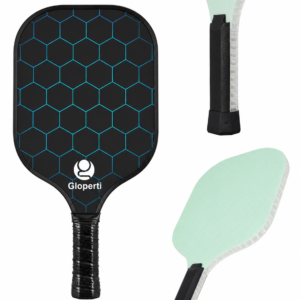
Shape is equally important. Standard, wide-body, hybrid, and elongated profiles serve different player preferences. Handle length, grip circumference, butt-cap shape, and transition geometry should be confirmed with physical samples. Small differences in handle construction can change comfort, swing weight, and perceived quality more than buyers expect.
Thermoformed Versus Traditional Construction
Thermoformed construction can improve perimeter rigidity and create a more unified structure, but it also requires disciplined control of heat, pressure, foam, adhesive, and cooling. Traditional cold-pressed or assembled constructions may be appropriate for many recreational and mid-market products. Neither method is automatically superior for every price point.
Ask the factory to explain its process window and failure controls. Key questions include how delamination is tested, how edge foam is managed, how crushed cores are prevented, and how finished paddles are checked for warping. A supplier that can discuss process risks openly is generally more credible than one that only repeats marketing language.
Choosing a Carbon Fiber Pickleball Paddle Set Manufacturer
A carbon fiber pickleball paddle set manufacturer must control more than the paddles. Sets may include two or four paddles, indoor or outdoor balls, replacement grips, edge tape, covers, towels, and carry bags. The finished package needs to be designed as one retail unit, with balanced dimensions, protective separators, barcode placement, carton strength, and consistent branding.
For e-commerce, request drop-test guidance, master-carton data, package weight, and photo-ready samples. For wholesale or promotional use, ask about logo placement on paddles, bags, zipper pulls, labels, and inserts. A well-designed set can increase perceived value while reducing the buyer’s need to coordinate several accessory suppliers.
How to Source the Best Pickleball Paddle Overgrip Manufacturer in China
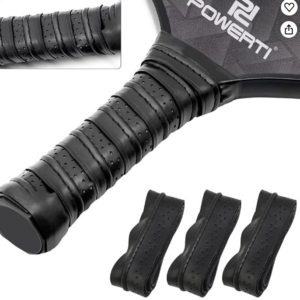
The best pickleball paddle overgrip manufacturer in China should be evaluated on tack, sweat absorption, thickness, stretch, backing film, finishing tape, color stability, and roll consistency. Overgrips look simple, but poor adhesive control or uneven cutting quickly creates complaints.
When pairing grips with paddles, request samples installed on the actual handle. Test the wrap after storage, heat exposure, and repeated play. Confirm whether the grip is supplied as an original grip, an overgrip, or both. Private-label options may include printed finishing tape, branded sleeves, multi-pack boxes, and color assortments.
Understanding Supplier Comparisons and Search Terms
Buyers may search phrases such as apexonsport pickleball paddle manufacturer, carbon pickleball paddles manufacturer, carbon pickleball paddle manufacturer, or carbon fiber pickleball paddles manufacturer when building a supplier list. Treat these searches as starting points rather than endorsements. Verify factory ownership, product scope, certifications, export experience, and sample quality directly.
Similarly, searches for best pickleball paddle manufacturers 2025 2026 often produce lists based on brand visibility, marketplace presence, or editorial criteria rather than factory capability. A sourcing buyer needs a different scorecard: engineering fit, quality system, responsiveness, cost structure, capacity, and willingness to support private-label development.
Canadian Pickleball Paddle Manufacturers Versus Asian OEM Supply
Canadian pickleball paddle manufacturers may appeal to buyers seeking local development, shorter domestic communication lines, regional branding, or specific small-batch programs. Asian OEM supply, including China-based production, may offer broader component ecosystems, tooling choices, packaging integration, and scale.
The better option depends on the program. A premium local story may justify a higher cost structure, while a multi-SKU retail line may benefit from an established OEM network. Some brands combine both approaches by developing products domestically and producing them with an overseas manufacturing partner under a controlled specification and inspection plan.
OEM and Private-Label Customization Checklist
Before requesting a quotation, prepare a clear product brief. Include paddle shape, dimensions, face material, core thickness, target weight, balance preference, handle length, grip size, surface finish, edge-guard color, logo method, artwork format, packaging, quantity, compliance needs, and delivery destination.
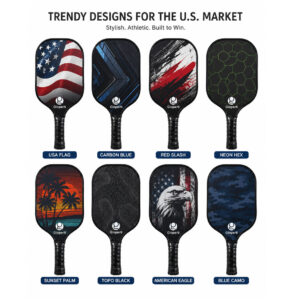
For branding, common options include UV printing, heat-transfer graphics, water-transfer decoration, screen printing, engraved or molded components, custom grips, private-label end caps, hangtags, boxes, covers, and bags. Ask the factory which methods are most durable for the chosen surface and whether color standards can be matched using Pantone references or approved physical samples.
MOQ, Sampling, Tooling, and Lead-Time Planning
Minimum order quantity depends on the level of customization. A factory may accept a relatively low MOQ for an existing shape with custom graphics, while a new mold, custom edge guard, special grip, or unique package may require a larger commitment. Buyers should separate the MOQ for paddles, printing, packaging, and accessories because each component may have a different production threshold.
Use a staged sampling process. First approve structure and play feel. Then approve graphics and colors. Finally approve the complete pre-production sample with packaging. This sequence reduces the risk of spending time on artwork before the underlying paddle is correct. Lead time should be confirmed again after final artwork and deposit because material availability and production schedules can change.
Quality Control Tests Worth Requesting
A practical inspection plan may include dimensions, thickness, finished weight, balance point, surface flatness, edge-guard fit, handle alignment, grip wrapping, logo position, color, print adhesion, packaging, and carton condition. Depending on the product and market, buyers may also request impact tests, peel or bonding checks, heat-aging checks, moisture exposure, handle-pull tests, and drop tests.
Do not rely only on a golden sample. Define measurable tolerances and an acceptable quality level for mass production. Ask the supplier how nonconforming units are identified and whether inspection photos, weight data, or batch records can be shared before shipment. Third-party inspection can be useful for first orders or high-value launches.
Compliance, Testing, and Marketing Claims
Claims such as tournament approved, professional grade, raw carbon, thermoformed, or high spin should be supported by the correct documents and product configuration. Approval requirements can change, and the exact model submitted for testing must match the version sold. Buyers should verify current rules directly with the relevant governing body before printing approval language on packaging.
A responsible supplier should avoid guaranteeing claims that depend on external certification. Instead, the factory should provide samples, specifications, material declarations, and process information so the brand owner can complete the appropriate testing and registration for its target market.
Cost Analysis Beyond the Unit Price
The lowest quotation can become expensive if it creates inconsistent weights, late shipments, weak packaging, rework, returns, or poor reviews. Compare total landed cost, including tooling, samples, printing setup, packaging, freight volume, duties, inspections, payment terms, and replacement policy.
Also consider assortment efficiency. A manufacturer that can produce several face materials, thicknesses, shapes, sets, covers, and grips under one coordinated program may reduce management cost and improve brand consistency. Consolidation is valuable only when the supplier can maintain quality across the full range.
A Practical Supplier Audit Scorecard
Use a weighted scorecard with categories for product capability, process control, sample quality, communication, compliance support, capacity, pricing, lead time, packaging, and after-sales response. Score each supplier based on evidence. Factory videos, audit reports, production records, and physical samples are more reliable than polished brochures.
For a first order, choose a manageable quantity and establish clear checkpoints: specification approval, artwork approval, pre-production sample, in-process update, final inspection, and shipping document review. A successful pilot order gives you real information about execution before you scale.
Why Work With Gloperti for Custom Paddle Development
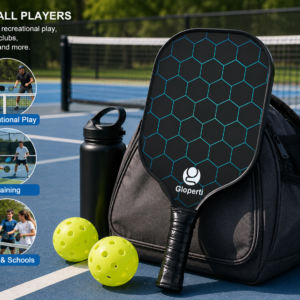
Gloperti supports custom pickleball paddle programs for importers, sports brands, clubs, promotional-product distributors, and e-commerce sellers. Available development directions include carbon fiber and fiberglass faces, multiple core thicknesses, custom shapes, private-label graphics, two-sided UV printing, branded packaging, covers, bags, grips, and coordinated paddle sets.
Our team can help convert a concept into a practical specification, prepare visual mockups, organize samples, and coordinate mass-production details. For suitable programs, customization can begin from an MOQ of 50 paddles, making it easier to test new designs or launch focused market collections. Visit our custom pickleball racket page to discuss materials, dimensions, artwork, packaging, and target price.
Conclusion
Choosing a carbon fiber pickleball paddle manufacturer is a strategic sourcing decision. The strongest partner is not necessarily the factory with the biggest catalog or the lowest quote. It is the supplier that can understand your target customer, translate requirements into a controlled specification, produce convincing samples, maintain batch consistency, and support your brand after delivery.
Use the evaluation framework in this guide to compare a carbon pickleball paddle manufacturer, a carbon fiber pickleball paddle set manufacturer, accessory suppliers, Canadian pickleball paddle manufacturers, and China-based OEM factories on the factors that actually drive commercial success. A disciplined process leads to better products, fewer surprises, and a more scalable paddle line.
Frequently Asked Questions
What should I ask a carbon fiber pickleball paddle manufacturer before ordering?
Ask about face material, core thickness, construction method, target weight tolerance, handle design, printing, MOQ, sampling, testing, packaging, lead time, and batch inspection records.
Can a carbon fiber pickleball paddle manufacturer in China support low MOQ private labeling?
Many factories can support lower quantities when you use an existing shape and customize graphics or packaging. New molds and special components usually require a higher MOQ.
What is the difference between a paddle factory and a trading company?
A factory directly controls production operations, while a trading company coordinates production through one or more factories. Both can work, but buyers should understand who owns quality control and corrective action.
Which carbon face is best for a private-label paddle?
There is no single best face. 3K, T700-style raw carbon, 12K, and 18K options should be tested as complete paddles because resin, texture, core, thickness, and construction all affect performance.
Can one supplier produce paddle sets and overgrips?
Yes. Many integrated suppliers can coordinate paddles, balls, covers, bags, original grips, overgrips, labels, inserts, and retail packaging as one set.
How do I compare Canadian pickleball paddle manufacturers with China OEM suppliers?
Compare local-brand value, development support, MOQ, cost, lead time, component options, capacity, quality systems, and logistics. The best model depends on your market and product strategy.
What quality checks should be included before shipment?
Typical checks include dimensions, weight, thickness, balance, flatness, edge fit, handle alignment, grip installation, print quality, packaging, carton condition, and agreed durability tests.
How long does custom paddle development take?
Timing varies by material availability, tooling, artwork, sample revisions, and production schedule. A staged process with structure approval, graphic approval, and pre-production approval is the safest approach.
Looking for a reliable OEM/ODM pickleball paddle manufacturer?
Gloperti specializes in custom pickleball paddle manufacturing — logos, colors, packaging, and specs fully customized for brands, clubs, and retailers.
Ready to Source the Right Paddle?
Whether you need OEM/ODM manufacturing, wholesale pricing, or a custom branded paddle – we’re here to help. Get a free quote within 24 hours.