Meta Title: Custom Pickleball Paddle Manufacturer in China | OEM Guide
Meta Description: Find a reliable custom pickleball paddle manufacturer in China. Compare carbon fiber, graphite, composite, T700 elongated and child paddle production options.
How to Choose a Custom Pickleball Paddle Manufacturer in China
Table of Contents
- Introduction: Why Manufacturer Selection Shapes Your Product
- 1. Define Your Target Player Before Requesting a Quote
- 2. Carbon Fiber, Graphite, and Composite Paddle Options
- 3. Why T700 Raw Carbon Fiber Is Popular
- 4. Elongated Shape Development and Balance Control
- 5. Junior and Child Pickleball Paddle Manufacturing
- 6. Core Construction: Thickness, Material, and Feel
- 7. Customization Options for Private-Label Brands
- 8. Sampling and Product Development Workflow
- 9. Quality Control Checks That Matter
- 10. Certification, Compliance, and Market Claims
- 11. MOQ, Pricing, Lead Time, and Payment Terms
- 12. How to Audit and Compare Manufacturers
- 13. Building a Complete Product Line
- 14. Why Work With Gloperti for Custom Paddle Projects
- Conclusion
Introduction: Why Manufacturer Selection Shapes Your Product
Launching a private-label pickleball paddle is not simply a matter of placing a logo on an existing racket. The manufacturer you choose influences the paddle’s feel, durability, surface consistency, packaging quality, delivery schedule, and ultimately the reputation of your brand. A strong custom pickleball paddle manufacturer should be able to translate a market idea into a repeatable production specification, then control that specification from sampling through mass production.
Buyers today often compare several highly specialized supplier categories at the same time: a china carbon fiber pickleball paddle manufacturer for performance models, a china graphite pickleball paddles manufacturer for lightweight control products, a china pickleball paddles composite manufacturer for affordable recreational lines, and child pickleball paddle manufacturers for junior programs. The right factory should help you build a coherent product family rather than forcing every model into the same construction.
This guide explains the materials, shapes, production controls, customization options, commercial terms, and quality checks that importers should evaluate before placing an OEM or ODM order.
1. Define Your Target Player Before Requesting a Quote
A useful quotation begins with a clear user profile. “Carbon fiber paddle” is too broad because the same surface material can be used for a soft-control paddle, a power-focused thermoformed paddle, a junior paddle, or an elongated tournament model.
Start by defining the player level, price range, preferred balance, core thickness, shape, grip size, target weight, surface texture, certification requirement, packaging format, and expected order volume. A custom pickleball paddles manufacturer can then recommend a practical bill of materials instead of quoting the lowest-cost generic option.
For beginners and leisure players, forgiveness and easy handling are usually more important than maximum spin. Competitive players may prioritize raw carbon texture, edge stability, swing weight, and consistency between production batches. Junior users need lower weight, smaller grip circumference, appropriate handle length, rounded edges, and age-suitable graphics. Clear positioning makes supplier comparisons far more accurate.
2. Carbon Fiber, Graphite, and Composite Paddle Options
A custom carbon fiber pickleball paddle manufacturer normally offers several face constructions, including 3K woven carbon fiber, 12K or 18K decorative weaves, T700 raw carbon fiber, and carbon-fiber-over-fiberglass laminates. The visible material name alone does not determine performance. Resin content, fiber orientation, peel-ply treatment, surface coating, bonding pressure, and curing stability all affect the final result.
A china graphite pickleball paddles manufacturer may use graphite sheets or graphite-style face laminates to produce light, responsive paddles with clean ball feedback. These models can work well for clubs, schools, starter sets, and buyers seeking a thinner or more traditional feel.
A china pickleball paddles composite manufacturer typically combines fiberglass, carbon layers, resin systems, and polymer cores in different ratios. Composite construction gives brands flexibility in price, power, graphics, and weight. It is especially useful when building coordinated good-better-best product tiers.
Ask suppliers to describe the complete laminate rather than naming only the top layer. A reliable factory should disclose face thickness, core material, adhesive or resin system, pressing method, surface finish, and realistic weight tolerance.
3. Why T700 Raw Carbon Fiber Is Popular
T700 raw carbon fiber is widely specified for performance paddles because it can provide a durable textured surface, controlled response, and strong marketing value. However, the phrase “T700” does not guarantee identical performance across factories. Surface treatment, fiber supplier, laminate thickness, curing, and texture retention all matter.
When evaluating china t700 elongated pickleball paddle manufacturers, request close-up surface photos, abrasion test information, sample weight data, and production-lot tolerances. Compare spin performance after repeated use, not only on a fresh sample. It is also wise to confirm whether the texture comes from the carbon weave and peel-ply process or mainly from a temporary sprayed coating.
For a premium line, specify acceptable surface roughness, gloss level, cosmetic defect limits, edge-guard fit, core thickness tolerance, handle alignment, and delamination test requirements in the purchase specification.
4. Elongated Shape Development and Balance Control
An elongated paddle offers extra reach and often appeals to singles players, tennis converts, and customers who prefer a longer hitting surface. Yet elongated shape pickleball paddle manufacture requires careful balance control. Increasing length can raise swing weight even when total weight appears unchanged.
A capable factory should discuss length-to-width ratio, handle length, throat geometry, core density, perimeter reinforcement, edge-guard mass, and grip build-up. Prototype testing should include static weight, balance point, swing weight where available, twist resistance, and comfort during repeated strokes.
Do not approve an elongated model based on a drawing alone. A shape that looks attractive in CAD may feel head-heavy or have a narrow sweet spot. Order multiple prototypes with controlled weight variations and let representative players test them before freezing the mold or cutting tool.
5. Junior and Child Pickleball Paddle Manufacturing
Child pickleball paddle manufacturers need to do more than shrink an adult design. Junior equipment should match smaller hands, lower strength, and shorter reach. Important variables include grip circumference, handle length, overall length, total weight, balance point, edge protection, and graphic style.
For schools, camps, and youth programs, durability and easy identification may matter more than elite spin performance. Fiberglass or composite faces can provide lively response at a practical price, while a lighter carbon model may suit advanced juniors. Rounded profile transitions, secure end caps, low-odor materials, and stable grip wrapping are important details.
Ask the factory for age-range recommendations and physical samples. A sensible junior line may include two sizes rather than one universal “kids” paddle. Packaging should clearly show size, weight range, care instructions, and adult-supervision guidance where appropriate.
6. Core Construction: Thickness, Material, and Feel
The polymer honeycomb core is central to paddle feel. Common thicknesses include approximately 10 mm, 13 mm, 14 mm, and 16 mm, although actual finished thickness must be verified. Thinner paddles often feel quicker and more direct, while thicker paddles generally provide more dwell time, stability, and control.
Core cell size, density, sheet quality, bonding coverage, and perimeter treatment can be as important as nominal thickness. For thermoformed products, foam injection and edge-wall construction may improve stability and power, but poor process control can create crushed cores, uneven expansion, or delamination risks.
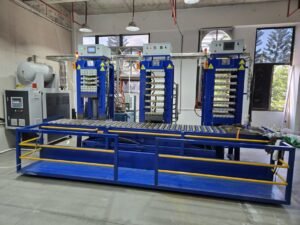
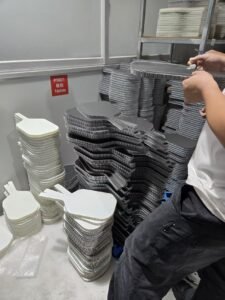
A professional custom pickleball paddle manufacturer should record core lot, pressing parameters, finished thickness, and weight throughout production. Buyers should define tolerances and test samples from different cartons, not only the pre-production sample.
7. Customization Options for Private-Label Brands
Customization can include paddle shape, face material, core thickness, handle length, grip size, surface artwork, logo placement, edge-guard color, grip color, butt-cap logo, packaging, inserts, barcode labels, and set configuration. UV printing is commonly used for full-color graphics on both faces, while water-transfer, screen printing, decals, and direct printing may be available for specific finishes.
Good artwork preparation prevents color shifts and blurry logos. Supply vector files, Pantone references, bleed areas, safe zones, and placement dimensions. Ask for a digital mock-up and a physical color sample when brand color accuracy is important.
For low-volume launches, using an existing mold with custom graphics is usually the most economical route. Fully custom molds, special handles, unique edge systems, or proprietary tooling require more development time and a higher minimum order quantity. A trustworthy custom pickleball paddles manufacturer will separate tooling, sampling, unit cost, and packaging charges clearly.
8. Sampling and Product Development Workflow
A disciplined development process usually includes requirement confirmation, quotation, artwork review, prototype production, performance testing, corrections, pre-production sample approval, mass production, inspection, and shipment release.
Request at least two or three samples when weight and feel are critical. One sample cannot show production variation. Record each sample’s weight, balance point, dimensions, grip circumference, face finish, and subjective test feedback. When a revision is made, update the specification sheet so old and new requirements do not become mixed.
The approved sample should be signed or otherwise identified as the golden sample. Keep one with the buyer and one at the factory. Photographs are useful, but they do not replace a physical reference for color, texture, edge fit, and handle shape.
9. Quality Control Checks That Matter
Quality control should cover incoming materials, in-process checks, finished-product inspection, and packaging verification. Critical tests may include dimensions, weight, balance, flatness, bonding integrity, edge-guard adhesion, handle alignment, grip wrapping, surface appearance, print adhesion, impact resistance, and carton drop testing.
For carbon and composite paddles, inspect for bubbles, dry spots, wrinkles, resin marks, uneven texture, dents, and visible delamination. Tap testing can help identify bonding defects, while destructive sampling may be appropriate for large orders. Thermoformed models require special attention to core condition and perimeter consistency.
Agree on an AQL plan or another inspection standard before production. Define what counts as a critical, major, or minor defect. Vague expectations lead to arguments after goods are packed; measurable standards make corrective action much easier.
10. Certification, Compliance, and Market Claims
Certification needs depend on the target market and sales channel. Tournament-focused products may require approval under the relevant governing body’s current equipment rules. Because standards and approved-equipment procedures can change, buyers should confirm the latest requirements directly with the governing organization before production.
In addition, packaging and materials may need to meet importer, retailer, chemical, labeling, or consumer-product requirements. Avoid unsupported claims such as “professional approved,” “non-toxic,” or “eco-friendly” unless documentation supports them.
The factory can provide test reports and material declarations, but the brand owner or importer remains responsible for confirming that the final product, labeling, and marketing are compliant in the destination market.
11. MOQ, Pricing, Lead Time, and Payment Terms
Pricing depends on face material, core, construction method, printing, grip, packaging, tooling, order quantity, inspection level, and shipping terms. A low unit price may exclude mold fees, barcode labels, upgraded cartons, approval samples, or export packaging.
Ask for a line-item quotation and confirm whether the price is EXW, FOB, CIF, or another Incoterm. Clarify sample time, production lead time, peak-season capacity, deposit requirement, balance payment timing, and policy for defective goods.
MOQ can vary by mold, material, artwork, and packaging. Existing shapes with standard materials usually support lower quantities. Fully customized construction requires larger commitments because the factory must purchase dedicated materials and set up production separately.
12. How to Audit and Compare Manufacturers
Compare suppliers using a scorecard rather than price alone. Evaluate communication speed, technical knowledge, sample accuracy, process transparency, factory capacity, quality records, export experience, customization range, problem-solving behavior, and commercial terms.
Useful audit questions include: Which steps are completed in-house? How are raw materials identified? How are pressing temperature and pressure controlled? How is weight matched? What is the rework process? Can the supplier trace a defect to a production lot? How are approved samples stored? How does the factory protect customer artwork and tooling?
Video calls, third-party audits, production photos, and independent inspections can reduce risk. The best supplier is often the one that identifies potential problems before taking the deposit, not the one that agrees instantly to every request.
13. Building a Complete Product Line
A brand can often gain more value by developing a coordinated range with one capable supplier. For example, a recreational fiberglass set, a graphite control paddle, a T700 carbon performance paddle, an elongated model, and a junior paddle can share packaging architecture and brand language while serving different users.
Working with one custom pickleball paddles manufacturer can simplify color matching, component sourcing, inspection standards, and shipment consolidation. Still, each model should have its own specification and testing plan. Avoid changing only artwork while claiming major performance differences.
Product-line planning should connect material choices to clear customer benefits: lighter handling, larger sweet spot, added reach, softer control, stronger power, or youth-friendly dimensions.
14. Why Work With Gloperti for Custom Paddle Projects
Gloperti supports OEM and private-label pickleball paddle projects with carbon fiber, fiberglass, graphite-style, and composite constructions. Available development options can include multiple core thicknesses, custom graphics, two-sided UV printing, logo customization, packaging, and coordinated paddle sets.
Our team can help buyers refine artwork, select practical materials, prepare samples, and organize production specifications for repeat orders. For many standard custom projects, the starting quantity can be as low as 50 paddles, depending on construction, mold, and packaging requirements.
Explore our custom pickleball racket manufacturing service to discuss your target market, dimensions, material, logo, packaging, and order quantity.
Conclusion
Choosing a manufacturer is a product-development decision, not just a sourcing decision. A dependable partner should understand materials, balance, printing, quality control, packaging, compliance, and repeatability.
Whether you are comparing a china carbon fiber pickleball paddle manufacturer, a china graphite pickleball paddles manufacturer, a china pickleball paddles composite manufacturer, child pickleball paddle manufacturers, or china t700 elongated pickleball paddle manufacturers, use the same disciplined approach: define the user, document the specification, test multiple samples, agree on measurable standards, and inspect production.
That process gives your brand a stronger chance of launching paddles that look professional, perform consistently, and earn repeat business.
Start Your Custom Pickleball Paddle Project
Share your preferred material, thickness, shape, artwork, packaging and quantity with Gloperti. We can help prepare a practical OEM proposal and sample plan.
Frequently Asked Questions
What information should I send to a custom pickleball paddle manufacturer?
Send your target player, material, shape, dimensions, core thickness, weight range, grip size, artwork, packaging, quantity, certification needs, destination market, and target price.
What is the typical MOQ for custom pickleball paddles?
MOQ depends on mold, construction, graphics, and packaging. Standard-shape projects may start around 50 paddles, while fully custom molds or materials usually require higher quantities.
Is T700 carbon fiber always better than fiberglass?
Not automatically. T700 carbon can offer durable texture and controlled response, while fiberglass can provide lively power and lower cost. The best material depends on the player and price position.
Can a manufacturer make an elongated pickleball paddle?
Yes. Existing elongated molds are common, and custom shapes are possible. Balance point, swing weight, handle length, and sweet-spot performance should be tested before mass production.
What should be different about a child pickleball paddle?
A child paddle should typically be lighter, use a smaller grip, have suitable overall dimensions, secure edge protection, and age-appropriate graphics.
How many samples should I test before production?
Testing two or three samples is better than approving a single unit because it reveals variation in weight, balance, finish, and feel.
Can logos and full-face graphics be printed on both sides?
Yes. Two-sided UV printing is commonly available. Vector artwork, color references, bleed, and safe zones help achieve a cleaner result.
How do I check factory quality before shipment?
Use a written inspection checklist, agreed defect limits, random carton sampling, dimensional and weight checks, appearance inspection, packaging checks, and third-party inspection when appropriate.
What is the difference between graphite and carbon fiber paddle faces?
The terms are sometimes used loosely in the market. Buyers should request the exact laminate specification, thickness, surface treatment, and material documentation rather than relying only on the product name.
Can one factory produce junior, standard, and elongated paddle lines?
A capable OEM factory can often produce all three, using separate molds and specifications while coordinating graphics, packaging, and quality standards across the range.
Ready to Source the Right Paddle?
Whether you need OEM/ODM manufacturing, wholesale pricing, or a custom branded paddle – we’re here to help. Get a free quote within 24 hours.