Meta Title: Edge Guard Tape & Edgeless Pickleball Paddle Factory
Meta Description: Source edge guard tape, edge tape, edgeless and elongated pickleball paddles from a China OEM factory. Compare materials, construction, customization and QC.
Focus Keyword: edge guard tape for pickleball paddle factory
Edge Guard Tape and Edgeless Pickleball Paddle Factory: Complete OEM Buyer’s Guide
A commercial sourcing guide for brands, importers and distributors comparing molded edge guards, protective edge tape, edgeless construction and elongated OEM pickleball paddles.
Introduction
For a pickleball brand, distributor, sporting-goods importer, or promotional-products buyer, the edge system is not a cosmetic afterthought. It affects durability, swing feel, perceived quality, repairability, packaging, and the way a paddle looks after repeated contact with the court. That is why buyers searching for an edge guard tape for pickleball paddle factory are usually making a broader sourcing decision: they need a supplier that understands paddle structure, adhesive performance, surface finishing, customization, and production consistency.
This guide explains how to evaluate an edge guard tape for pickleball paddle factory China, how conventional molded edge guards differ from removable edge tape, when an edgeless construction is appropriate, and what to request from an elongated shape pickleball paddle factory. It is written for commercial buyers who need dependable OEM or private-label production rather than a one-time retail purchase.
Why the Paddle Edge System Matters
The perimeter of a pickleball paddle receives more accidental impacts than almost any other area. Players scrape paddles along the court while reaching for low balls, knock paddles against fences or bags, and occasionally collide with another paddle during doubles. A properly engineered edge system helps protect the face laminate and core while keeping the product visually consistent throughout its useful life.
From a manufacturing standpoint, the edge solution also influences total weight, balance point, aerodynamic feel, dimensional tolerance, and assembly time. A thick molded guard may provide strong impact protection but add noticeable perimeter mass. Thin edge tape can create a cleaner profile and is easier to replace, yet its adhesive and abrasion resistance must be carefully selected. An edgeless design offers a modern appearance and a large visual face, but the exposed perimeter needs excellent finishing and structural reinforcement.
A qualified factory should therefore discuss the edge solution together with the face material, core thickness, paddle geometry, target weight, and intended retail position. Treating each component as part of one system leads to better on-court performance and fewer quality complaints.
Three Common Edge Construction Options
Commercial pickleball paddles generally use one of three perimeter strategies.
First, a molded edge guard is fitted around the paddle after the face and core are bonded and cut. This approach is common because it gives the edge a defined protective barrier. The guard can be produced in different profiles, textures, and colors, and it can conceal minor perimeter variation. It is a practical option for beginner, club, school, rental, and general retail paddles.
Second, edge tape is wrapped or applied around the perimeter. Buyers looking for an edge tape for pickleball paddle factory often want a lighter, more customizable alternative. Edge tape can be supplied in plain colors, printed designs, brand colors, or protective transparent finishes. Depending on the construction, it may be a permanent factory-applied component or a replaceable accessory included in the package.
Third, an edgeless paddle has no raised plastic guard. The perimeter is shaped and finished to create a continuous silhouette. A capable edgeless pickleball paddle factory must control cutting, sanding, sealing, reinforcement, and cosmetic finishing with greater precision because defects cannot be hidden under a molded guard. Edgeless models are visually distinctive but require thoughtful engineering to resist chipping and delamination.
How to Evaluate Edge Guard Tape Materials
Not all tape performs the same way. Buyers should ask for the tape substrate, adhesive type, thickness, stretch behavior, abrasion resistance, temperature tolerance, and aging test results. Common substrates may include flexible polymer films, woven textile-backed materials, synthetic leather-like films, or layered protective laminates. The best choice depends on whether the product is designed for permanent assembly, replaceable protection, decorative branding, or a combination of these functions.
Adhesive performance is especially important. Weak adhesive can lift at tight curves, collect dust, or shift during play. Overly aggressive adhesive may leave residue or damage the edge finish when removed. A factory should test the adhesive on the actual paddle edge coating rather than relying only on a generic supplier specification.
For humid markets or products that may remain inside hot vehicles, environmental stability matters. Ask the edge guard tape for pickleball paddle factory to perform heat-aging, humidity-aging, peel, abrasion, and repeated flex tests on production-representative samples. Packaging tests are also useful because tightly packed paddles can press against tape seams during long-distance shipping.
China Factory Capabilities for OEM and Private Label Programs
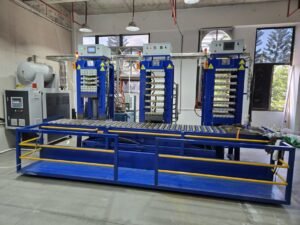
An experienced edge guard tape for pickleball paddle factory China should be able to support more than basic assembly. Useful capabilities include industrial design review, paddle mold development, CNC or die cutting, core lamination, thermoforming where applicable, perimeter finishing, tape converting, printing, logo application, grip installation, packaging, inspection, and export documentation.
For a private-label project, the factory should translate a brand brief into a controlled specification sheet. That document should define paddle dimensions, face material, core material and thickness, target weight range, balance target, handle length, grip circumference, edge system, tape color, artwork position, surface texture, packaging, barcode placement, inspection standard, and carton configuration.
A strong supplier will also flag conflicts before production. For example, an elongated paddle with a long handle, thick core, heavy edge guard, and high face weight may exceed the desired overall balance. A factory that identifies this early can adjust the guard profile, tape weight, internal reinforcement, or face layup before tooling and mass production.
Edge Tape Customization and Brand Presentation
Edge tape is a useful branding surface because it remains visible when paddles are stacked in a retail display or stored in a bag. Depending on the material and order quantity, factories may offer solid-color matching, contrasting colors, repeated logos, pattern printing, warning text, model names, or transparent protective tape over printed edge graphics.
Color consistency should be approved under defined lighting conditions. A digital artwork file alone is not enough because the printed or molded result can differ from a screen display. Request a physical color sample, a production-equivalent pre-production sample, and a retained approval standard. For repeat orders, specify acceptable color tolerance and require the factory to compare each batch against the retained standard.
The seam location also affects appearance. A clean seam near the handle or throat is usually less visible than a seam placed at the top of the paddle. The supplier should define seam overlap, alignment tolerance, edge coverage, and acceptable gaps. On premium products, these details strongly influence customer perception even though they do not appear in basic material specifications.
Edgeless Paddle Engineering and Quality Risks
Edgeless paddles attract attention because of their clean profile and uninterrupted face design. However, the absence of a raised guard transfers more responsibility to the laminate, perimeter reinforcement, edge seal, and finishing process. Poorly made edgeless paddles can show chips, exposed core cells, rough edges, coating cracks, or face separation after impact.
When evaluating an edgeless pickleball paddle factory, ask how the perimeter is reinforced and sealed. The factory should explain the cutting method, edge radius, sanding sequence, resin or coating system, curing process, and inspection method. Samples should be checked for uniform thickness, smoothness, color consistency, sharp points, exposed fibers, and weak sections around the top corners.
Impact testing should reflect the intended market. A recreational paddle may require a different protection level from a premium performance paddle. The goal is not to claim that an edgeless paddle is indestructible, but to verify that the chosen design survives reasonable handling and play without premature cosmetic or structural failure.
Elongated Paddle Design Considerations
An elongated shape pickleball paddle factory must balance reach, sweet-spot location, handle length, total weight, and swing weight. Adding length can improve reach and create a different leverage profile, but it can also make the paddle feel head-heavy if perimeter materials are not controlled.
The edge system becomes particularly important on elongated designs because the perimeter is longer. A heavier guard or tape adds more total mass than it would on a compact paddle. For this reason, buyers should request weight data for each component and ask for sample paddles within the proposed production tolerance.
Handle construction also deserves attention. Longer handles are often preferred by players who use two-handed backhands, but the transition between handle and face must remain strong. The factory should control handle insert materials, foam or reinforcement, grip wrapping, end-cap fit, and alignment. An elongated design should be tested as a complete system rather than simply extending the outline of a standard paddle.
Recommended Sampling and Approval Process
A disciplined sampling process reduces expensive changes after mass production. Begin with a specification confirmation sample that establishes dimensions, construction, materials, and basic appearance. After functional feedback, request a revised pre-production sample made with the intended edge guard, tape, graphics, grip, and packaging.
Approve samples in writing and keep one signed reference sample at the buyer’s location and one at the factory. The approval record should include date, version number, artwork file name, measured weight, balance point, dimensions, color references, and any accepted deviations. Photographs are helpful, but they should support rather than replace the physical standard.
For new tape or edgeless constructions, pilot production is valuable. A small controlled run can reveal seam lifting, edge variation, print alignment issues, packing pressure marks, or weight drift that may not appear on one handmade sample. Correcting these issues before the full order protects both schedule and margin.
Quality Control Checklist for Mass Production
A practical quality plan should combine incoming material inspection, in-process checks, and final inspection. Incoming checks may cover core thickness, face laminate condition, tape width and color, adhesive batch, molded guard dimensions, grip material, and packaging components.
In-process control should verify lamination quality, paddle outline, hole-free surface finish, edge smoothness, guard fit, tape alignment, handle straightness, grip tension, logo position, and weight. Factories should use calibrated scales and measuring tools and should record data by batch rather than relying only on visual inspection.
Final inspection should include appearance, dimensions, weight range, edge adhesion, seam quality, grip finish, packaging accuracy, barcode readability, carton quantity, and random functional tests. Buyers can define an AQL-based inspection plan or another mutually agreed standard. For high-value launches, a third-party pre-shipment inspection may provide additional assurance.
MOQ, Pricing, and Lead-Time Factors
Pricing depends on more than the paddle face material. Tooling, custom edge profiles, tape conversion, color matching, printing method, sample revisions, packaging, inspection level, and order quantity all influence the final quotation.
A standard edge tape color may have a lower minimum order quantity than a custom printed tape. A new molded guard profile can require tooling, while a stock profile may reduce setup cost. Edgeless designs may save the cost of a plastic guard but can require more finishing labor and tighter quality control. Therefore, buyers should compare total landed value instead of focusing only on one component price.
Lead time should be separated into design confirmation, sampling, material preparation, mass production, inspection, and shipping. Ask the factory which materials are stocked and which are made to order. A realistic schedule with clear approval deadlines is more reliable than an unusually short promise that ignores material or tooling lead times.
How to Select the Right Manufacturing Partner
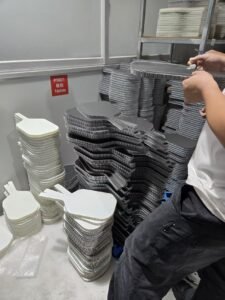
The right supplier should demonstrate relevant paddle experience, transparent communication, controlled documentation, and the ability to explain trade-offs. Request factory photos or a video audit, business information, product samples, process flow, quality records, and references where appropriate.
During quotation, compare whether each supplier has included the same construction and service scope. A very low price may exclude custom sampling, printed tape, reinforced edge finishing, testing, retail packaging, or final inspection. Use a standardized request-for-quotation sheet so that offers are comparable.
Pay attention to the questions a factory asks. A capable partner will ask about target market, player level, retail price, desired feel, dimensions, weight, materials, branding, packaging, compliance needs, and forecast quantity. Detailed questions are usually a sign that the supplier is engineering the product rather than simply matching a photo.
Frequently Asked Questions
Below are common sourcing questions from brands and importers.
What is the difference between a molded edge guard and edge tape?
A molded edge guard is a shaped protective component fitted around the paddle. Edge tape is a flexible strip applied to the perimeter. Guards usually provide a more pronounced protective barrier, while tape can offer a slimmer profile, lower weight, easier replacement, and more decoration options.
Can edge tape be customized with our logo?
Yes, depending on tape material, printing process, artwork complexity, and order quantity. Buyers should approve physical print samples and define logo spacing, seam position, and color tolerance.
Are edgeless paddles less durable?
Not automatically. Durability depends on laminate design, perimeter reinforcement, sealing, edge radius, coating, and quality control. An edgeless paddle needs careful engineering because it does not have a raised guard to absorb or hide impact damage.
Can a factory produce both standard and elongated paddles?
A full-service OEM factory can usually support multiple outlines, handle lengths, core thicknesses, and edge systems. New shapes may require tooling or cutting-program development.
What should be tested before mass production?
Confirm dimensions, weight, balance, edge adhesion, abrasion resistance, impact behavior, graphics, grip installation, packaging, and shipping stability using production-representative samples.
Is China suitable for private-label pickleball paddle production?
China has a broad supply chain for composites, polymer cores, grips, printing, molded components, packaging, and export logistics. Supplier capability varies, so buyers should audit processes and approve clear specifications before ordering.
Conclusion
Choosing an edge guard tape for pickleball paddle factory is ultimately a product-engineering decision. The tape, molded guard, or edgeless perimeter must work with the paddle face, core, geometry, weight target, artwork, packaging, and intended price level.
A reliable edge guard tape for pickleball paddle factory China will provide material guidance, production-representative samples, documented tolerances, and practical quality testing. Buyers developing a premium edgeless model or sourcing from an elongated shape pickleball paddle factory should pay special attention to perimeter reinforcement, finishing, component weight, and pilot production.
For OEM, ODM, and private-label projects, Gloperti supports custom paddle shapes, face materials, core thicknesses, graphics, edge solutions, grips, and packaging. Review the custom pickleball racket manufacturing page to begin a specification discussion and request a tailored quotation.
Start Your Custom Pickleball Paddle Project
Discuss paddle shape, face material, core thickness, edge protection, graphics, grip and packaging with our OEM team.
Ready to Source the Right Paddle?
Whether you need OEM/ODM manufacturing, wholesale pricing, or a custom branded paddle – we’re here to help. Get a free quote within 24 hours.