Focus Keyword: pickleball paddle factory | Related Keywords: pickleball paddles factory seconds, 3k sport leisure pickleball paddle factory, factory second pickleball paddles, power pro pickleball paddle factory
Finding the right pickleball paddle factory is one of the most important steps for sports brands, Amazon sellers, importers, promotional product distributors, and club buyers who want consistent quality at a competitive price. A good factory does more than produce paddles. It helps you choose the right materials, control weight and balance, design attractive graphics, reduce defect rates, and build a product line that can sell well in your target market.
In this complete guide, we explain how pickleball paddles are manufactured, what to check before choosing an OEM supplier, how pickleball paddles factory seconds are different from first-quality products, and why buyers should carefully evaluate every factory second pickleball paddle before placing a bulk order.
What Does a Pickleball Paddle Factory Do?
A professional pickleball paddle factory usually handles material sourcing, core lamination, surface pressing, edge guard installation, handle wrapping, printing, quality inspection, packaging, and export preparation. For OEM and private label customers, the factory may also provide product development support, graphic mockups, logo customization, packaging design, and sample production.
The production process can vary depending on the paddle type. Entry-level paddles may use fiberglass or composite faces, while premium paddles often use carbon fiber, 3K carbon fiber, raw carbon texture, graphite, or hybrid surfaces. Core thickness is also important. Common choices include 10mm, 13mm, and 16mm, with each thickness offering a different feel for power, control, and stability.
Key Materials Used in Pickleball Paddle Manufacturing
When comparing factories, buyers should first understand paddle materials. Material selection affects durability, hitting feel, spin potential, cost, and market positioning.
- Fiberglass paddles: Popular for recreational and beginner players because they offer good pop, colorful designs, and friendly pricing.
- Carbon fiber paddles: Often preferred by intermediate and advanced players who want a stable feel, better control, and a more premium surface.
- 3K carbon fiber paddles: A strong option for brands looking for a performance look and higher perceived value. This is why terms like 3k sport leisure pickleball paddle factory are often searched by buyers looking for sporty, leisure-focused, and customizable paddle lines.
- Graphite paddles: Lightweight and responsive, suitable for players who want quick hand speed at the kitchen line.
- Polymer honeycomb core: One of the most common core structures because it balances control, comfort, and durability.
OEM Custom Pickleball Paddles: What Buyers Should Prepare
If you want to develop a private label paddle, prepare your requirements before contacting a pickleball paddle factory. This makes communication faster and helps the factory quote accurately.
- Paddle material: fiberglass, carbon fiber, 3K carbon fiber, graphite, or hybrid surface.
- Core thickness: 10mm, 13mm, 16mm, or custom specification.
- Size and shape: standard, elongated, widebody, or custom mold.
- Weight range: lightweight, midweight, or power-focused heavier paddle.
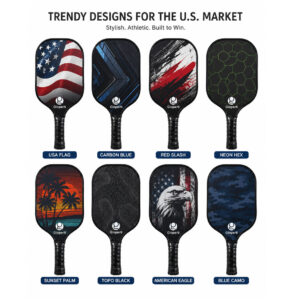
- Surface design: full-color UV printing, logo printing, matte finish, glossy finish, or textured finish.
- Packaging: single paddle sleeve, neoprene cover, PVC bag, Oxford fabric bag, retail box, or complete paddle set packaging.
- Target market: Amazon, independent website, club sales, wholesale distribution, promotional gifts, or sports retail.
What Are Pickleball Paddles Factory Seconds?
Pickleball paddles factory seconds are paddles that may have minor cosmetic issues, small printing differences, slight surface marks, small color variation, or other non-critical imperfections. In many cases, these paddles are still usable for practice, training, rental programs, giveaways, or budget retail channels. However, factory seconds should be clearly separated from first-quality paddles to protect brand reputation.
For buyers, the biggest advantage of factory second pickleball paddles is cost. The biggest risk is inconsistency. Before buying factory seconds in bulk, request real product photos, defect descriptions, sample pieces, and a clear quality grading standard.
Factory Second Pickleball Paddles vs First-Quality Paddles
| Item | First-Quality Paddles | Factory Second Paddles |
|---|---|---|
| Appearance | Clean finish, approved design, consistent color | May have small cosmetic marks or printing variation |
| Performance | Designed to meet full quality standard | May perform well, but consistency must be checked |
| Best Use | Retail sales, brand launch, premium sets | Practice, clearance, rental, promotional use |
| Price | Higher | Lower |
| Brand Risk | Lower | Higher if defects are not clearly controlled |
How to Evaluate a Reliable Pickleball Paddle Factory
Not every supplier that sells paddles is a real manufacturer. Some are trading companies, and some only resell existing models. A reliable factory should be able to show production capability, sample experience, quality control process, material options, and customization experience.
- Ask for real factory photos or videos. Look for pressing machines, cutting equipment, printing area, assembly line, and packing area.
- Check sample quality. Review surface finish, edge guard fit, handle comfort, balance, sound, and weight accuracy.
- Confirm customization ability. A good factory can print your logo, create mockups, make color adjustments, and provide packaging options.
- Review quality inspection steps. Weight check, surface check, bonding inspection, edge guard inspection, and packaging inspection are essential.
- Compare communication speed. A factory that replies clearly and professionally can save you time during product development.
Why 3K Carbon Fiber Pickleball Paddles Are Popular
Searches such as 3k sport leisure pickleball paddle factory show that buyers are interested in a mix of performance, lifestyle design, and OEM flexibility. 3K carbon fiber has a recognizable woven appearance that looks premium and sporty. It can be used for serious recreational paddles, club-level paddles, branded promotional sets, and private label product lines.
For a sports brand, 3K carbon fiber can create a stronger product story than a basic entry-level paddle. It looks technical, feels durable, and can be paired with minimalist graphics, bold color accents, or custom logo printing.
What About Power Pro Pickleball Paddle Factory Searches?
Some buyers search for terms like power pro pickleball paddle factory when looking for paddles with a stronger hitting feel, more pop, or a performance-focused design. In OEM production, a “power” paddle is usually influenced by surface material, core thickness, paddle shape, weight distribution, and handle length. A factory can help adjust these elements based on your target customer.
For example, an elongated paddle may offer more reach and leverage, while a thicker 16mm control paddle may provide better stability. A midweight fiberglass paddle may feel more powerful for beginners, while a carbon fiber paddle may provide better control for experienced players. The best choice depends on your market, price point, and customer profile.
Private Label Opportunities for Pickleball Paddle Buyers
Pickleball continues to create opportunities for custom paddle brands, club merchandise, corporate gifts, sports retailers, and online sellers. A factory can support different product lines, including beginner paddle sets, premium carbon fiber paddles, kids’ paddles, colorful fashion paddles, tournament-style paddles, and promotional logo paddles.
For independent website owners and B2B buyers, custom paddles can be positioned around quality, design, value, and fast customization. Instead of competing only on price, create a complete offer: paddle, cover, balls, bag, logo printing, and retail-ready packaging.
Quality Control Checklist Before Shipment
Before confirming mass production shipment, use a quality checklist. This is especially important for first orders and custom printed products.
- Confirm paddle size, thickness, and weight range.
- Check printed logo position, color, and surface finish.
- Inspect edge guard alignment and glue quality.
- Check handle wrapping, grip comfort, and end cap position.
- Test several paddles for sound, rebound feel, and surface consistency.
- Confirm packaging, barcode, carton marks, and shipping labels.
- Separate factory seconds from first-quality goods if applicable.
Common Mistakes When Buying Pickleball Paddles from a Factory
Many buyers focus only on unit price. That can be a costly mistake. A low price may hide weak materials, unstable weight control, poor printing, cheap packaging, or slow communication. It is better to compare total value: sample quality, customization support, defect control, packaging, delivery time, and long-term cooperation.
Another common mistake is copying a popular paddle without building a clear market position. A successful private label paddle should have a defined customer: beginner, intermediate player, club buyer, gift buyer, fashion player, or competitive player. The more clearly you define the product, the easier it is for the factory to help you develop the right paddle.
FAQ: Pickleball Paddle Factory and Factory Seconds
Can I customize my logo on pickleball paddles?
Yes. Most OEM factories can print your logo on one or both sides of the paddle. UV printing is commonly used for colorful designs and private label branding.
Are factory second pickleball paddles worth buying?
They can be worth buying for practice, clearance, rental use, or promotional programs, but you should inspect defect types and sample quality before ordering in bulk.
What is the best material for custom pickleball paddles?
Fiberglass is good for affordable and colorful paddles. Carbon fiber and 3K carbon fiber are better for premium positioning, control, and stronger perceived value.
Can a factory help with paddle packaging?
Yes. Common options include neoprene covers, PVC bags, Oxford fabric bags, retail boxes, and complete paddle set packaging.
How do I choose between 10mm, 13mm, and 16mm paddles?
10mm paddles usually feel faster and more direct, 13mm paddles offer balanced playability, and 16mm paddles are popular for stability and control.
Conclusion
Choosing the right pickleball paddle factory can help you build a stronger product line, improve quality control, and create customized paddles for your market. Whether you are sourcing first-quality paddles, exploring pickleball paddles factory seconds, comparing factory second pickleball paddles, or searching for a 3k sport leisure pickleball paddle factory, the key is to focus on material, production capability, sample quality, communication, and long-term reliability.
For brands and importers looking for custom pickleball paddles, a complete OEM solution can include material selection, logo printing, packaging, sample development, and bulk production support. With the right factory partner, your paddle line can move from idea to market much faster.
Looking for a reliable OEM/ODM pickleball paddle manufacturer?
Gloperti specializes in custom pickleball paddle manufacturing — logos, colors, packaging, and specs fully customized for brands, clubs, and retailers.
Ready to Source the Right Paddle?
Whether you need OEM/ODM manufacturing, wholesale pricing, or a custom branded paddle – we’re here to help. Get a free quote within 24 hours.