China Carbon Fiber Pickleball Paddle Supplier: The Complete Guide to Custom Pickleball Paddle Manufacturing
Focus Keyword: china carbon fiber pickleball paddle supplier
Table of Contents
- Introduction
- Why Source Pickleball Paddles from China?
- Carbon Fiber, Graphite, and Composite Paddle Materials
- Core Materials and Thickness Options
- Cold-Pressed, Thermoformed, and Unibody Construction
- Key Customization Options for Private-Label Brands
- How to Build a Clear Paddle Specification Sheet
- Supplier Evaluation: Factory, Trading Company, or Integrated Partner?
- Sampling and Product Development Process
- Quality Control for Carbon Fiber Pickleball Paddles
- Certification, Rules, and Marketing Claims
- Pricing, MOQ, Tooling, and Lead Time
- Common Sourcing Mistakes to Avoid
- How to Choose the Right China Carbon Fiber Pickleball Paddle Supplier
- Why Work with Gloperti for Custom Paddle Projects?
- Conclusion
Introduction
The global pickleball market has created strong demand for paddles that combine performance, distinctive branding, dependable quality, and commercially realistic pricing. For distributors, sports brands, clubs, retailers, promotional-product companies, and e-commerce sellers, selecting the right China carbon fiber pickleball paddle supplier can determine whether a product launch becomes a scalable success or an expensive quality-control problem.
China has developed a mature sporting-goods supply chain that includes carbon-fiber surface processing, honeycomb core production, thermoforming, edge-guard molding, handle assembly, UV printing, packaging, and export logistics. A capable supplier can coordinate these steps into one controlled OEM or private-label program. The important point is that not every factory provides the same engineering capability, material transparency, process consistency, or communication quality.
This guide explains how to evaluate a china graphite pickleball paddles supplier, a china pickleball paddles composite supplier, and a custom carbon fiber pickleball paddle supplier. It also covers material choices, core thickness, construction methods, customization, testing, cost drivers, sampling, quality assurance, packaging, compliance, and supplier selection. The goal is to help buyers move from a broad product idea to a repeatable paddle specification that can be manufactured and sold with confidence.
Why Source Pickleball Paddles from China?
China remains a major sourcing center for pickleball paddles because the manufacturing ecosystem is broad and highly specialized. Rather than relying on a single workshop to perform every operation, experienced suppliers work with an integrated network of material processors, mold makers, printing teams, packaging factories, and inspection personnel. This concentration of capabilities can shorten development time and give buyers more options for design, construction, and price positioning.
A professional China carbon fiber pickleball paddle supplier can support several business models. New brands may begin with a low-quantity logo program on an existing mold. Established sellers may request a semi-custom model with a revised handle, edge guard, surface texture, or graphic package. Larger brands may develop exclusive tooling, a proprietary layup, custom foam injection, or a specialized weight distribution. This flexibility allows a buyer to match investment level with market opportunity.
Cost efficiency is another reason buyers source from China, but price should not be viewed in isolation. The best value comes from the combination of tooling access, material availability, technical labor, production scale, packaging integration, and export experience. A cheaper quotation can become expensive when specifications are vague, material substitutions occur, paddle weights vary excessively, or packaging fails in transit. The right supplier protects total project economics, not just the initial unit price.
Carbon Fiber, Graphite, and Composite Paddle Materials
Material terminology in the pickleball industry is often used loosely, so buyers should define exactly what they are purchasing. “Carbon fiber,” “graphite,” and “composite” may describe the face material, the reinforcement layer, or the overall construction. A reliable supplier should provide a clear bill of materials and explain the grade, weave, thickness, resin system, and surface treatment used in the paddle.
Carbon fiber faces are popular because they can offer a stable feel, efficient energy transfer, and strong spin potential when combined with an appropriate peel-ply or textured surface. Common commercial options include 3K woven carbon, T700 raw carbon fiber, 12K carbon, and 18K decorative or performance-oriented weaves. The visual weave alone does not guarantee performance. Resin content, bonding, surface texture, face thickness, core quality, and final compression all affect playability.
A china graphite pickleball paddles supplier may offer graphite-faced paddles designed for light weight, control, and accessible pricing. In some catalogues, “graphite” refers to a thin carbon-based sheet or coated surface rather than a premium raw-carbon fabric. Buyers should request material samples, cross-section information, and production references before using performance claims in marketing.
A china pickleball paddles composite supplier typically produces fiberglass, carbon-fiberglass hybrids, Kevlar-style aramid blends, or layered face constructions. Fiberglass can provide lively rebound and a softer entry price, while hybrid laminates can be engineered to balance power, control, durability, and appearance. Composite solutions are especially useful when a brand needs multiple product tiers under one visual identity.
Core Materials and Thickness Options
The core is a major contributor to paddle feel, sound, stability, and durability. Polypropylene honeycomb is the most common choice for modern performance paddles because it is lightweight and can be produced in several cell sizes and densities. Nomex and aluminum honeycomb may still appear in specific product categories, but polypropylene is generally preferred for mainstream consumer paddles.
Core thickness should match the intended player profile. A 13 mm paddle often feels faster and more direct, supporting power-oriented play and quick hand speed. A 14 mm model provides a middle ground between pop and control. A 16 mm paddle is widely used for control, stability, and a softer response. Some suppliers also offer 10 mm junior or entry-level constructions and thicker specialty cores for maximum plushness.
Thickness must be measured as part of the complete construction, not only the honeycomb sheet. Face skins, adhesive layers, perimeter foam, and finishing tolerances influence the final dimension. Your specification should state the acceptable finished thickness range, core density, cell size, and weight target. A dependable custom pickleball paddle supplier will record these variables instead of describing a model simply as “13 mm” or “16 mm.”
Cold-Pressed, Thermoformed, and Unibody Construction
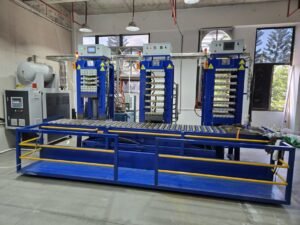
Traditional cold-pressed paddles are produced by laminating face materials to a honeycomb core under controlled pressure and temperature. This method is cost-effective, versatile, and suitable for many recreational and intermediate paddles. Quality depends heavily on adhesive coverage, pressure uniformity, curing time, edge finishing, and handle attachment.
Thermoformed paddles use heat, pressure, and molded perimeter construction to create a more integrated structure. Many designs wrap carbon material around the edges and may add foam around the perimeter to improve stability and enlarge the effective sweet spot. Thermoforming can support higher-performance positioning, but it requires tighter process control. Excessive heat, poor resin flow, uneven foam, or inconsistent compression can cause delamination, crushing, warping, or performance variation.
The term “unibody” usually means the face reinforcement continues through the neck and handle area, rather than relying on a separately attached handle section. This can improve structural continuity, but buyers should confirm the actual layup. Marketing terminology should be backed by construction drawings or sample disassembly. A serious custom carbon fiber pickleball paddle supplier will discuss the process in engineering terms and identify which features are standard, optional, or proprietary.
Key Customization Options for Private-Label Brands
Customization can range from simple logo printing to full product engineering. For a first order, many brands choose an existing shape and construction, then customize the face graphic, grip color, edge guard, end cap, packaging, and barcode label. This reduces tooling cost and allows faster market testing.
More advanced programs may include an exclusive paddle shape, elongated or widebody geometry, custom throat dimensions, handle length, grip circumference, face layup, core density, perimeter weighting, foam injection, balance point, and target swing weight. Each change should have a commercial reason. Longer handles may appeal to two-handed backhand players, while a wider body may improve forgiveness. Added perimeter mass can increase stability but may reduce hand speed.
Graphic customization commonly uses UV printing, water-transfer printing, heat transfer, screen printing, or surface decals. UV printing is flexible for colorful small-batch designs and can reproduce detailed artwork. Buyers should verify adhesion, color consistency, abrasion resistance, and whether the printed layer changes the intended surface texture.
Packaging options include individual neoprene covers, Oxford fabric bags, PVC set bags, color boxes, kraft boxes, mailer cartons, retail sleeves, and complete paddle sets with balls and accessories. A custom pickleball paddles supplier should provide dielines, barcode placement, carton dimensions, gross weight, and drop-test recommendations before mass production.
How to Build a Clear Paddle Specification Sheet
A detailed specification sheet is the foundation of a successful OEM project. It removes ambiguity and gives the supplier measurable acceptance criteria. At minimum, the document should include finished dimensions, shape drawing, handle length, grip circumference, total thickness, target weight, weight tolerance, balance point, face material, core material, core density, edge-guard material, grip construction, end-cap design, artwork version, packaging, labeling, and carton requirements.
Performance-related specifications can include swing weight, twist weight, surface roughness, deflection, rebound behavior, sound profile, and moisture resistance. Not every buyer needs laboratory-level control, but critical claims should be testable. For example, a brand that promotes “raw T700 carbon” should confirm the fabric source and surface process. A brand that markets a paddle as lightweight should define a narrow finished-weight range.
Use a golden sample approval process. The final approved sample should be signed, dated, photographed, weighed, measured, and retained by both buyer and supplier. Mass production should be compared against this reference. Changes after approval must be documented through a revision number rather than handled only through chat messages.
Supplier Evaluation: Factory, Trading Company, or Integrated Partner?
Some buyers insist on working only with a factory, while others obtain excellent results through an export-oriented trading or development company. The label matters less than capability, transparency, and control. A factory may own presses and assembly lines but outsource printing, core cutting, edge guards, or packaging. An integrated supplier may coordinate several specialized factories while maintaining stronger project management and inspection.
Ask who owns the tooling, who purchases the carbon material, where lamination occurs, how many production lines are available, and which processes are outsourced. Request videos or live calls showing material storage, pressing, trimming, printing, assembly, inspection, and packaging. Check whether the supplier has worked with paddles of similar construction, thickness, and target price.
Communication quality is a practical indicator of future performance. Strong suppliers answer technical questions directly, identify risks early, and confirm details in writing. Weak suppliers repeat generic claims, avoid tolerances, or agree to every request without discussing feasibility. A reliable China carbon fiber pickleball paddle supplier should be willing to challenge an unrealistic design rather than quietly produce an unstable product.
Sampling and Product Development Process
A structured sampling process normally begins with a product brief and quotation, followed by artwork preparation, material confirmation, prototype production, testing, revision, and golden-sample approval. Existing-mold logo samples may be completed relatively quickly, while fully custom thermoformed models require tooling and more development cycles.
Evaluate samples systematically. Measure length, width, thickness, handle dimensions, grip circumference, weight, and balance. Inspect face flatness, edge-guard fit, printing alignment, surface texture, grip wrapping, end-cap fit, and any visible glue marks. Test multiple samples rather than relying on one “perfect” unit.
On-court evaluation should involve players with different styles. Ask them to score control, power, spin, stability, hand speed, comfort, sweet spot, sound, and visual quality. Record feedback in a standard form. Subjective opinions become more useful when linked to measured variables such as weight and balance.
Do not rush from the first acceptable sample directly into a large order. A pilot order can reveal production and packaging issues that prototypes do not show. For a new construction, consider a small production run, destructive testing, and accelerated durability evaluation before committing to a major launch.
Quality Control for Carbon Fiber Pickleball Paddles
Quality control should occur at incoming materials, during production, and before shipment. Incoming checks may include carbon-fabric appearance, core thickness and density, adhesive batch, edge-guard dimensions, grip material, and printed packaging. In-process controls should verify layup sequence, adhesive application, press settings, curing time, trimming dimensions, handle assembly, and surface treatment.
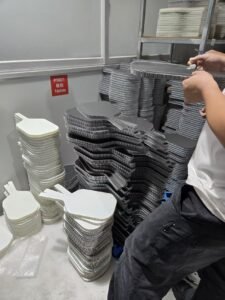
Finished-paddle inspection commonly includes dimensions, weight, thickness, balance, flatness, visual appearance, print registration, edge-guard adhesion, grip finish, end-cap security, and packaging. Functional testing may include impact testing, bond-strength checks, handle bending, torsion, temperature cycling, moisture exposure, drop testing, and repeated-ball striking.
AQL inspection can be used for larger orders, but the inspection standard must define critical, major, and minor defects. Delamination, cracked faces, loose handles, severe warping, incorrect materials, and unsafe sharp edges should be treated as critical or major. Small cosmetic marks may be minor depending on the agreed standard.
Keep production records by batch. Traceability is valuable when a customer reports a problem because the supplier can identify the material lot, production date, operator, press settings, and inspection results. This discipline separates professional manufacturing from simple order fulfillment.
Certification, Rules, and Marketing Claims
Brands frequently ask whether a paddle can be marketed as tournament-ready or approved for organized play. Approval requirements and equipment rules can change, so buyers should verify the current rules directly with the relevant governing organization before making claims. The supplier can support the process with dimensions, materials, surface data, and sample production, but the brand owner should control final submissions and approvals.
Avoid unsupported claims such as “professional grade,” “maximum spin,” or “unbreakable.” Marketing language should reflect test data and the actual construction. Material claims should be precise: T700 raw carbon fiber, woven 3K carbon, fiberglass composite, aramid-carbon hybrid, or another documented specification.
Chemical and packaging compliance may also matter depending on the destination market and retailer. Requirements can include restricted-substance declarations, packaging material rules, labeling, country-of-origin marking, barcode standards, and product safety documentation. Confirm these before artwork and packaging approval to avoid rework.
Pricing, MOQ, Tooling, and Lead Time
Pricing depends on face material, core specification, construction method, shape, weight tolerances, printing, grip, edge guard, packaging, accessories, inspection, and order volume. Thermoformed raw-carbon paddles generally cost more than basic cold-pressed fiberglass models because of materials, tooling, process time, and quality-control requirements.
MOQ varies by customization level. A supplier may accept a relatively low quantity for logo printing on a standard model, while custom molds, special laminates, or exclusive components require higher volumes. Buyers should distinguish the sample MOQ, trial-order MOQ, color or artwork MOQ, and total production MOQ.
Tooling fees may cover paddle molds, trimming fixtures, printing plates, packaging dies, injection molds, or custom end caps. The purchase agreement should state who owns the tooling, how long it will be stored, whether maintenance is included, and whether the supplier may use it for other customers.
Lead time should be divided into sample development, material preparation, production, inspection, and shipping. Seasonal demand, carbon-fabric availability, packaging approvals, and public holidays can affect the schedule. Build buffer into launch planning rather than relying on the fastest quoted date.
Common Sourcing Mistakes to Avoid
The first mistake is choosing solely by price. A low quotation may exclude better carbon material, tight weight sorting, durable printing, protective packaging, or full inspection. Compare quotations line by line and confirm the exact construction.
The second mistake is using vague specifications. Terms such as “high quality,” “professional,” or “same as the famous brand” are not measurable. Replace them with drawings, material descriptions, tolerances, test methods, and approved samples.
The third mistake is approving only appearance. Two paddles can look identical while using different cores, adhesives, face thicknesses, or layups. Weight, balance, bond quality, surface treatment, and durability must be checked.
The fourth mistake is changing artwork or construction during production. Late changes create mismatched materials, packaging errors, and schedule delays. Use revision control and freeze specifications before the production start.
The fifth mistake is skipping pre-shipment inspection. Even a trusted custom pickleball paddle supplier benefits from a documented final check. Inspection protects both sides by confirming that the order matches the agreed standard before the goods leave the factory.
How to Choose the Right China Carbon Fiber Pickleball Paddle Supplier
Begin by defining your market position. Are you developing an affordable recreational set, a club-level control paddle, a lightweight women’s model, a junior paddle, or a premium thermoformed performance paddle? A supplier that excels at low-cost sets may not be the best partner for advanced raw-carbon development, and a premium factory may not be competitive for promotional quantities.
Shortlist suppliers based on relevant construction experience, not general sports-product catalogues. Request comparable samples, process details, material options, tolerance standards, and case examples. Evaluate response speed, but also evaluate response quality. Detailed, cautious answers are often more valuable than instant promises.
Use a scorecard covering technical capability, sample quality, material transparency, quality systems, communication, pricing, MOQ, lead time, customization, packaging, compliance support, and after-sales response. Weight each category according to your business risk.
Finally, treat the relationship as an ongoing manufacturing partnership. Share sales feedback, return reasons, customer reviews, and improvement priorities. The best supplier will use this information to refine weight ranges, graphics, packaging, surface durability, and future models. Continuous improvement creates a stronger product line than repeatedly changing factories for a small price difference.
Why Work with Gloperti for Custom Paddle Projects?
Gloperti supports private-label and OEM pickleball paddle development for brands, distributors, clubs, and retailers. Project options can include carbon fiber, graphite-style, fiberglass, and composite faces; 13 mm, 14 mm, and 16 mm cores; standard, elongated, and widebody shapes; custom logos and full-face graphics; individual covers and set packaging; and low-volume market-testing programs.
A typical project begins with target-market positioning, desired construction, dimensions, weight range, artwork, packaging, and order quantity. The development team then recommends a practical solution, prepares visual mockups, produces samples, confirms the golden standard, and coordinates production inspection.
Buyers can use the custom pickleball racket page to review development options and begin a specification discussion: custom pickleball racket page. Clear product positioning and measurable specifications allow the supplier to quote accurately and reduce revisions.
Conclusion
Choosing a China carbon fiber pickleball paddle supplier is a strategic sourcing decision, not a simple catalogue purchase. The strongest results come from combining clear market positioning, precise specifications, verified materials, controlled sampling, measurable quality standards, and disciplined production management.
Whether you need a china graphite pickleball paddles supplier for lightweight control paddles, a china pickleball paddles composite supplier for value-focused product lines, or a custom carbon fiber pickleball paddle supplier for premium thermoformed models, evaluate the complete manufacturing system. Material names and attractive graphics are only the beginning; consistency, durability, documentation, and communication determine long-term commercial performance.
A capable custom pickleball paddle supplier should help transform your product concept into a repeatable manufacturing standard. With the right partner, private-label brands can launch faster, reduce quality risk, and build a paddle range that is differentiated, scalable, and ready for global distribution.
Frequently Asked Questions
What is the best face material for a custom pickleball paddle?
The best material depends on the target player and price level. Raw carbon fiber is popular for control and spin, fiberglass can provide lively power and value, and hybrid composites can balance feel, durability, and cost.
What information should I send to a China carbon fiber pickleball paddle supplier?
Send the paddle shape, dimensions, thickness, target weight, handle length, grip size, face material, core type, construction method, artwork, packaging, quantity, destination market, and any testing or approval requirements.
Can I order custom pickleball paddles with a low MOQ?
Many suppliers offer lower MOQs when you use an existing mold and customize the logo, artwork, grip, edge guard, and packaging. Fully custom tooling or proprietary construction usually requires a higher MOQ.
What is the difference between carbon fiber and graphite pickleball paddles?
The terms are sometimes used inconsistently. Carbon fiber usually refers to a woven or unidirectional carbon fabric, while graphite may refer to a thin carbon-based face sheet. Ask the supplier for the exact material specification rather than relying only on the product name.
Are 13 mm or 16 mm paddles better?
A 13 mm paddle often feels faster and more powerful, while a 16 mm paddle generally offers more control, stability, and a softer response. The best choice depends on the intended player profile and the complete construction.
What is a thermoformed pickleball paddle?
A thermoformed paddle is produced with heat and pressure in a mold, often with carbon wrapping around the perimeter and optional foam injection. The process can improve structural integration and stability when controlled correctly.
How should I inspect a bulk paddle order?
Use an agreed inspection standard covering dimensions, weight, thickness, balance, flatness, printing, surface texture, edge guards, grips, handles, packaging, and functional durability. Compare production units with the signed golden sample.
Can a supplier help with packaging and paddle sets?
Yes. Experienced suppliers can provide individual covers, retail boxes, PVC or Oxford set bags, balls, grip accessories, labels, cartons, and customized packaging artwork.
How long does custom paddle development take?
Timing depends on whether you use an existing model or create custom tooling. Logo samples are faster, while new molds and thermoformed constructions require more engineering, sampling, testing, and revision time.
How can I reduce risk when choosing a custom pickleball paddles supplier?
Use a detailed specification sheet, verify material claims, approve multiple samples, retain a golden sample, start with a pilot order, define defect standards, and perform pre-shipment inspection.
Looking for a reliable OEM/ODM pickleball paddle manufacturer?
Gloperti specializes in custom pickleball paddle manufacturing — logos, colors, packaging, and specs fully customized for brands, clubs, and retailers.
Ready to Source the Right Paddle?
Whether you need OEM/ODM manufacturing, wholesale pricing, or a custom branded paddle – we’re here to help. Get a free quote within 24 hours.