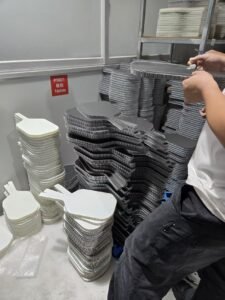
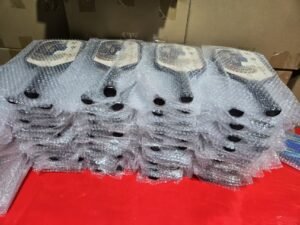
For sports brands launching a distinctive paddle, understanding custom pickleball paddle molds helps control tooling costs, clarify ownership and reduce uncertainty before production. Start by confirming whether your design needs new tooling, what the quotation includes and how finished samples will be approved.
Custom pickleball paddle molds are production tools developed for a specific paddle geometry and manufacturing method. Depending on the construction, a tooling project may involve CNC machining, compression molding tools, thermoforming tooling, trimming fixtures or separate component molds. These terms describe different operations and should not be treated as interchangeable.
A new mold can support a differentiated product, but it is not necessary for every custom paddle order. Many private-label collections can begin with an existing platform and customized graphics, grips or packaging. Other projects require dedicated tooling to achieve a different shape, handle geometry or molded construction.
For buyers evaluating Gloperti or another manufacturing partner, the practical questions are straightforward: Do we need a new mold? What will development include? Who controls the tooling? And what evidence is required before production begins?
This guide explains how to compare existing and custom tooling, prepare a useful development brief, evaluate costs and document ownership and sample approval requirements.
Quick Buyer Checklist
Before approving a tooling quotation, confirm:
- Whether your design requires new tooling or can use an existing platform.
- Which molds, templates, fixtures or other tools the quotation includes.
- The drawing revision and specifications used to manufacture the tooling.
- How many sample and revision rounds are included.
- The criteria for approving the tooling and finished paddle samples.
- Who owns the tooling and whether its use is exclusive.
- Who handles storage, maintenance, repairs and future modifications.
- The production quantity over which you expect to recover the development cost.
What Are Custom Pickleball Paddle Molds?
A pickleball paddle mold is a tool used to form or control specified features of a paddle during a particular manufacturing operation. Its function depends on the paddle construction and production method.
In some molded composite constructions, tooling helps establish the paddle profile, perimeter geometry and handle transition during processing. Other paddle constructions rely more heavily on sheet lamination, pressing, profile cutting and assembly.
Not every custom paddle requires a dedicated full-shape forming mold.
Molds, Cutting Templates and Fixtures Are Different
In supplier discussions, “mold” is sometimes used broadly to describe several kinds of production tooling. Buyers should ask exactly what is being developed.
| Tooling type | Typical purpose | What buyers should confirm |
|---|---|---|
| Forming mold | Controls specified geometry during molding or pressing | Compatible construction, dimensions and process requirements |
| Cutting template or program | Defines the outline of cut components | Profile, revision control and cutting method |
| Trimming or positioning fixture | Holds parts during finishing or assembly | Alignment, repeatability and supported operations |
| Component mold | Produces a specific molded component | Component material, dimensions and compatibility |
| Inspection fixture | Helps verify selected dimensions or features | Inspection method and acceptance criteria |
A quotation described only as a “custom mold fee” may leave important questions unanswered. Request an itemized explanation of the tools and development work included.
CNC Machining, Compression Molding and Thermoforming Tooling
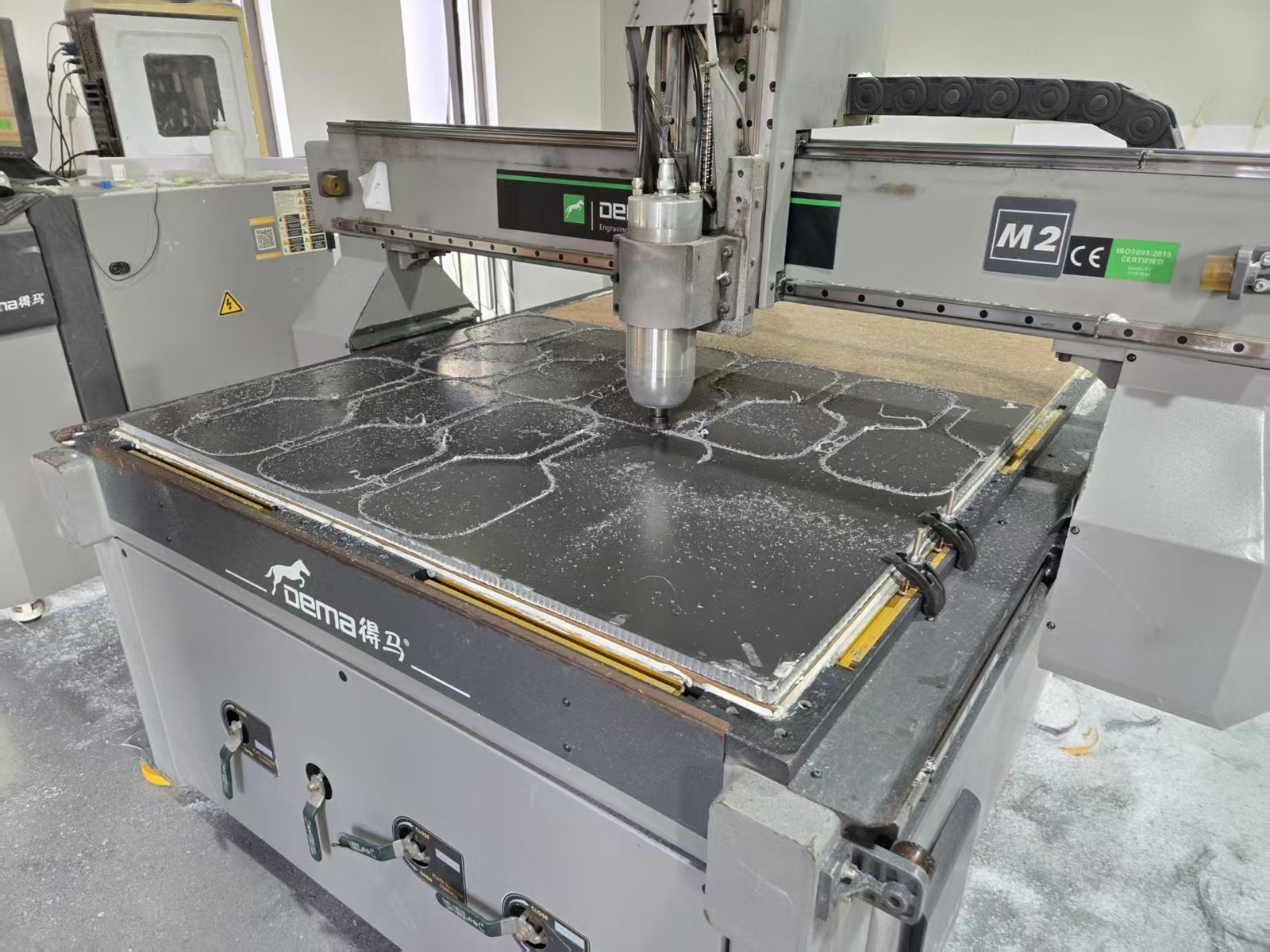
Understanding the terminology helps buyers compare quotations that may describe different tooling requirements.
CNC machining uses computer-controlled equipment to remove material from a workpiece. In a tooling project, it may be used to manufacture mold cavities, tool surfaces or fixtures according to approved design data. CNC machining describes how a tool or part is made; it does not identify the paddle’s finished construction.
Compression molding uses a mold and applied pressure, often with heat, to shape or consolidate a material system. The tooling must suit the intended materials, geometry and processing conditions. Buyers should ask which features the mold controls and which finished-product characteristics depend on subsequent operations.
Thermoforming tooling generally refers to tools used to shape heated thermoplastic materials. In pickleball supplier discussions, “thermoformed paddle” may be used more broadly to describe particular heated composite production methods. Ask the manufacturer to explain the actual process rather than assuming that every supplier uses the term in the same way.
CAD drawings, dimensional tolerances and inspection fixtures connect the approved design to measurable production requirements. Critical dimensions should have defined reference points and an agreed inspection method.
For your project, request a clear explanation of:
- The manufacturing operation supported by each tool.
- The materials and configurations the tooling can accommodate.
- The dimensions controlled by the tool.
- The trial samples and inspections needed for approval.
- Any additional tools required for trimming, assembly or components.
These terms provide useful technical context, but they are not certifications or proof of in-house capability. Confirm which operations the supplier performs internally and which are handled by specialist tooling partners.
For an overview of how tooling fits into the complete production workflow, see our pickleball paddle manufacturing process.
Existing Molds vs. Custom Molds: Which Should Your Brand Choose?
Existing molds vs custom paddle molds is, in the end, a commercial comparison: the right approach depends on your product differentiation, launch budget and expected order volume.
Option 1: Use an Existing Paddle Platform
An existing platform is often a practical starting point when a suitable shape and construction are already available.
Depending on the platform, customization may include graphics, logos, grip materials, selected construction options and packaging. Available combinations should be confirmed before artwork and samples are approved.
This approach can suit brands that want to test customer demand before committing to a new tooling program.
However, using an existing platform does not automatically provide an exclusive shape. Clarify which elements are shared and which are specific to your order.
Option 2: Modify an Existing Platform
Some projects fall between a standard private-label order and a fully new development.
A buyer may want to adjust a handle, change selected components or revise the product specification while retaining parts of an established platform. The manufacturer must assess whether those changes need new tooling, modified tooling, different fixtures or only updated production settings.
A change that looks small on a drawing may still affect assembly, processing or inspection.
Option 3: Develop Dedicated Tooling
Dedicated tooling becomes relevant when the intended geometry or construction cannot be produced reliably using available tools.
It can support a differentiated product platform, but it also introduces engineering decisions, sample validation and a larger development commitment.
| Decision factor | Existing platform | Modified platform | Dedicated tooling |
|---|---|---|---|
| Product geometry | Established options | Selected changes | Developed around an approved design |
| Initial development commitment | Generally lower | Depends on modifications | Generally higher |
| Validation scope | Confirm selected configuration | Validate changed features | Validate new geometry and construction |
| Shape exclusivity | Must be checked | Must be negotiated | Must be documented |
| Suitable use | Market testing and private label | Targeted differentiation | Distinct product development |
Learn more about the available approaches through our custom pickleball paddle manufacturing service.
When Do You Need a New Pickleball Paddle Mold?
When do you need a custom pickleball paddle mold, and when will an existing tool do the job? New tooling should solve a defined product requirement – it should not be an automatic charge attached to every customization request.
You Need a Different Paddle Geometry
A new head profile, perimeter shape or handle transition may require tooling changes, depending on the construction.
Before requesting a new mold, define what the geometry is intended to achieve. Your goal might be a different hitting area, a longer handle or a particular product identity. The engineering review should connect that goal to a manufacturable design.
Your Construction Requires Different Tooling
A change in construction may alter how the paddle is formed, supported, pressed or finished.
The manufacturer should explain whether the existing tooling remains suitable and which features need to change. Buyers should avoid assuming that one tool can support every material system or construction method.
You Want a Dedicated Product Platform
An established brand may invest in a platform intended for repeat orders and future model variations.
In that situation, the development discussion should cover more than the first sample. Consider how the tooling will support repeat production, future revisions, replacement components and additional production capacity.
You Need a Unique Component
A project may require a new tool for an edge guard, end cap or another component without requiring an entirely new paddle-forming mold.
Ask the supplier to separate component tooling from paddle tooling so the quotation reflects the actual development scope.
Buyer takeaway
Custom graphics alone do not necessarily require a new paddle mold. Branding and structural development should be evaluated separately.
Pickleball Paddle Mold Design: What Buyers Need to Confirm
A clear specification helps prevent tooling from being manufactured around incomplete assumptions.
Define the Paddle Geometry
The development brief should identify the dimensions relevant to your design, such as:
- Overall length and maximum width.
- Head profile and corner transitions.
- Handle length and cross-sectional geometry.
- Finished paddle thickness.
- Edge construction and component interfaces.
- Measurement reference points and agreed tolerances.
Clarify whether a dimension refers to the unfinished paddle body or the completed product. For example, finished grip circumference includes the installed grip system and should not be confused with the underlying handle dimensions.
Confirm the Intended Construction
A drawing shows geometry, but it may not explain how the product will be built.
The manufacturer also needs to understand the intended face materials, core, perimeter structure, bonding approach and finishing requirements.
For a fuller comparison of face and core options, see our pickleball paddle materials guide.
Material or construction changes introduced after tooling approval can require additional review and may lead to modifications.
Separate Mold Dimensions from Performance Targets
A mold can help establish geometry. It does not, by itself, guarantee a particular playing response.
Finished weight, balance, swing weight, twist weight and durability also depend on materials, layup, core structure, adhesive, components and process consistency.
State performance targets in the development brief, then agree on how representative samples will be evaluated. Avoid approving a mold on the assumption that a specific outline automatically delivers the desired performance.
Review Manufacturability Before Cutting Tooling
Pickleball paddle mold manufacturing starts from approved design data, so settle the questions below before any tooling is cut.
Before tooling manufacture begins, request a review of the features that could complicate production.
- Can the proposed geometry be produced and released from the tool reliably?
- Are the handle and perimeter transitions suitable for the construction?
- Can components be assembled without excessive adjustment?
- Are critical dimensions accessible for inspection?
- Which features are likely to need sample validation?
For projects that need help translating a product concept into a production specification, explore our ODM pickleball paddle development options.
What Affects Pickleball Paddle Mold Cost?
Pickleball paddle mold cost depends on the actual tooling scope. A useful quotation should explain both the physical tools and the development services being purchased.
What Should a Tooling Quotation Include?
Gloperti’s own tooling quotation follows that principle. The table below shows what is
included and what buyers should confirm for each item:
| Quotation item | What Gloperti includes / buyers should confirm |
|---|---|
| Design & engineering | Free design included, CAD file provided |
| Physical tooling | No physical tooling required |
| Trial samples | 2 samples; 3 trial runs; shipping charged to the customer’s actual delivery address |
| Revisions | Dimensions can only be reduced — they cannot be enlarged |
| Acceptance | Dimensions accepted against the approved drawings; testing done by playing real matches; sample approval requires a signature and photos |
| Ownership & maintenance | Ownership: the paying party. Exclusive-use right: the factory. Storage and maintenance: kept at the factory, stored under normal conditions and protected from rust |
Exact terms are confirmed in the written quotation for each project.
Design and Engineering Work
A concept sketch, a reference sample and a production-ready drawing require different levels of engineering support.
The quotation should clarify whether it includes drawing preparation, manufacturability review, design revisions and preparation of manufacturing data.
Tooling Complexity and Construction
Geometry, tool material, machining requirements, surface preparation and production process compatibility can all affect the quotation.
The lowest initial tooling price may not represent the best option if the tool requires frequent adjustment or cannot support the intended production plan.
Number of Tools and Production Capacity
A “mold set” should be clearly defined.
Confirm how many tools are included, what each tool does and whether the quoted set supports the required production arrangement. Additional tooling may be needed when production capacity expands.
Trial Samples and Revisions
Sample development can include several separate activities:
- Initial tooling trials.
- Prototype or pre-production paddle manufacture.
- Dimensional inspection.
- Construction and assembly review.
- Agreed testing.
- Tooling modifications.
- Additional sample shipments.
Ask which activities are included and what triggers an additional charge.
How to Calculate Tooling Cost per Paddle
For internal budgeting, tooling cost can be allocated across a planned production quantity:
Allocated tooling cost per paddle = One-time tooling investment ÷ Planned production quantity
For illustration only, suppose a project has a tooling investment of $2,000:
| Planned production quantity | Allocated tooling cost per paddle |
|---|---|
| 500 paddles | $4.00 |
| 1,000 paddles | $2.00 |
| 2,000 paddles | $1.00 |
| 5,000 paddles | $0.40 |
The result is the pickleball paddle tooling cost per unit at your planned volume – the same investment looks very different at 500 units and at 5,000.
These figures demonstrate the calculation; they are not a Gloperti quotation or an industry price benchmark.
Tooling allocation is only one part of the budget. Materials, production, packaging, testing, freight and other applicable expenses should be evaluated separately.
For the broader cost structure, read our pickleball paddle manufacturing cost guide.
The Custom Paddle Mold Development Process
The custom paddle mold development process below gives both the buyer and the manufacturer clear approval points at each of the six steps.
Step 1: Prepare the Product Brief
Define the target customer, sales channel, intended construction, geometry, performance direction, quantity and budget.
Reference products can help explain your goals, but the brief should identify the specific features you want to develop.
Step 2: Review Existing Tooling Options
Before committing to custom tooling, evaluate whether an existing platform can meet the requirements.
Ask the manufacturer to explain why new tooling is necessary and what alternatives are available.
Step 3: Approve the Design and Quotation
Confirm the drawing revision, tooling scope, payment stages, sample plan and revision policy.
Commercial terms should also identify ownership, permitted use and any exclusivity arrangements.
Step 4: Manufacture and Inspect the Tooling
Tooling is produced according to the approved design and checked against the agreed requirements.
Any proposed deviation should be reviewed before it affects the product specification.
Step 5: Produce and Evaluate Trial Samples
Trial samples help reveal issues that may not be visible in a drawing.
Evaluation should cover dimensions, appearance, assembly, weight distribution and agreed functional or durability checks. A visually acceptable sample is not sufficient evidence for every production requirement.
Use our pickleball paddle quality control process as a starting point for discussing inspection checkpoints.
Step 6: Approve Revisions and Release Production
Document any tooling changes and approve the final sample and specification before mass production.
Retain a clearly identified reference sample, drawing revision and inspection requirements for future orders.
Buyer takeaway
Tooling approval and finished-product approval are separate milestones. A tool may meet its dimensional requirements while the paddle still needs material or process adjustments.
A Gloperti Custom Tooling Project: From Drawing to Approved Sample
Client projects stay confidential, so this case uses our own
Control 16 model instead: a closed-mould thermoformed paddle we
developed, put into production and still build today. Every number below is a published
specification you can check on the product page, and the photos are real factory records.
We describe what the sample rounds record and what decided release, rather than
reconstructing each round.
The Brief: What the New Paddle Had to Change
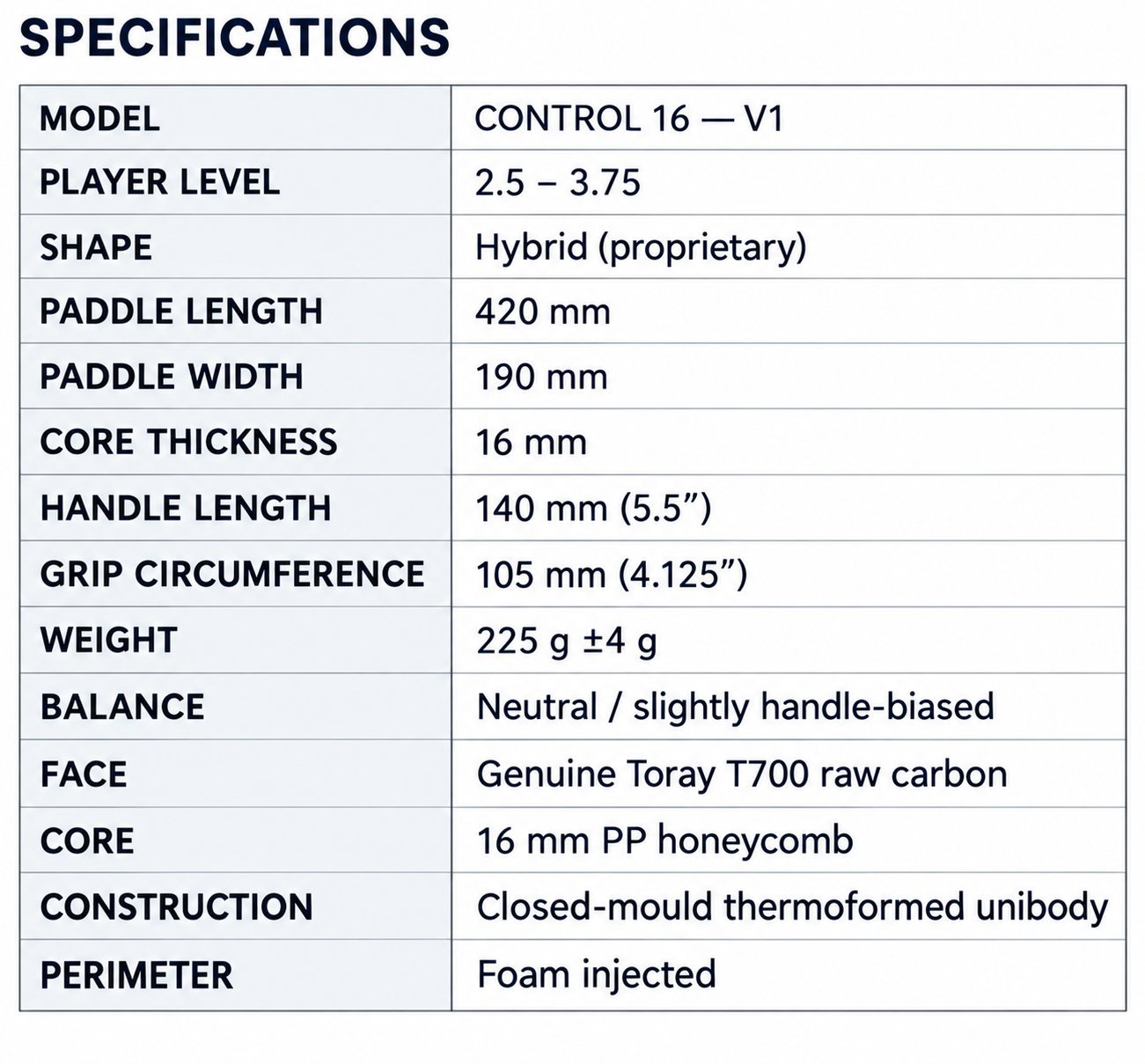
The target was a control-first paddle for 2.5–3.75 level players, built as a
closed-mould thermoformed unibody with a foam-injected perimeter, in a proprietary hybrid
geometry of 420 × 190 mm with a 140 mm handle. A thermoformed unibody is not a
lamination platform with a different face sheet: the perimeter carries an injected foam
wall, and the body is formed and consolidated in one closed-mould step.
Why the Existing Platform Could Not Deliver It
Our established layup platforms — the kind behind the bundled fiberglass model in
the factory example earlier in this guide — are built from cut sheets pressed and
assembled around the core. They cannot produce a continuous foam-injected perimeter or the
consolidated unibody that the control-first feel was specified around. No amount of graphic
or grip customization closes that gap, so the project needed dedicated tooling: a closed
forming mould run on the hot-press line shown at the top of this guide, plus the fixtures
that locate the body for foam injection and finishing. Cutting programs for the face and
core sheets were produced from the same approved drawing.
What the Sample Rounds Record
Early sample rounds exist to find what a drawing cannot show — and any issue a
round surfaces is logged against a drawing revision and corrected in the tooling, the
layup or the process before the next round. The record that each round is judged against
stays the same:
| Check | Target on the released spec | How it is judged |
|---|---|---|
| Unit weight | 225 g ±4 g | Five units per round on one calibrated scale, recorded to 0.1 g |
| Core thickness | 16 mm | Measured at three points: throat, centre, head |
| Balance | Neutral to slightly handle-biased | Measured from the butt cap with the grip fitted |
| Perimeter foam | Continuous foam wall | Checked along the full perimeter, not sampled at one point |
| Play test | Control-first response for 2.5–3.75 players | Real match play by the test panel; reviewer notes recorded verbatim as opinion |
Two lines on that sheet do most of the work. The weight target and its tolerance are
listed together — 225 g ±4 g allows an 8 g spread between units — and the
balance direction is written down instead of left to feel. A paddle can hit both numbers
and still play differently if the tolerance is not managed batch after batch.
Revision Control and Final Acceptance
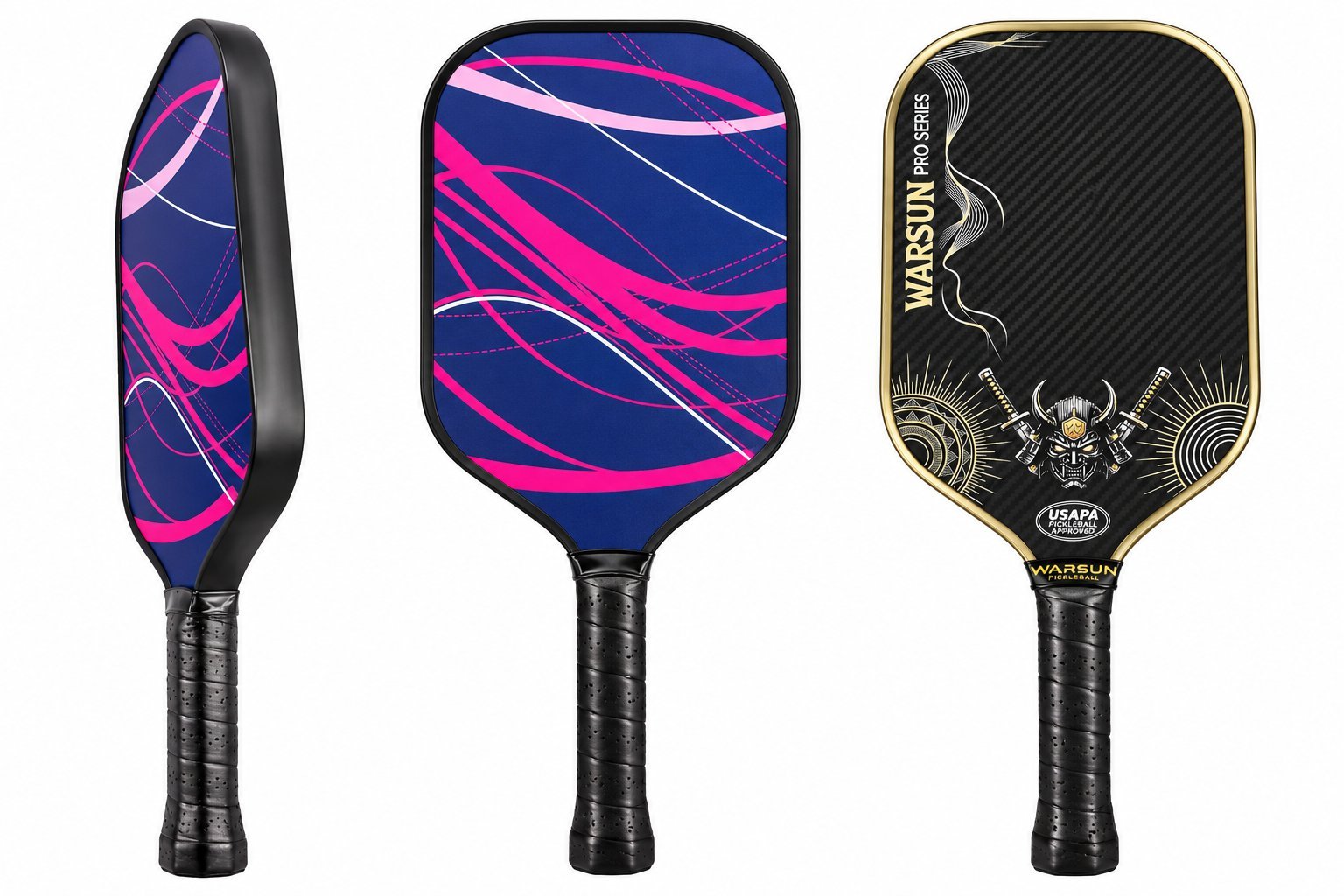
The released specification is revision V1, shown below. Approval followed the same
terms set out in our tooling quotation earlier in this guide: dimensions accepted against
the approved drawings, testing by playing real matches, and a signed, photographed
reference sample retained for future orders. Independent confirmation came through USA
Pickleball approval of the finished model.
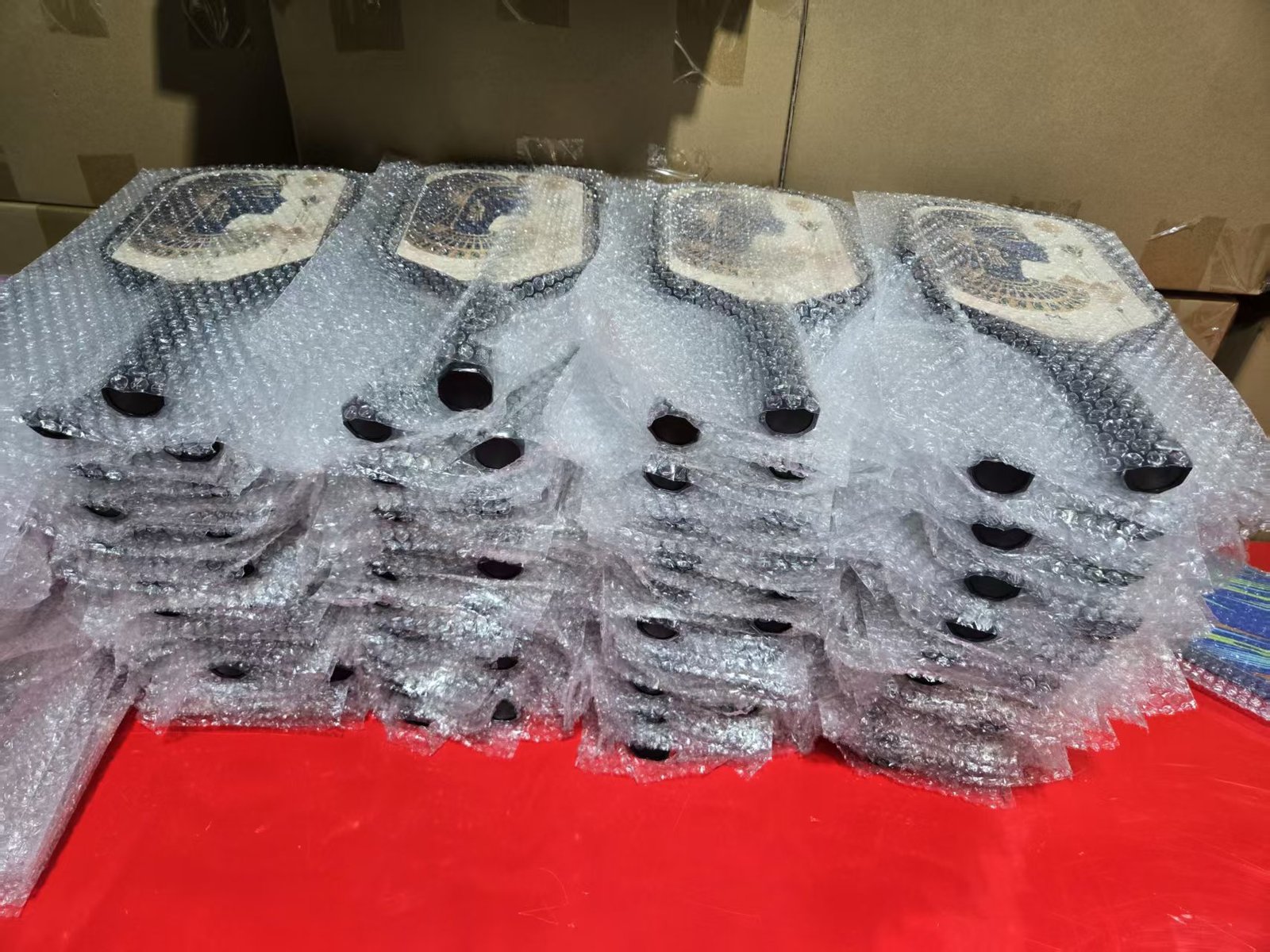
With tooling and product approved, the model moved to repeat production against the
same drawing revision, specification and reference sample:
Buyer takeaway
A tooling case you can verify beats a list of
adjectives. Before you commit to any custom pickleball paddle tooling project, ask for
exactly these three artifacts: the released specification with a revision number, the
record used to judge sample rounds, and the signed, photographed reference sample the
factory will build your repeat orders against.
Mold Ownership, Exclusivity and Maintenance
Paying a tooling invoice should not leave the parties relying on different assumptions. Pickleball paddle mold ownership, exclusive use and maintenance are three separate terms, and each one belongs in writing.
Ownership and Exclusive Use Are Separate Questions
Clarify who owns the physical tooling and who may use it.
A buyer may require that a dedicated tool be used only for its orders. If so, the scope of that restriction should be written into the agreement rather than inferred from a “custom mold” description.
Clarify Rights to Drawings and Development Files
Physical tooling, CAD files, artwork and manufacturing know-how can involve different rights.
Confirm which files the buyer will receive and which development outputs are included in the commercial agreement.
Agree on Storage and Maintenance
- Where the tooling will be stored.
- How it will be identified.
- Who performs routine maintenance.
- How repair needs will be reported.
- Who pays for damage or wear-related work.
- What happens after a long period without orders.
Avoid relying on an unsupported promise that tooling will last for a fixed number of years or production cycles.
Confirm Modification and Transfer Conditions
Future design changes may require rework or replacement tooling.
If transfer to another facility is important, discuss release conditions, packing, transport and the information needed to assess compatibility. A transferred tool may need adaptation before another manufacturer can use it.
What to Send Before Requesting a Tooling Quote
A detailed inquiry helps the manufacturer assess the custom pickleball paddle tooling your project actually needs and provide a useful quotation.
| Information | What to provide |
|---|---|
| Project purpose | New brand launch, existing model revision or dedicated product platform |
| Target market | Customer type, sales channel and intended positioning |
| Geometry | Drawings, dimensions, sketches or clearly annotated references |
| Construction | Face material, core, thickness and intended manufacturing approach |
| Product targets | Weight range, balance direction, grip and other agreed requirements |
| Order plan | Initial quantity and realistic repeat-order expectations |
| Development scope | Tooling, samples, testing, artwork and packaging requirements |
| Commercial needs | Ownership, exclusivity, confidentiality and transfer expectations |
| Schedule | Target sample review and delivery dates |
A strong inquiry explains the product requirements and asks the factory to assess the tooling needed to achieve them.
Frequently Asked Questions
Do all custom pickleball paddles need a new mold?
No. Many projects can use an existing paddle platform with customized branding and selected specifications. New tooling depends on the geometry, construction and component requirements.
Does adding a logo require a new paddle mold?
Usually, adding printed graphics or a logo does not require a new structural paddle mold. Embossed, recessed or molded branding on a component may require different tooling.
Can one mold produce different paddle thicknesses?
It depends on the tooling design and manufacturing method. Confirm the supported configurations with the manufacturer rather than assuming that thickness can be changed without tooling work.
How much do custom pickleball paddle molds cost?
The cost must be quoted against a defined scope. Design complexity, tooling construction, number of tools, trial samples and revision requirements can all affect the price.
How long does custom mold development take?
The schedule depends on design readiness, tooling complexity, manufacturing availability and the number of sample or revision rounds. Request a staged schedule covering design approval, tooling, trials and sample evaluation.
Who owns a custom pickleball paddle mold?
Ownership should be explicitly stated in the agreement. Also confirm exclusive use, storage, maintenance and release conditions, because these are separate commercial questions.
Does a custom mold guarantee tournament approval?
No. Tooling is only one part of product development. Any required approval must be evaluated for the finished paddle model through the relevant organization’s current requirements and procedures.
Should a new brand choose existing molds or dedicated tooling?
An existing platform may be suitable for testing demand with a smaller development commitment. Dedicated tooling becomes more relevant when the brand has a defined product requirement, a realistic order plan and a clear reason to develop a different geometry or construction.
Discuss Your Custom Pickleball Paddle Project with Gloperti
Whether you are evaluating an existing platform or planning dedicated tooling, start with a clear product brief.
Send Gloperti your preferred shape, dimensions, construction, target weight, initial quantity and development goals. Include drawings or annotated references where available, and specify any requirements for tooling ownership or exclusive use.
We can review your requirements and discuss a suitable path for custom pickleball paddle manufacturing, including the tooling scope and sample development needed for your project.
Ready to Discuss Your Paddle Project?