How Are Pickleball Paddles Made? A Step-by-Step Manufacturing Guide
Pickleball Paddle Manufacturing Process: A Step-by-Step Guide for Buyers
Learn how modern pickleball paddles are manufactured, including carbon fiber and fiberglass construction, honeycomb cores, lamination, pressing, thermoforming, UV printing, assembly, quality control, and packaging.

Pickleball paddles may look simple from the outside, but a finished paddle is the result of a controlled manufacturing process involving composite materials, honeycomb cores, bonding, molding or pressing, trimming, surface finishing, printing, handle assembly, quality inspection, and packaging.
If you are a brand owner, distributor, sporting-goods buyer, or private-label customer, understanding how pickleball paddles are made can help you compare suppliers, evaluate product specifications, reduce sampling risks, and choose the right construction for your market.
How Are Pickleball Paddles Made?
In general, pickleball paddles are made by combining a lightweight honeycomb core with one or more composite face layers. Depending on the product design, the face may use carbon fiber, fiberglass, graphite, or a hybrid material. The components are cut to shape, bonded and pressed or thermoformed, trimmed, surface-finished, printed, assembled with a handle and grip, inspected, and packaged.
This section answers a question new buyers ask most often: how are pickleball paddles manufactured in a modern production facility? A typical manufacturing flow is:
Material Selection → Cutting → Core Preparation → Lamination → Pressing or Thermoforming → Trimming → Surface Finishing → UV Printing → Handle & Grip Assembly → Quality Control → Packaging
For buyers, the important point is that the final performance of a paddle does not come from one material alone. Face material, core thickness, construction method, paddle geometry, surface treatment, weight distribution, bonding quality, and production consistency all influence the finished product.
What Are Pickleball Paddles Made Of?
A modern pickleball paddle normally contains several major components: a face material, a lightweight core, bonding layers, edge protection, a handle, and a grip. The exact construction depends on the target market, performance requirements, price point, and manufacturing method.
Paddle Face Materials
Carbon fiber and fiberglass are two common composite face materials. Carbon fiber is valued for its stiffness and strength-to-weight characteristics and is widely used for performance-oriented paddle designs. Fiberglass can provide a different feel and response and is often selected for recreational, entry-level, value-oriented, or specific custom product programs.
Some paddle designs also use graphite or hybrid composite structures. Buyers should avoid judging a paddle only by the name of the face material. The core, thickness, number and orientation of layers, molding method, surface texture, paddle shape, and weight distribution also matter.
For buyers specifically evaluating carbon fiber construction, see the carbon fiber pickleball paddle manufacturing page for a more product-focused overview.
Pickleball Paddle Core Materials
The core is commonly made from a lightweight honeycomb structure, with polypropylene being widely used in modern paddle construction. Core thickness can vary according to the product concept. Common commercial specifications include approximately 10 mm, 13 mm, 14 mm, and 16 mm designs.
Core thickness should not be considered in isolation. It interacts with the face material, paddle geometry, molding process, surface construction, and weight distribution. A thicker core may be selected for one product concept while a thinner construction may be used for another.
Pickleball Paddle Core Thickness Comparison
Core thickness is an important specification when developing or comparing pickleball paddles. As a general design guide, thinner cores are often associated with a faster, more power-oriented response, while thicker cores tend to provide more control, touch, and speed absorption. Actual performance also depends on face material, paddle shape, construction method, weight, and balance.
| Core Thickness | Primary Play Style | Sweet Spot Size | Power / Control Balance |
|---|---|---|---|
| 10mm - 13mm | Power / Fast Hands | Smaller | Higher Power, Less Control |
| 14mm | Balanced / Hybrid | Medium | All-Around Versatility |
| 16mm | Control / Touch / Reset | Often More Forgiving | Typically More Control-Oriented |
Buyer note: Core thickness should not be evaluated by itself. For private-label or OEM paddle development, buyers should consider the core together with face material, surface texture, paddle geometry, total weight, balance, and the intended playing style.
Edge Guard, Handle and Grip
The edge area protects the paddle perimeter and helps maintain structural integrity. The handle connects the paddle body to the grip, while the grip material, circumference, cushioning, texture, and finish influence handling comfort.
How Are Pickleball Paddles Made? Step by Step
Step 1: Material Selection and Inspection
Manufacturing begins with selecting the required face material, core material, adhesive system, handle components, grip materials, edge protection, and packaging components. For custom programs, the material selection is normally linked to the buyer's target price, performance requirements, product positioning, and intended market.
Incoming material inspection is important because variation in raw materials can affect production consistency. A professional manufacturing process should have procedures for checking material specifications before production begins.
Step 2: Cutting the Paddle Face and Core
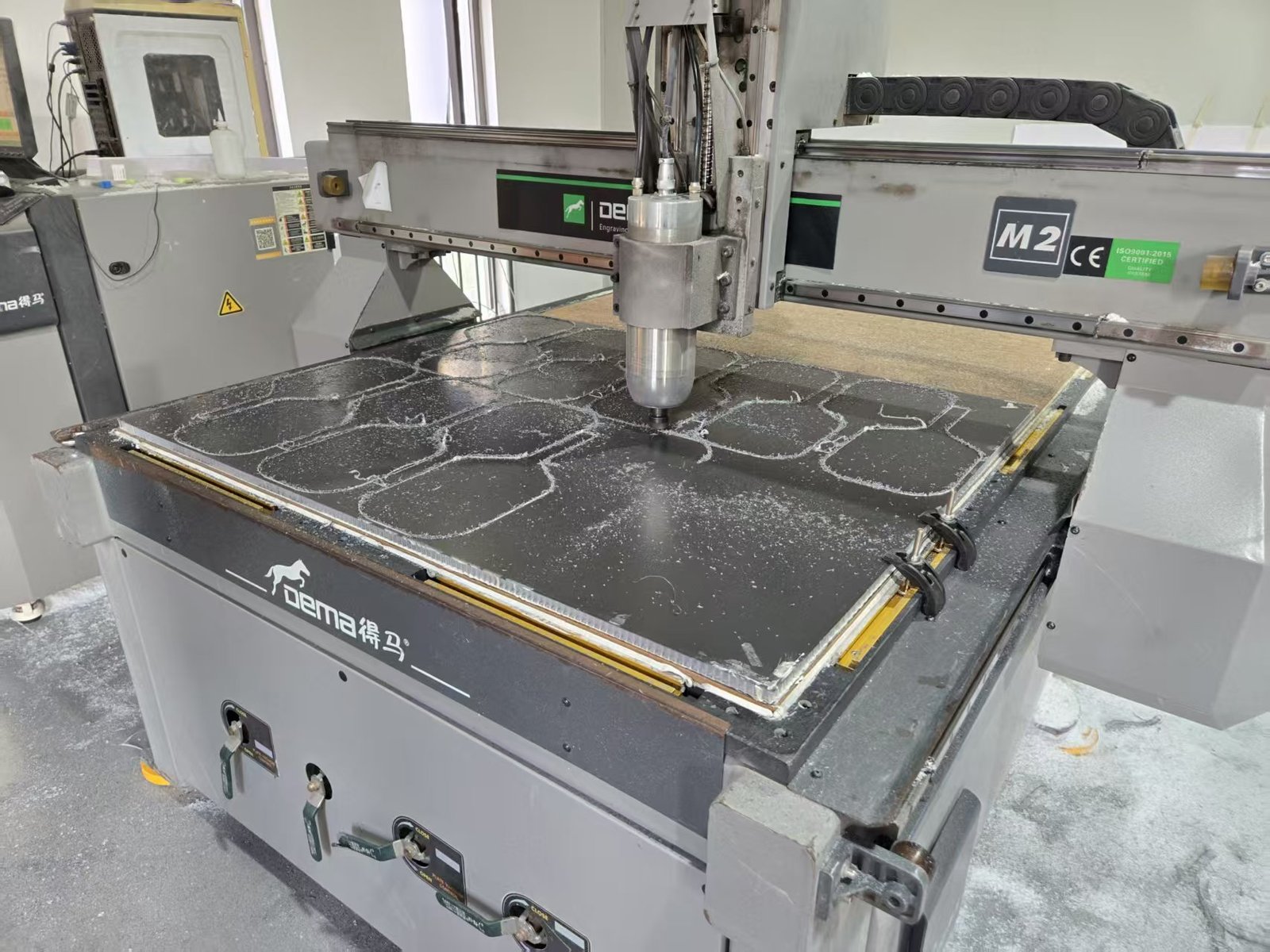
Composite face sheets and core materials are cut according to the required paddle geometry. The cutting process needs to maintain consistent dimensions and shape because small variations can affect assembly, appearance, weight, and final product consistency.
For custom paddles, this stage is also where the approved shape, length, width, and construction design become production components.
Step 3: Preparing the Honeycomb Core
The honeycomb core is prepared to match the paddle shape and required thickness. The core must be positioned accurately between the face layers. Depending on the construction, additional reinforcing or edge components may be incorporated into the assembly.
Core preparation is important because the core is a major structural component of the paddle. Poor alignment can create problems during bonding, trimming, and final inspection.
Step 4: Layering and Lamination
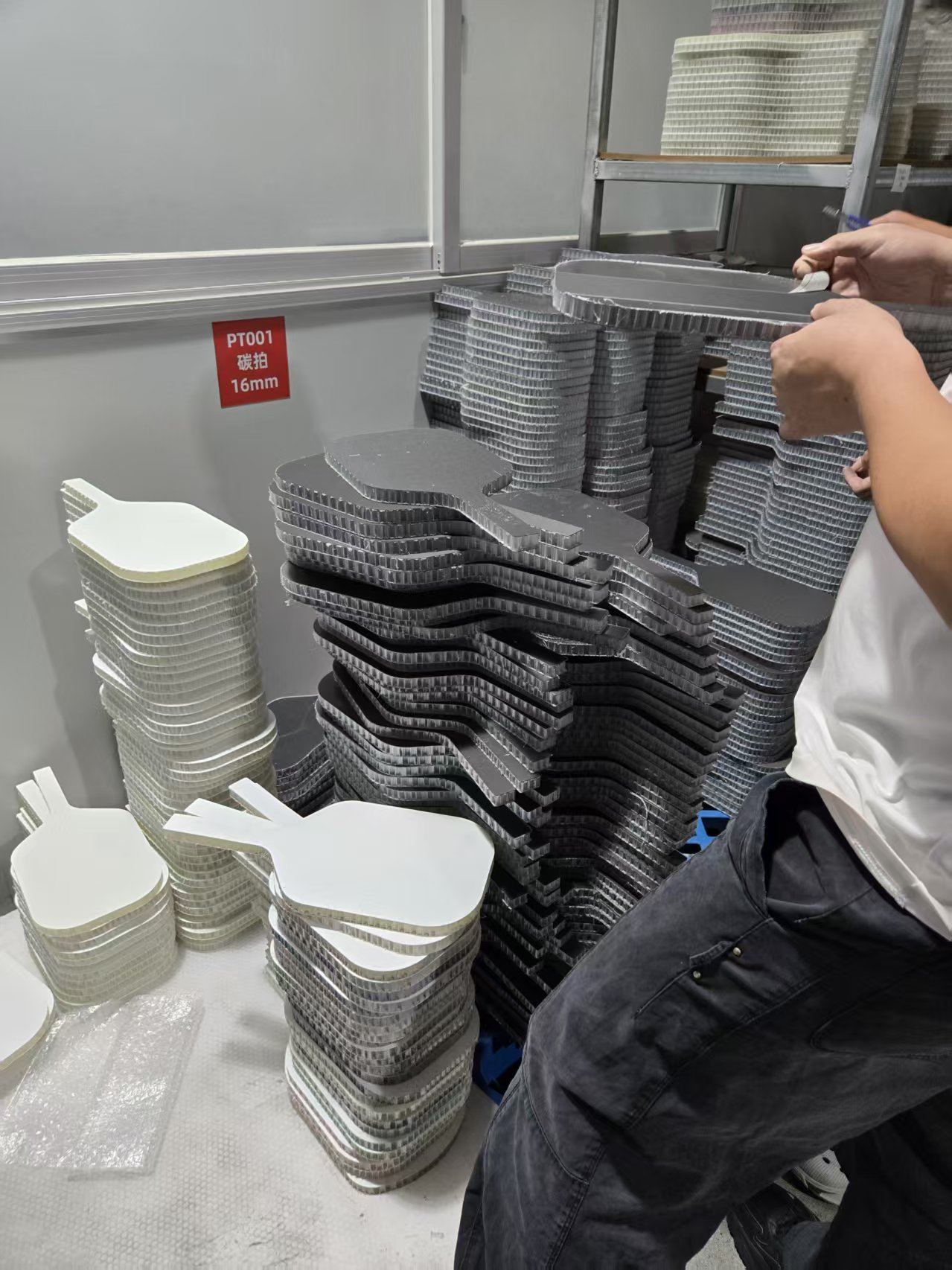
The face material, bonding system, core, and additional layers are assembled into the required stack. A simplified construction can be represented as:
Face Layer → Bonding Layer → Honeycomb Core → Bonding Layer → Face Layer
Actual constructions can be more complex. Production control may involve adhesive quantity, layer alignment, pressure, temperature, curing conditions, and processing time. Consistent lamination helps reduce defects and batch-to-batch variation.
Step 5: Pressing or Thermoforming
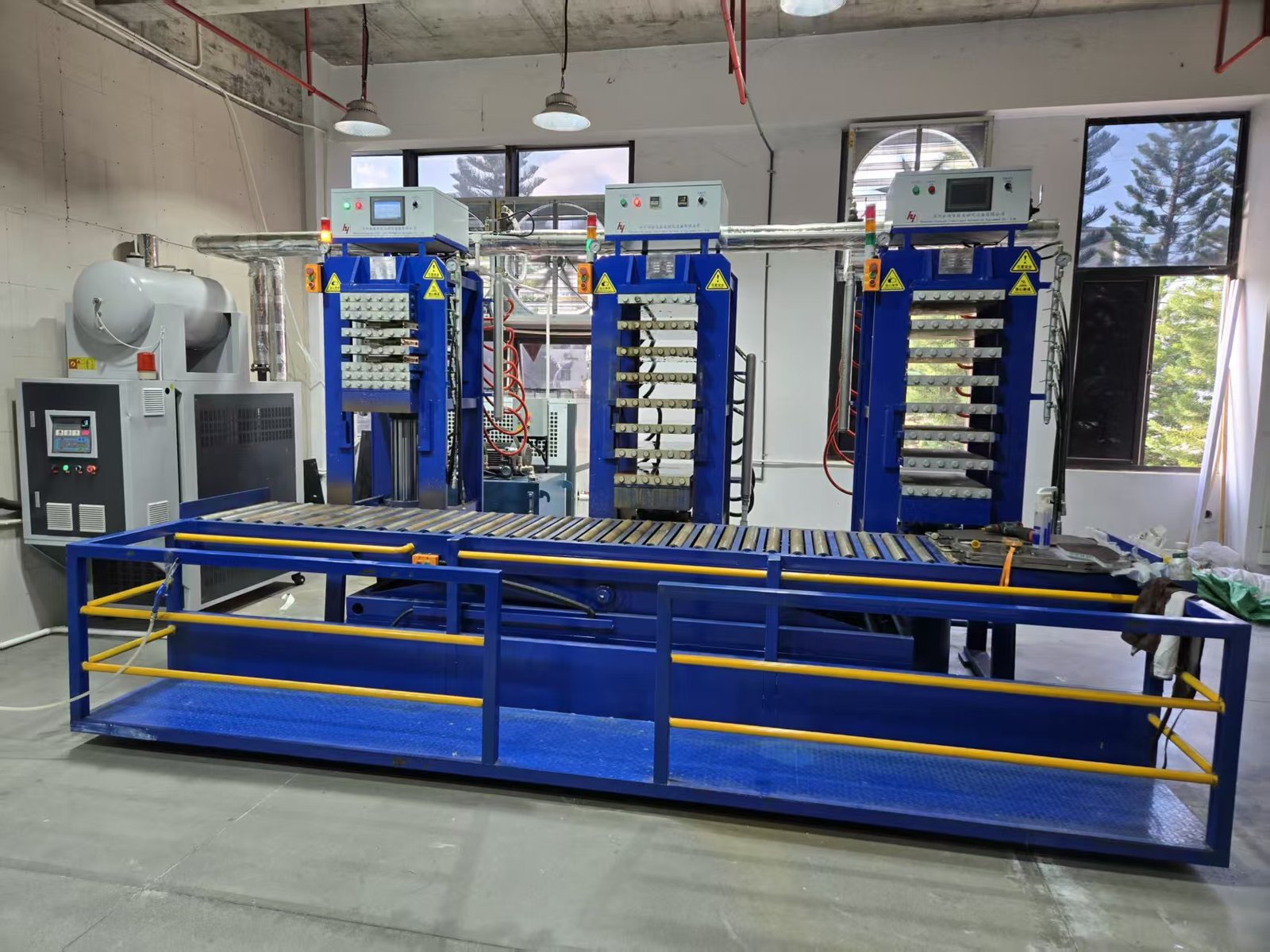
Once the layers are prepared, the assembly is formed using an appropriate production method. Traditional cold-pressed construction generally relies on pressing and bonding composite layers into the required shape. Thermoformed construction uses controlled heat and pressure to form the composite structure.
Cold-Pressed Pickleball Paddle Construction
Cold-pressed construction is widely used for composite paddle production. The face layers and core are bonded and pressed into the desired geometry. The process can support a broad range of product designs and is suitable for many commercial paddle programs.
Thermoformed Pickleball Paddle Construction
Thermoformed pickleball paddle manufacturing uses controlled heat and pressure to shape the composite structure. The process can require more specialized tooling and tighter process control. It is often associated with performance-oriented product development, but the correct construction depends on the product specification and manufacturing objectives.
There is no universal rule that one manufacturing method is always better. Buyers should evaluate the complete construction, target performance, cost, durability requirements, and production capability.
Step 6: Trimming and Edge Finishing
After pressing or forming, excess material is trimmed away. The paddle perimeter is finished to the required dimensions and appearance. Edge finishing is important because inconsistent trimming can affect dimensions, weight, appearance, and edge protection assembly.
Step 7: Surface Finishing and Texture
The paddle face can receive additional surface treatment depending on the product design. Surface texture, coating, finish, and graphics all need to be considered together because the final surface is part of the overall product construction.
For a buyer developing a private-label paddle, surface treatment should be confirmed during the sampling stage rather than being left until mass production.
Step 8: UV Printing and Custom Branding
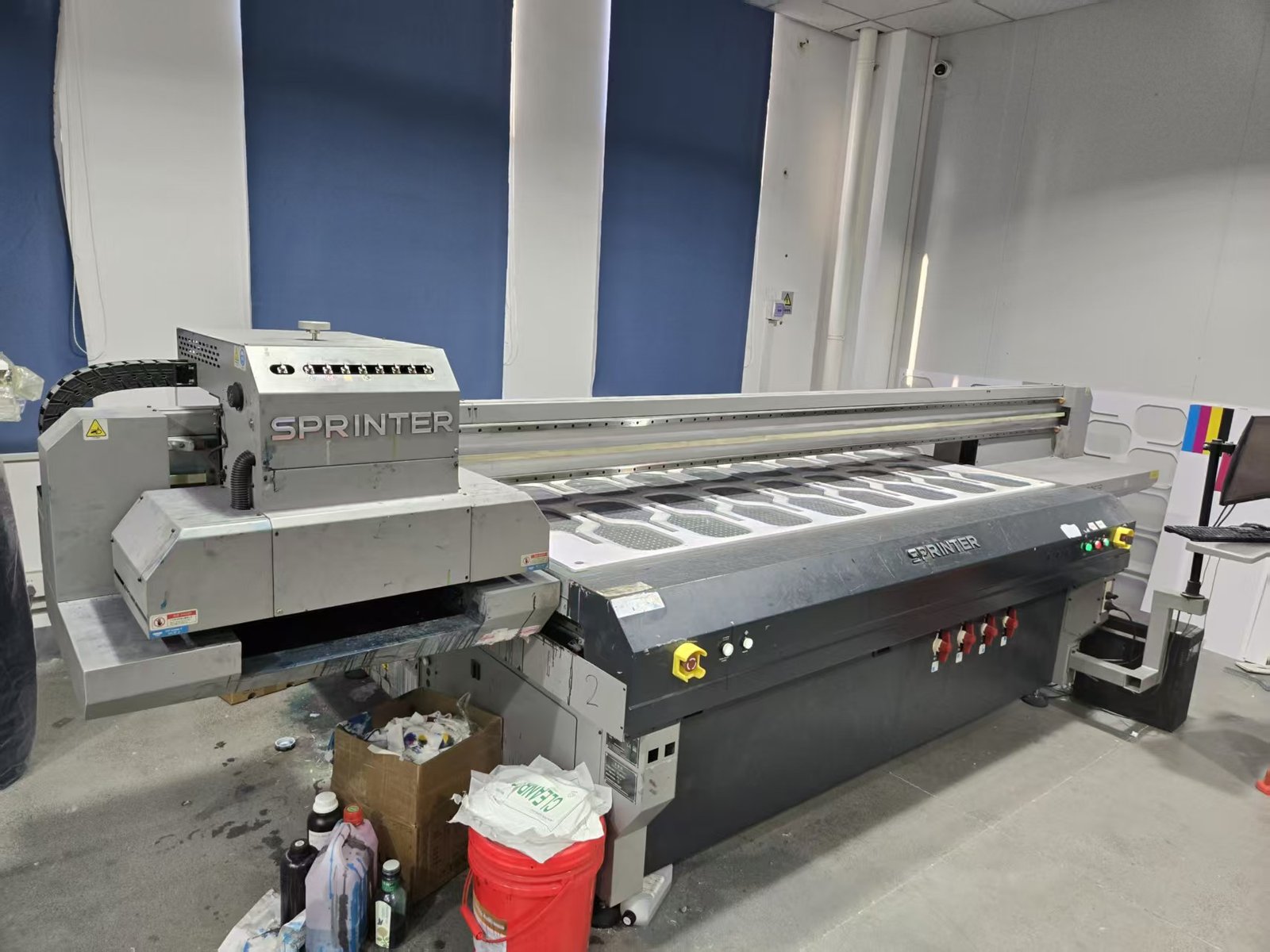
For custom pickleball paddles, branding can be applied after the relevant surface preparation. UV printing is one common method for applying logos, graphics, colors, and other artwork.
A typical custom workflow is:
Logo or Artwork → Visual Mockup → Sample → Buyer Approval → Mass Production
A visual mockup allows the buyer to review the paddle appearance before committing to mass production. This is particularly useful when a brand has specific logo placement, colors, graphics, or packaging requirements.
For brands developing a complete private-label program, see custom pickleball paddle manufacturing for a commercial overview of OEM and ODM options.
Step 9: Handle and Grip Assembly
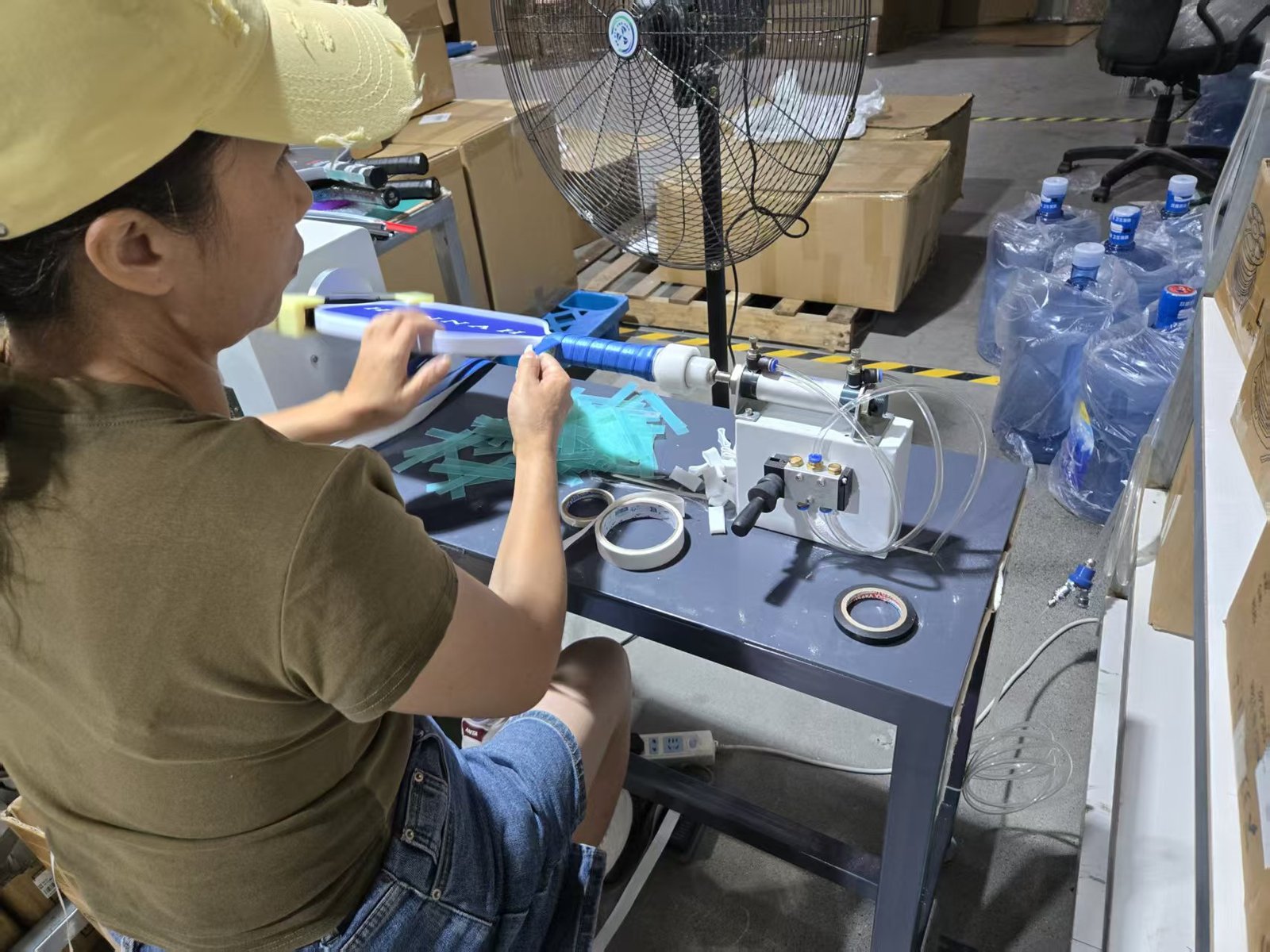
After the paddle body is finished, the handle and grip are assembled. The handle needs to be securely connected to the paddle body, while the grip is installed with consistent positioning and tension.
Custom buyers may also specify handle dimensions, grip circumference, grip material, texture, color, and branding details depending on the product concept.
Step 10: Quality Control
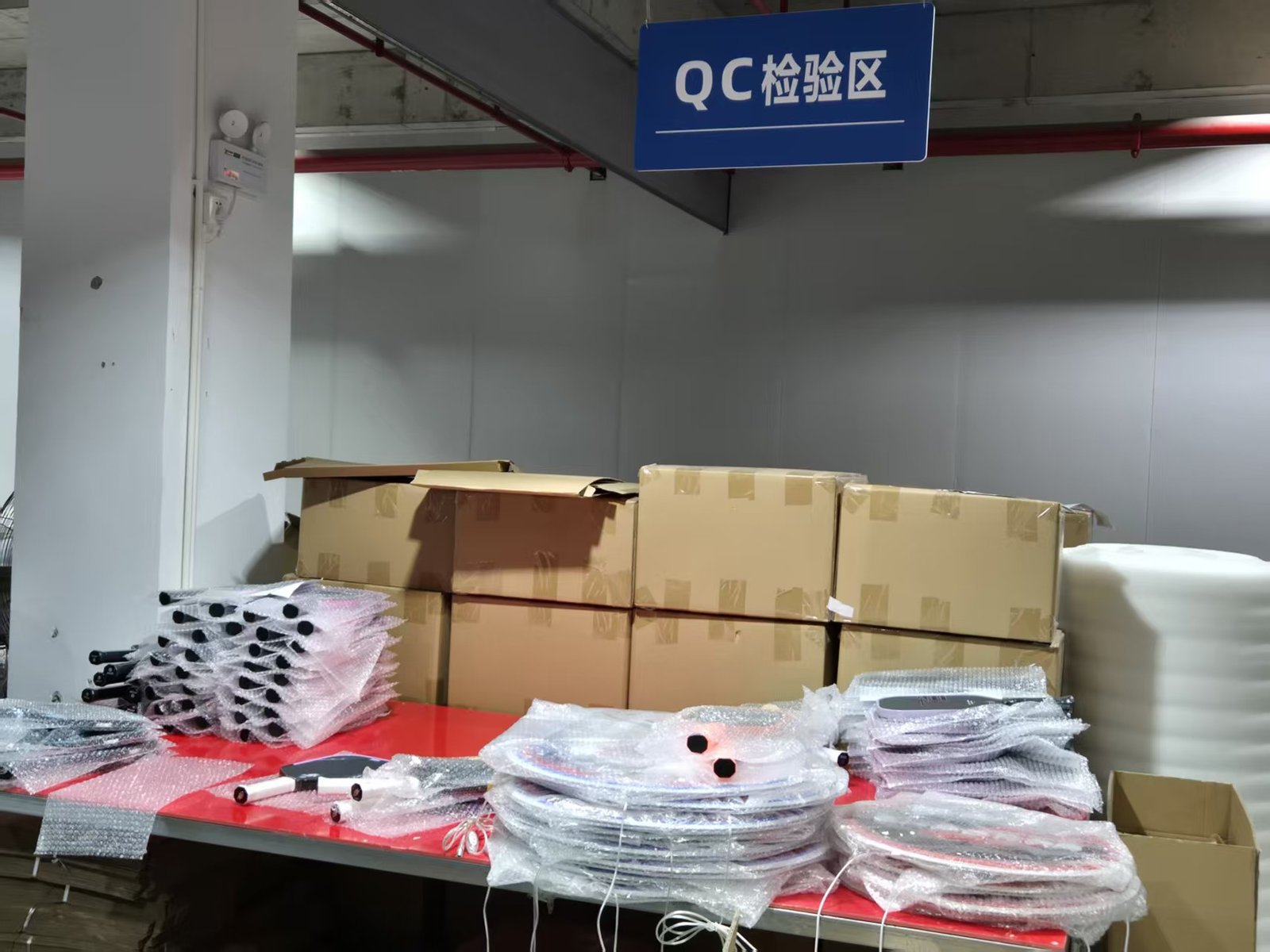
Quality control runs through the entire pickleball paddle production process, not only at the end of the line, and every unit is checked again before shipment. Depending on the product program, inspection can include weight, dimensions, appearance, surface finish, printing, edge condition, handle assembly, structural integrity, and packaging.
For B2B buyers, consistency between samples and mass-production units is especially important. A supplier should be able to establish clear specifications so the production team can manufacture according to the approved sample and artwork.
Step 11: Packaging and Shipment
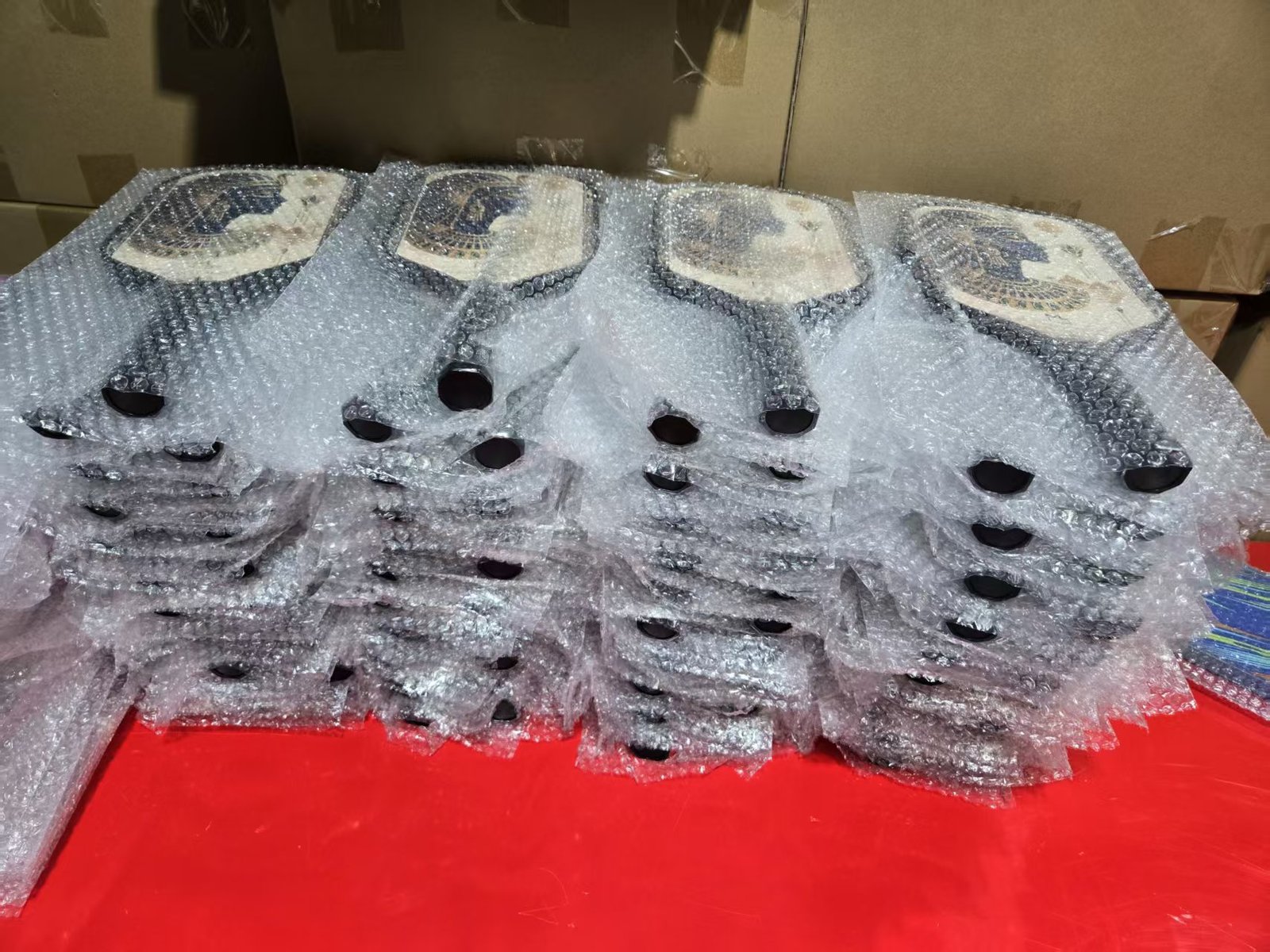
Finished paddles are prepared for individual packaging, bulk cartons, retail packaging, or customized private-label packaging. Packaging requirements can include product labels, barcode information, carton markings, inserts, and shipping specifications.
Good packaging is not only about presentation. It also helps protect finished paddles during storage, handling, and international transportation.
How Are Carbon Fiber Pickleball Paddles Made?
Carbon fiber pickleball paddles follow the same broad manufacturing concept but use carbon fiber as a major face material. A simplified process is:
Carbon Fiber Sheet → Cutting → Layer Preparation → Core Assembly → Lamination → Pressing or Thermoforming → Trimming → Surface Treatment → Printing → Handle Assembly → Quality Control
Carbon fiber itself does not automatically determine the final performance of a paddle. The construction around the carbon fiber matters as well, including core material, core thickness, layer configuration, molding method, surface treatment, paddle geometry, total weight, and balance.
If your product program specifically requires carbon fiber, review the carbon fiber pickleball paddle manufacturer page.
How Are Fiberglass Pickleball Paddles Made?
Fiberglass paddles are manufactured using a similar composite production sequence. Fiberglass face layers are cut, assembled with the core, bonded, pressed or formed, trimmed, finished, printed when required, assembled with a handle and grip, inspected, and packaged.
Fiberglass can be selected when a buyer wants a different combination of feel, responsiveness, durability, production cost, and market positioning. As with carbon fiber, the finished paddle depends on the complete construction rather than the face material alone.
For product programs focused on fiberglass construction, see the fiberglass pickleball paddle manufacturing page.
What Is a T700 Carbon Fiber Pickleball Paddle?
T700 is a carbon fiber grade commonly referenced in performance-oriented product development. When a buyer specifies T700 carbon fiber, the supplier should still confirm the complete paddle construction rather than treating the fiber grade as the only performance factor.
Face construction, core, thickness, molding method, surface treatment, geometry, weight, balance, and quality control all contribute to the finished product.
For buyers specifically developing T700 products, see T700 carbon fiber pickleball paddles.
Cold-Pressed vs. Thermoformed Pickleball Paddles
| Feature | Cold Pressed | Thermoformed |
|---|---|---|
| Basic Process | Pressing and bonding composite layers | Heat and pressure forming |
| Tooling | Relatively straightforward | More specialized |
| Product Development | Flexible for many product programs | More engineering-intensive |
| Production Requirements | Established process control | Tighter heat and forming control |
| Typical Positioning | Broad product range | Often performance-focused |
| Customization | High | High |
| Cost | Depends on design and volume | May require additional tooling and process investment |
Neither method should be described as universally superior. The appropriate process depends on the product specification, performance target, tooling, volume, cost target, and factory capabilities.
How Long Does It Take to Manufacture a Pickleball Paddle?
Manufacturing time varies according to product complexity, order quantity, tooling requirements, artwork approval, packaging requirements, raw-material availability, and factory production scheduling.
A typical custom project may include:
- Product requirement discussion
- Specification confirmation
- Artwork and visual mockup
- Prototype or sample development
- Sample approval
- Production preparation
- Mass production
- Quality inspection
- Packaging and shipment
For buyers, the most useful approach is to confirm the complete production schedule with the manufacturer before placing an order rather than relying on a generic industry timeline.
How Is Pickleball Paddle Quality Tested?
Quality control can cover several stages of production. Finished paddles may be checked for weight, dimensions, shape, surface appearance, printing quality, edge condition, handle assembly, grip installation, and packaging.
For custom orders, the approved sample should be treated as an important production reference. Clear specifications and inspection standards can help reduce variation between batches.
USA Pickleball Equipment Standards and Certification Checks
For brands targeting sanctioned competition, factory quality control should distinguish internal inspection from official USA Pickleball (formerly USAPA) paddle certification. Under the USA Pickleball Equipment Standards Manual, the paddle’s combined length and width (including edge guard and butt cap) must not exceed 24 inches (60.96 cm), and its length must not exceed 17 inches (43.18 cm). The rules do not impose a general paddle thickness or weight limit.
Certification involves more than dimensions. Relevant evaluation concepts include paddle surface characteristics, surface roughness (roughness test), coefficient of friction, deflection, and other applicable performance tests. Importantly, USA Pickleball announced that from October 1, 2026, newly submitted paddles must measure no more than 2,100 RPM in its Spin Rate Test; surface roughness and coefficient-of-friction upper thresholds are replaced by measurements of record for this new spin framework. Brands should verify the latest applicable requirements before submitting a model.
Factory measurements and in-house QC do not themselves constitute USA Pickleball approval. Tournament approval must be confirmed through the official certification process and the approved paddle list; no Gloperti model is claimed certified here.
Official references: USA Pickleball Equipment Standards Manual; USA Pickleball Spin Rate Test Update (2026); Official Paddle Testing Overview.
What Affects the Quality of a Pickleball Paddle?
Several factors can influence the finished paddle:
- Face material: Carbon fiber, fiberglass, graphite, or hybrid construction.
- Core: Material, thickness, density, and structural design.
- Layering: Number, orientation, and alignment of composite layers.
- Bonding: Adhesive application and curing control.
- Molding: Pressure, temperature, time, and tooling accuracy.
- Geometry: Length, width, thickness, shape, and edge design.
- Surface: Texture, finish, coating, and printing.
- Weight consistency: Control of finished-product variation.
- Quality control: Inspection procedures before shipment.
Can Pickleball Paddles Be Custom Manufactured?
Yes. Custom pickleball paddles can be developed for brands, distributors, sporting-goods companies, promotional programs, retailers, and private-label businesses.
Depending on the manufacturer's capabilities, buyers may be able to customize paddle shape, dimensions, thickness, weight, balance, face material, core, surface finish, handle, grip, edge protection, logo, graphics, colors, and packaging.
For a private-label project, a practical development sequence is:
Product Idea → Specifications → Material Selection → Visual Mockup → Sample → Approval → Production → QC → Packaging
The advantage of working with a manufacturer during development is that the buyer can align the product construction with the intended price point and market instead of simply adding a logo to an existing generic paddle.
What Should Buyers Look for in a Pickleball Paddle Manufacturer?
Before selecting a supplier, buyers should evaluate more than the factory price. Important questions include:
- Does the supplier have relevant paddle manufacturing experience?
- Can the factory provide carbon fiber and fiberglass options?
- Can the supplier support OEM and ODM development?
- Can the factory provide visual mockups and samples?
- Is there a defined quality-control process?
- Can the supplier maintain consistent production between batches?
- Can the factory handle custom logos and graphics?
- Can the supplier provide customized packaging?
- Is communication fast enough for international product development?
For a B2B project, communication and sampling can be just as important as the quoted unit price. A slightly lower factory price does not necessarily reduce the total project cost if revisions, inconsistent samples, delays, or quality problems occur later.
Looking for a Pickleball Paddle Manufacturer in China?
Gloperti is a pickleball paddle manufacturer based in Xiamen, Fujian, China, supporting OEM, ODM, wholesale, and private-label projects. The product range can include carbon fiber and fiberglass paddle constructions with different thicknesses, shapes, weights, surface finishes, graphics, logos, and packaging options.
For buyers developing a new paddle collection, our pickleball paddle factory can support the development process from product concept and visual mockup through sampling, production, quality control, and packaging.
- 3,000+ m² production facility
- 10 cutting machines
- 5 UV printers
- 8 molding and vulcanizing machines
- 5 designers
- 5 QC inspectors
- 40+ production workers
- 10,000+ paddles daily production capacity
Learn more about pickleball paddle manufacturing in China or explore the pickleball paddle collection.
Related Pickleball Paddle Manufacturing Resources
Frequently Asked Questions About Pickleball Paddle Manufacturing
Pickleball paddles are made by combining a composite face material with a lightweight honeycomb core, followed by bonding, pressing or thermoforming, trimming, surface finishing, printing, handle and grip assembly, quality control, and packaging.
Common materials include carbon fiber, fiberglass, graphite, hybrid composite face materials, polypropylene honeycomb cores, adhesives, edge protection, handle materials, and grip materials.
Carbon fiber pickleball paddles are made by cutting carbon fiber layers, assembling them with a honeycomb core, laminating and forming the structure, trimming the paddle, applying surface treatment and graphics, assembling the handle and grip, and completing quality control.
The core of many modern pickleball paddles is made from a lightweight honeycomb structure, commonly polypropylene. Core thickness varies by product design and can include approximately 10 mm, 13 mm, 14 mm, or 16 mm constructions.
Cold-pressed paddles are produced by bonding and pressing composite layers into the required shape. Thermoformed paddles use controlled heat and pressure to form the composite structure. The best process depends on the product design, performance target, tooling, cost, and manufacturing requirements.
Yes. Depending on the manufacturer’s capabilities, buyers can customize paddle shape, dimensions, thickness, weight, balance, face material, core, surface finish, handle, grip, edge protection, logo, graphics, colors, and packaging.
The timeline depends on specifications, order quantity, tooling, artwork approval, packaging, raw-material availability, and factory scheduling. A custom project normally includes specification confirmation, artwork, sampling, approval, production, quality control, packaging, and shipment.
Buyers should evaluate manufacturing experience, material options, OEM and ODM capability, sampling, visual mockups, quality control, batch consistency, customization options, packaging capability, production capacity, and communication speed.
Ready to Develop Your Own Pickleball Paddle?
Share your logo, product idea, target specifications, artwork, or packaging requirements with Gloperti. Request a visual mockup and quotation for your next private-label or custom pickleball paddle project.