Choosing between thermoformed and cold-pressed pickleball paddles affects more than the description on your product listing. For brands, importers, and wholesale buyers, the decision influences the construction you approve, the tooling you need, the quotation you compare, and the checks used to accept production.
Quick answer. Cold-pressed pickleball paddles commonly bond face sheets to a core using adhesive and controlled pressure. Thermoformed paddles add a heated molding or consolidation stage and may include perimeter reinforcement. For OEM buyers, sample an existing cold-pressed platform for a value-focused launch, or a documented thermoformed design when reinforcement is part of the brief. Verify performance on finished samples.
This guide covers construction differences, quotation scope, tooling, and the sample approval steps that connect your product brief to production.
What Is a Cold-Pressed Pickleball Paddle?
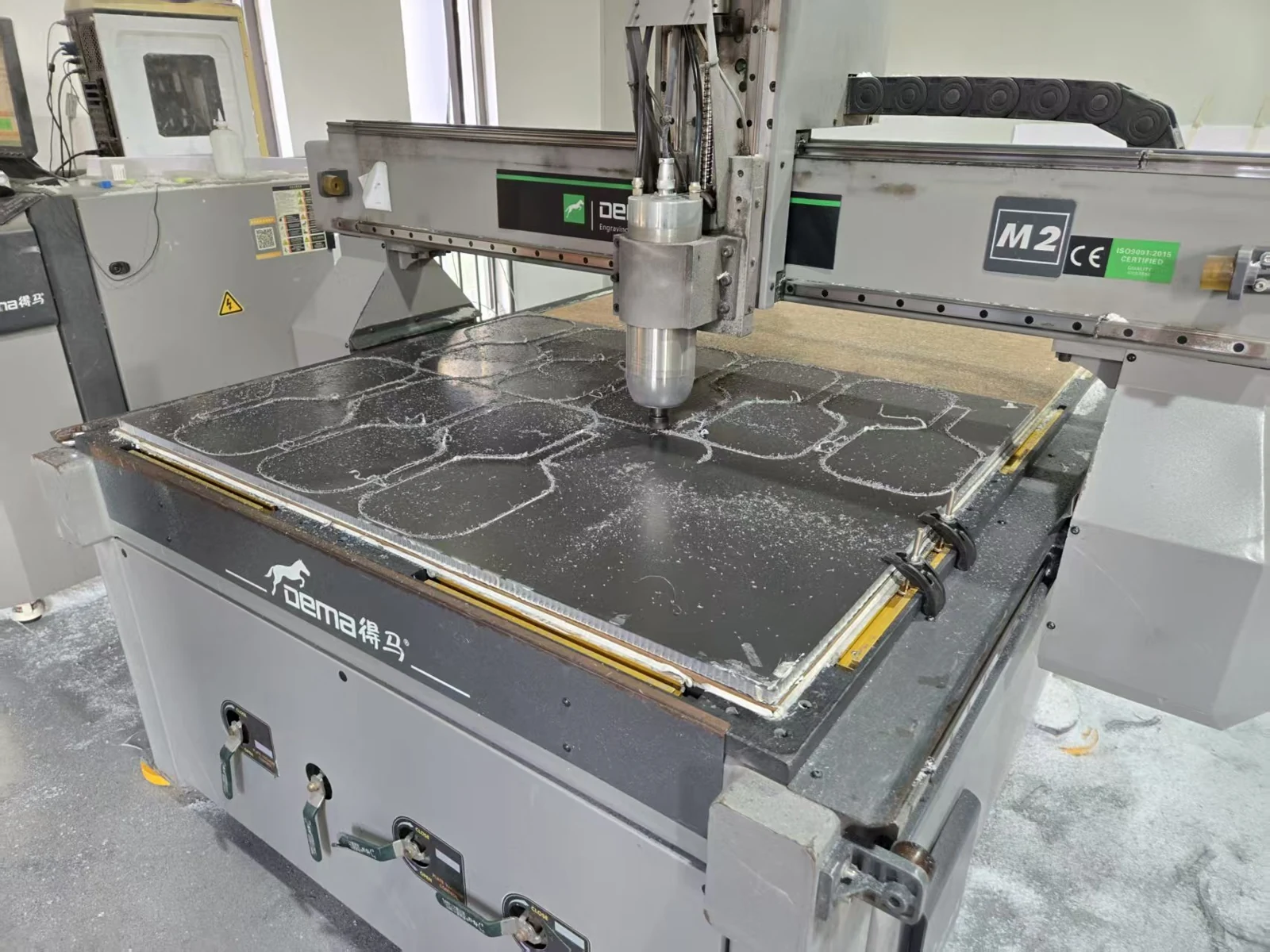
A cold-pressed pickleball paddle commonly combines composite face sheets with a core panel using adhesive bonding and controlled pressure. Depending on the production route, the bonded panel or assembly is shaped, finished, and fitted with the specified handle components, edge protection, and grip.
“Cold-pressed” is a supplier description that needs clarification. Ask which components are prepared separately, how they are bonded, and what curing steps are used. It does not necessarily mean that every material and component was manufactured without heat.
What Is a Thermoformed Pickleball Paddle?
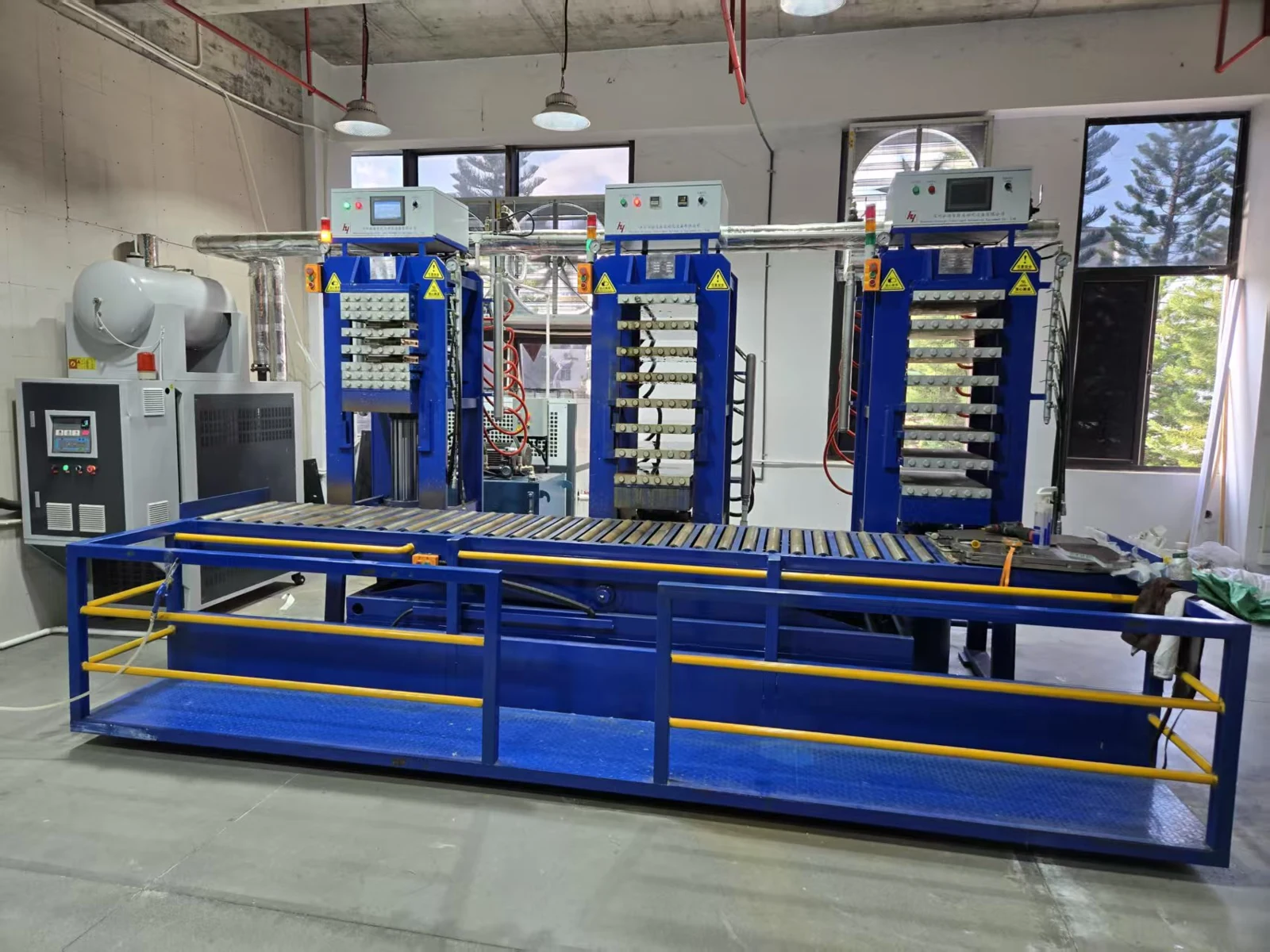
In pickleball sourcing, a thermoformed paddle generally refers to a construction processed with heat and pressure in tooling to consolidate a specified assembly. Depending on the design, it may include wrapped composite reinforcement around the perimeter, reinforcement through the handle transition, or foam around selected core edges.
Perimeter wrapping, handle reinforcement, and foam placement are separate design choices within this construction category.
The terminology also deserves attention. In plastics manufacturing, thermoforming usually describes shaping heated thermoplastic material. Paddle suppliers may use the term more broadly for heated composite processes. A section drawing, sample cross-section, or written construction description helps resolve what the factory means.
For the complete sequence from material preparation to finishing, see our pickleball paddle manufacturing process.
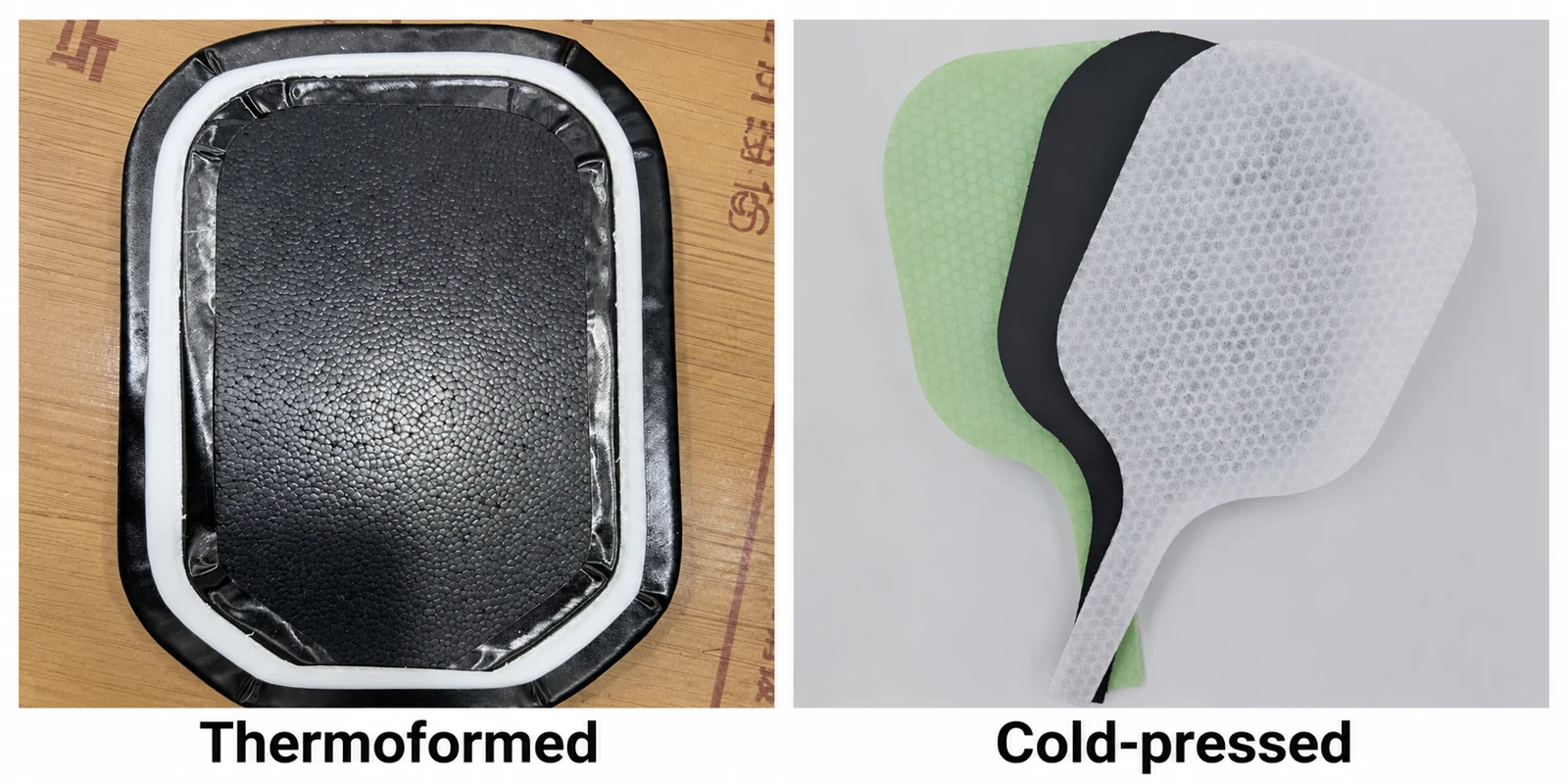
These Gloperti samples illustrate two different constructions, not a controlled comparison of pressing methods. Core design and perimeter structure also differ. Confirm the material and construction specifications for the quoted model.
Thermoformed vs. Cold-Pressed Pickleball Paddles at a Glance
| Comparison point | Cold-pressed construction | Thermoformed construction | What buyers should verify |
|---|---|---|---|
| Assembly route | Commonly uses bonded face sheets and core panels or assemblies. | Generally includes a heated molding or consolidation stage. | Actual process and written construction specification. |
| Perimeter and handle | Depend on the platform’s edge and handle design. | May incorporate wrapped reinforcement and specified foam regions. | Wrap coverage, handle continuity, foam location, and edge protection. |
| Materials | Available with different composite faces and cores. | Also available with different composite faces and cores. | Exact materials, layup, core, and finish. |
| Cost | Can offer economical existing platforms, depending on specifications. | Additional tooling or reinforcement can increase project cost. | Matched specifications, quantity, packaging, and development scope. |
| Production checks | Bonding, dimensions, alignment, edge fit, and consistency. | Bonding, core condition, reinforcement, geometry, and consistency. | Inspection methods and agreed acceptance criteria. |
Does Thermoforming Automatically Improve Power, Control, or Spin?
The finished construction determines how a paddle behaves. Core design, face layup, thickness, weight distribution, surface finish, and geometry all need consideration alongside the manufacturing route.
Pickle Pro Labs’ published performance analysis includes cold-pressed and thermoformed paddles within its traditional sandwich-construction category. Its findings connect rebound performance to several measured properties, including thickness and stiffness. That supports evaluating complete paddles before making claims about a process category. Read the Pickle Pro Labs performance report.
Compare power and control through defined evaluations
Ask what “more power” means in the supplier’s comparison. It might refer to measured rebound behavior, a player’s impression during drives, or a difference caused by weight distribution. Record the evaluation method and compare the same shots under similar conditions.
For control, define what your intended customers need. That could include predictable soft shots, comfortable resets, or manageable handling at the kitchen. Use a consistent evaluation form so feedback from different samples remains comparable.
Check surface finish separately when discussing spin
Request the actual face finish and texture specification. Record any printing or coating differences between samples. If spin is a selling point, use appropriate testing or a consistent evaluation protocol before assigning performance claims to the product.
Material selection also needs its own review. Our guide to pickleball paddle face and core materials explains the specifications to establish before comparing constructions.
How Thermoformed vs Cold-Pressed Pickleball Paddles Affect OEM Costs
A unit quotation can include materials, reinforcement, grip, artwork, and packaging. Separate these recurring costs from one-time tooling and development charges.
Thermoformed pickleball paddle manufacturing may involve additional tooling, reinforcement materials, and process-control requirements. Cold pressed pickleball paddle manufacturing can provide a practical starting point when an existing bonded platform meets the brief. The actual commercial result depends on the factory’s available designs and the scope of customization.
Ask each supplier to quote the following on the same basis.
- Face material, layup, core, thickness, and paddle dimensions.
- Target weight range, handle dimensions, grip, and edge treatment.
- Surface finish, artwork coverage, printing, and logo requirements.
- Order quantity, number of designs, and retail packaging.
- Samples, tooling, development revisions, testing, and inspection charges.
- Trade term, delivery scope, and quotation validity.
Compare the total cost of launching the approved product, including any one-time charges. Review our pickleball paddle manufacturing costs guide for the quotation items to clarify.
Do Private Label Pickleball Paddles Need New Tooling?
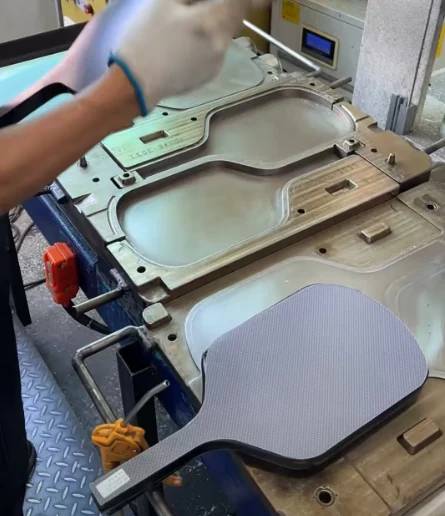
Start by asking whether an existing platform can accommodate your requested shape, handle, thickness, and construction. A private label project using an available platform may require only the agreed graphics, grip, and packaging changes.
A new geometry or structural feature may require new tooling and development samples. Clarify whether the quoted tooling fee covers forming molds, cutting programs, trimming fixtures, component tools, or a combination of these.
Before paying a development charge, document ownership, permitted use, revision rounds, maintenance responsibilities, and the conditions for sample approval. Our guide to custom pickleball paddle molds covers these decisions in more detail.
How to Compare Cold-Pressed and Thermoformed Pickleball Paddle Samples
1. Create a shared sample brief
For example, a brand developing a 16 mm carbon-face paddle could request one suitable cold-pressed platform and one suitable thermoformed platform. Keep shape, handle length, core category, surface finish, and target weight as similar as the available designs allow.
This is an illustrative procurement example. Where the platforms differ, record the differences before comparing price or performance. Testing two commercial platforms helps select a product, while isolating the effect of the pressing method requires a more controlled study.
2. Record specifications and inspect several units
Assign each sample a model code and revision. Measure finished weight, thickness, overall dimensions, and handle dimensions using the same methods. If balance, swing weight, or twist weight matters to your brief, agree how those properties will be measured and reported.
Inspect several samples from each proposed construction when practical. A single attractive sample provides limited information about the variation you may receive in an order.
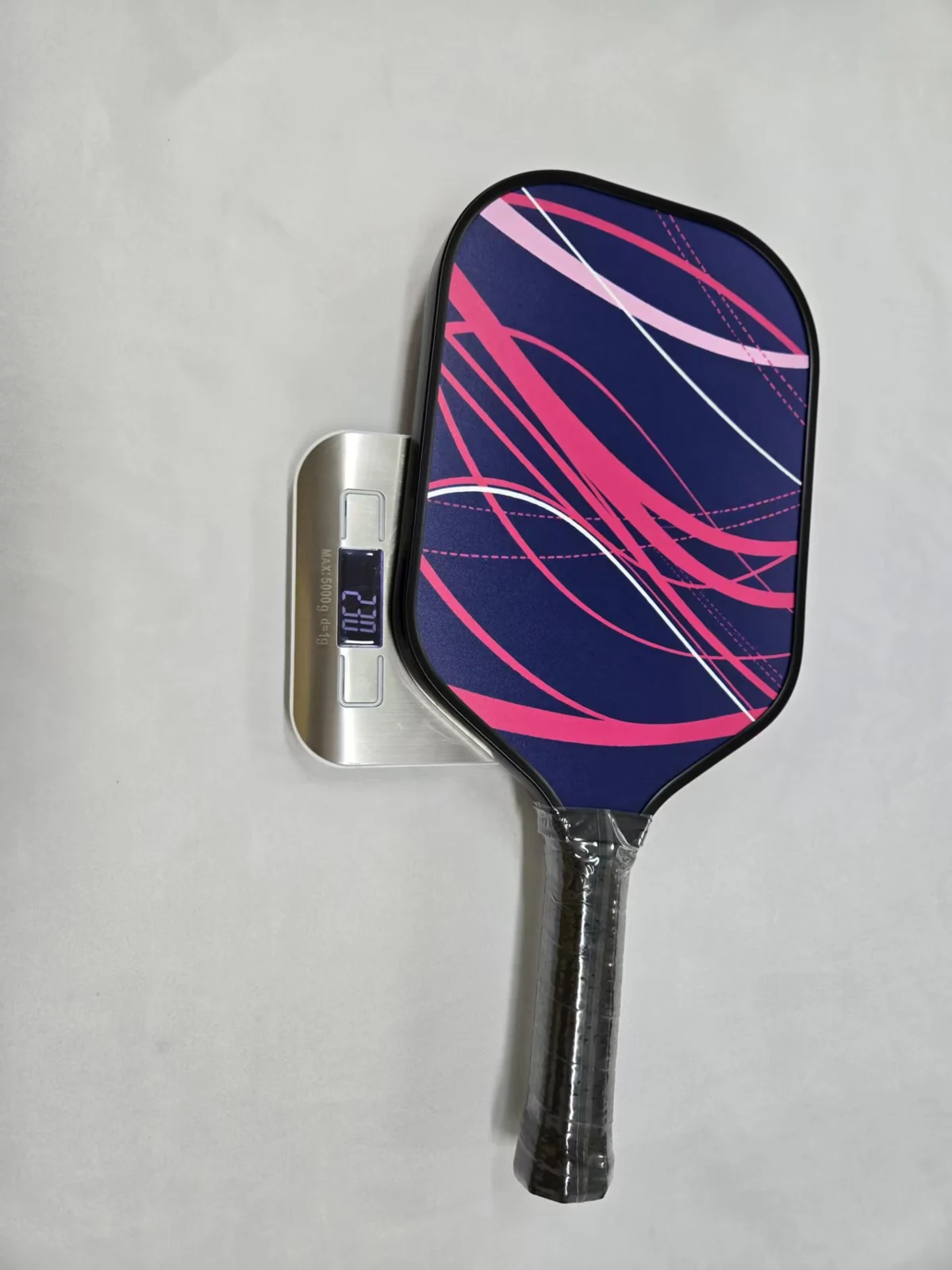
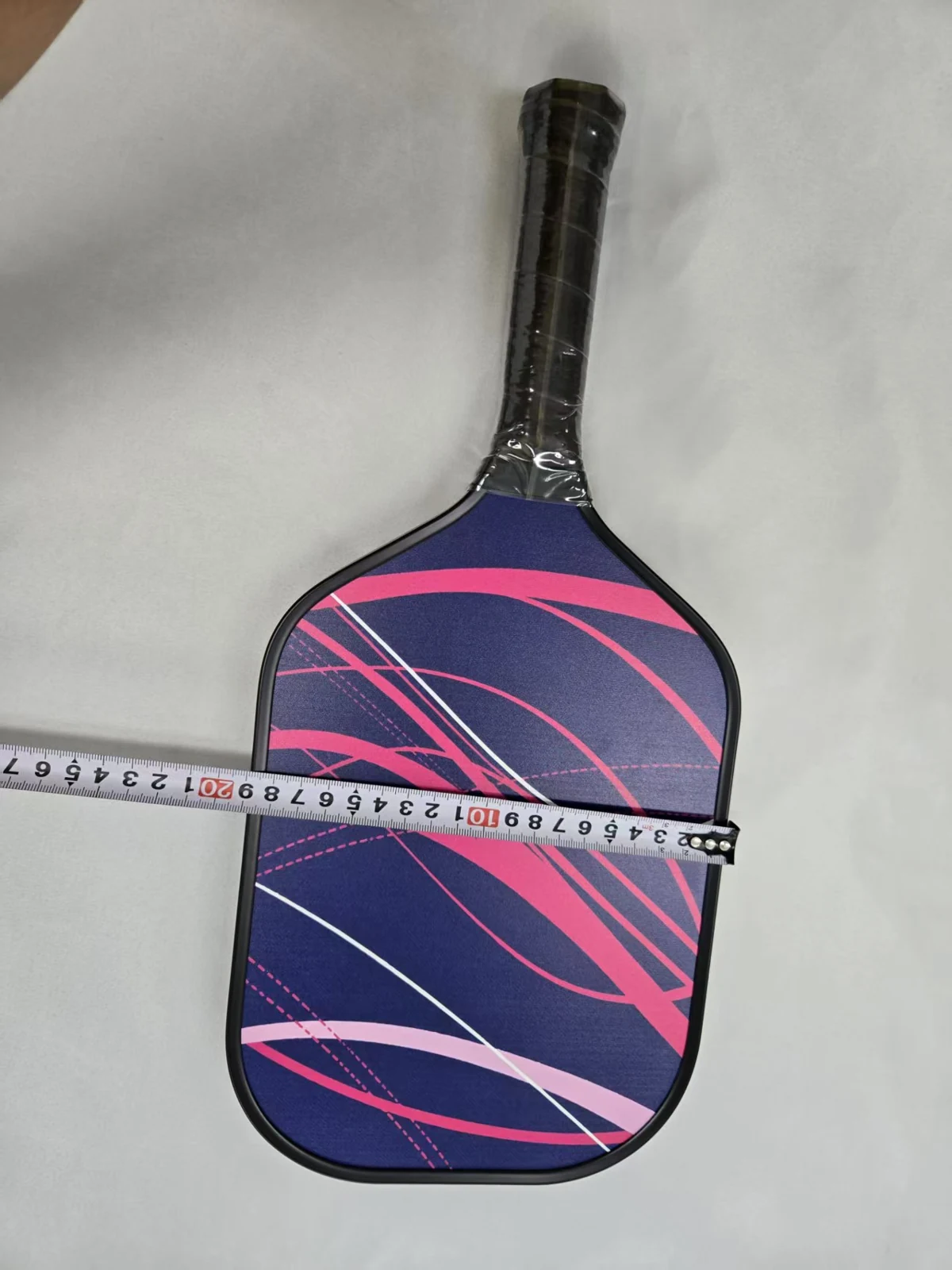
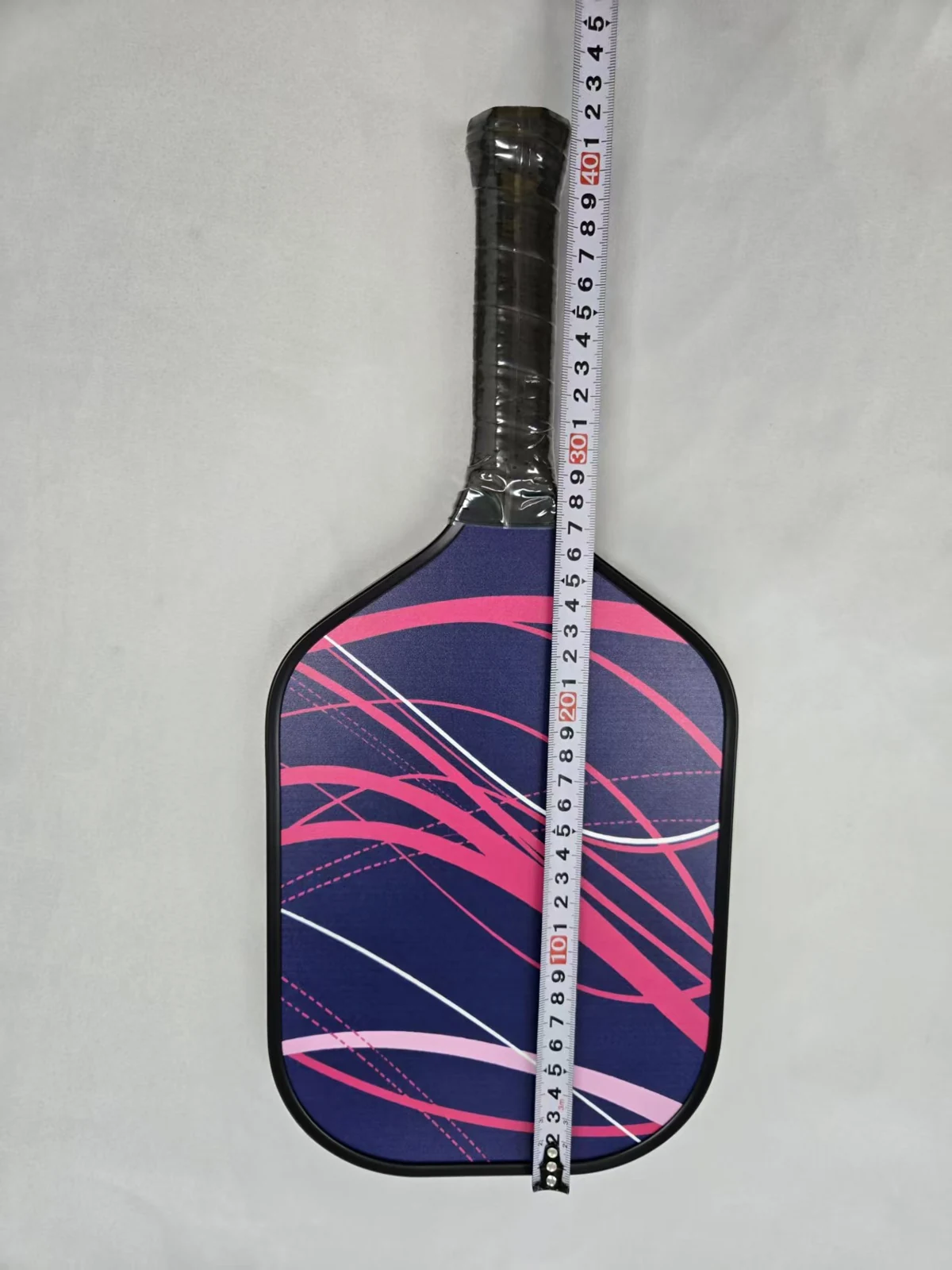
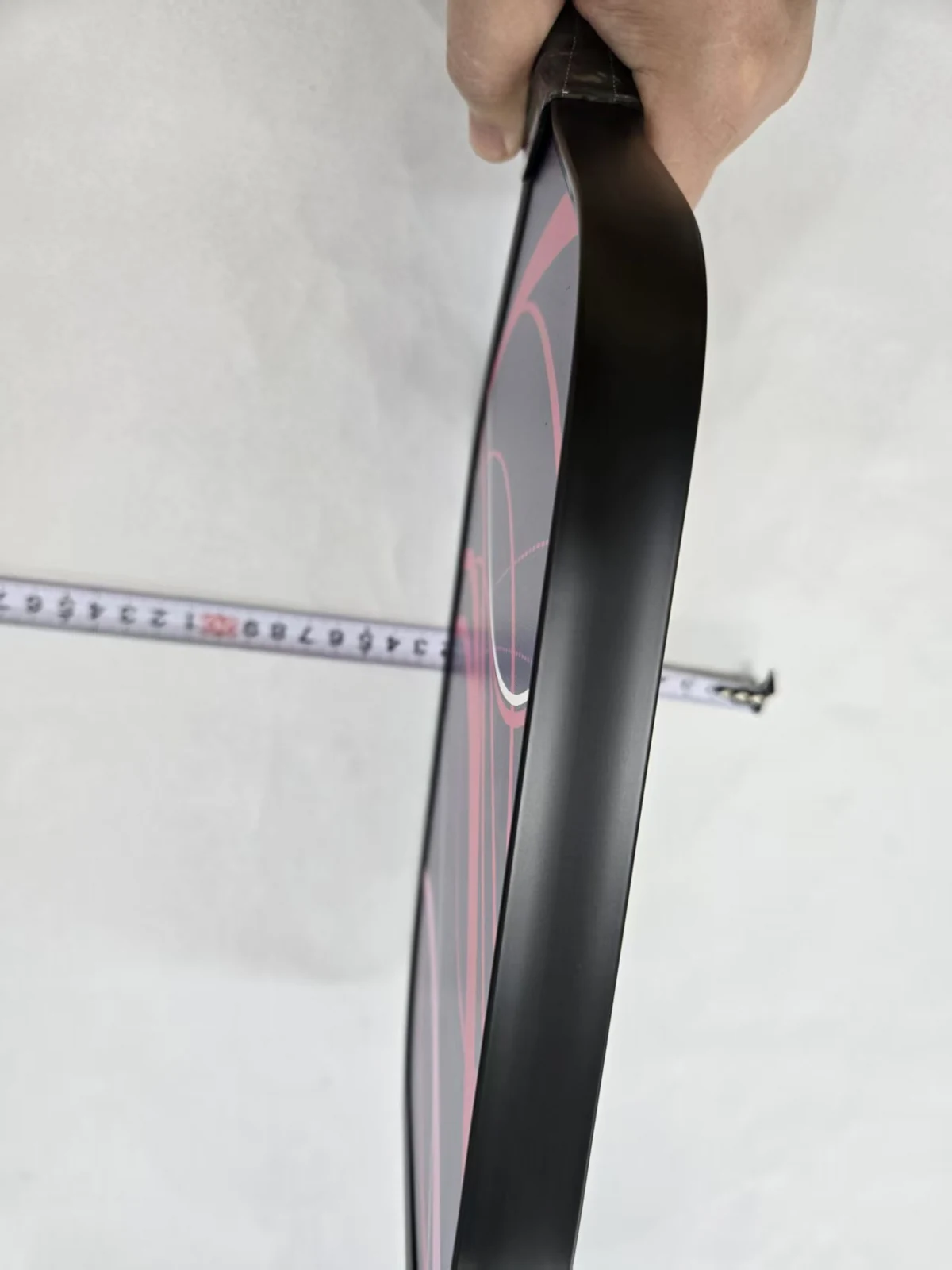
Factory Sample Inspection Photos
Factory inspection photos show sample weighing, width and overall-length checks, and the edge profile.
3. Use a consistent play evaluation
Use the same ball model, similar conditions, and the same evaluation tasks. Include soft shots, resets, blocks, volleys, and drives. Record handling and comfort feedback separately from measured results.
If the test includes extended use or repeated impacts, define the procedure in advance and inspect the paddles afterward. Describe results with the sample identification and test conditions attached.
4. Approve a reference sample and specification together
Keep an approved reference sample and a matching specification revision. Confirm which materials and construction details require written approval before substitution. Connect production inspections to those agreed requirements.
Quality Checks for Cold-Pressed and Thermoformed Pickleball Paddles
Both constructions require checks on bonding, core condition, geometry, surface finish, handle integrity, and assembly. The supplier should explain how its inspections address the proposed design and which checks are visual, dimensional, functional, or destructive.
| Inspection area | What to establish before ordering |
|---|---|
| Bond and internal condition | Methods used to identify separation, voids, or damaged core regions, and when destructive sample checks are required. |
| Weight and dimensions | Agreed ranges, measurement locations, equipment, and sampling plan. |
| Handle and perimeter | Specified construction, fit, alignment, reinforcement, and functional checks. |
| Surface and graphics | Approved finish, print reference, cosmetic limits, and applicable verification methods. |
| Repeat-order consistency | Revision control, material traceability, inspection records, and change approval. |
A visual inspection alone cannot establish internal bond quality or long-term durability. Match the verification method to the characteristic being accepted. Use our pickleball paddle quality control checklist when preparing the inspection agreement.
Which Pickleball Paddle Construction Fits Your Product Line?
Use your launch requirements to decide which platforms deserve sampling. The following are suggested purchasing approaches.
| Buyer objective | Suggested next step |
|---|---|
| Value-priced starter set | Sample an economical existing cold-pressed platform and verify that its finish, handling, and quality meet the brief. |
| A specific reinforced structure | Request a documented thermoformed platform with the required perimeter and handle details. |
| A defined control or power response | Evaluate suitable models from both constructions against the same playing and measurement criteria. |
| A short development schedule | Compare existing platforms first, then confirm sample, artwork, testing, and production timing. |
| A distinctive proprietary shape | Review tooling feasibility and development cost before committing to either construction. |
Frequently Asked Questions
Are thermoformed pickleball paddles always better than cold-pressed paddles?
Suitability depends on the finished design, manufacturing quality, intended customer, and price target. Compare documented samples against your requirements before choosing a construction.
Can cold-pressed paddles use carbon fiber faces?
Yes. Carbon fiber describes a face material, while cold pressing describes part of the manufacturing route. Confirm the actual fiber material, face layup, surface finish, core, and bonding specification.
Does a thermoformed paddle always contain foam?
Not necessarily. “Thermoformed” alone does not confirm whether a paddle contains foam. Ask the supplier to specify the foam material, location, and function for the quoted model.
Is non-thermoformed the same as cold-pressed?
Non-thermoformed is a broader description. Cold-pressed is one commonly discussed alternative, but suppliers may offer other constructions. Request the specific manufacturing route and assembly details.
Which construction should a new private label brand choose?
Begin with target customers, intended retail price, order quantity, and required product characteristics. Compare available platforms and approve samples before investing in additional customization or tooling.
What should an OEM sample request include?
Include the intended market, target customer, quantity, shape, face material, core thickness, weight range, handle requirements, finish, graphics, packaging, and any required testing or approval plan.