Peel-ply texture is the patterned finish left on a pickleball paddle face when a temporary woven fabric is removed after the resin cures. For OEM buyers, the surface to approve is the finished, printed sample. Check the areas the ball can contact and keep an approved sample for comparison with production paddles.
How Peel-Ply Texture Forms on a Paddle Face
During layup, a manufacturer places a woven release fabric called peel ply against the face laminate. As the resin cures against the fabric, it takes on the fabric’s pattern. The manufacturer then removes the cloth, exposing the textured resin surface. The cloth is a temporary manufacturing layer. The ATL Composites peel ply reference describes this process for composite laminates.
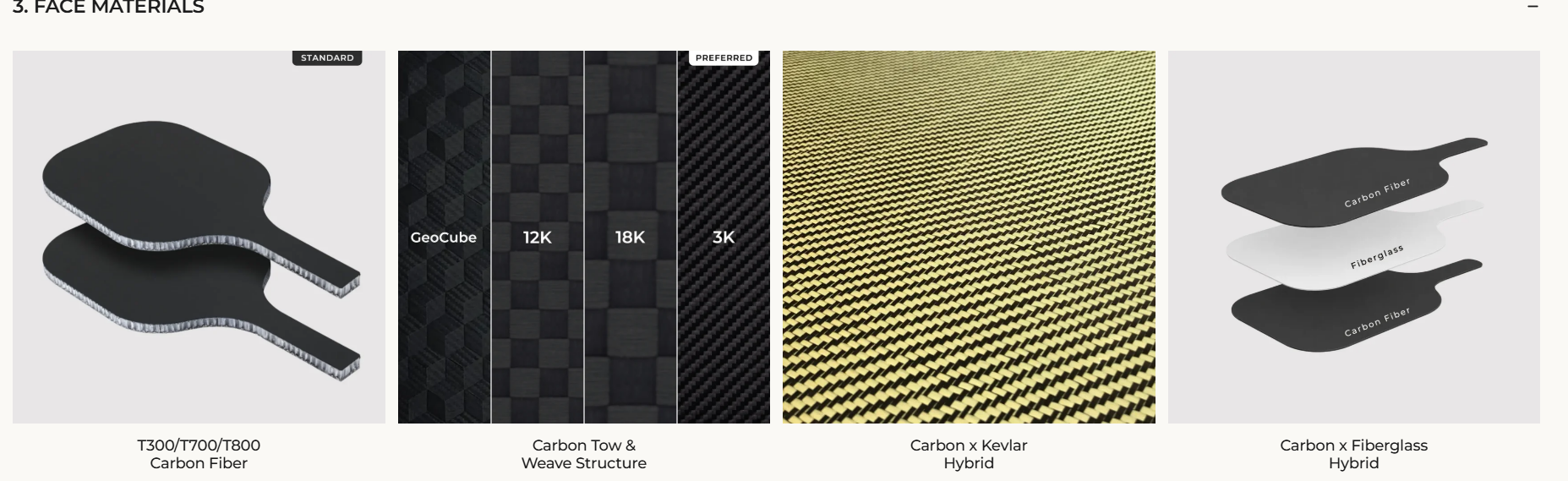
A paddle specification should identify the face reinforcement and the finished surface separately. A T700 designation refers to the specified fiber, while 3K describes a tow of approximately 3,000 filaments. A visible carbon weave tells you about appearance. The texture the ball contacts depends on the finished surface. See our guide to T700 vs 3K carbon fiber specifications for the material details.
USA Pickleball Surface Standards and the 2,100 RPM Spin Test
USA Pickleball applies a maximum measured spin rate of 2,100 RPM to paddles submitted for certification from October 1, 2026. Surface roughness and coefficient of friction are still recorded under the new testing approach. Previously certified paddles must comply with the standards in effect at the time of their certification.
Historical reference. Section 2.E.2.a.1 of the January 2025 Equipment Standards Manual specified per-face averages of Rz ≤ 30 µm and Rt ≤ 40 µm across six directions. Individual readings were capped at Rz 33 µm and Rt 44 µm.
The manual lists prohibited surface features such as anti-skid paint, sand-textured paint and sandpaper-like surfaces. Keep aftermarket sanding and grip-enhancing coatings out of the approval plan. Peel ply forms texture during cure. Approval depends on the finished paddle and applicable tests, including the production print or coating.
Peel-Ply vs. Spray-On Grit
Peel ply forms a pattern in the curing resin. Spray-on grit adds a textured coating to the face. Ask what forms the ball-contact surface and how the supplier controls it.
Swipe to compare both finishes.
| Decision | Peel-ply texture | Spray-on grit |
|---|---|---|
| Durability | The resin pattern can polish down in high-contact areas with use. | Raised particles can smooth out, wear away or loosen. Check wear and coating adhesion. |
| Batch consistency | Specify nylon or polyester peel ply, the fabric grade and warp and weft thread counts (threads per inch or centimeter), if available. Control resin flow, cure and cloth contact with the laminate. | Control coating viscosity, spray pressure, pass overlap and film thickness. |
| USAP approval risk | Uneven resin transfer or print coverage can change the finished surface. Evaluate both faces. | Overspray and pass overlap can create locally rough patches. Verify the coating against prohibited-feature rules and test the finished model. |
| Cost and cycle time | Budget for release cloth, cutting and removal labor, and any tooling maintenance in the quote. | Budget for coating, masking, spray equipment cleanup, curing time and rework. |
Request matched samples with the same construction, shape and artwork coverage. For a durability claim, agree on a wear protocol and compare spin before and after the same exposure. For a cost comparison, ask for quotes at the same order quantity and inspection scope.
How to Preserve Peel-Ply Texture During UV Printing
Heavy UV ink laydown or a glossy clear coat can fill shallow valleys in the resin pattern. A printed zone can then have a different texture from the exposed face beside it. That difference may change ball contact across the face. Visual gloss and finger feel can flag areas to inspect. Measure the finished surface to assess the effect.
During artwork review, ask for a thin ink laydown or a matte UV ink trial, or use negative space to keep selected areas unprinted. A textured UV ink creates a new finish wherever it covers the face. Evaluate that finish on the printed sample. Compare the printed area, exposed area and transition on both faces under matching light. Lock the artwork revision, ink specification, varnish option and sample ID at sign-off.
Peel-Ply Sample Approval Checklist for OEM Buyers
Use this checklist when signing off on the surface. Add the agreed checks to your OEM sample approval checklist so the approved finish can be checked again on the production run.
Swipe to see all columns.
| Check | What to record | Production reference |
|---|---|---|
| Surface process | Specify peel-ply finish and record any subsequent coating or print treatment. | Approved face specification. |
| Artwork coverage | Save the artwork revision and mark which ball-contact areas are printed. | Final artwork file and photos of both sample faces. |
| Texture consistency | Inspect agreed locations on both faces. Document any smooth patches, uneven areas or marks that need review. | Close-ups, agreed inspection locations and any measured finish criteria. |
| Sample sign-off | Record model, sample ID, revision and approval date. | Identified physical reference sample and signed specification. |
| Bulk inspection | Agree on inspection locations, the number of units to check and how to handle a mismatch. | Inspection results tied to the production lot and approved sample. |
If the surface process or artwork coverage changes after sign-off, ask for a revised sample before accepting the change. Use the pickleball paddle quality control process to plan how the surface check fits into broader production inspection.
Frequently Asked Questions About Peel-Ply Texture
Does peel-ply texture wear off over time?
Yes. Repeated ball contact can gradually polish the high points of the cured resin texture, especially around the areas players hit most often. The face can feel smoother while the underlying fibers remain covered. Visible fiber exposure suggests deeper wear or damage. Inspect the surface and document any performance change.
Can you UV print over a peel-ply carbon fiber face?
Yes. UV ink can be applied to a peel-ply carbon fiber face. A heavier ink layer or clear coat can fill parts of the resin texture, so approve the actual printed sample. To retain exposed texture in selected areas, test a lighter ink laydown or leave those areas unprinted.
Is peel-ply texture better than spray-on grit for raw carbon fiber paddles?
Peel-ply is a good choice for raw carbon fiber paddles when you want a repeatable resin finish and no loose grit particles from a separate coating. Consistency depends on the cloth specification, resin cure and print coverage. Compare matched samples for wear, spin and batch consistency, and test the final tournament configuration against applicable USA Pickleball standards.
Plan Your Custom Paddle Sample
If you’re developing custom T700 pickleball paddles, share your artwork, target paddle configuration, order quantity and preferred finish with Gloperti. Include any areas where you want the texture to remain visible so we can discuss the sample and approval requirements for your project.