pickleball paddle supplier Guide: Choosing the Right OEM Partner for 3K, 12K, and T700 Carbon Fiber Paddles
Focus Keyword: pickleball paddle supplier
Table of Contents
- Introduction
- Why the Supplier Matters More Than the Material Label
- Understanding 3K Carbon Fiber Paddle Supply
- What Makes a Good Sport-Leisure Paddle Program
- How 12K Carbon Fiber Changes the Product Position
- Building a 12K Power Paddle
- Supplying 12K Tournament Paddles
- T700 Thin-Core Paddles: High Performance, Higher Process Demands
- Core Thickness and Honeycomb Selection
- Thermoforming, Edge Foam, and Handle Construction
- Customization for Private-Label Brands
- Quality Control Checklist for Paddle Buyers
- MOQ, Sampling, Lead Time, and Cost Management
- How to Compare Supplier Quotations Correctly
- Recommended Product-Line Architecture
- Common Sourcing Mistakes to Avoid
- How to Choose the Right OEM Partner
- Conclusion
- Frequently Asked Questions
Introduction
For brands, distributors, clubs, promotional companies, and sporting-goods retailers, choosing a reliable pickleball paddle supplier is one of the most important decisions in building a profitable paddle line. The market now includes entry-level fiberglass models, 3K carbon fiber paddles for recreational players, 12K carbon fiber paddles for intermediate and tournament users, and thin-core T700 models designed for speed, spin, and responsive power. These products may look similar in a catalog, but their performance, durability, production complexity, and target customer can be very different.
A capable supplier does more than quote a low price. The right manufacturing partner should help you match face material, core thickness, shape, weight, handle geometry, edge construction, graphics, packaging, and testing standards to a clear market position. This guide explains how buyers can evaluate 3K, 12K, and T700 paddle programs, how to avoid common sourcing mistakes, and how to build a product range that is easier to market and reorder.
Why the Supplier Matters More Than the Material Label
Carbon-fiber labels are useful, but they do not tell the whole story. Two paddles described as 12K carbon fiber may play differently because of resin content, fiber orientation, surface treatment, core density, molding pressure, perimeter reinforcement, and final weight distribution. In the same way, a T700 face does not automatically guarantee premium performance if the bonding process is inconsistent or the core is poorly matched to the face.
A professional pickleball paddle supplier should control the complete build rather than simply assemble anonymous components. Buyers should ask who laminates the face, who cuts and prepares the honeycomb core, whether thermoforming is completed in-house, how edge foam is applied, and how finished paddles are checked. Process control creates repeatability, and repeatability is what protects a brand after the first successful sample.
Understanding 3K Carbon Fiber Paddle Supply
A 3K carbon fiber fabric is woven from tow bundles containing approximately 3,000 filaments. Its familiar fine checkerboard appearance gives products a technical, premium look without pushing cost as high as many advanced carbon constructions. For private-label programs, 3K can be a strong bridge between basic fiberglass paddles and high-performance raw-carbon models.
A well-managed 3k carbon fiber pickleball paddle supply program is especially useful for recreational adults, club beginners, schools, corporate sports programs, and value-focused online brands. The face can deliver a firmer, more controlled response than many fiberglass models while remaining accessible to players who are not yet looking for a tournament-specific paddle.
When buyers request 3k sport leisure pickleball paddle supply, they should define the playing experience rather than relying only on the fabric name. A 16 mm polypropylene honeycomb core can create a softer, steadier feel, while a 13 mm or 14 mm core can make the paddle faster and more direct. Standard shapes are easier for casual players, whereas elongated shapes can add reach but may reduce the sweet spot for beginners.
What Makes a Good Sport-Leisure Paddle Program
Sport-leisure products must be comfortable, visually attractive, durable, and easy to understand. They are often sold to consumers who choose based on appearance, weight, grip comfort, and perceived quality rather than laboratory performance data. This makes quality control and presentation just as important as advanced material claims.
For sport leisure pickleball paddle supply, practical specifications usually include a balanced weight, forgiving core, medium grip circumference, protective edge guard, and broad color choices. Sets of two or four paddles may include balls, covers, or a carry bag. Retail-ready packaging can improve conversion for gift, family, and club channels.
A supplier that can supply sport leisure pickleball paddle models should also offer stable graphic reproduction. UV printing, water-transfer graphics, surface decals, or direct printing all create different costs and finishes. Buyers should approve physical color samples because monitor colors and production inks rarely match perfectly without calibration.
How 12K Carbon Fiber Changes the Product Position
A 12K carbon fabric uses larger tow bundles and usually creates a bolder weave pattern. In paddle development, it is commonly positioned as a more powerful or performance-oriented option. However, the final result still depends on the complete layup and construction. A stiffer face can increase direct response and energy return, but an overly rigid build may reduce comfort and control.
A 12k intermediate pickleball paddle supply program should focus on predictable performance for players moving beyond entry-level equipment. These customers often want more spin, a stable sweet spot, better blocking, and enough power for serves and overheads without losing touch at the kitchen line. A 14 mm or 16 mm core is often suitable, depending on whether the brand prioritizes hand speed or control.
When a supplier is asked to supply 12k intermediate pickleball paddle models, the development brief should include target static weight, swing-weight range, twist-weight goal, handle length, grip circumference, and balance point. Even when a buyer does not publish all these numbers, they are valuable internal controls for repeat production.
Building a 12K Power Paddle
A 12k power pickleball paddle supply project usually combines a responsive carbon face with a thinner core, perimeter reinforcement, an elongated or hybrid shape, and a balance point that supports acceleration through the ball. Power does not mean simply making the paddle heavier. Excess head weight can slow reaction time and increase fatigue, while an overly thin core can feel harsh.
The best power models use a coordinated design. Face stiffness, core thickness, foam placement, handle construction, and overall geometry should work together. Thermoformed construction can improve structural unity and edge stability, but the factory must manage heat, pressure, adhesive distribution, and cooling carefully to avoid deformation or premature delamination.
Brands should request prototype comparisons rather than one final sample. For example, test two core thicknesses, two weight ranges, or two foam configurations with the same face material. Controlled comparisons make it easier to understand which feature causes the performance change.
Supplying 12K Tournament Paddles
To supply 12k tournament pickleball paddle products, a manufacturer needs tighter tolerances and better documentation than for a basic recreational line. Competitive players notice variation in weight, balance, handle shape, surface texture, and sound. A paddle that feels excellent at 225 grams may feel slow at 240 grams, even when both are technically within a loose factory standard.
Tournament-focused buyers should establish acceptance ranges before production. Important checkpoints include finished weight, dimensions, thickness, flatness, grip size, edge alignment, graphic position, surface consistency, and bonding integrity. Sampling plans should specify how many units are measured from each batch and what happens when a batch falls outside the approved range.
If certification or approval is required for the target market, plan it before printing packaging or launching presales. The supplier should provide accurate construction data and stable reference samples. Any later change to face material, core, shape, thickness, or manufacturing process may affect approval status and should be controlled through a formal change process.
T700 Thin-Core Paddles: High Performance, Higher Process Demands
T700 is a widely used carbon-fiber grade valued for its strength-to-weight characteristics and suitability for performance sporting goods. In pickleball paddles, raw or textured T700 faces are often selected for spin, feedback, and premium positioning. A thin-core design can add speed and pop, but it also places more stress on manufacturing consistency.
A high quality t700 thin core pickleball paddle supplier should demonstrate stable lamination, controlled surface treatment, accurate core thickness, strong edge bonding, and repeatable handle assembly. Thin paddles can amplify defects that might be less noticeable in a thick, soft recreational model. Small differences in adhesive, core density, or face flatness may change sound and feel.
Buyers should also discuss surface-texture durability. A very aggressive texture may perform well in a new sample but wear quickly. A balanced texture should support spin while surviving normal play, cleaning, ball impact, and transport. Ask for abrasion testing methods and compare new, conditioned, and used samples whenever possible.
Core Thickness and Honeycomb Selection
The polypropylene honeycomb core is the heart of most modern composite paddles. Thickness affects feel, power, dwell time, stability, and hand speed. Common commercial options include approximately 13 mm, 14 mm, and 16 mm, although custom constructions are possible.
Thinner cores generally feel faster and more direct. They can suit power players and quick hands, but they may offer a smaller margin for off-center contact. Thicker cores generally provide more stability, control, and comfort. For intermediate players, 14 mm and 16 mm platforms are often easier to position because they balance performance with forgiveness.
Core cell size and density also matter. Buyers should not assume that two cores with the same thickness are identical. A supplier should lock the core specification and source so later batches do not shift unexpectedly. Core compression, moisture exposure, cutting quality, and adhesive coverage should be monitored during production.
Thermoforming, Edge Foam, and Handle Construction
Thermoforming has become a major construction method in performance paddles. The face and perimeter are molded under heat and pressure, often with foam reinforcement around the edge. The goal is a more unified structure, a stable perimeter, and a larger effective hitting area.
The method is not automatically superior unless the process is controlled. Excess heat can damage materials, uneven pressure can create warping, and poor adhesive distribution can create weak zones. Ask suppliers how temperature, pressure, cycle time, and cooling are recorded. A reliable factory should be able to explain its control points without hiding behind marketing language.
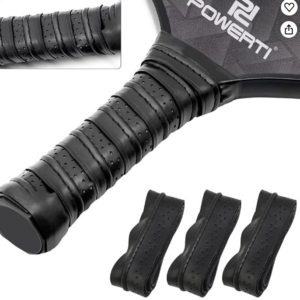
Handle construction is equally important. Options include molded handles, wrapped extensions of the paddle structure, wooden inserts, foam-filled handles, and reinforced neck areas. Buyers should test torsional stability, grip comfort, cap security, and repeated impact resistance. A paddle face can be excellent while a weak handle ruins the product.
Customization for Private-Label Brands
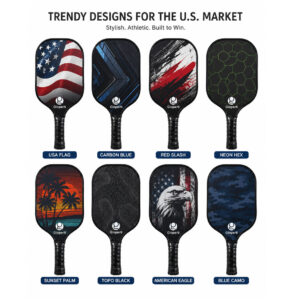
A commercial paddle program needs a clear customization menu. Typical options include face graphics, logo placement, edge-guard color, grip color, end-cap branding, serial numbers, laser marking, paddle covers, retail boxes, instruction cards, and multi-paddle sets. The supplier should distinguish between low-cost graphic changes and engineering changes that require new tooling or testing.
For small and growing brands, a modular approach reduces risk. Start with an approved platform, select the face material and thickness, then customize artwork, grip, edge color, and packaging. Once sales data is available, move into custom shapes, exclusive molds, or specialized layups.
Artwork files should be managed professionally. Vector logos, bleed areas, color codes, print-resolution requirements, and safe zones should be confirmed before sampling. A production proof is useful, but a physical pre-production sample is safer for complex gradients, metallic effects, or dark carbon backgrounds.
Quality Control Checklist for Paddle Buyers
Quality control should begin with raw materials and continue through packing. Incoming checks may include face-material identity, weave appearance, core thickness, density, grip components, edge guards, adhesives, and packaging. In-process checks should cover cutting, alignment, lamination, molding, trimming, drilling, printing, handle assembly, and curing.
Finished-product inspection should include dimensions, thickness, weight, balance, cosmetic appearance, edge fit, grip wrapping, end-cap security, sound consistency, flatness, and packaging completeness. Functional tests may include repeated ball impact, drop testing, handle torque, edge impact, temperature conditioning, and surface abrasion.
A good pickleball paddle supplier should provide inspection records, not only verbal assurances. Buyers can request photos, measurement sheets, video inspections, third-party inspection access, or golden-sample comparison. The approved golden sample should be signed, dated, and stored by both parties.
MOQ, Sampling, Lead Time, and Cost Management
Minimum order quantity depends on customization depth. Stock platforms with custom printing can often support lower quantities, while exclusive molds, special carbon layups, and custom packaging usually require larger commitments. Buyers should ask for separate MOQs for the paddle, graphics, grip, cover, box, and accessories because each component may have a different production minimum.
A practical sampling path includes a material or platform sample, customized artwork sample, functional approval sample, and pre-production sample. Rushing directly from a catalog photo to mass production creates unnecessary risk. Sample costs are small compared with the cost of returns, poor reviews, and unsellable inventory.
Lead time should be divided into artwork, material preparation, sampling, approval, production, inspection, and shipping. A supplier that promises an unrealistically short schedule may be skipping curing, testing, or planning steps. Build extra time around holidays, peak seasons, certification, and custom packaging.
How to Compare Supplier Quotations Correctly
A low quotation may exclude features included by another supplier. Compare quotations line by line: face material, core type and thickness, construction method, shape, weight tolerance, grip, edge guard, printing, cover, box, accessories, inspection, certification support, shipping terms, and tooling charges.
Ask whether the quoted carbon is decorative, structural, raw, coated, or textured. Confirm whether the paddle is cold-pressed, hot-pressed, or thermoformed. Check whether packaging is retail-ready and whether barcodes, warning labels, country-of-origin marks, and carton labels are included.
The best commercial decision is usually the supplier with the strongest total value and lowest execution risk, not the lowest unit price. Consistent quality, fast communication, accurate sampling, and dependable reorders protect margin better than a small saving on the first purchase.
Recommended Product-Line Architecture
A clear range helps buyers cover multiple customer segments without creating too many overlapping SKUs. A practical three-tier structure can begin with a 3K sport-leisure paddle, continue with a 12K intermediate paddle, and finish with a T700 or 12K tournament model.
The first tier can emphasize comfort, color, value, and set packaging. The second tier can emphasize carbon performance, balanced control, spin, and an upgrade path for regular players. The third tier can emphasize advanced construction, tighter tolerances, optimized weight, premium grip, and competition-focused specifications.
This structure also simplifies marketing. Each model has a distinct user, benefit, and price level. The supplier can share tooling, packaging formats, or components where appropriate, while still creating visible differences in face material, shape, thickness, and graphics.
Common Sourcing Mistakes to Avoid
The first mistake is choosing a material name before defining the user. A 12K face is not automatically right for every intermediate player, and a thin T700 paddle is not automatically right for beginners. Start with the playing profile and sales channel.
The second mistake is approving only appearance. A beautiful sample should still be measured, weighed, play-tested, impact-tested, and compared with production units. The third mistake is accepting broad tolerances. Tight but realistic specifications reduce customer complaints and make reorders more consistent.
Other common errors include failing to confirm ownership of molds and artwork, ignoring packaging drop performance, launching before compliance is complete, and allowing material substitutions without written approval. A simple product specification sheet and change-control procedure prevent many of these problems.
How to Choose the Right OEM Partner
Create a supplier scorecard that covers engineering capability, material traceability, manufacturing control, quality systems, communication, customization, sampling speed, testing, compliance support, capacity, and after-sales response. Request factory photos or video, production-flow explanations, sample inspection reports, and references where appropriate.
During development, evaluate how the supplier handles questions and problems. Strong partners identify trade-offs, propose alternatives, document changes, and explain why a specification may not work. Weak partners agree to everything without clarifying performance, cost, or schedule consequences.
For long-term growth, choose a supplier that can support a product roadmap. Your first order may be a simple sport-leisure model, but later orders may require 12K intermediate paddles, tournament models, thin-core T700 designs, custom molds, branded accessories, and coordinated packaging. A scalable partner reduces the need to restart sourcing each season.
Conclusion
Choosing the right pickleball paddle supplier requires more than comparing carbon-fiber names and unit prices. A successful program connects the target player with the right face material, core, thickness, shape, weight, construction, grip, graphics, packaging, and quality controls.
3K carbon fiber is a strong choice for premium sport-leisure and value-performance ranges. 12K carbon can support intermediate, power, and tournament positioning when it is matched with the right structure. T700 thin-core paddles can deliver fast, responsive performance, but they require disciplined manufacturing and tighter inspection.
Buyers who define specifications clearly, approve physical samples, document tolerances, and select a transparent OEM partner are far more likely to build a profitable paddle line with consistent reorders and strong customer reviews.
Frequently Asked Questions
What should I ask a pickleball paddle supplier before ordering?
Ask about face material, core thickness and density, construction method, weight tolerance, balance, grip size, printing, packaging, inspection standards, certification support, MOQ, sampling, lead time, and change-control procedures.
Is 3K carbon fiber suitable for recreational paddles?
Yes. A properly designed 3K carbon fiber paddle can offer attractive appearance, stable feel, durability, and a clear upgrade from basic fiberglass products, making it suitable for sport-leisure and club channels.
What is the difference between 3K and 12K carbon fiber paddles?
The weave and tow size differ, creating different appearance and potential stiffness characteristics. Actual paddle performance also depends on resin, layup, core, thickness, molding, shape, weight, and surface treatment.
Are 12K paddles only for advanced players?
No. A 12K face can be used in intermediate, power, or tournament designs. The full construction determines whether the paddle feels forgiving, controlled, fast, or powerful.
Why choose a T700 thin-core paddle?
T700 thin-core designs can provide quick handling, direct response, spin potential, and premium positioning. They require strong process control because thin constructions make weight, bonding, flatness, and core consistency especially important.
What core thickness is best for an intermediate paddle?
Many intermediate players prefer 14 mm or 16 mm paddles. A 14 mm core can feel faster and more responsive, while a 16 mm core generally offers more control, stability, and comfort.
Should I choose thermoformed construction?
Thermoforming can improve perimeter stability and structural unity, but only when heat, pressure, adhesive, and cooling are well controlled. Evaluate physical samples and test repeat production rather than relying on the label alone.
How can I reduce risk on my first private-label order?
Use an established platform, keep engineering changes limited, approve a physical pre-production sample, define measurable tolerances, inspect the batch, and avoid over-ordering before market feedback is available.
Can one supplier produce sport-leisure and tournament paddles?
Yes, provided the supplier has the materials, equipment, process control, testing, and quality systems needed for both. Confirm capability with samples and production documentation.
What documents should be included in a commercial paddle project?
Use a product specification sheet, approved artwork, packaging specification, golden sample, inspection checklist, test requirements, purchase order, and written change-approval process.
Develop Your Private-Label Pickleball Paddle Line
Work with an experienced OEM partner to develop 3K, 12K, T700, fiberglass, thermoformed, thin-core, thick-core, recreational, and tournament paddle programs with custom graphics and packaging.
Ready to Source the Right Paddle?
Whether you need OEM/ODM manufacturing, wholesale pricing, or a custom branded paddle – we’re here to help. Get a free quote within 24 hours.