When developing a private-label pickleball paddle, choosing between nominal 13mm and 16mm paddle designs is more than a specification decision. Thickness can influence the way a paddle feels, how its construction is engineered, and where the finished model fits in a product range. But thickness alone does not determine power, control, durability, or quality.
Quick answer: A 13mm pickleball paddle may suit buyers looking for a slimmer profile and a firmer feel. A 16mm paddle may suit buyers looking for a thicker profile and a more cushioned feel. Confirm whether each supplier specifies bare-core or finished-paddle thickness, then compare samples with similar construction, weight, and balance.
This guide focuses on the questions brand owners, importers, wholesalers, and product developers should ask before selecting a thickness for an OEM or ODM project. For a broader overview of production stages, see our pickleball paddle manufacturing process guide.
What Does 13mm or 16mm Mean on a Pickleball Paddle?
The 13mm or 16mm label usually refers to the nominal thickness of the paddle’s core or core assembly, as specified by the manufacturer. In product listings, suppliers sometimes use “core thickness” and “paddle thickness” loosely. Before comparing quotations, confirm exactly what the stated measurement covers and where it is measured.
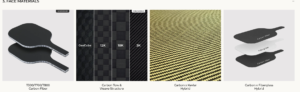
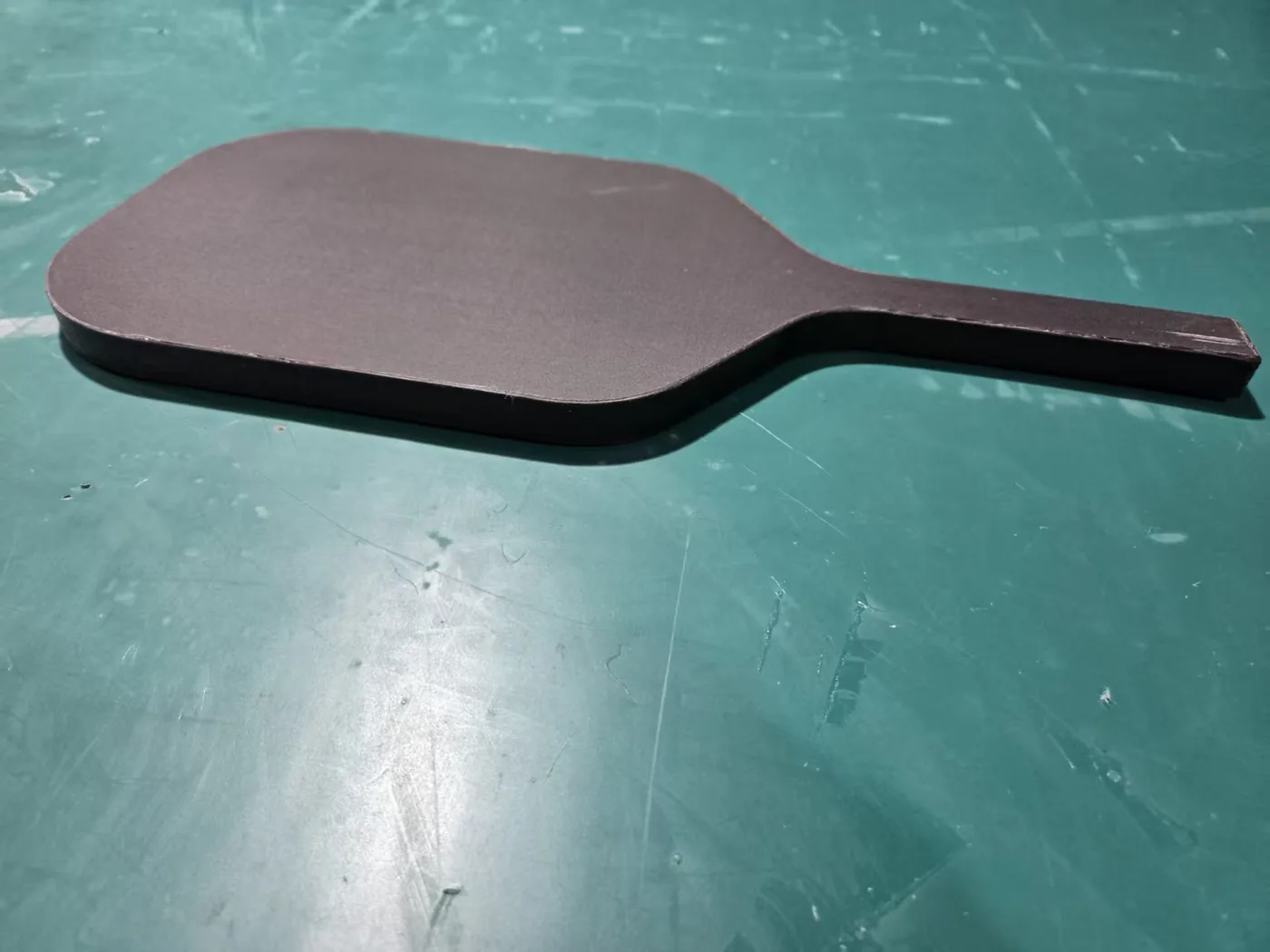
A finished paddle is a layered structure. Depending on the design, it may include face materials, adhesive or resin layers, a honeycomb or foam-based core, perimeter reinforcement, edge guard, and surface finishes. The measurement of a bare core is therefore not necessarily identical to the finished paddle’s overall thickness.
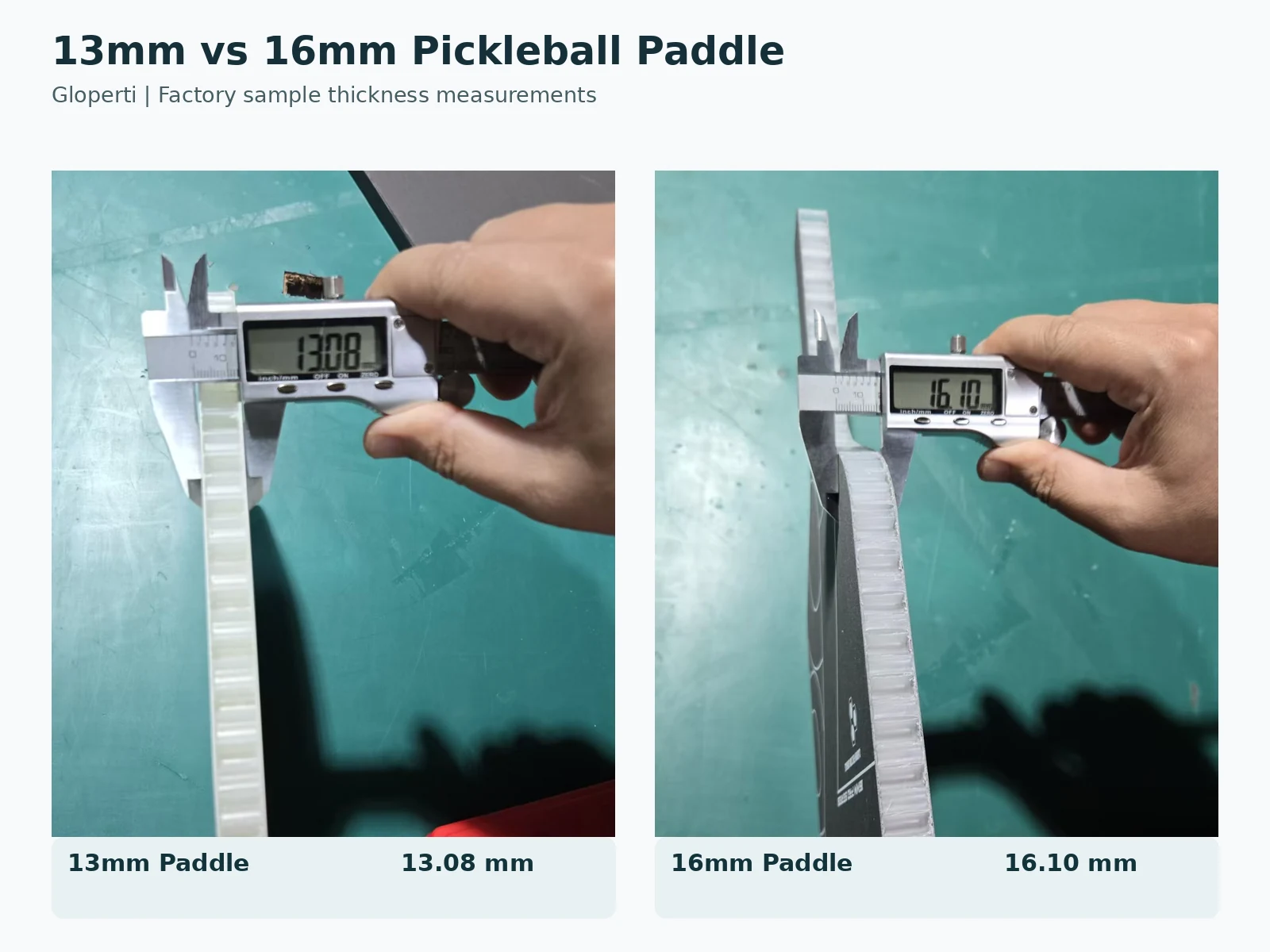
Sample traceability: the photographs show individual measurement points (13.08mm and 16.10mm). Sample IDs, measurement locations, completion status, and whether the two paddles share the same construction have not been supplied; no batch-wide tolerance or controlled A/B performance conclusion is claimed.
If your project also involves selecting a face and core material, review our guide to pickleball paddle materials.
13mm vs 16mm Pickleball Paddle: Comparison at a Glance
On narrow screens, swipe horizontally to view the full table.
| Comparison point | 13mm design | 16mm design |
|---|---|---|
| Nominal thickness profile | Nominal 13mm profile; verify whether the specification refers to the bare core or finished paddle | Nominal 16mm profile; verify whether the specification refers to the bare core or finished paddle |
| Potential feel | May feel firmer or more direct in some builds | May feel more cushioned in some builds |
| Response | Can be tuned for a quick, crisp response | Can be tuned for a more damped response |
| Stability | Depends on core geometry, face stiffness, perimeter design, and balance | Additional core depth may provide more design room, but does not guarantee greater stability |
| Weight | Not automatically lighter | Not automatically heavier |
| Best use in a product line | A distinct slim-profile or firmer-feel option, if validated by samples | A thicker-profile or softer-feel option, if validated by samples |
| What buyers should verify | Finished thickness, total weight, balance, core material and density, face construction, edge/perimeter design, and repeatability between samples and bulk production | |
This table describes possible design directions, not fixed performance rules. Two paddles with the same nominal thickness can play differently because their materials, layups, core geometry, and weight distribution differ.
Power, Control, Feel, and Stability: What Actually Changes?
Power and energy return
It is tempting to say that a thinner paddle always hits harder. That conclusion is too simple. Power depends on the complete paddle system, including face stiffness, core response, swing weight, paddle shape, and the player’s swing. A 13mm build may be engineered to feel crisp, but a 16mm build with a different face layup or balance may produce a different result.
For a fair comparison, test paddles with the same shape, face material, surface finish, handle, and target weight wherever possible. If several variables change at once, the sample test cannot isolate the effect of thickness.
Control and touch
Some players prefer the feel of a thicker paddle because a particular 16mm construction can soften the response on blocks, resets, and dinks. However, “thicker means more control” is not a universal rule. Core stiffness, bonding, face layup, and balance can change dwell feel and response.
For product development, ask testers to record specific observations rather than simply rating a paddle “good for control.” Useful tasks include soft dinks, third-shot drops, blocks, resets, and volleys. Record whether the ball launches higher or lower, how predictable the response feels, and whether off-center contact is manageable.
Stability and forgiveness
Stability on off-center hits is influenced by the paddle’s mass distribution, twist resistance, shape, perimeter reinforcement, and construction consistency. Core thickness can be one design input, but it cannot replace testing. A well-balanced 13mm sample may feel more stable to a particular player than a poorly balanced 16mm sample.
Sound and vibration
Sound and vibration are affected by the core structure, face materials, bonding, edge construction, and test conditions. Do not promise that a 16mm paddle is always quieter or that a 13mm paddle always produces a sharper sound. If sound or vibration is a selling point, compare prototypes under the same conditions and use customer-safe, supportable claims.
Does a Thicker Core Make a Pickleball Paddle Heavier?
Not necessarily. A 16mm core may use more core material in some designs, but the finished paddle’s weight also depends on core density, face material, resin or adhesive quantity, perimeter reinforcement, edge guard, handle, grip, and accessories. A lighter core material or a different construction can offset the additional thickness.
For OEM buyers, compare more than the number on the scale:
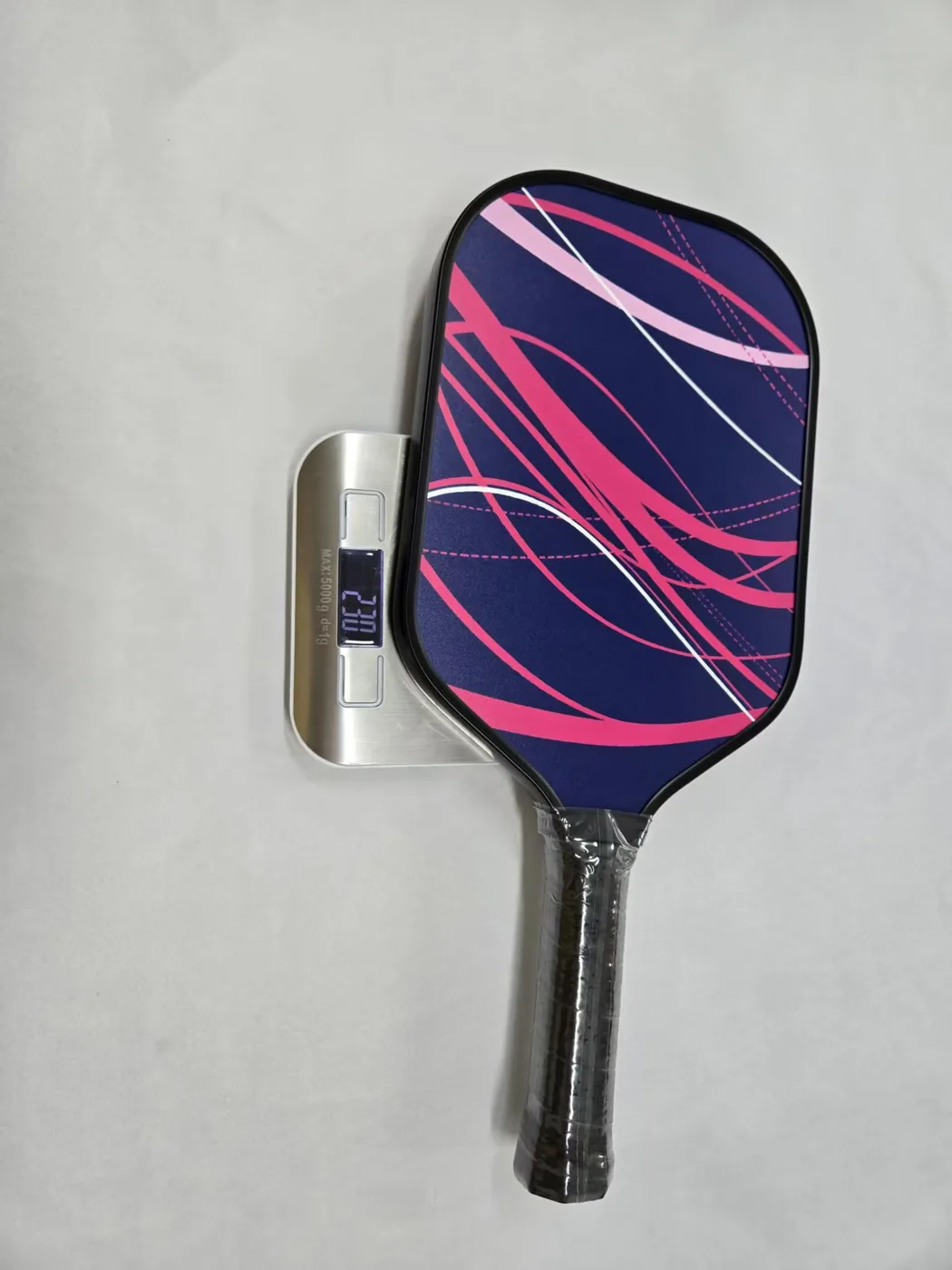
- Finished paddle weight: Record the weight of each approved sample in grams.
- Balance point: Note whether the paddle feels head-heavy, handle-heavy, or more evenly balanced.
- Swing weight: If this is important to your market, use a consistent measurement method or qualified test provider.
There is no universal swing-weight range that applies to all 13mm or all 16mm paddles. Swing weight depends on the finished paddle’s mass distribution and the measurement method, so compare measured samples rather than assigning a value based on thickness alone.
- Grip and handle: Confirm handle length, circumference, grip material, and butt-cap construction.
- Weight tolerance: Agree on an acceptable production range rather than relying on one sample measurement.
A useful development brief states the target weight range and balance preference separately from core thickness. This gives the factory a clearer target and makes comparisons between prototypes more meaningful.
Core Thickness Is Only One Part of Paddle Construction
When comparing 13mm and 16mm pickleball paddles, keep the rest of the construction visible. A supplier should be able to explain the main components and identify any differences between the two samples.
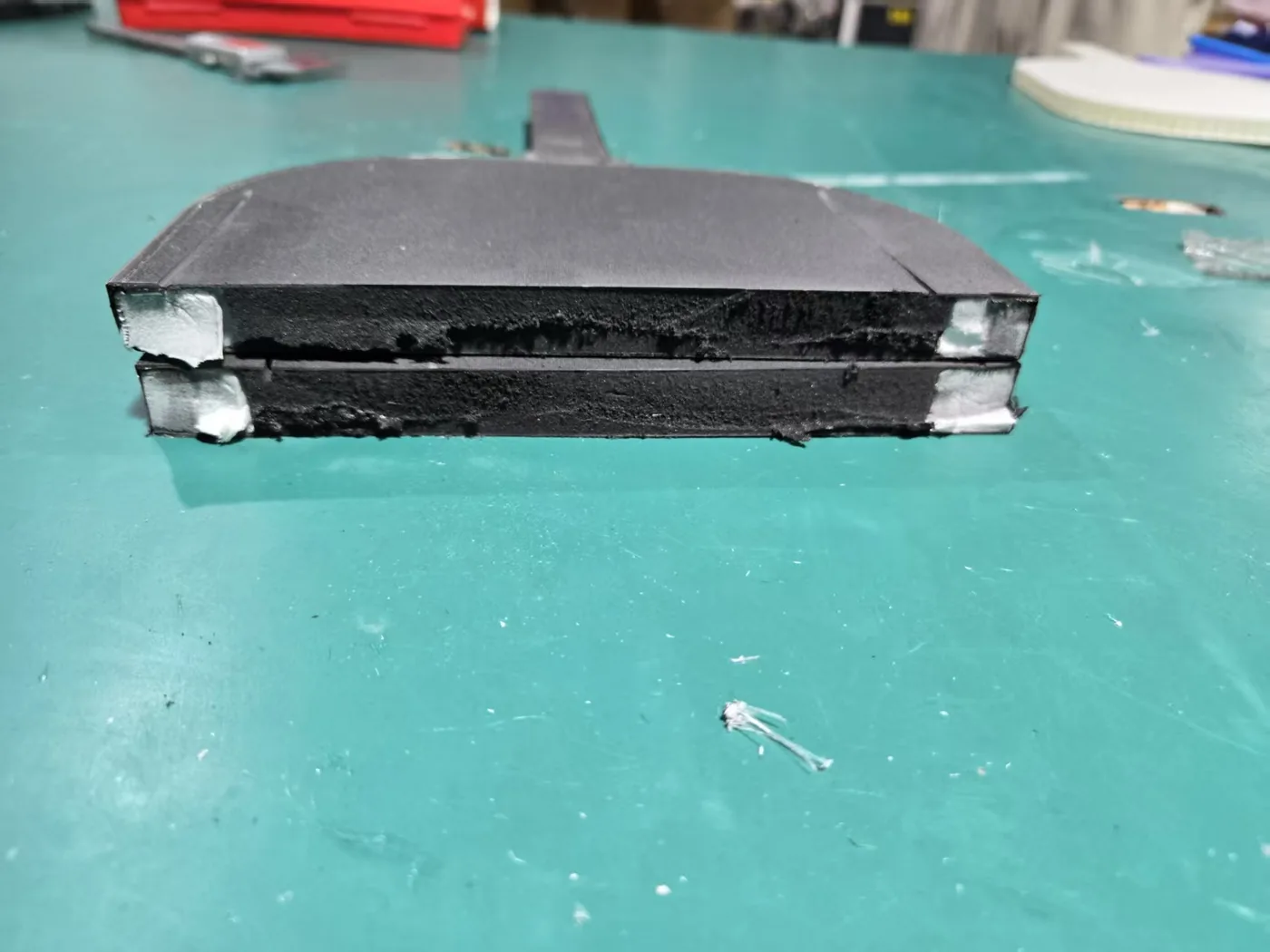
Core material and geometry
Honeycomb cores can vary in material, cell size, wall thickness, density, and geometry. Foam-based designs also vary by foam type, density, and whether foam is used throughout the core or only in selected areas. The words “honeycomb” and “foam” alone are not complete specifications.
Face material and layup
Carbon fiber, fiberglass, and hybrid face constructions can produce different stiffness, surface, and response characteristics. Fiber designation, weave or tow appearance, resin system, and layup should be confirmed rather than inferred from a marketing label. Read our comparison of fiberglass vs carbon fiber pickleball paddles for more detail.
Cold-pressed and thermoformed construction
Cold-pressed and thermoformed paddles use different manufacturing approaches. The process may affect how layers are consolidated and how the perimeter is constructed, but neither process automatically makes a paddle superior. Compare the actual bill of materials, reinforcement design, bonding method, and finished sample. See our guide to thermoformed vs cold-pressed pickleball paddles.
Shape, edge, and handle
Paddle length, width, edge guard, handle length, grip build-up, and balance influence the final playing experience. When comparing thickness options, keep these details consistent unless the purpose of the test is to compare complete product concepts.
Manufacturing and Quality-Control Considerations
From a factory perspective, moving from a 13mm to a 16mm design is not simply a matter of changing one number on a purchase order. The construction needs to be reviewed as a complete assembly. Depending on the platform, changes may affect core sourcing, material preparation, tooling or process settings, bonding, edge finishing, and inspection criteria.
Specification control
Before sampling, document the following:
- Nominal core thickness and finished paddle thickness, with measurement locations.
- Core material, geometry, density or other agreed material specification.
- Face material and construction on both sides.
- Bonding or molding process and perimeter reinforcement details.
- Overall paddle dimensions, shape, handle dimensions, and edge-guard design.
- Target finished weight and acceptable tolerance.
- Surface texture, graphics, logo placement, and packaging requirements.
Sample and bulk inspection
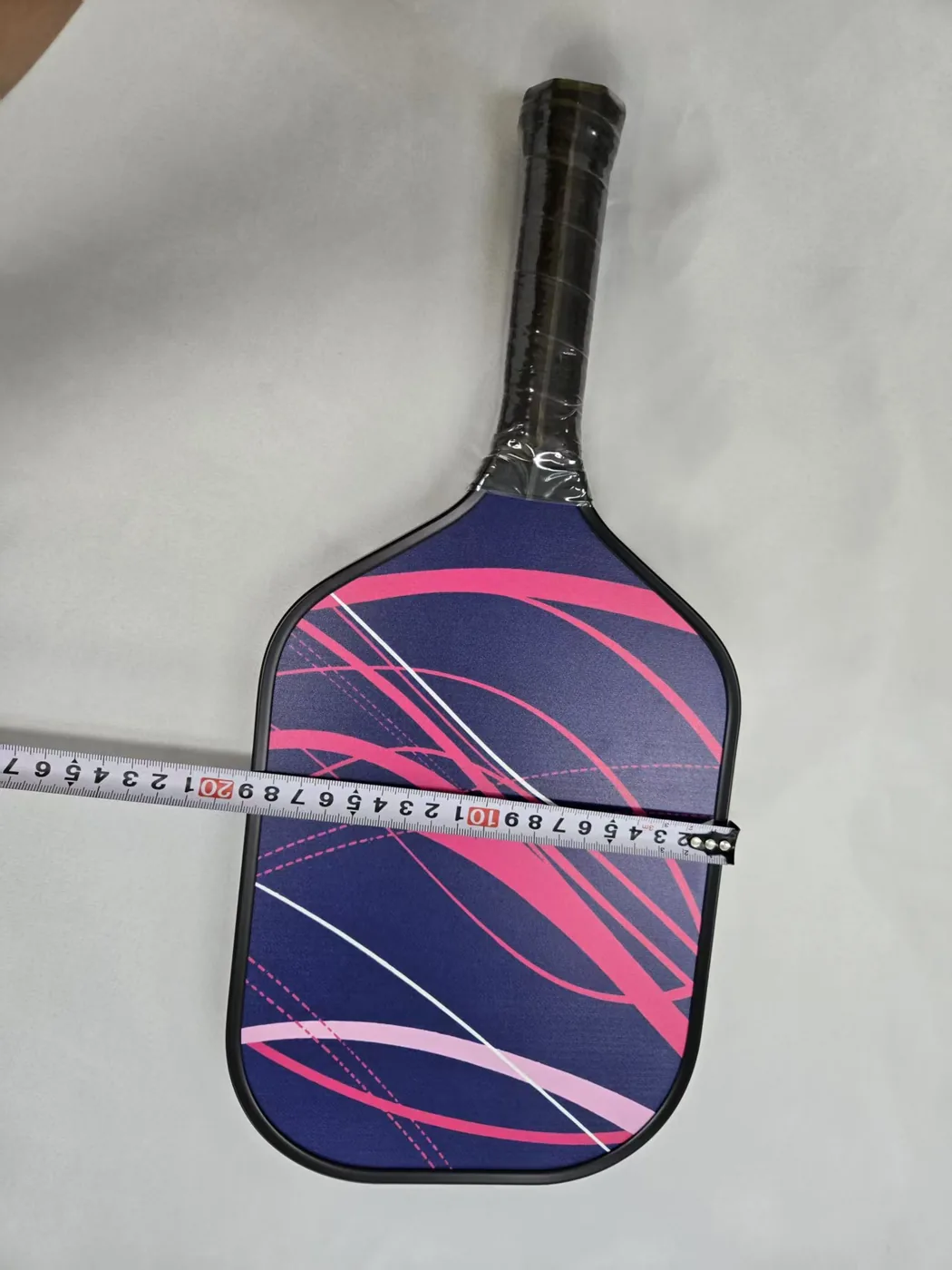
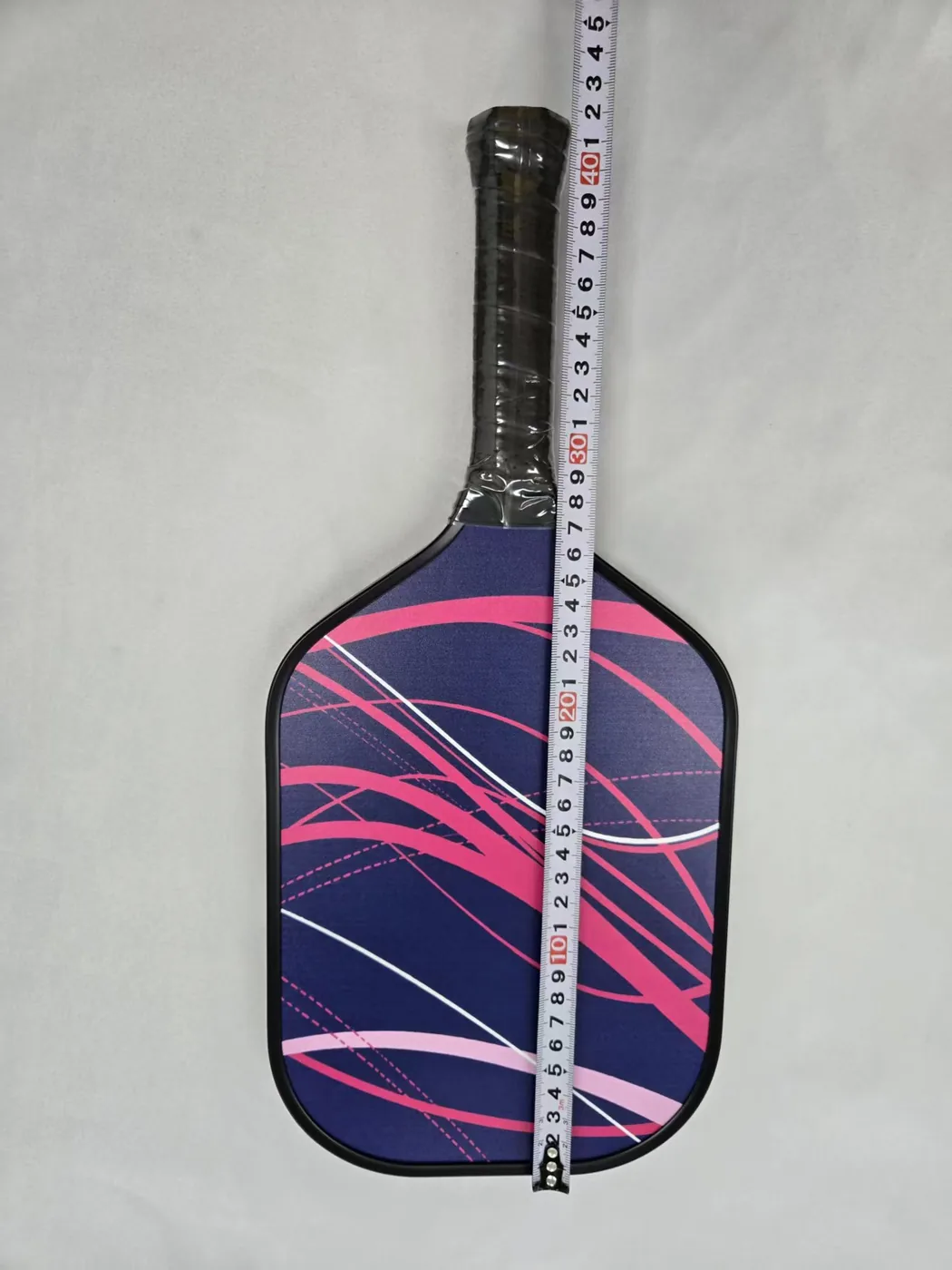
Measure samples with the same method that will be used for production inspection. Check multiple points where appropriate, because edge finishing and measurement technique can affect readings. Record the sample ID, revision, date, and measured results. Keep an approved reference sample or clear approval record for bulk production.
During production, inspection can include thickness, length and width, weight, visual finish, bonding and edge condition, handle and grip, logo placement, and packaging. The inspection plan should match the agreed product specification and the buyer’s quality requirements. For a broader checklist, see our Gloperti pickleball paddle quality control process.
Which Thickness Should a Pickleball Paddle Brand Choose?
The right choice depends on the intended customer, retail positioning, target price, and the performance brief. Instead of choosing by thickness alone, define what role the paddle should play in your product range.
Choose a 13mm concept when:
- Your product brief calls for a slimmer core profile.
- Your target players prefer a firmer or more direct feel in the tested construction.
- You want to test a differentiated model alongside an existing thicker-core paddle.
- Your sample results support the intended playing characteristics and price position.
Choose a 16mm concept when:
- Your product brief calls for a thicker core profile.
- Your target players prefer the tested sample’s more cushioned or damped feel.
- You want to develop a model whose complete construction meets a specific stability or touch target.
- Your sample results support the intended positioning and production cost.
For a controlled OEM trial, ask the factory whether the 13mm and 16mm samples can use the same face layup, shape, handle, perimeter construction and comparable finished weight. A thickness change may require a different core blank, press setup, mold insert or entirely different tooling depending on the manufacturing platform. Request a written tooling review rather than assuming the same mold will work.
Should a brand offer both 13mm and 16mm?
Offering both can make sense when the two models serve clearly different customer needs. For example, a brand may position one model around a crisp response and another around a more cushioned feel. But the distinction must be real and validated. If the two products feel nearly identical, maintaining two SKUs may add inventory, artwork, forecasting, and quality-control complexity without giving buyers a meaningful choice.
Before launching both, run a side-by-side sample test with the same player group. Ask testers to alternate between models during serves, drives, blocks, resets, and dinks. Record structured feedback and compare the actual specifications and landed costs.
How Can 13mm vs 16mm Affect OEM Manufacturing Cost?
There is no reliable universal rule that a 16mm paddle costs a fixed amount more than a 13mm paddle. Cost depends on the complete design and the supplier’s materials, production route, yield, labor, tooling, order quantity, and packaging requirements.
When requesting quotations, ask suppliers to identify cost differences rather than quoting only a thickness label. Compare the two options on an equivalent basis:
On narrow screens, swipe horizontally to view the full table.
| Quotation item | What to confirm |
|---|---|
| Core construction | Material, density or geometry, thickness definition, and source |
| Face construction | Fiber type, layup, finish, and whether both sides are identical |
| Manufacturing process | Pressing or thermoforming route, reinforcement, and finishing |
| Target weight | Finished weight range and tolerance |
| Artwork | Logo, print coverage, number of designs, and approval requirements |
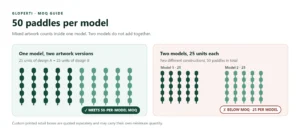
| Order quantity | MOQ per model, thickness, and artwork |
| Sampling and tooling | Sample fee, freight, tooling or mold charges, and any order-credit terms |
| Packaging | Individual bag, paddle cover, retail box, or set packaging |
| Trade terms | Incoterm, shipment destination, lead time, and included costs |
For a fair comparison, keep the order quantity, graphics, accessories, packaging, and trade terms the same. If a supplier changes several construction details between the 13mm and 16mm quotations, request a line-by-line explanation.
For a broader breakdown of material, tooling, sampling and production cost drivers, see the pickleball paddle manufacturing cost guide.
OEM Buyer Checklist: How to Approve a 13mm or 16mm Sample
Use this checklist when comparing prototype samples or preparing a private-label purchase order:
- Confirm the thickness definition. Is the measurement for the core or the finished paddle? Where and how is it measured?
- Confirm the construction. Record core material, face material, bonding method, and perimeter design.
- Check dimensions. Measure overall length, width, handle length, and grip circumference.
- Record weight and balance. Weigh each sample and note the balance or swing-weight target if applicable.
- Inspect finish. Check surface texture, edge guard, handle, grip, butt cap, logos, and print alignment.
- Play-test consistently. Use the same testers, balls, court conditions, and test sequence for both samples.
- Approve a controlled reference. Save the sample ID, photos, specifications, revision, and written approval.
- Set bulk tolerances. Agree on inspection points, acceptable variation, defect criteria, and corrective-action procedures.
Clear sample approval reduces the risk of a bulk order differing from the prototype. It also gives both the buyer and factory a common reference for repeat orders.
Frequently Asked Questions
Is a 13mm or 16mm pickleball paddle better?
Neither thickness is automatically better. A 13mm design may suit a player who prefers the feel of a thinner, firmer build, while a 16mm design may suit someone who prefers the feel of a thicker, more cushioned build. The complete construction and the player’s preference matter more than thickness alone.
Can a pickleball paddle manufacturer produce both 13mm and 16mm models?
Many manufacturers can develop different thickness options, subject to their available materials, tooling, and production platforms. Buyers should confirm the exact construction, sample availability, MOQ, lead time, and quality-control requirements with the supplier.
Does changing from 13mm to 16mm require a different mold?
Not always. It depends on the paddle platform, mold design, forming process, and construction. Ask the factory to review the design and confirm whether existing tooling can be used or whether modification or new tooling is required.
Which thickness is better for a private-label pickleball paddle line?
Choose based on the target customer, retail price, desired playing feel, and sample-test results. If both thicknesses serve distinct customer groups, offering both may make sense. If the difference is not meaningful to your buyers, one well-developed model may be easier to manage.
What should buyers include in a 13mm or 16mm paddle quotation request?
Provide the thickness definition, core and face materials, paddle shape and dimensions, target weight, surface finish, logo artwork, order quantity, packaging, sample requirements, and delivery terms. Ask the supplier to list any assumptions or exclusions in the quotation.
Develop Your Custom 13mm or 16mm Pickleball Paddle with Gloperti
If you are comparing 13mm and 16mm options for a new product line, share your target market, preferred construction, target weight, and estimated order quantity. Gloperti can review the brief, check tooling implications, and discuss suitable sample options based on the project requirements.
For the wider service scope, explore our custom pickleball paddle manufacturing services.
Editorial note: Performance descriptions in this article are general design considerations, not guarantees. Final characteristics depend on the complete paddle construction and should be verified through representative samples and appropriate testing.