To start a private label pickleball paddle brand, choose one target player and sales channel, select an existing paddle platform, and decide what to customize. Build your launch budget around the landed cost, approve a branded sample against a written specification, then place a first order sized to the demand you can reasonably support.
Private labeling lets you sell a factory-made paddle under your own brand. For a first launch, the decisions that shape your order are practical. Which model fits your customer? How many units can you sell through your chosen channel? What must the factory match when it moves from a sample to bulk production?
Define Your First Product & Target Market
Write a one-sentence brief before opening a factory catalog. Name the player, the use case, the sales channel, and the intended retail price. A new player buying a two-paddle set online and a club player buying a single paddle at a pro shop will judge the product differently.
For example, suppose you run a club shop and want to sell a branded paddle to recreational players moving up from a starter set. Start by comparing two sample platforms for comfort, handling, and price. Launch the better fit in one graphic with simple packaging. If you sell a set online instead, decide what the set includes and obtain a packed sample so you can quote shipping and evaluate the box as customers will receive it.
Before moving on, write down the intended buyer, sales channel, target retail price, and the two or three features that matter most to that buyer.
Choose a Paddle Platform & Confirm Private Label MOQ
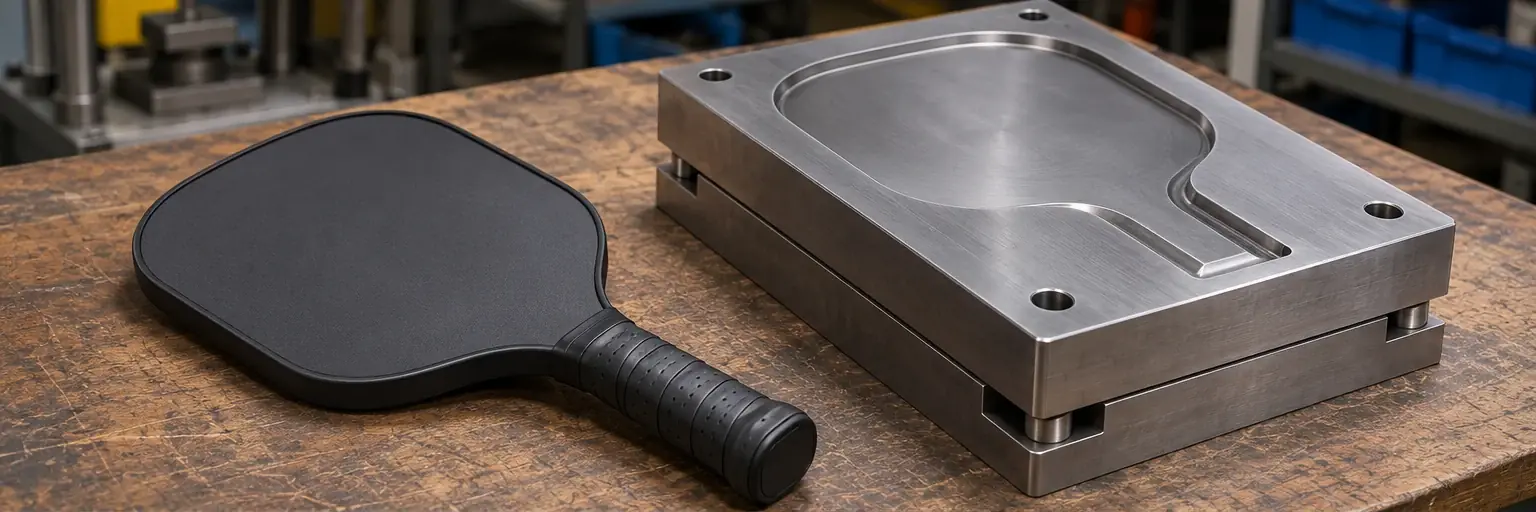
An existing platform gives you a starting shape and construction. Ask which branding options are available for that specific model. Face artwork, grip color, edge guard color, butt cap branding, and retail packaging can each have different requirements. If your product depends on a different shape or geometry, discuss when you need a custom pickleball paddle mold before committing to the design.
How many paddles should you order first?
Estimate how many units you can sell during your initial launch window and how much cash you can commit to inventory. Then ask the factory for the minimum order quantity (MOQ) per model and whether you can split the order across graphics. Request separate minimums for custom boxes, grips, or other components that could raise your initial commitment.
Selected Gloperti projects can start from 50 paddles. Confirm the MOQ for your exact construction, artwork, and packaging before you use that figure in your budget. If a box minimum exceeds your planned order, ask for a simpler packaging option and have both versions quoted.
If your sales channel requires USA Pickleball approval, search the USA Pickleball approved paddle list for the exact brand and model you plan to sell. Resolve any approval questions before confirming the production sample, printing packaging, or committing to a launch date.
Calculate Your Pickleball Brand Startup Costs & Landed Cost
Separate one-time launch expenses from the cost of getting inventory to your receiving point and the costs you incur when a unit sells. This makes it easier to judge both the cash required up front and how much each sale contributes toward recovering it.
| Budget category | What to include |
|---|---|
| One-time launch expenses | Samples and sample freight, artwork preparation, tooling or setup if required, and testing or approval costs if applicable. |
| Landed inventory | Paddles, retail packaging, inbound freight, and any insurance, import charges or receiving costs you pay to bring the order to its destination. |
| Selling costs | Channel or payment fees, fulfillment, outbound shipping you cover, advertising, and an allowance for returns. |
| Budget item | Amount |
|---|---|
| Total landed cost | US$1,600, including US$240 in inbound freight |
| Freight share | 15% of landed cost, or US$2.40 per paddle |
| Landed cost per paddle | US$16 |
| Net selling price per paddle | US$45 |
| Variable selling expenses per paddle | US$14 |
| Contribution per sale | US$45 − US$16 − US$14 = US$15 |
| Sales needed to cover US$450 in one-time startup costs | US$450 ÷ US$15 = 30 paddles |
At 30 sales, the US$450 in contribution covers the one-time startup costs. The calculation already includes the landed cost of the 30 paddles sold. The remaining 70 still represent US$1,120 in inventory at landed cost, so track recovery of the cash paid for the full batch separately.
To estimate your own freight costs, compare air and sea quotes using the same packed dimensions, weight, destination, and delivery scope.
For the factory side of the budget, see our guide to pickleball paddle manufacturing costs.
Request comparable factory quotes
Give each supplier the same brief and request quotes at the same quantity, packaging specification, and shipping terms. Ask for an itemized breakdown of paddle price, packaging, sample fees and freight, and any one-time charges. Confirm what starts the production lead time and ask how changes after sample approval affect price and schedule. Use our checklist for choosing a pickleball paddle factory when you compare responses.
For details on available platforms, branding and packaging, see Gloperti’s custom pickleball paddle manufacturing services.
Approve a branded sample against a written specification
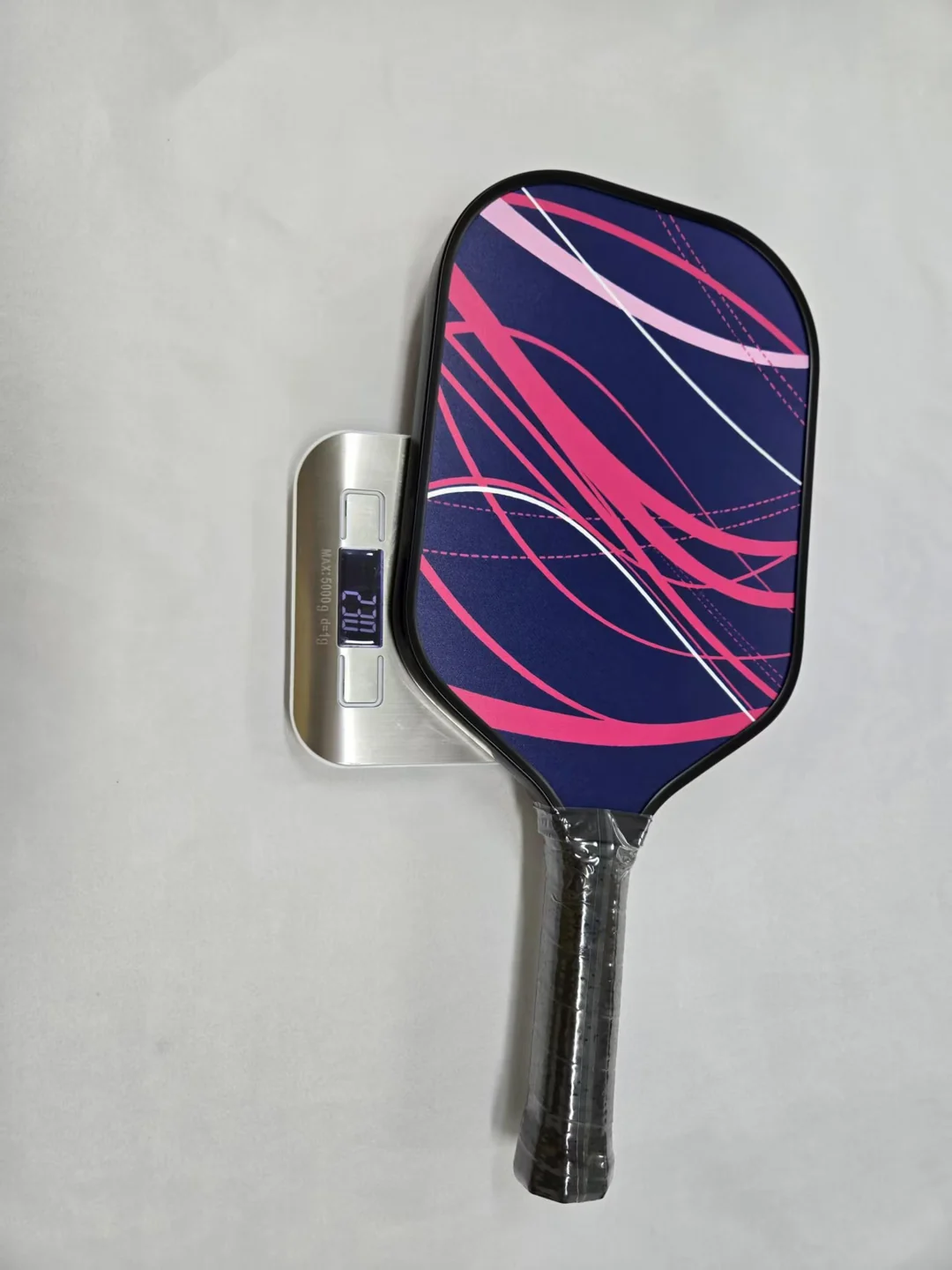
Evaluate a physical sample using the intended construction and decoration. Ask the factory to identify any differences between the sample and the proposed production version, such as a temporary grip or unfinished packaging. If one of those differences affects fit, appearance, or handling, settle it before authorizing bulk production.
What should your sample approval record include?
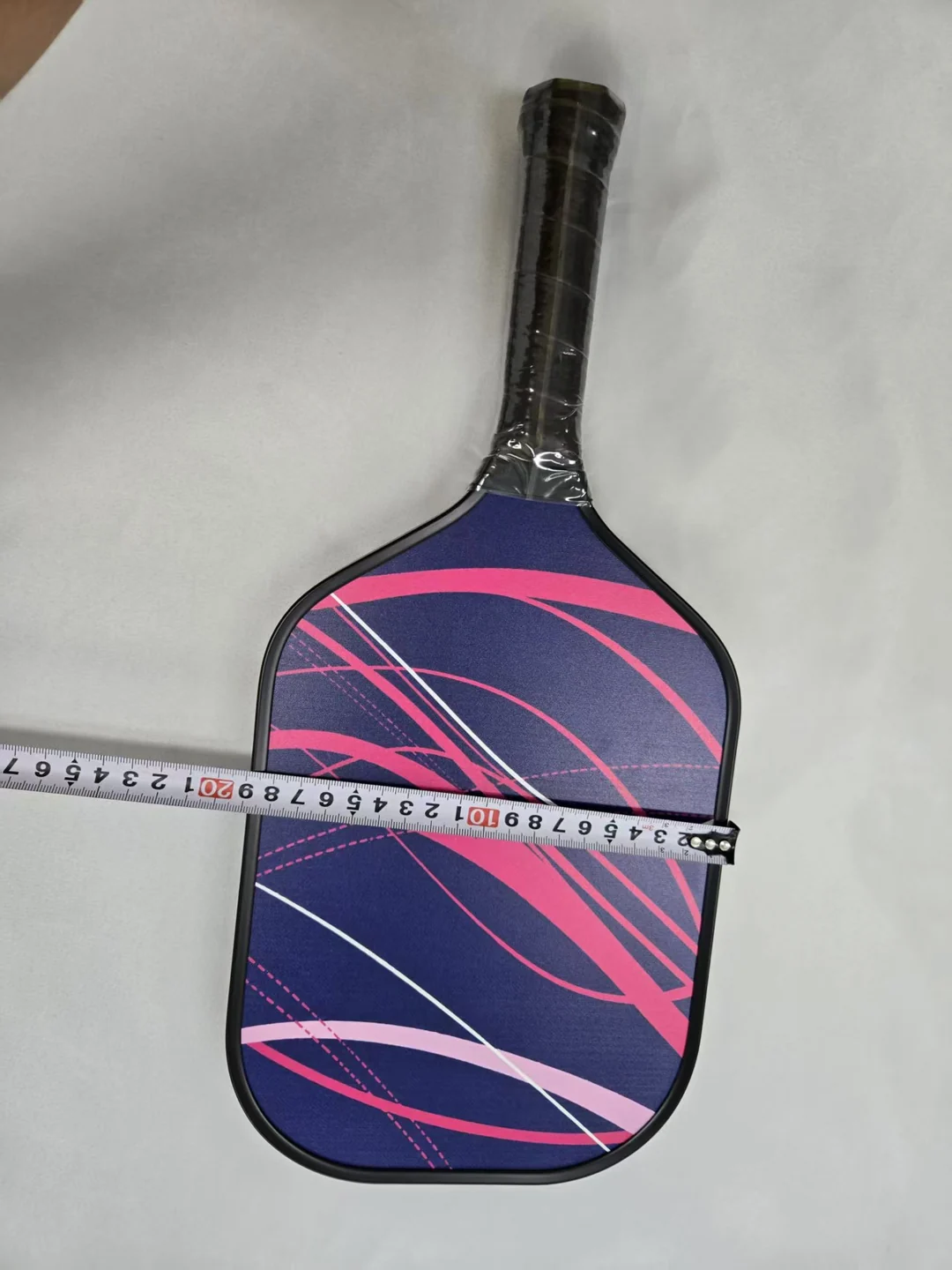
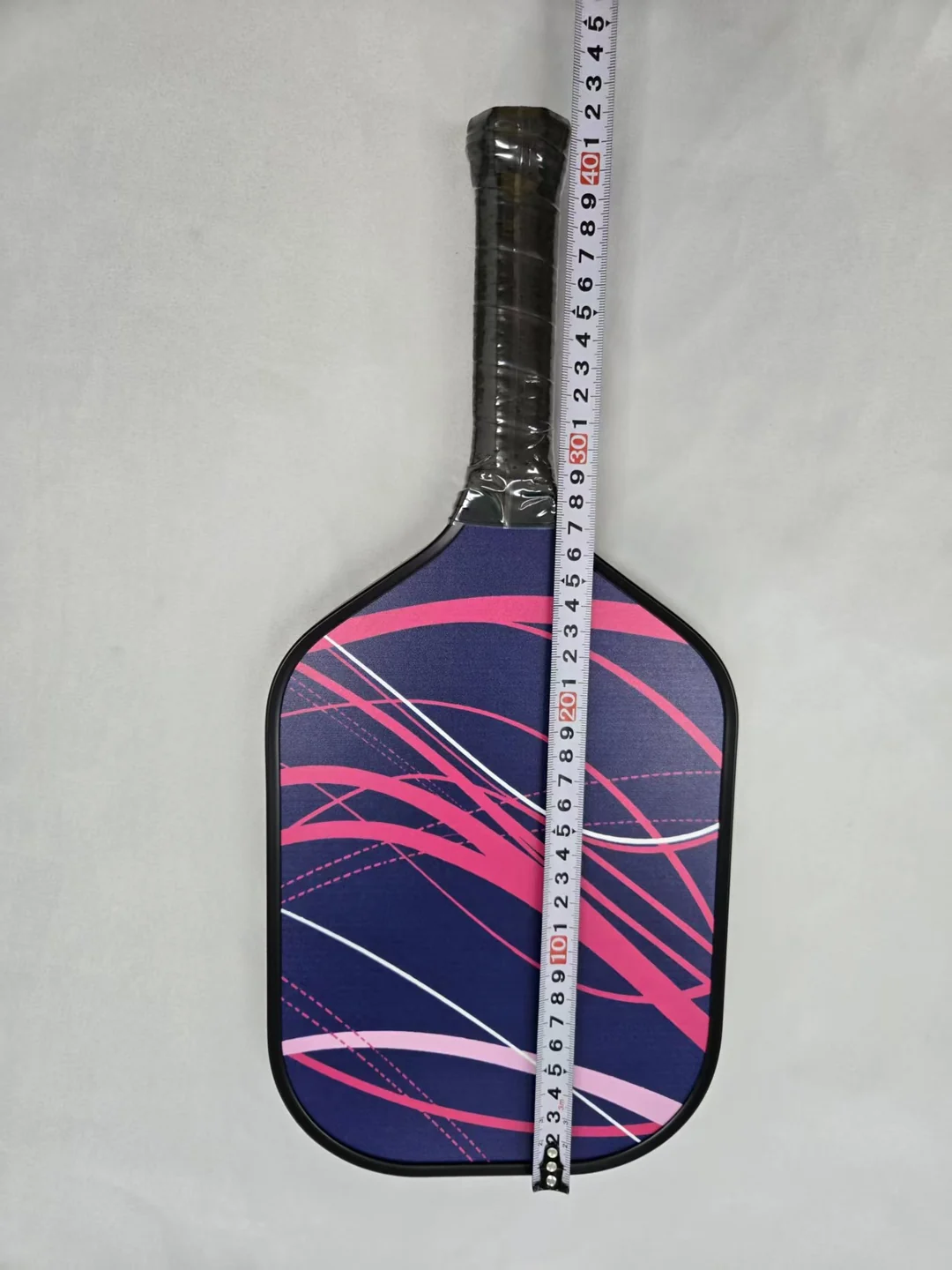
- Construction and dimensions. Record the model, face and core materials, length, width, thickness, handle length, and grip circumference.
- Weight and feel. Agree on a production weight range and how to measure it, including whether removable wraps or tags are present. Record play-test feedback separately from measurable acceptance criteria.
- Branding and finish. Record the approved artwork version, print placement on both faces, edge guard and grip colors, butt cap logo, and any edge branding.
- Packaging. Confirm the box or sleeve, accessories, labels, barcode placement where applicable, and carton requirements.
Give the approved sample a reference ID and attach dated photos to the specification. Ask the factory to acknowledge the same revision before production.
Sample inspection photos
These photos illustrate three checks to document when approving a paddle sample.
Gloperti case study: How a Canadian brand selected the LVN 01
A Canadian pickleball brand compared the technical specifications of five 16 mm thermoformed T700 configurations for its first premium paddle. The brand then paid for samples so its team and local players could evaluate the options before production. After reviewing the samples, the brand selected the T700-5+EPP+EVA platform for LVN 01, as documented in the full LVN 01 case study.
Place the first order and agree on inspection before production
Reference the approved sample ID, specification revision, artwork, packaging and quantities in the purchase order. Agree on what the factory should check, how many units to inspect, who reviews the results, and how defects will be handled before shipment. At inspection, compare production units with the approved sample and written tolerances using a pickleball paddle quality control checklist.
Equipment submission and supplier audits. If the model needs to be submitted, agree on who will handle the submission, which configuration will be tested, and how the factory will document subsequent changes. If your retailer also requires an amfori BSCI social audit, request the latest report for the facility that will make your order and check its date and scope.
Once stock arrives, track sell-through, returns, and buyer comments by model. Record why units come back. A recurring packaging issue and a recurring complaint about grip size call for different changes on a reorder.
Frequently asked questions
Do I need a new mold to start a private label pickleball paddle brand?
An existing platform may work if its geometry and construction suit the product you want to sell. Ask which changes can be made on that platform. A new shape or other geometry change may require different tooling.
How much does it cost to start a pickleball paddle brand?
Start with one-time setup costs, the full batch’s landed cost, and variable selling costs per unit. The first-order budget example shows how per-sale contribution covers startup expenses and how much remains tied up in unsold inventory. Use an itemized quote for your own model, packaging, and destination.
What should I send a private label paddle manufacturer for a quote?
Send your target customer and market, estimated first-order quantity, preferred paddle or reference model, artwork status, packaging needs, and delivery destination. Identify which details are flexible so the supplier can suggest options you can compare.
Copy this brief for your first factory inquiry
- Target country, player, and sales channel
- Target retail price and expected first-order quantity
- Preferred paddle platform or reference model and required specifications
- Logo and artwork files or current design status
- Preferred packaging, labels, and included accessories
- Delivery destination and target launch date
- Quote requested for samples, paddle and packaging MOQ, bulk pricing, shipping terms, and lead times